Artwork
A View through Three of the North-Western Arches of the Third Storey of the Coliseum
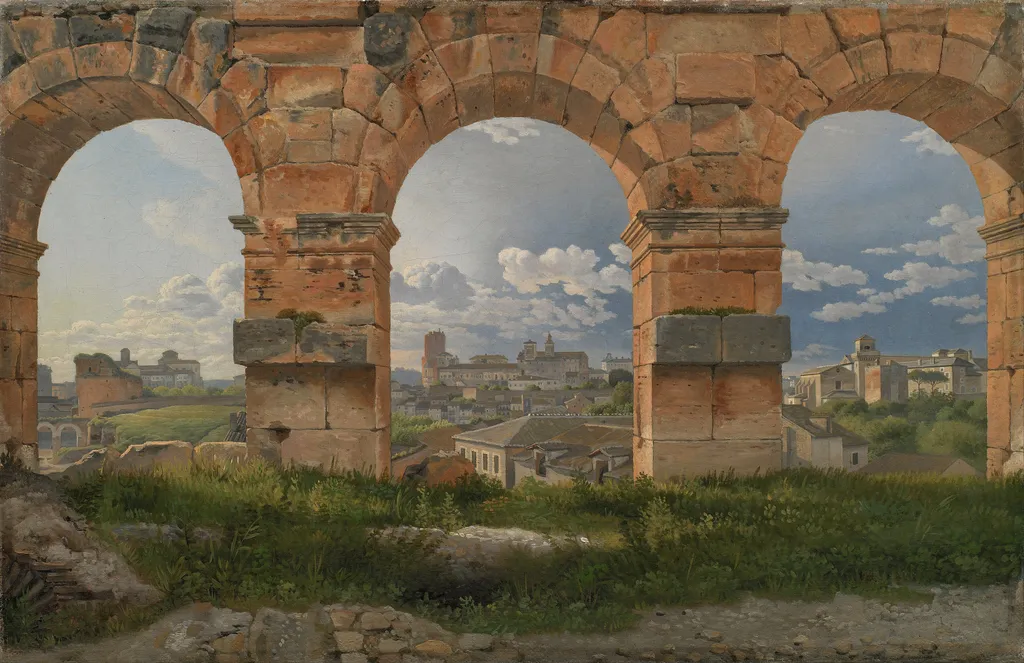
A View through Three of the North-Western Arches of the Third Storey of the Coliseum is an oil painting by the Neoclassicist artist Christoffer Wilhelm Eckersberg. It dates from 1815 and is held in the collection of the Statens Museum for Kunst. C.
About this work
Subject & Meaning
The framing arches, meticulously detailed in their ruinous state, act as a classical proscenium, guiding the viewer’s gaze toward an idealized Roman vista.
Eckersberg’s composition frames the Roman skyline through three decaying arches of the Colosseum’s third storey, transforming an impossible viewpoint into a deliberate construct. Through these apertures, recognizable landmarks appear: the Forum Romanum with Santa Maria in Aracoeli in the distance, the Torre dei Milizie at the foot of the Quirinal, and San Pietro in Vincoli on the right. The framing arches, meticulously detailed in their ruinous state, act as a classical proscenium, guiding the viewer’s gaze toward an idealized Roman vista.
This synthesis of fragments elevates the image beyond topographical record, evoking the Romantic impulse to reconcile classical grandeur with the passage of time. The work thus represents both a studied archaeological record and a curated pictorial harmony, emblematic of Eckersberg’s engagement with Nordic classicism during his Roman sojourn.
Technique & Style
Executed in oil on canvas in 1815, the work exemplifies plein-air practice introduced to Eckersberg during his Roman sojourn (1813–16).
The composition is a deliberate synthesis: three distinct arches and their views are telescoped into a single, balanced vista, with the framing arches rendered in precise linear clarity against a softly modulated sky. Infrared examination reveals an underlying sketch beneath the paint layer, and minor pentimenti, such as an added row of stones within the arches, document incremental refinement during execution.
Condition appears stable; the painting has remained in the Statens Museum for Kunst since 1911, where it is regularly exhibited.
History & Provenance
Christoffer Wilhelm Eckersberg created this oil painting during his three-year residence in Rome, which lasted from 1813 to 1816. While some sources date the inception to 1815, others specify its completion in 1816. The work emerged from the artist's practice of painting outdoors, utilizing preparatory sketches to construct a harmonious view that combines three distinct perspectives of the Colosseum and the Roman skyline.
Following his return to Copenhagen in 1818, the painting remained in private or studio ownership until 1911, when it entered the collection of the Statens Museum for Kunst in Copenhagen. It has since been recognized as a significant piece of the Danish cultural canon.
The painting has been part of the collection of the Statens Museum for Kunst in Copenhagen since 1911. It is held there as an oil on canvas and is catalogued within the museum's holdings. The work's documented exhibition history includes its inclusion in the presentation "A beautiful lie - Eckersberg," as recorded in its Wikidata entry.
The painting was also selected for inclusion in the Danish cultural canon of art in 2006, a designation that brought it renewed public visibility.
Context
Eckersberg’s A View through Three of the North-Western Arches (1815) is widely regarded as a touchstone of Danish Golden Age painting, reflecting the period’s engagement with classical antiquity and topographical accuracy. Scholars note that while the ruined arches and distant landmarks are meticulously rendered, the composition synthesizes multiple viewpoints into a unified scene, aligning with Eckersberg’s study of Renaissance perspectival strategies, particularly those of Raphael.
The work’s prominence was cemented in 2006 when it was included in the Danish cultural canon, underscoring its national significance. Posthumously, it became a pedagogical cornerstone: after returning from Rome in 1818, Eckersberg leveraged such Roman views to shape generations of Danish artists as professor and later director of the Royal Danish Academy of Fine Arts, embedding his Italianate approach in the academy’s curriculum.
Legacy
Regarded as the most famous work Christoffer Wilhelm Eckersberg produced during his Roman sojourn, the painting holds a distinguished place in art history as a prime example of Danish Golden Age painting. Its significance was formally recognized in 2006 when it was included in the Danish cultural canon. Beyond its status as a masterpiece, the work served as a vital pedagogical tool; after returning to Copenhagen in 1818, Eckersberg utilized his Roman studies, including this piece, to exert profound influence on his students at the Royal Danish Academy of Fine Art.
The painting has remained part of the Statens Museum for Kunst collection since 1911, continuing to represent the artist's innovative approach to outdoor observation and compositional construction.
Overview
C. W. Eckersberg, a Danish painter, created A View through Three of the North-Western Arches of the Third Storey of the Coliseum in oil during his stay in Rome around 1815 or 1816. This work is one of several he produced depicting the ancient Roman ruins, capturing the historical landscape with a distinctive approach. It exemplifies his engagement with classical antiquity during a pivotal period in his career.
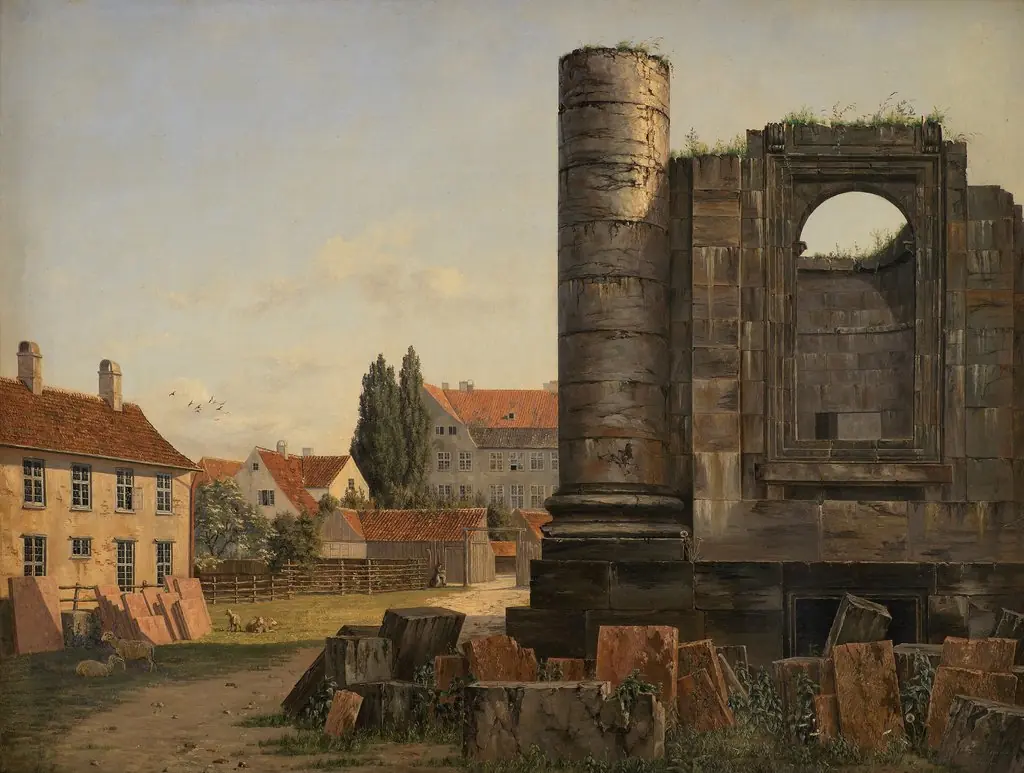
Own this work as a print
Artist & collection
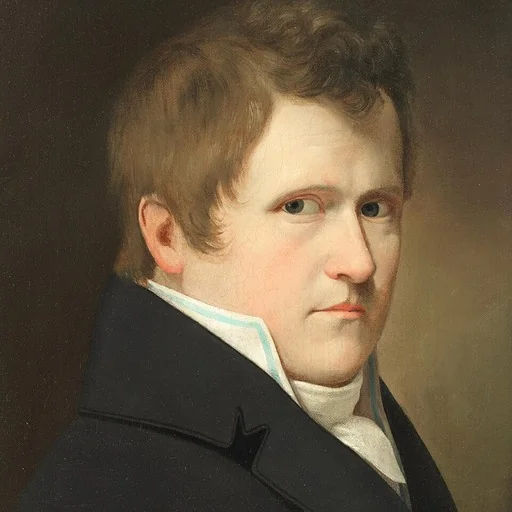
Artist
Christoffer Wilhelm Eckersberg
Christoffer Wilhelm Eckersberg (2 January 1783 – 22 July 1853) was a Danish painter.

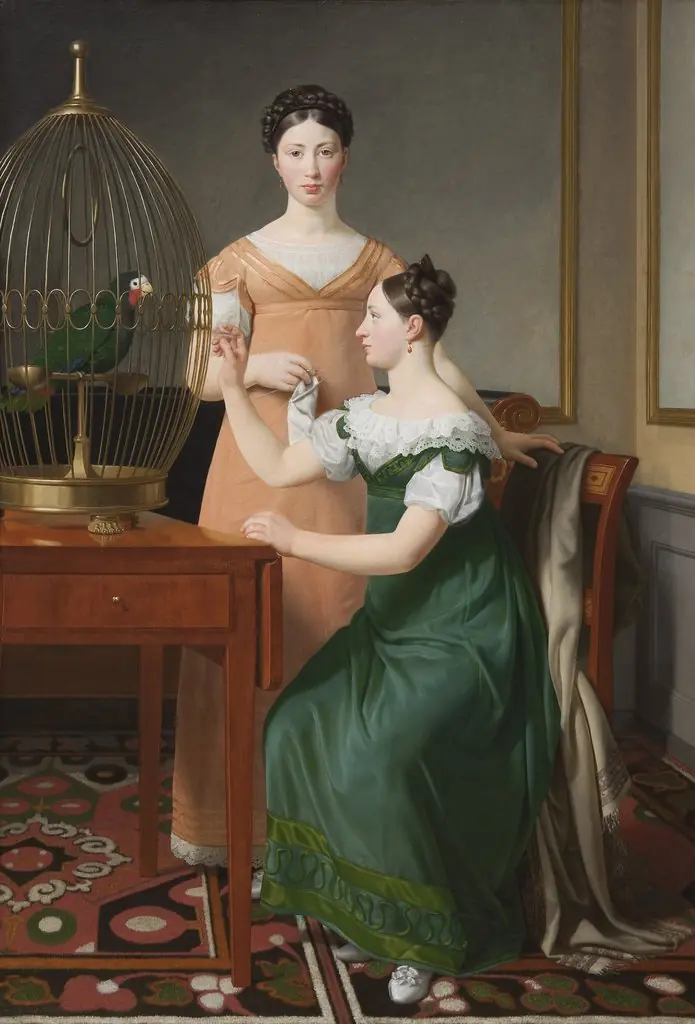 Bella and Hanna. The Eldest Daughters of M. L. Nathanson
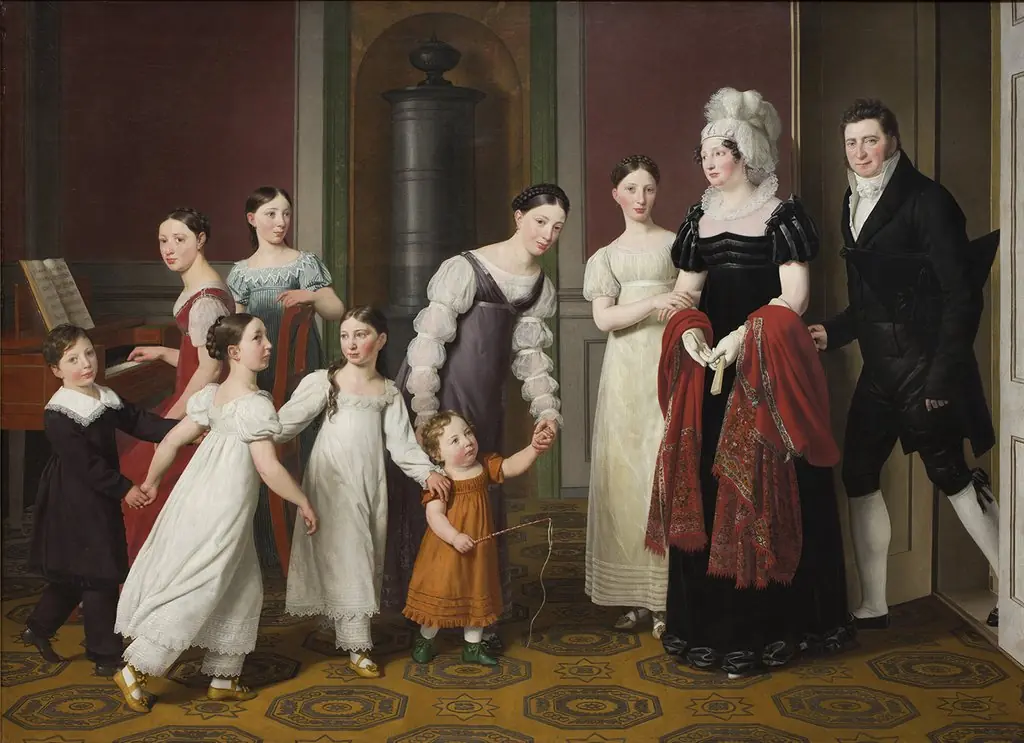 Familien Nathanson
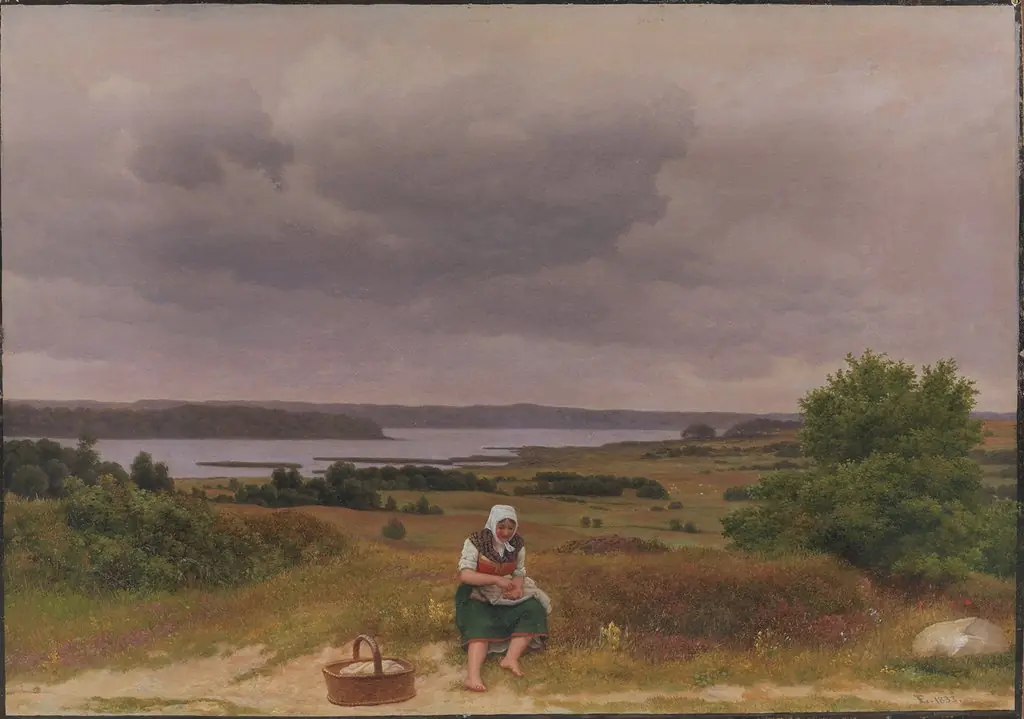 View of Lake Fure near Rudersdal, North Sealand.
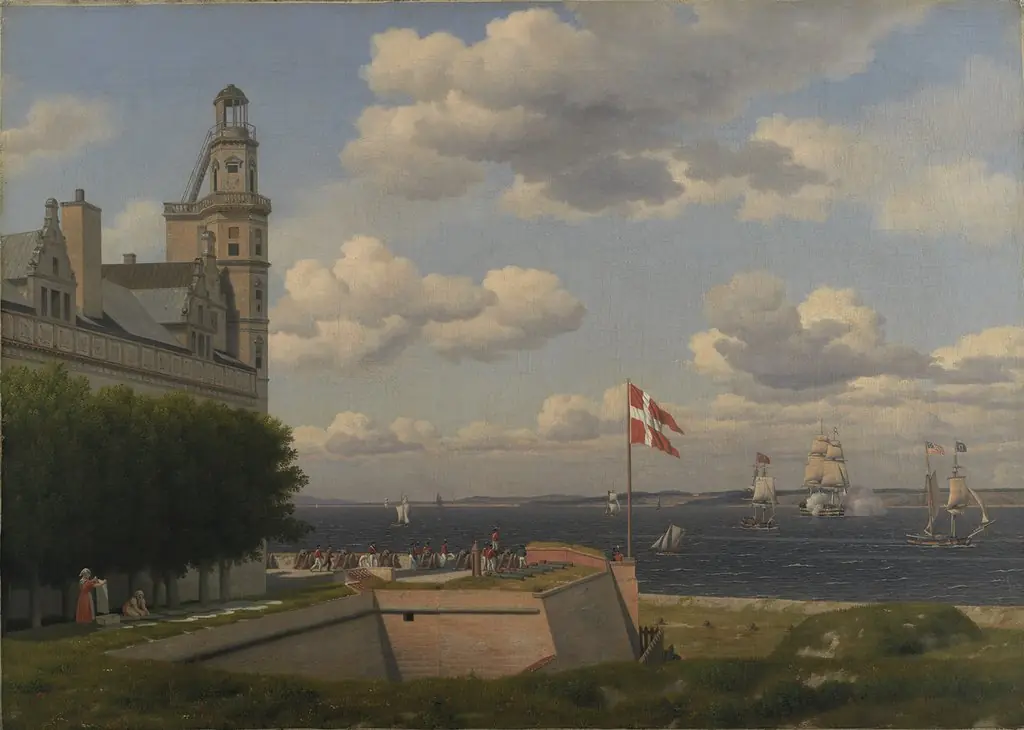 A View towards the Swedish Coast from the Ramparts of Kronborg Castle
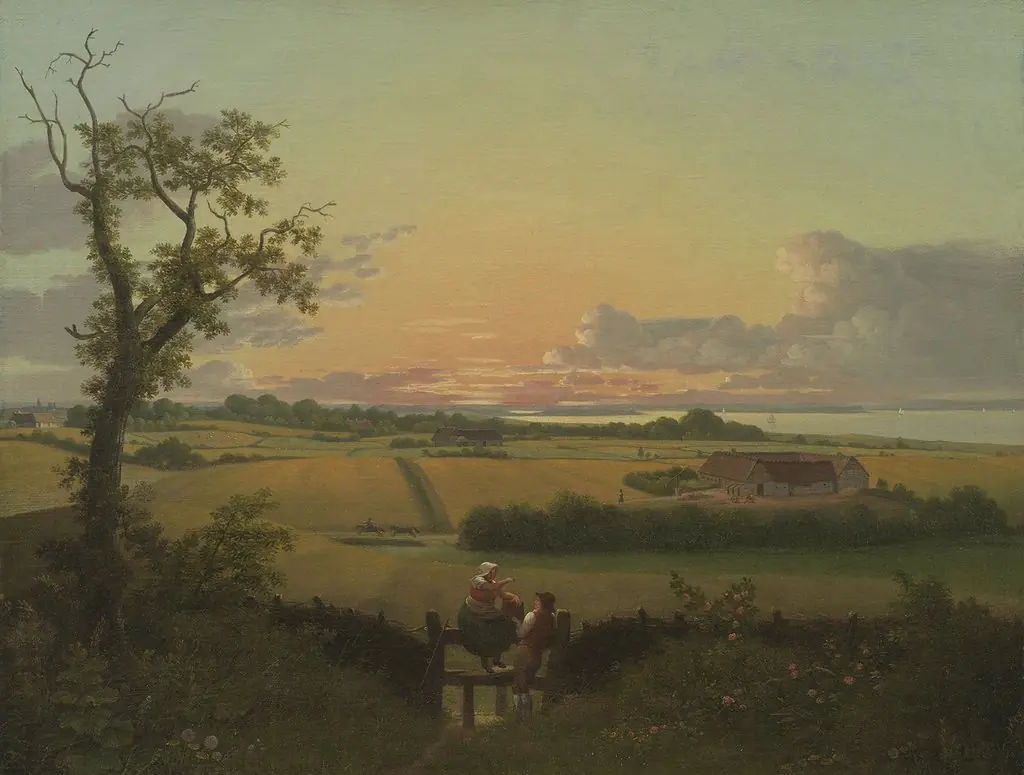 Landscape with a Stile. The Isle of Møn
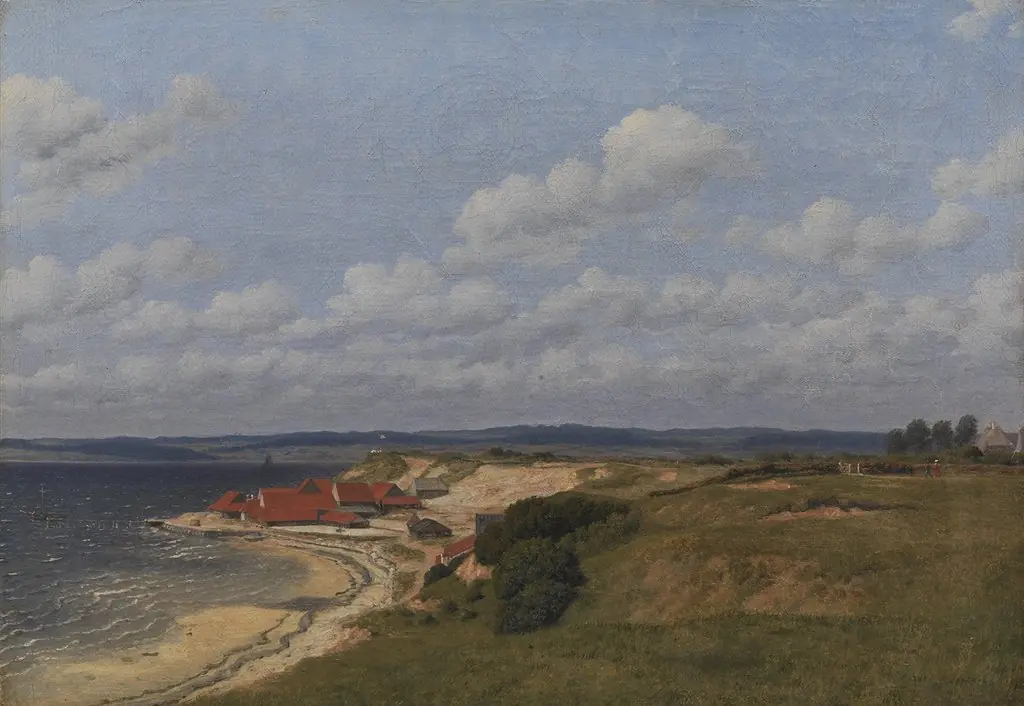 Renbjærg Tileworks by Flensburg Fiord
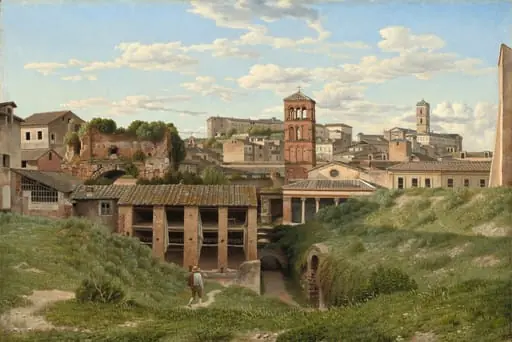 View of the Cloaca Maxima, Rome
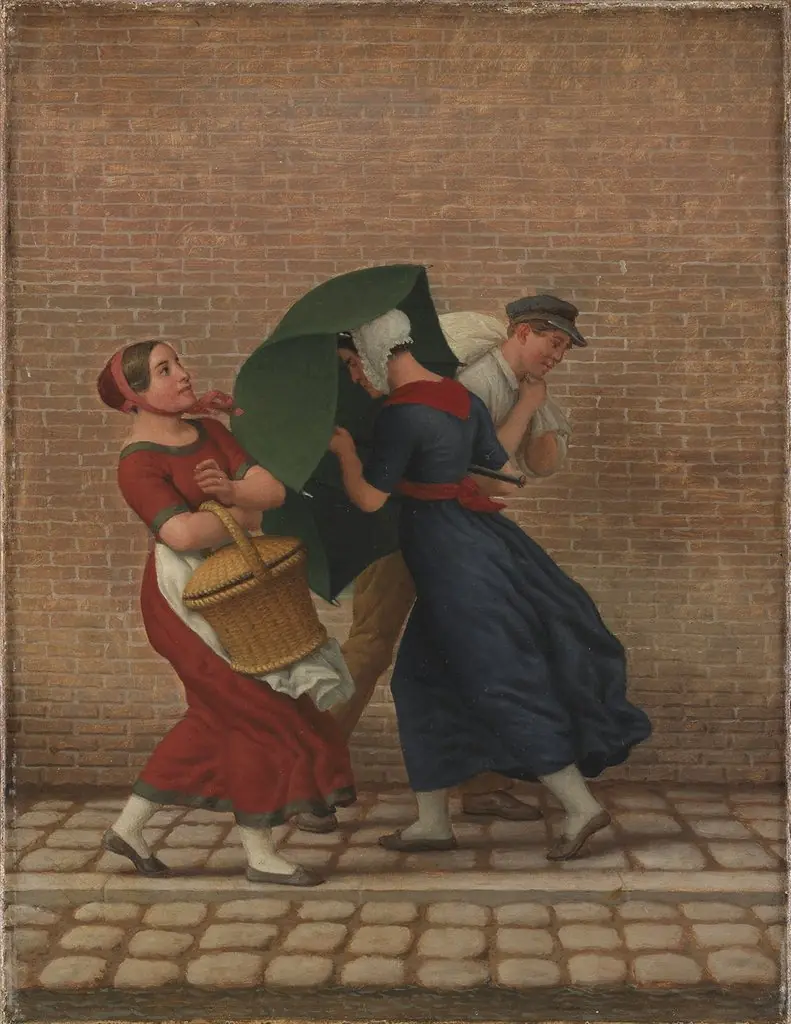 Street Scene in Windy and Rainy Weather
- Parti af Marmorpladsen med ruinerne af den ufuldførte Frederikskirke
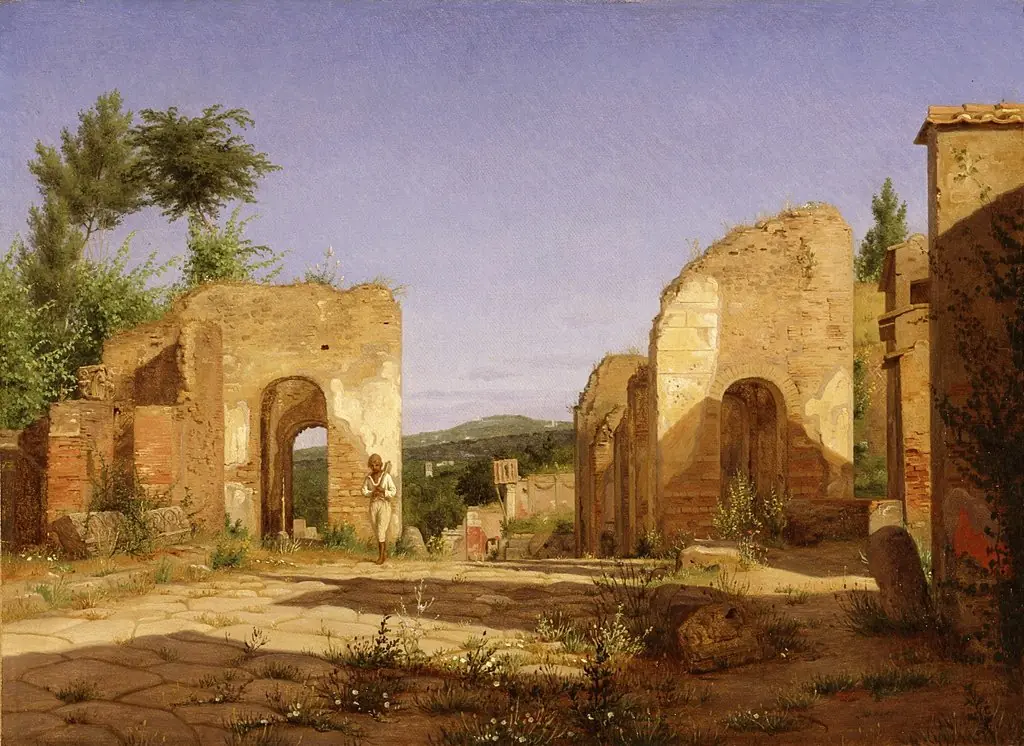 Gateway in the Via Sepulcralis in Pompeii
 Ruins of the Tenczyn Castle
 A Building near Tor di Quinto outside Rome
 De golf van Napels met op de achtergrond het eiland Ischia
 A Section of the Via Sacra, Rome (The Church of Saints Cosmas and Damian)
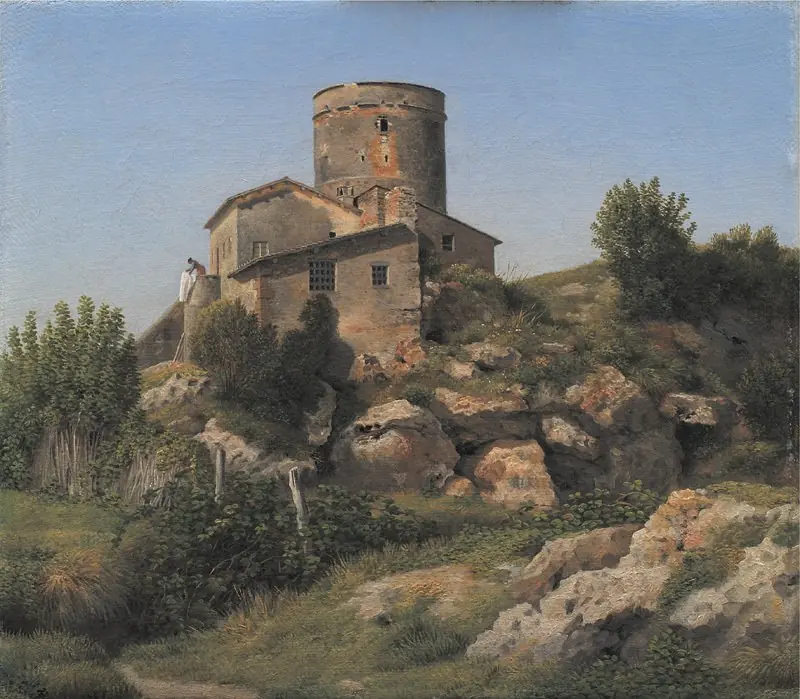 A Building near Tor di Quinto outside Rome
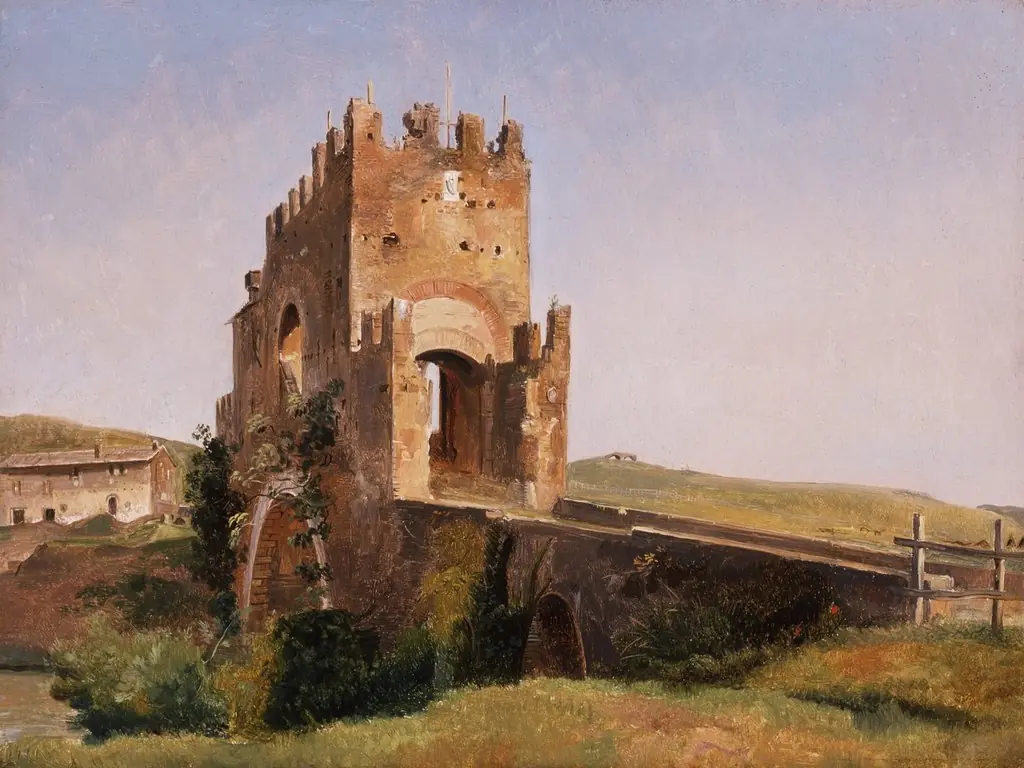 View of the Ponte Nomentano (Roman Campagna)
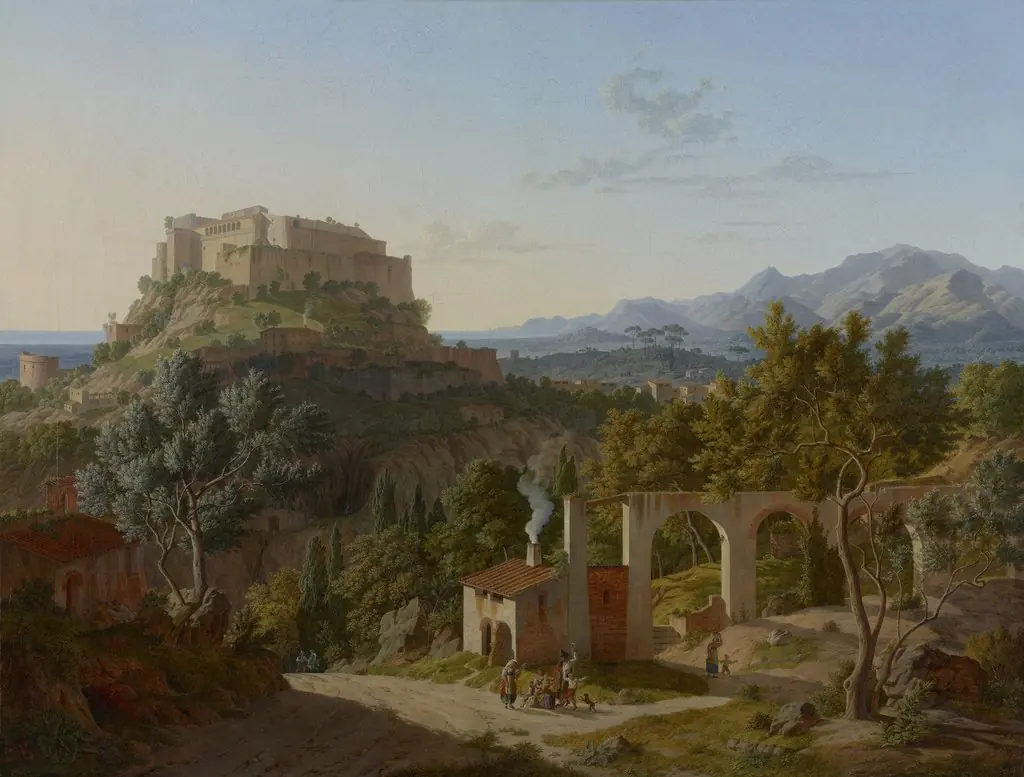 Landscape with the Castle of Massa di Carrara
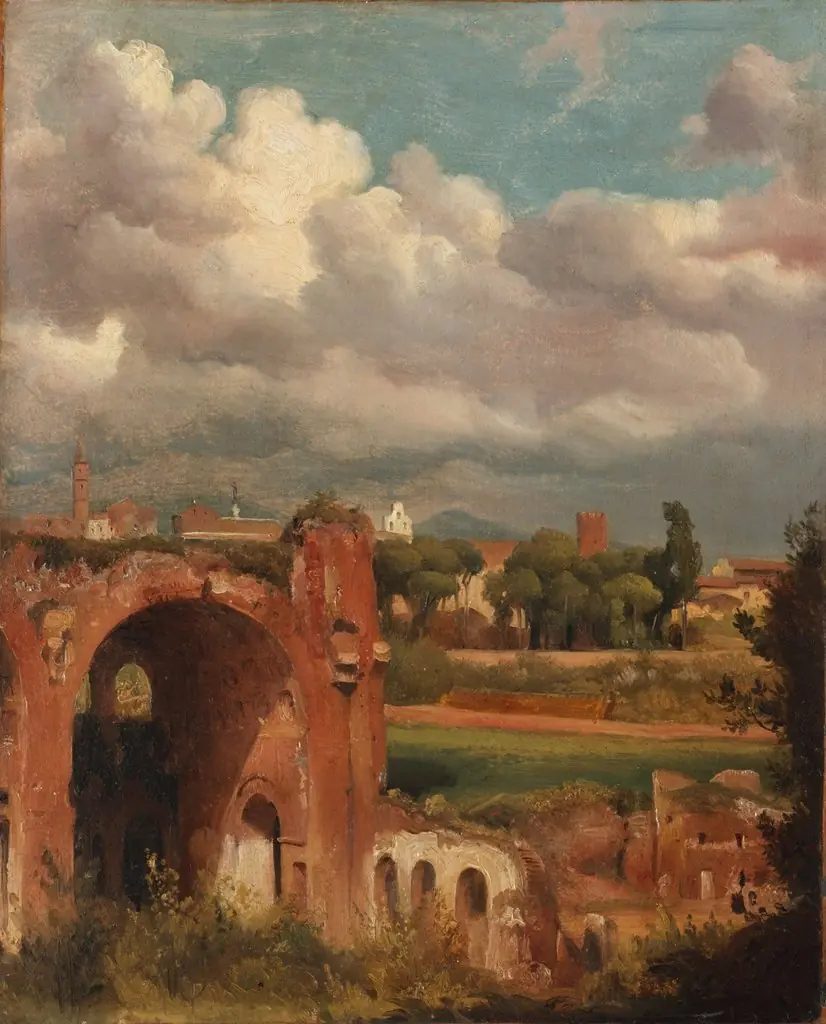 View of the Basilica of Constantine from the Palatine, Rome
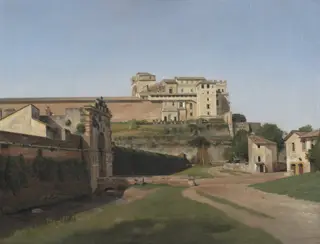 Porta Angelica and Part of the Vatican