Artwork
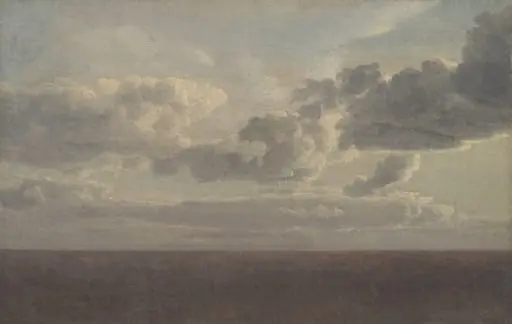
Study of Clouds over the Sound
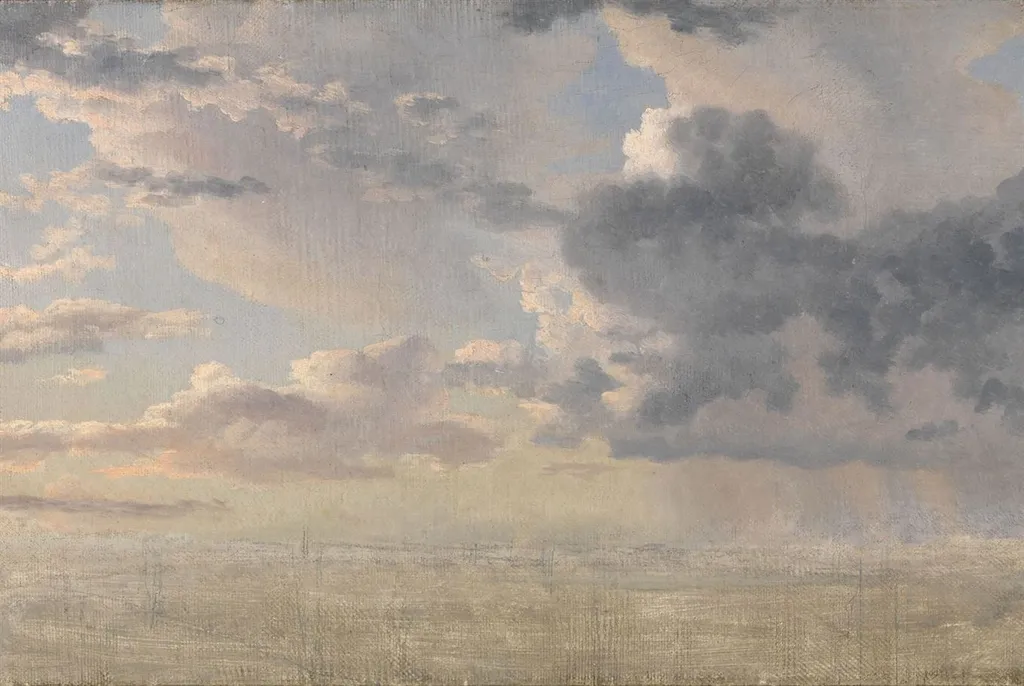
Study of Clouds over the Sound is an oil painting by Christoffer Wilhelm Eckersberg. It dates from 1826 and is held in the collection of the Statens Museum for Kunst.
About this work
Overview
Study of Clouds over the Sound is an oil painting on canvas created in 1826 by the Danish artist Christoffer Wilhelm Eckersberg.
Study of Clouds over the Sound is an oil painting on canvas created in 1826 by the Danish artist Christoffer Wilhelm Eckersberg. Measuring 322 by 441 millimeters, the work is held in the collection of the Statens Museum for Kunst in Copenhagen. The painting represents a pivotal example of Eckersberg's landscape studies and his sustained engagement with atmospheric phenomena during a period when he was establishing himself as the central figure of the Danish Golden Age.
Subject & Meaning
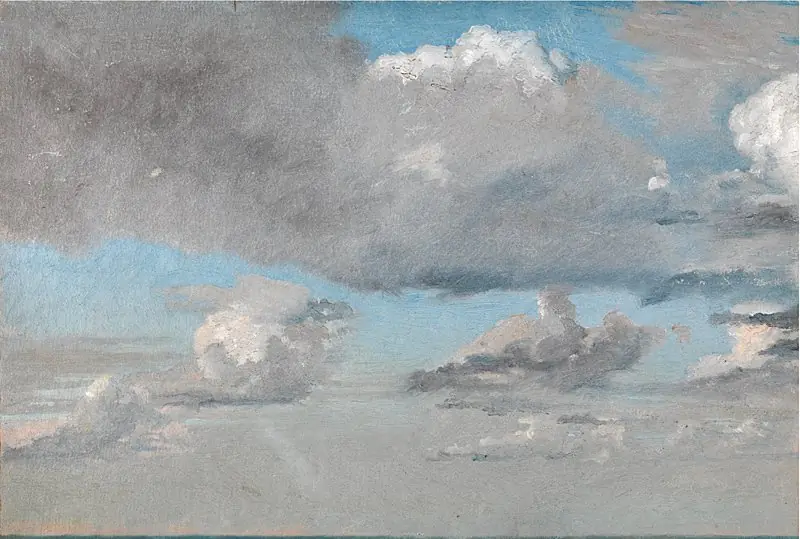
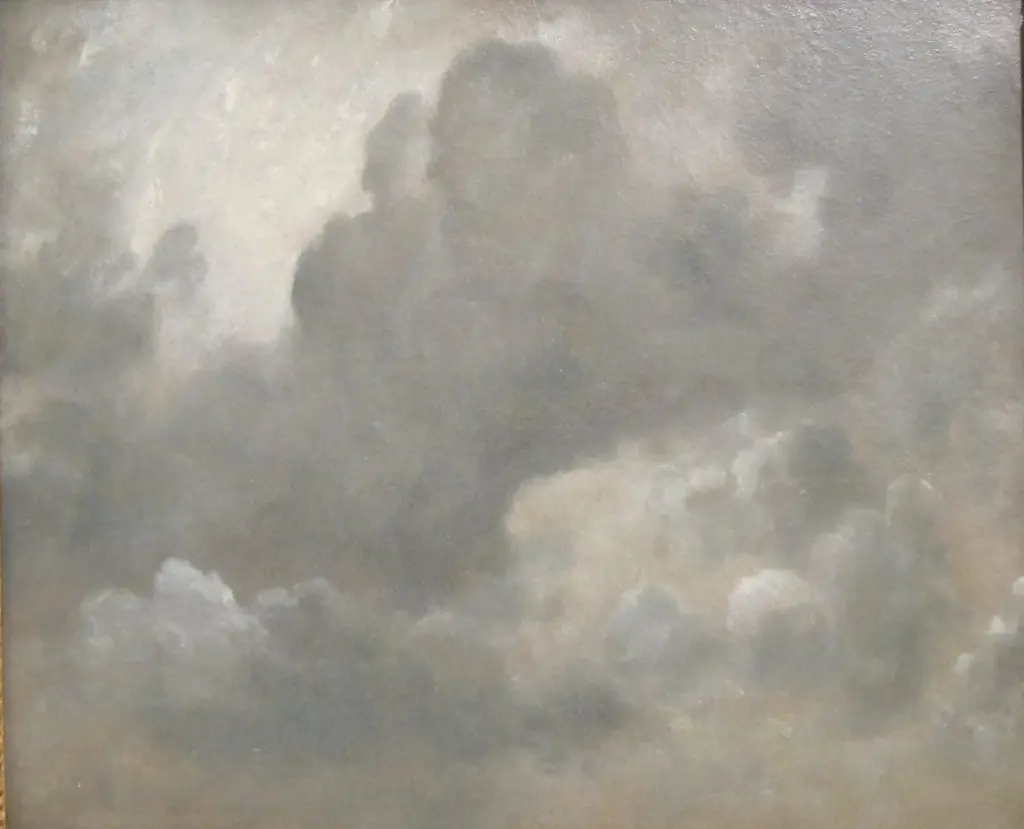
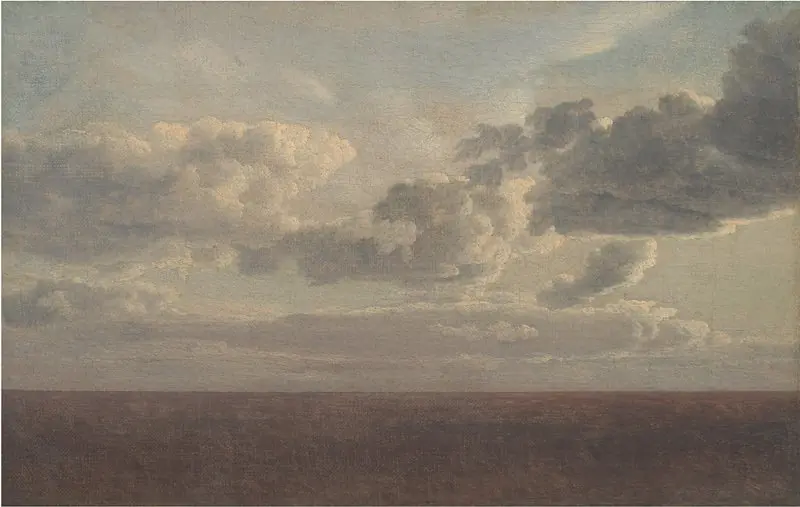
The painting depicts an expansive sky filled with cloud formations that occupy the upper two-thirds of the composition, with a narrow strip of water or land along the bottom edge. No human or animal figures appear. The subject is purely atmospheric: billowing, layered clouds rendered in muted grays, soft blues, creamy whites, and touches of warm beige and pale orange near the lower edges. Light emanates from behind or within certain cloud masses, producing tonal gradations from bright to dark. Near the horizon, faint vertical marks suggest masts, poles, or distant structures, hinting at the maritime setting of the Øresund, the strait separating Denmark from Sweden. The lower portion remains hazy and indistinct, blending earth and sky and dissolving the boundary between them. The work conveys the transient, ephemeral quality of weather and light, embodying Romantic-era interests in the sublime and the ever-changing natural world.
Technique & Style
Eckersberg executed the painting in oil on canvas with a horizontally oriented format. The brushwork in the sky is smooth and blended, creating seamless transitions between tones, while the foreground area employs softer, more textured, and sketch-like strokes. The overall finish is atmospheric and impressionistic, prioritizing the transient effects of light and weather over crisp detail. The palette relies on subtle gradations rather than strong contrasts, with translucent washes conveying movement and the shifting conversation between clouds and fading light. The surface shows visible craquelure and age patterns. This handling reflects Eckersberg's methodical practice of painting en plein air, directly observing nature to capture its essence with precision. The low horizon line, allowing the sky to dominate, demonstrates his interest in meteorological phenomena and the vastness of the natural world.
History & Provenance
The painting was created in 1826, during a pivotal period in Eckersberg's life when he was immersed in the Romantic movement while living in Denmark. He had returned from his studies in Paris and Rome in 1816, married Elisabeth Cathrine Julie Juel in 1817, and was named professor at the Royal Danish Academy in 1818. The work is now held by the Statens Museum for Kunst, though the exact date of its acquisition by the museum is not specified in the available sources. The painting belongs to a series of cloud studies Eckersberg undertook, reflecting both his artistic and scientific interests in atmospheric conditions.
Context
Eckersberg occupies a foundational position in Danish art history, often referred to as the "Father of Danish painting." Born in 1783 in Blåkrog, he trained at the Royal Danish Academy of Art in Copenhagen under Nikolaj Abraham Abildgaard, then studied with Jacques-Louis David in Paris from 1811 to 1812, and worked in Rome from 1813 to 1816. Upon his return to Denmark, he synthesized neoclassical training with a growing dedication to direct observation of nature. By 1826, when he painted Study of Clouds over the Sound, the art world was transitioning from neoclassical ideals toward Romantic expressions, and Eckersberg's landscape studies showcased a new appreciation for color and light. His cloud studies aligned with broader nineteenth-century scientific interests in meteorology and the classification of natural phenomena. These works marked him as a significant figure in the development of Scandinavian art and influenced a generation of students at the Royal Academy, including Købke and Constantin Hansen.
Legacy
Study of Clouds over the Sound endures as a significant work within Eckersberg's oeuvre and the broader Danish Golden Age. The painting exemplifies his contribution to landscape painting through its meticulous observation of atmospheric conditions and its capture of transient natural beauty. His methodical approach to painting outdoors and his attention to the delicate interplay of light and shadow laid groundwork for later developments in plein air painting. The work continues to be reproduced and studied, reflecting its lasting appeal and historical importance. It represents a moment when artists increasingly looked to the natural world with scientific curiosity combined with aesthetic sensitivity, seeking to record fleeting phenomena with precision and care.
Artist & collection
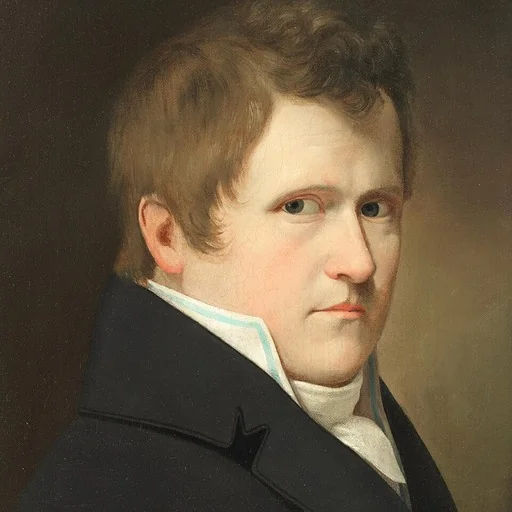
Artist
Christoffer Wilhelm Eckersberg
Christoffer Wilhelm Eckersberg (2 January 1783 – 22 July 1853) was a Danish painter.

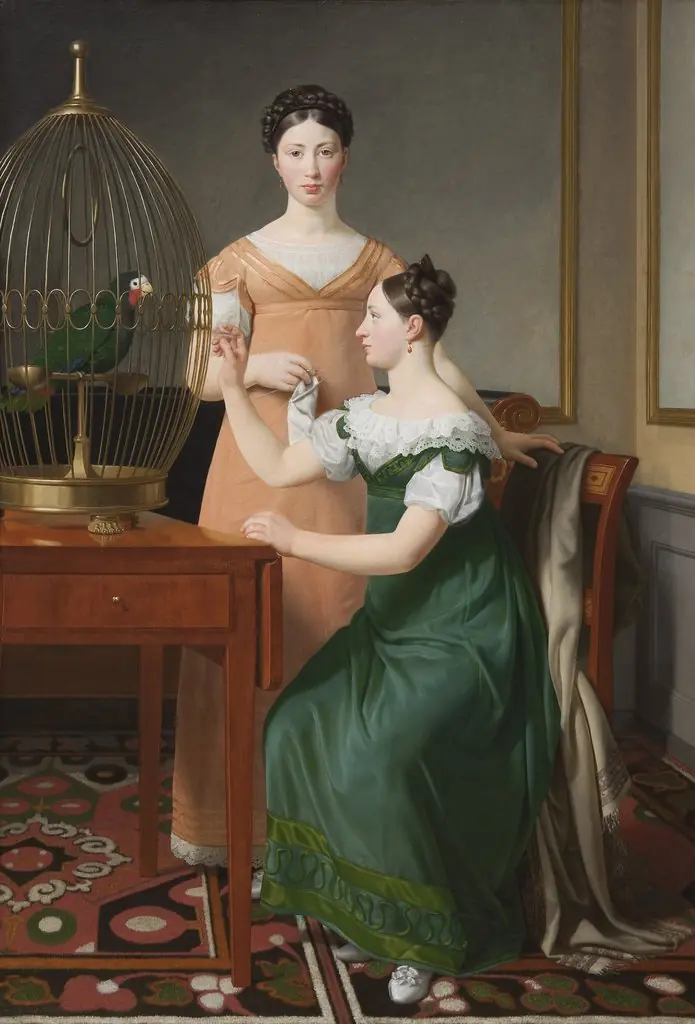 Bella and Hanna. The Eldest Daughters of M. L. Nathanson
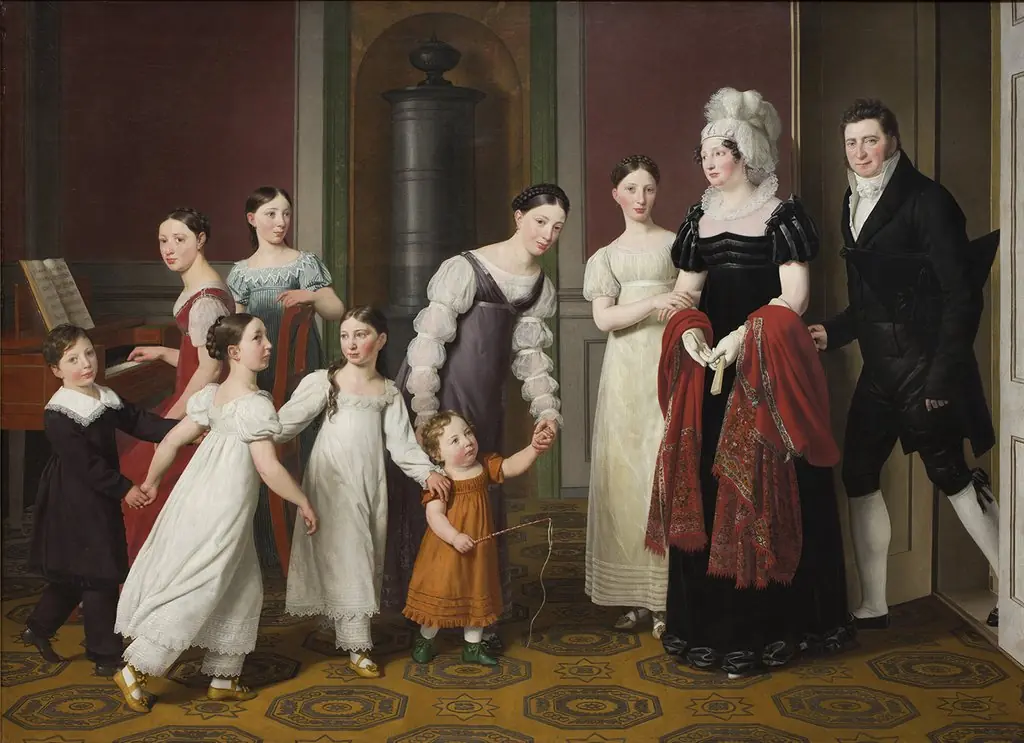 Familien Nathanson
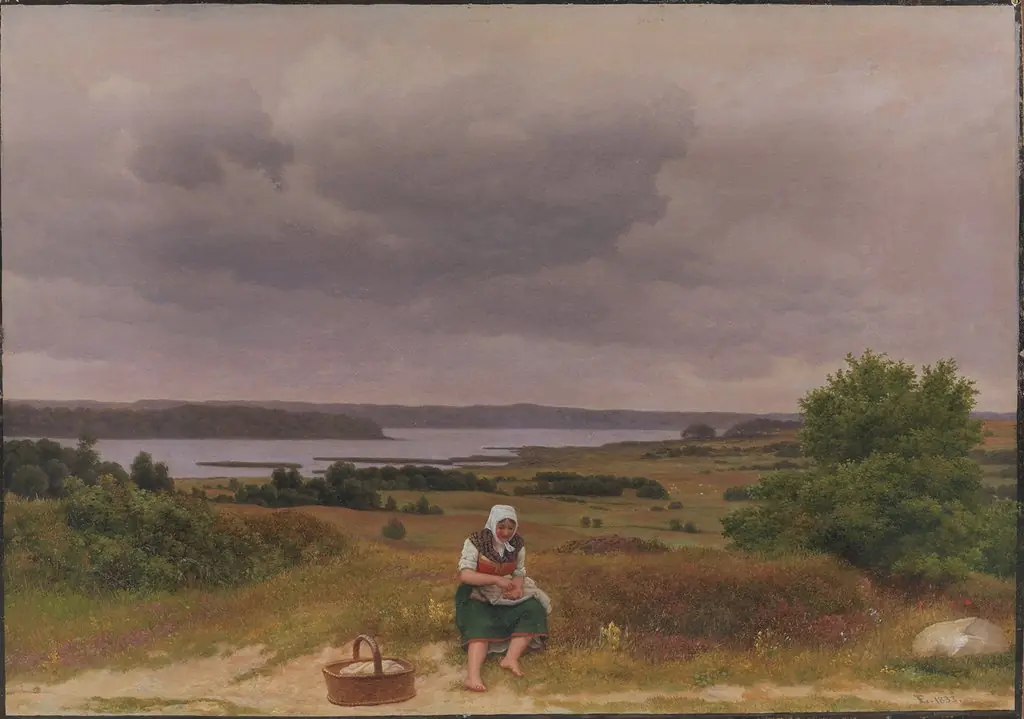 View of Lake Fure near Rudersdal, North Sealand.
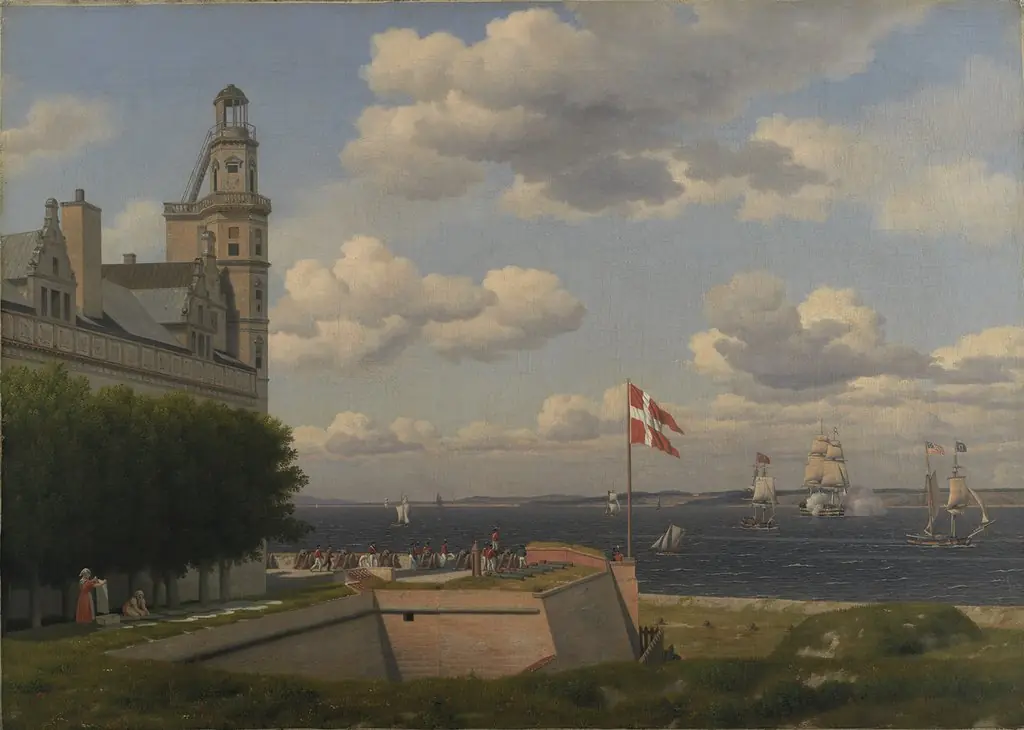 A View towards the Swedish Coast from the Ramparts of Kronborg Castle
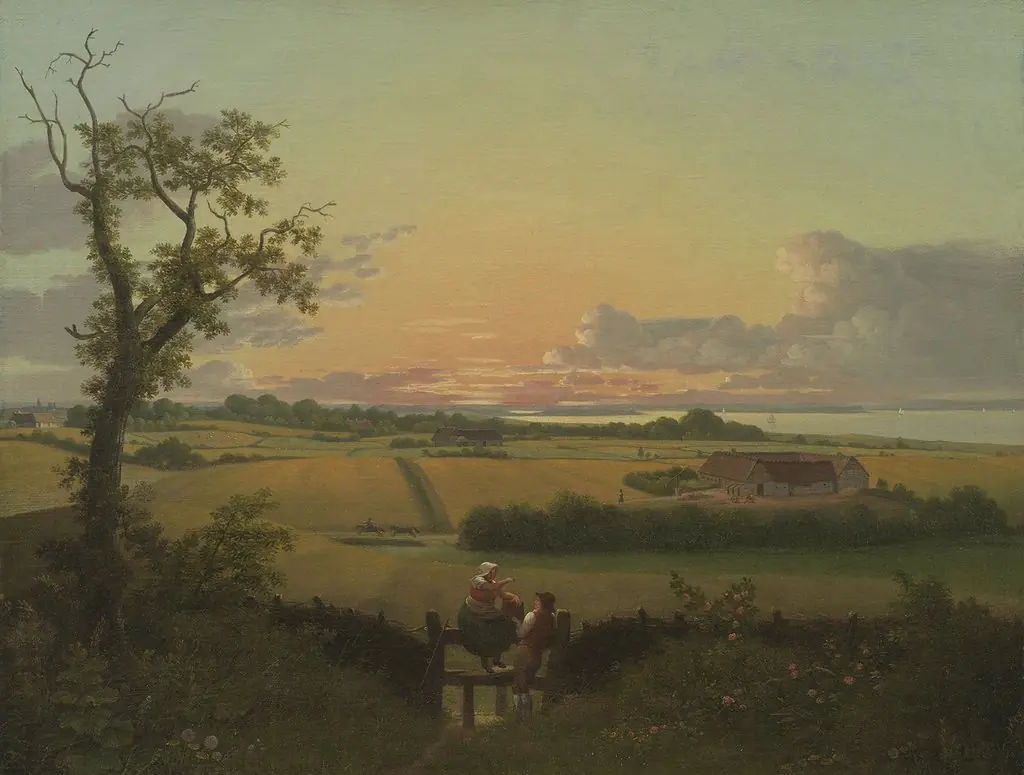 Landscape with a Stile. The Isle of Møn
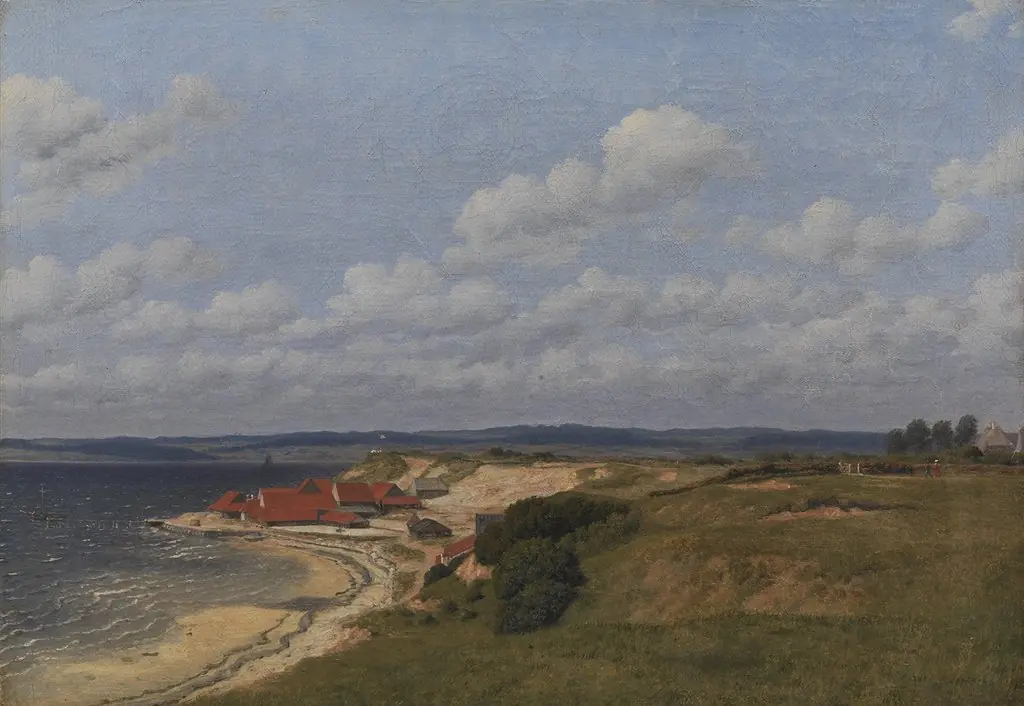 Renbjærg Tileworks by Flensburg Fiord
 View of the Cloaca Maxima, Rome
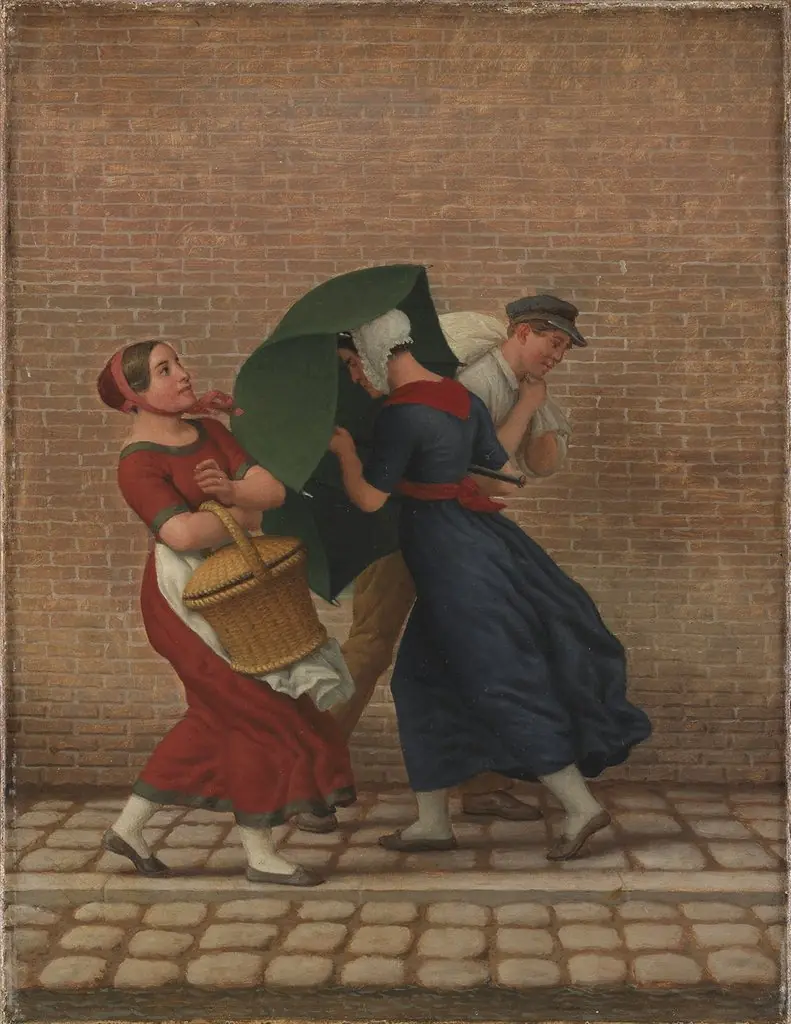 Street Scene in Windy and Rainy Weather