Artwork
The Marble Steps Leading to the Church of Santa Maria in Aracoeli in Rome
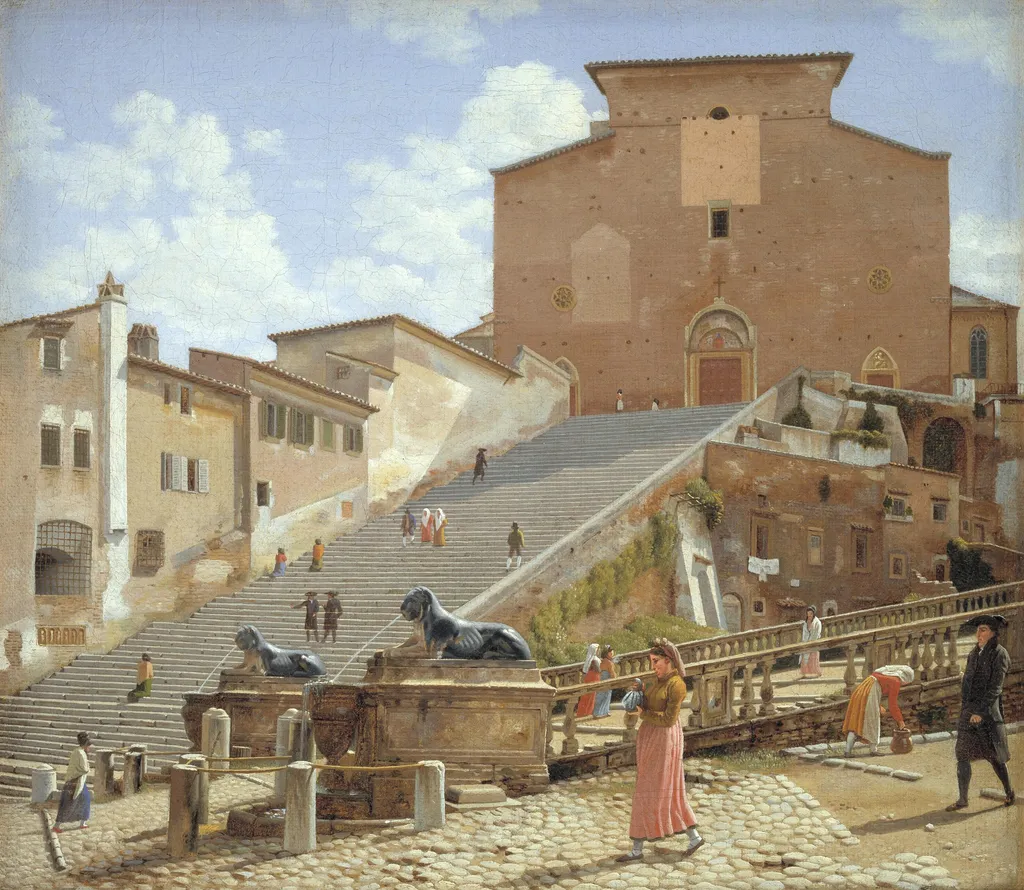
The Marble Steps Leading to the Church of Santa Maria in Aracoeli in Rome is an oil painting by the Neoclassicist artist Christoffer Wilhelm Eckersberg. It dates from 1814 and is held in the collection of the Statens Museum for Kunst. C.
About this work
Subject & Meaning
By choosing a low vantage point, Eckersberg organized the scene into firm vertical and diagonal lines, directing the eye upward toward the basilica.
Eckersberg's painting depicts the medieval basilica of Santa Maria in Aracoeli on the Capitoline Hill in Rome, approached from below along the celebrated marble staircase known as the Cordonata, flanked by its antique lion sculptures. The composition centers on the anonymous medieval settlement lining the ramp, its plastered walls weathered and flamelike, while the houses flanking the steps and the brick-decorated church facade still lie in shadow, indicating a mid-morning setting recorded across multiple outdoor sessions.
By choosing a low vantage point, Eckersberg organized the scene into firm vertical and diagonal lines, directing the eye upward toward the basilica. The flanking residential buildings, since demolished to make way for the monument to Victor Emanuel II, are documented here as part of the vanished medieval fabric of the Capitoline approach. Human figures, women, men, and statuary, animate the steps and square, lending scale to the architecture and to the Piazza del Campidoglio beyond.
The work represents Eckersberg's commitment to plein-air observation and to subjects in Rome that had not yet been widely treated, recording both a specific sacred site and the everyday medieval streetscape that once surrounded it.
History & Provenance
Christoffer Wilhelm Eckersberg painted this oil-on-canvas cityscape in 1814, during his three-year stay in Rome (1813–1816). He worked outdoors, a practice that was still innovative at the time, capturing the mid-morning light as the church façade remained in shadow. The composition was created from a deliberately low viewpoint, emphasizing vertical and diagonal lines.
The painting entered the collection of the Statens Museum for Kunst in Copenhagen in 1898 and remains there. It has been exhibited as part of "L'Âge d'or de la peinture danoise (1801–1864)."
Context
The work was shown in the 19th‑century Danish exhibition L’Âge d’or de la peinture danoise, signalling contemporary interest in Eckersberg’s Roman subjects. It entered the collection of Statens Museum for Kunst in 1898, where it remains on view.
Scholars regard the painting as a hallmark of Eckersberg’s plein‑air phase, noting the low viewpoint that creates strong diagonal and vertical lines and the careful rendering of morning light on the church façade. The composition has been cited as influential in the development of architectural painting in the Danish Golden Age.
Overview
C. W. Eckersberg's painting, The Marble Steps Leading to the Church of Santa Maria in Aracoeli in Rome, depicts the grand ascent to the medieval Roman church. Executed in oil on canvas between 1814 and 1816, this work captures a specific moment in time and place. The Danish artist meticulously rendered the architectural details and the play of light, establishing a strong sense of realism and presence within the urban landscape.
Technique & Style
Eckersberg adopted a low viewpoint, emphasizing the imposing scale of the steps and the church above. This perspective, combined with a precise arrangement of vertical and diagonal lines, lends structural integrity to the composition. The artist’s practice of painting outdoors allowed for a careful observation of mid-morning sunlight and the resulting shadows, contributing to the work's tangible quality and realistic depiction of textures and forms.
Own this work as a print
Artist & collection
Artist
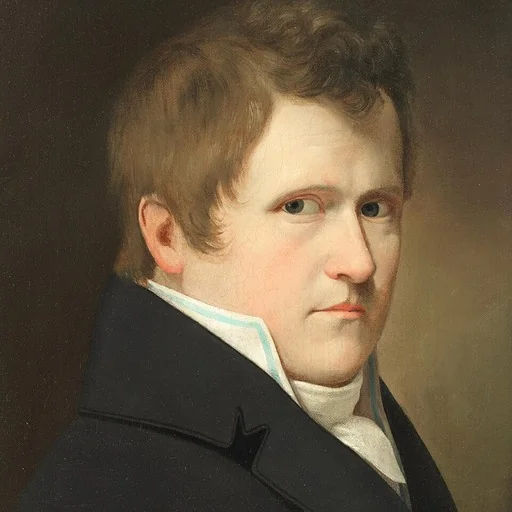
Christoffer Wilhelm Eckersberg
Christoffer Wilhelm Eckersberg (2 January 1783 – 22 July 1853) was a Danish painter.

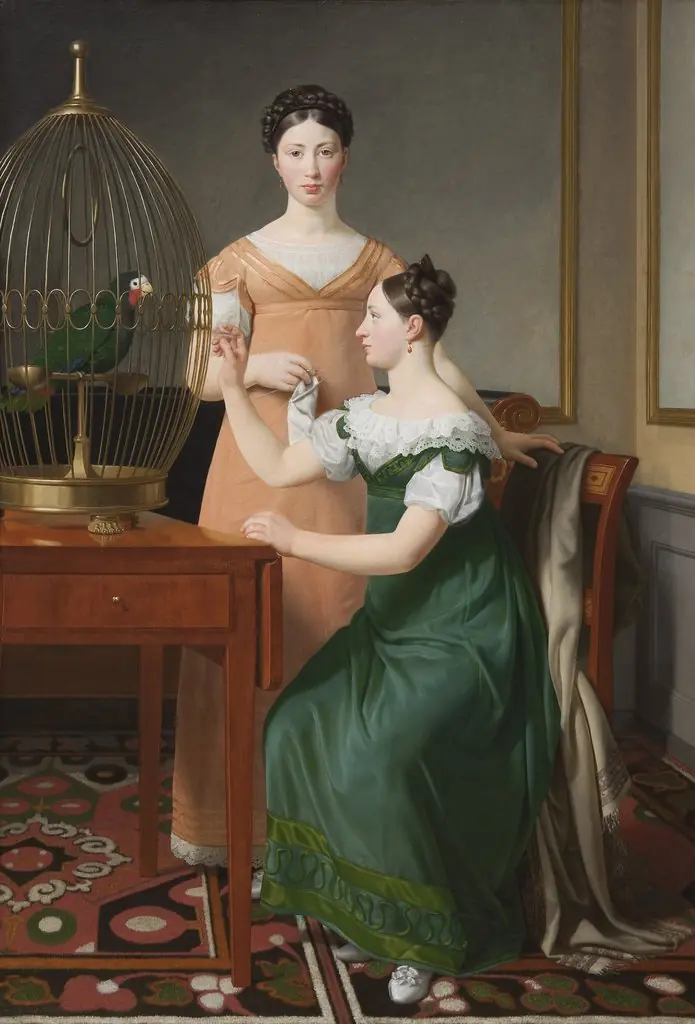 Bella and Hanna. The Eldest Daughters of M. L. Nathanson
 Familien Nathanson
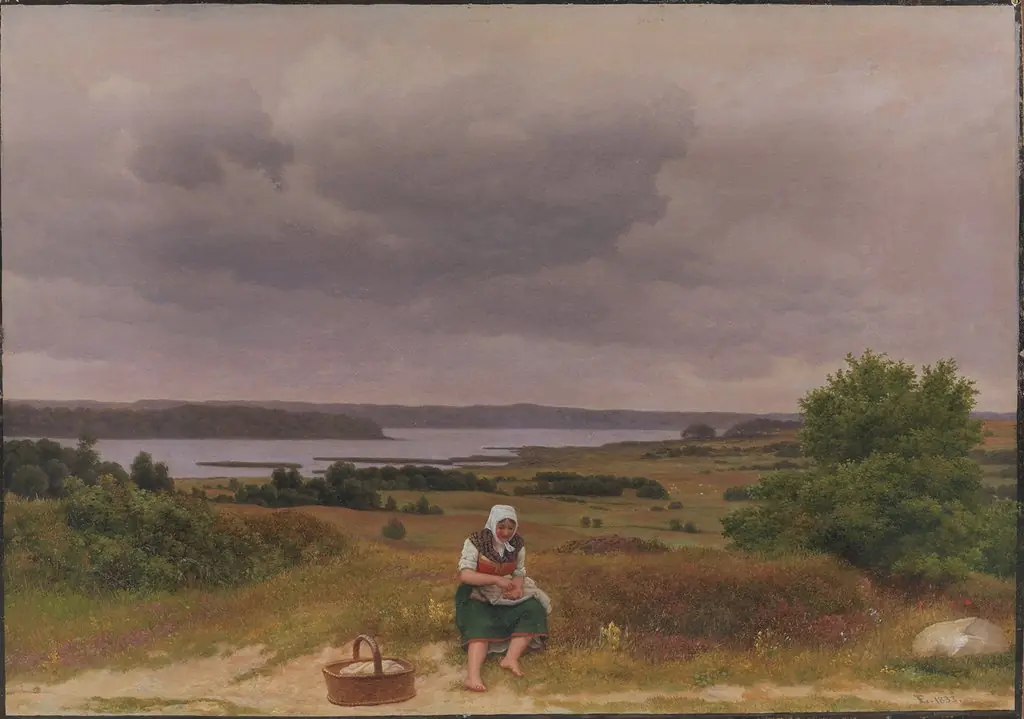 View of Lake Fure near Rudersdal, North Sealand.
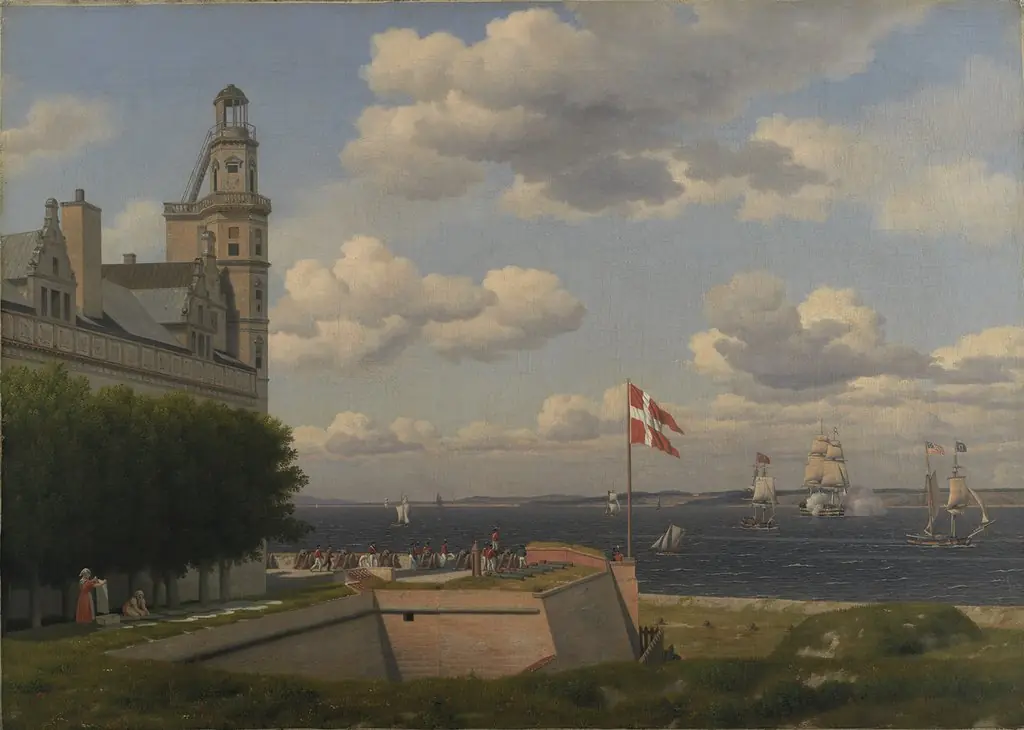 A View towards the Swedish Coast from the Ramparts of Kronborg Castle
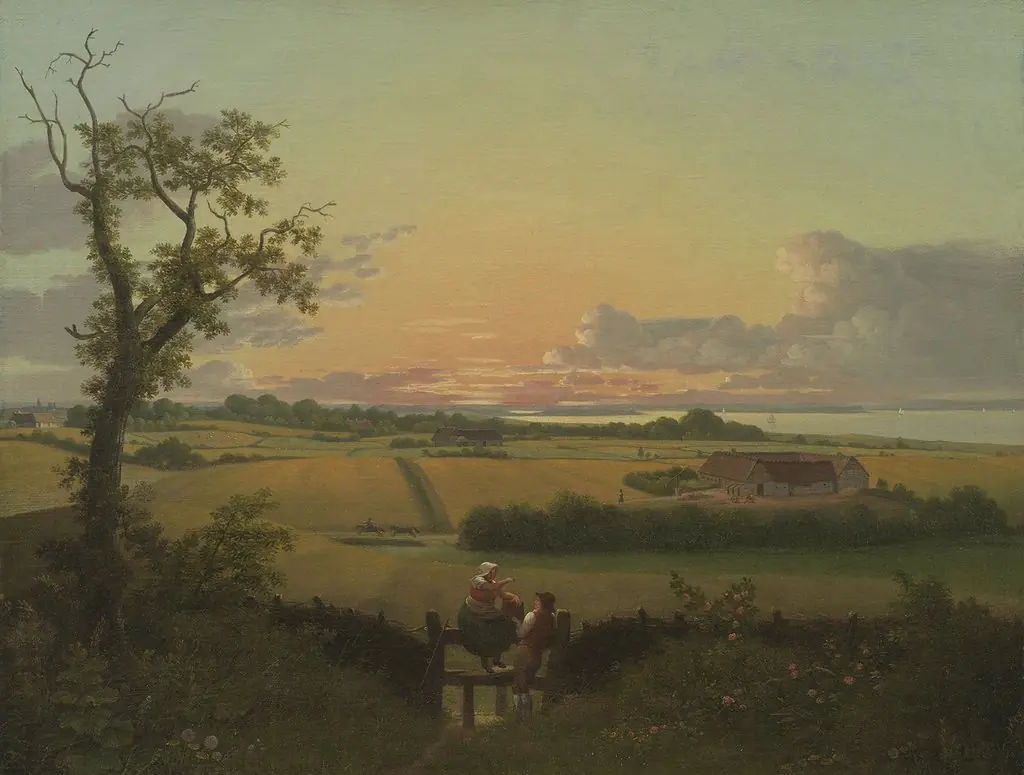 Landscape with a Stile. The Isle of Møn
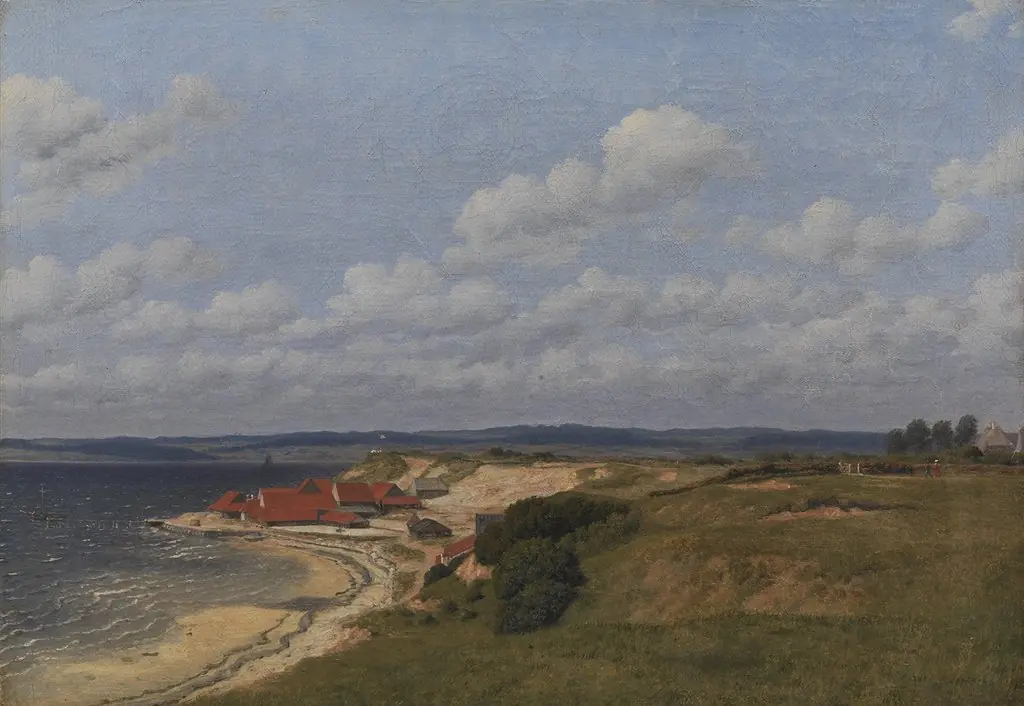 Renbjærg Tileworks by Flensburg Fiord
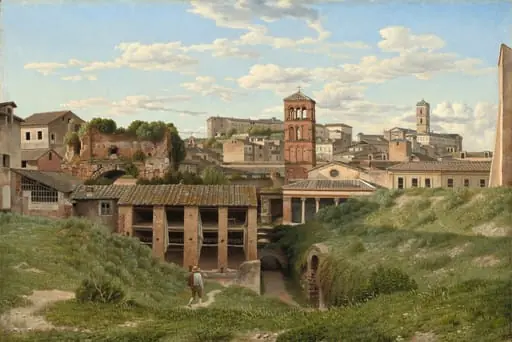 View of the Cloaca Maxima, Rome
 Street Scene in Windy and Rainy Weather
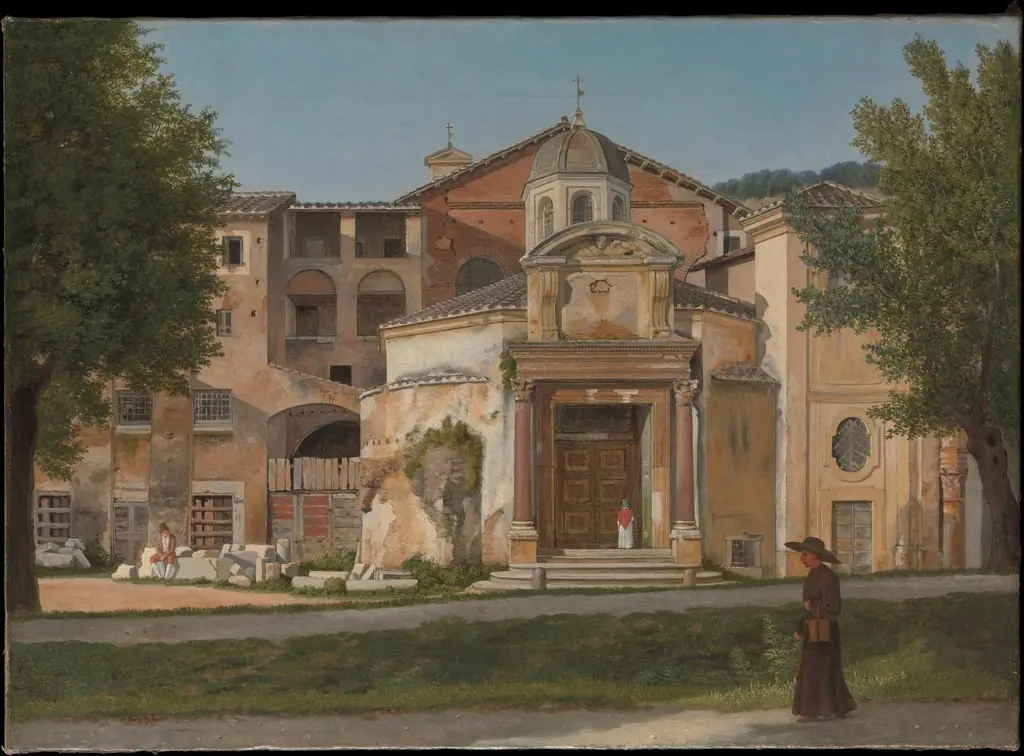 A Section of the Via Sacra, Rome (The Church of Saints Cosmas and Damian)
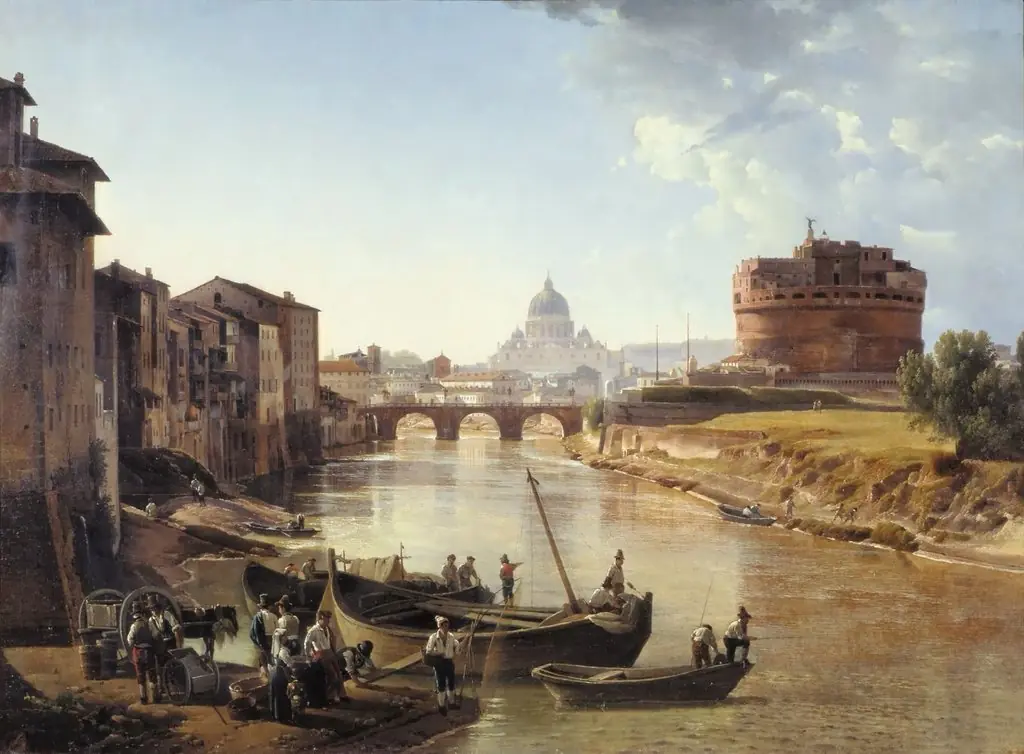 The New Rome. Castel Sant'Angelo
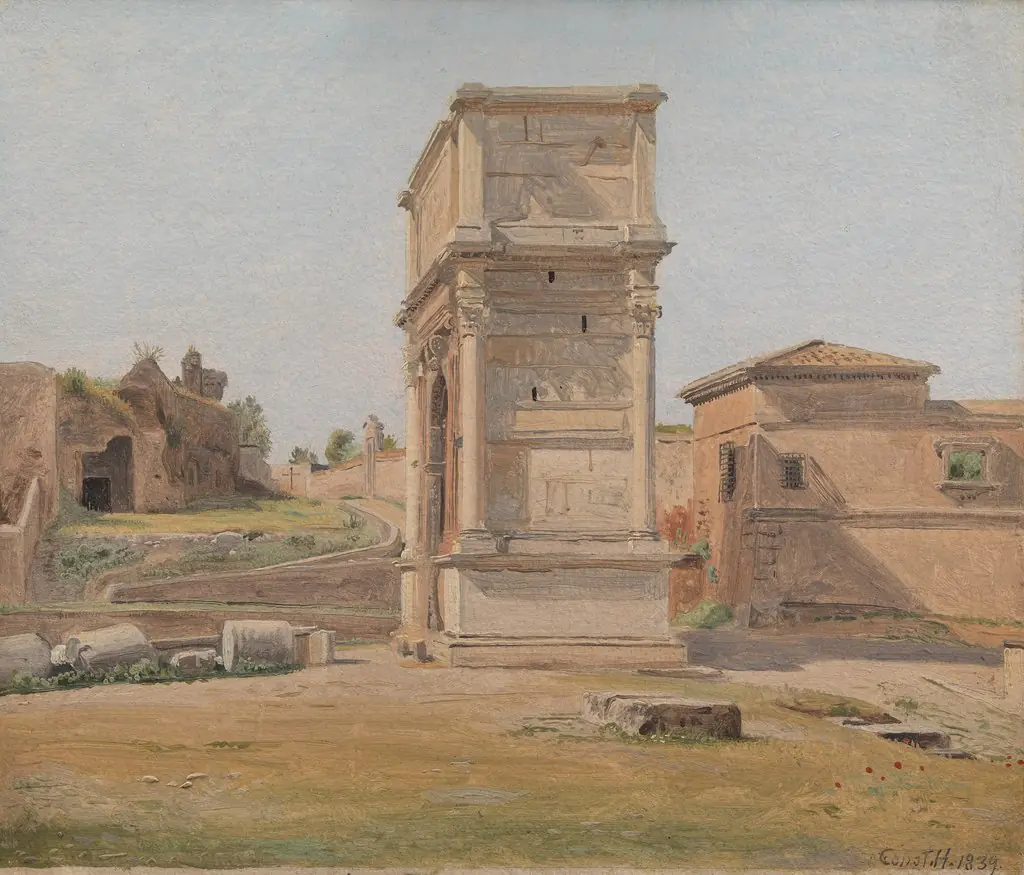 The Arch of Titus in Rome
 Sant'Agnese fuori le mura, Rome
 The Market Place in Priverno
 The Market Place in Priverno
 Torvet i Sulmona
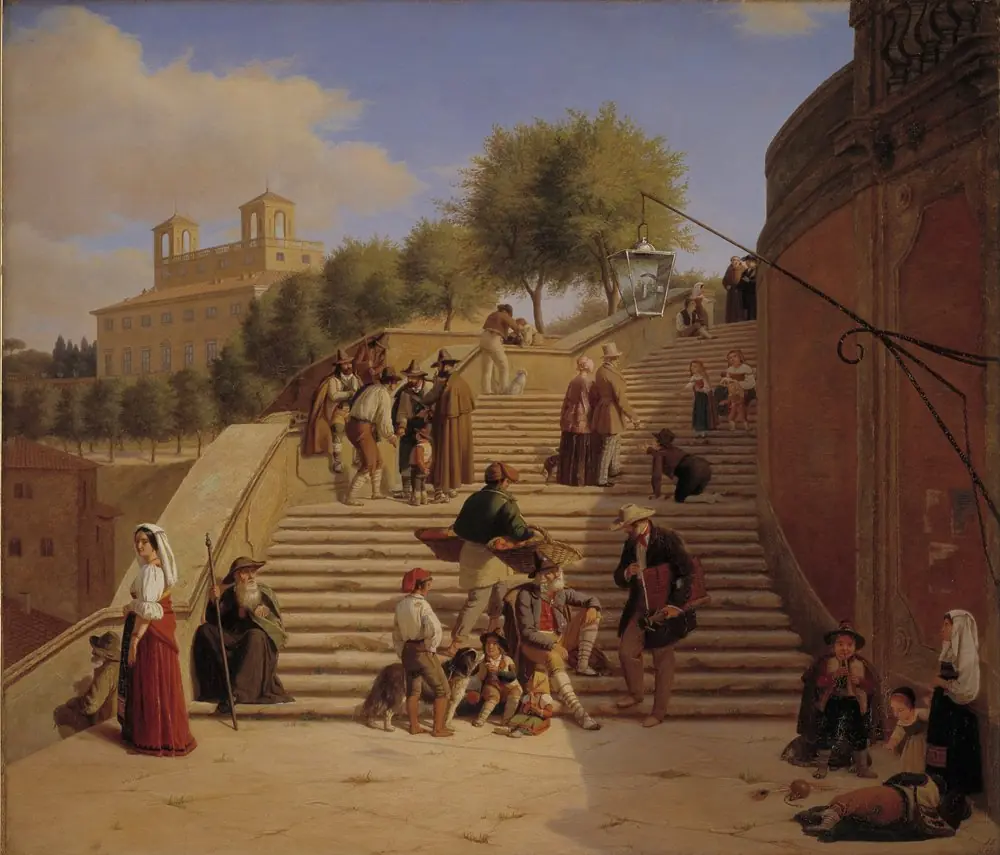 The Upper Flights of the Spanish Steps in Rome
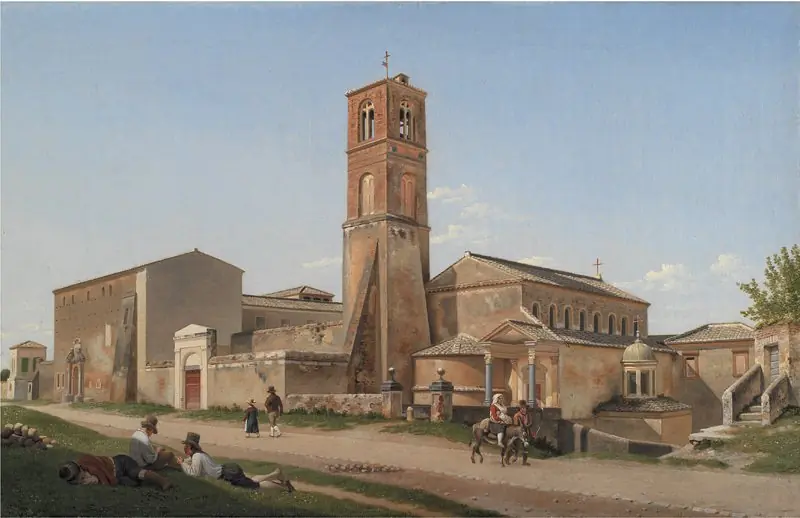 S. Agnese fuori le mura, Rome
 Porta Angelica and Part of the Vatican