Artwork
Wolf, fox and sheep
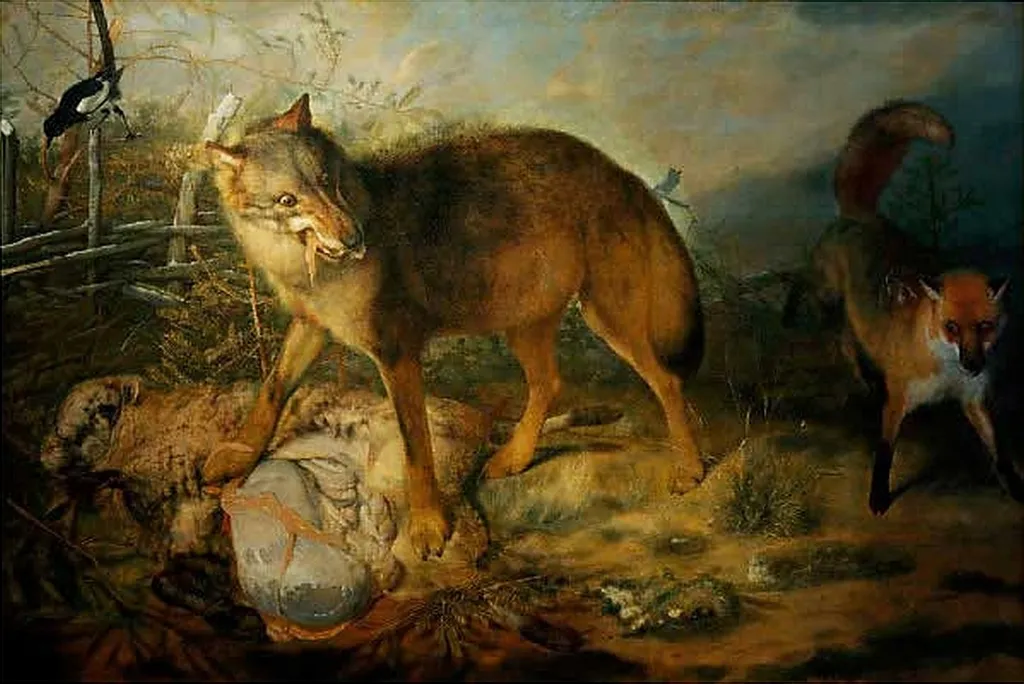
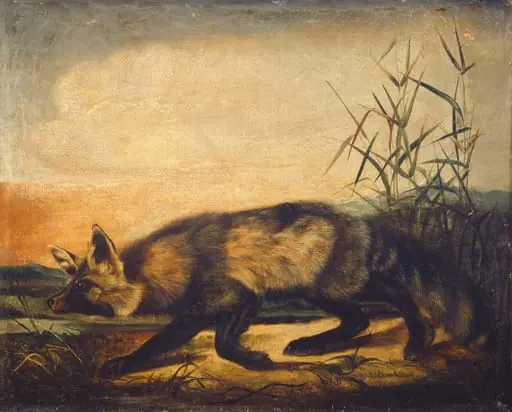
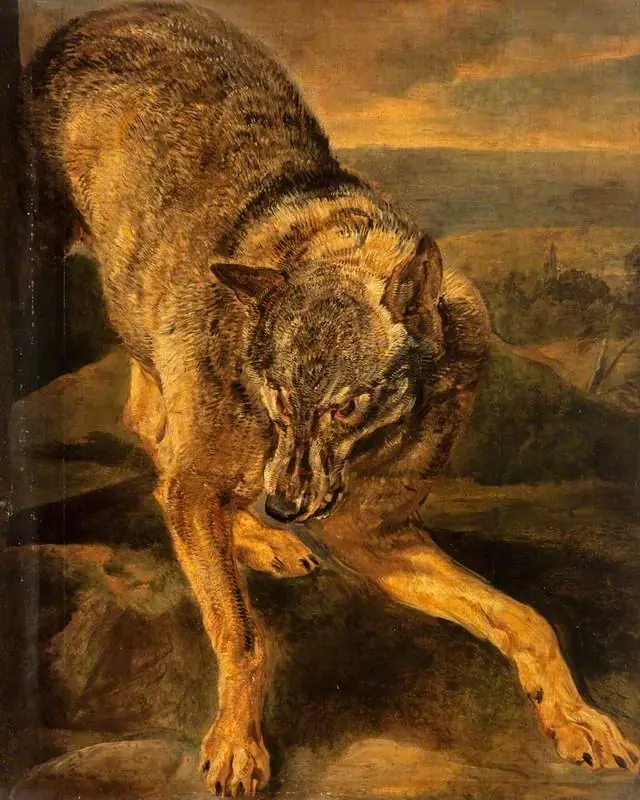
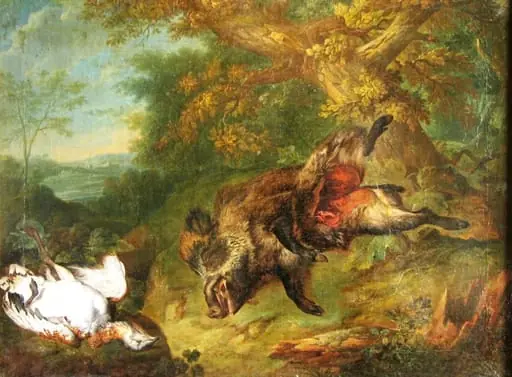
Wolf, fox and sheep is an oil painting by the Flemish Baroque painting artist Christopher Paudiß. It dates from 1666 and is held in the collection of the Bavarian State Painting Collections.
About this work
Overview
Painted in 1666 by Christoph Paudiß, a Bavarian artist trained in the circle of Rembrandt, this oil-on-canvas work presents a tense animal scene. It resides in the Alte Pinakothek in Munich and reflects the influence of Flemish Baroque traditions, particularly in its dramatic lighting and naturalistic rendering of creatures in motion.
Subject & Meaning
The painting captures a moment of violent encounter: a wolf has seized a sheep, its jaws open mid-attack, while a fox flees in the periphery. A bird sits motionless on a distant fence, observing. The composition suggests a moral allegory, predation, escape, and indifference, common in Baroque visual culture, though no explicit narrative is provided by the artist.
Technique & Style
Paudiß employs chiaroscuro to heighten the drama, contrasting the wolf’s shadowed form against the dim landscape. Thick impasto builds texture in the wolf’s fur and the sheep’s wool, lending physicality to the struggle. The fox’s motion is suggested through loose brushwork, while the background remains muted, directing focus to the central conflict.
History & Provenance
Created during Paudiß’s mature period, the painting entered the Alte Pinakothek’s collection in the 19th century. Its attribution has remained consistent, though it was never widely exhibited outside Germany. No early records of commission or ownership are known, suggesting it may have been a private study or genre piece rather than a commissioned work.
Context
In mid-17th-century southern Germany, artists often turned to animal subjects to explore themes of nature’s brutality and moral order. Paudiß’s training under Rembrandt’s followers informed his handling of light and emotion, aligning his work with broader Northern European traditions that favored psychological realism over idealized form.
Legacy
Though not among Paudiß’s most reproduced works, the painting exemplifies the quiet intensity of regional Baroque painting outside major centers like Amsterdam or Antwerp. It remains a testament to the period’s interest in natural observation, rendered with emotional restraint rather than theatrical flourish.
Artist & collection
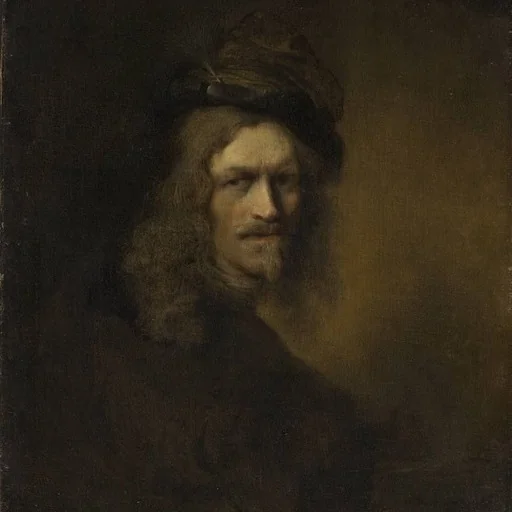
Artist
Christoph(er) Paudiß (1630 in Lower Saxony – 1666 in Freising, Upper Bavaria) was a Bavarian Baroque painter and a student of Rembrandt van Rijn.