Artwork
The Boar Hunt
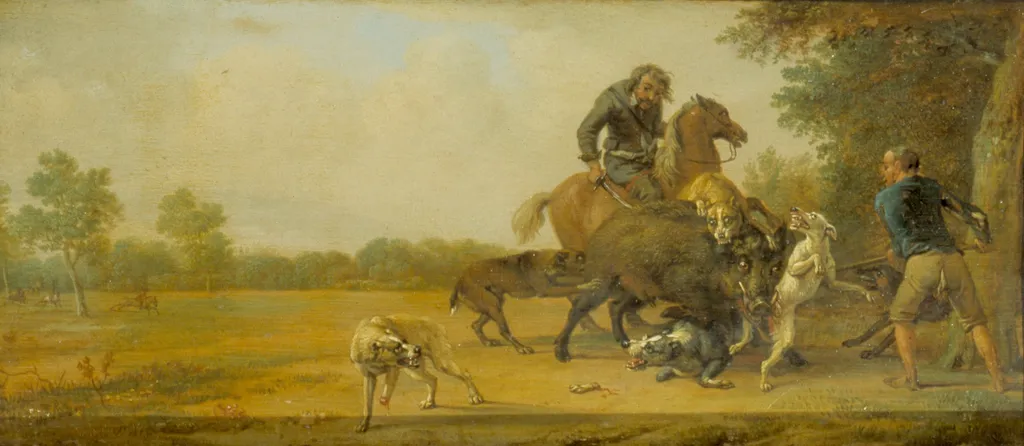
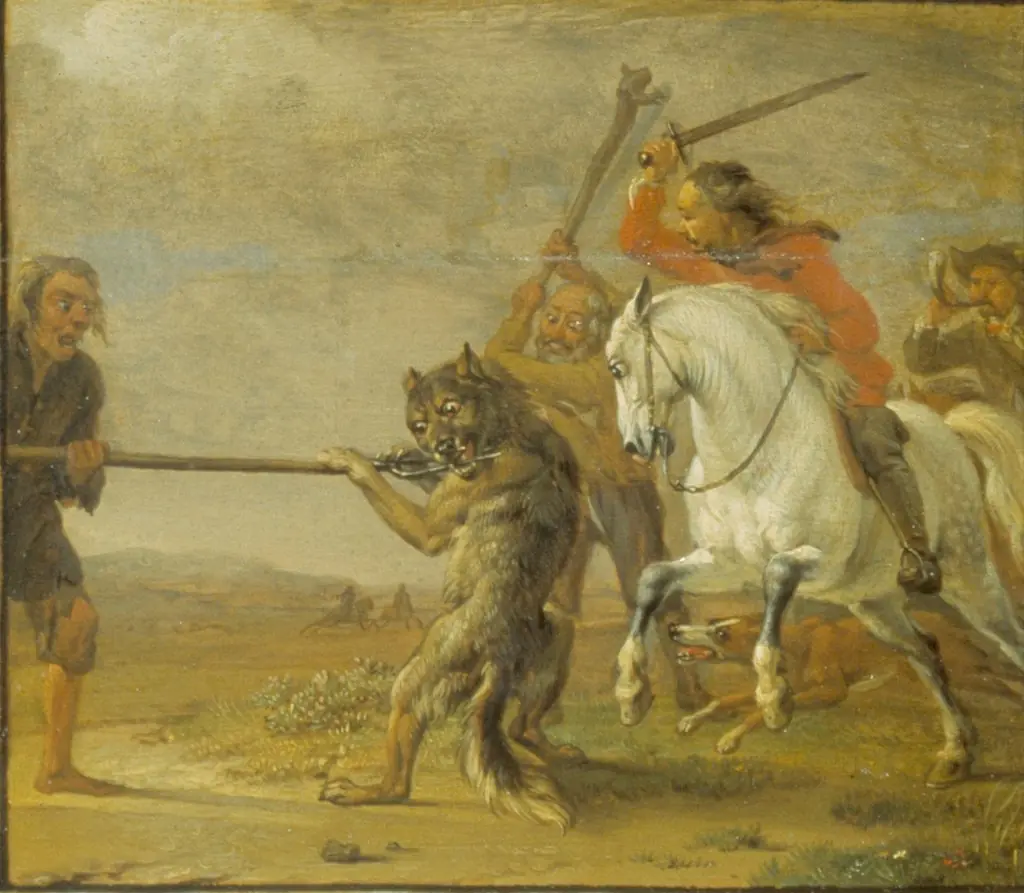
The Boar Hunt is an oil painting by the Dutch Golden Age artist Paulus Potter. It dates from 1650 and is held in the collection of the Hermitage Museum.
About this work
Subject & Meaning
The boar, identified in the iconographic record as Sus scrofa, is shown at the center of the action, surrounded by hunters and dogs in a coordinated chase.
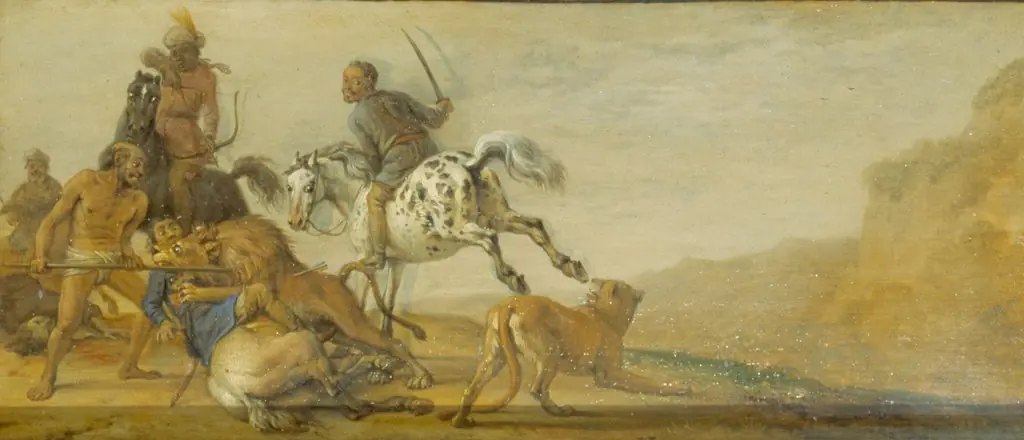
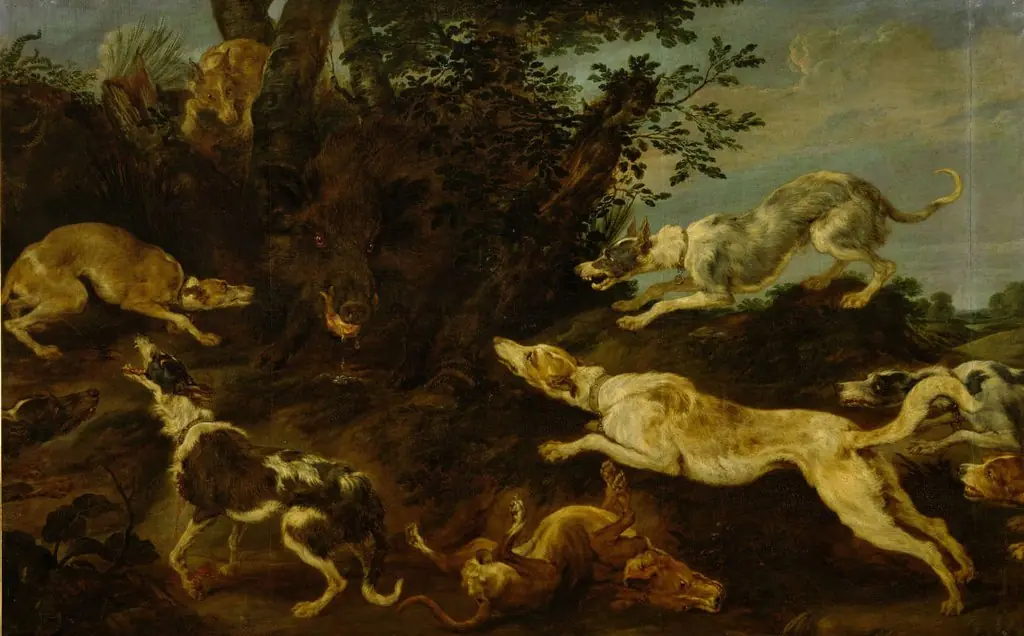
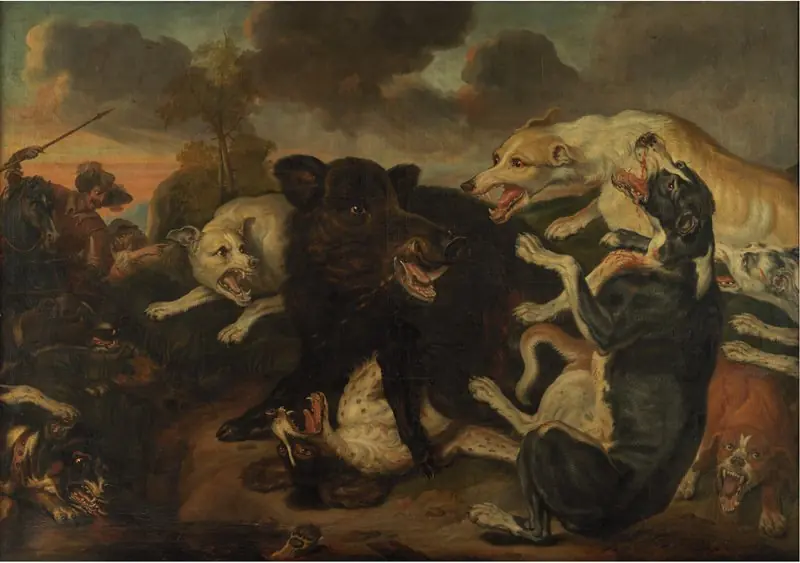
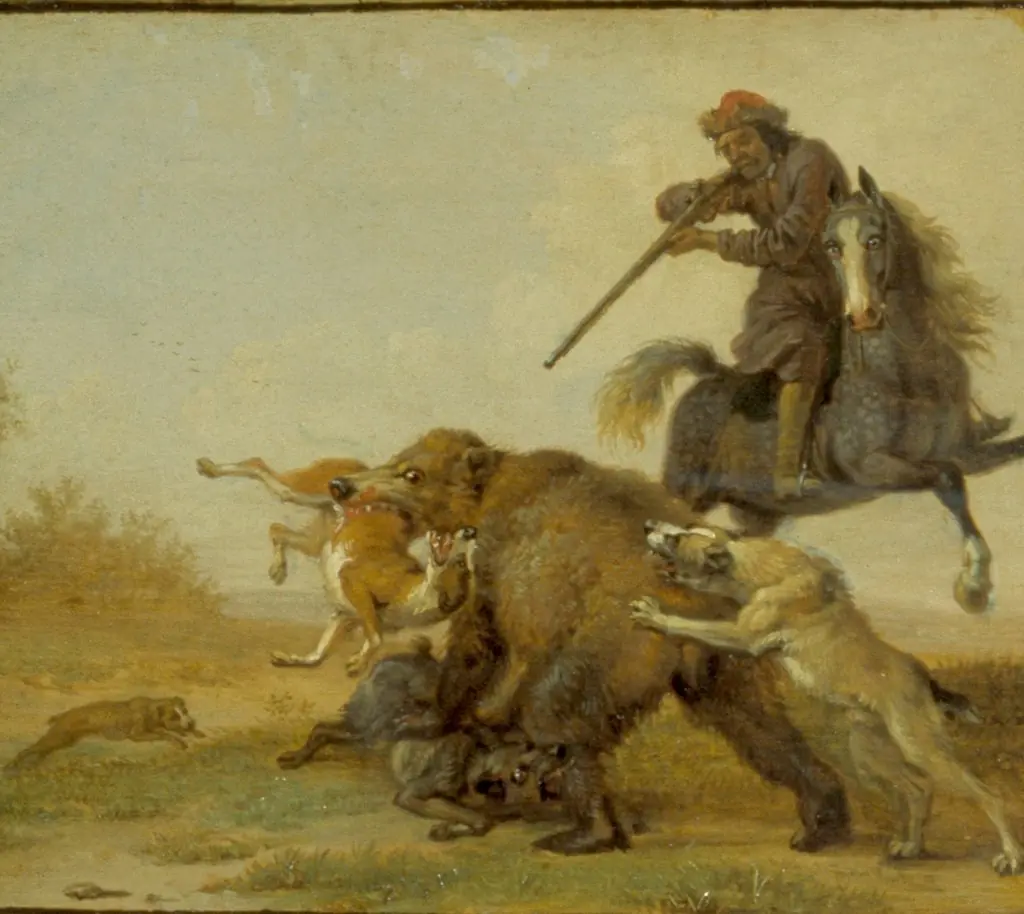
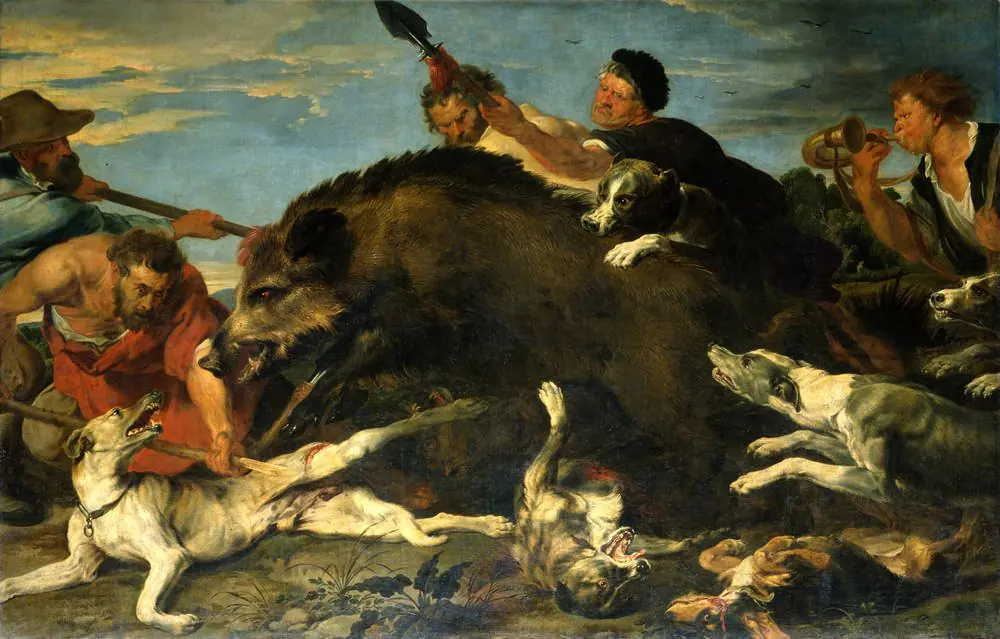
The Boar Hunt depicts a violent hunting encounter between mounted hunters and a wild boar, rendered as a genre scene in oil on panel. The composition shows men on horseback thrusting spears at the animal, accompanied by hounds that pursue and harry the quarry. The boar, identified in the iconographic record as Sus scrofa, is shown at the center of the action, surrounded by hunters and dogs in a coordinated chase.
In seventeenth-century Dutch genre painting, scenes of the boar hunt carried layered meanings. On a literal level, the subject celebrated the courage, horsemanship, and pack-handling skills required to bring down dangerous game. On a symbolic level, the boar hunt was a traditional motif drawn from classical and medieval imagery, often read as a test of human valor against a ferocious beast, and as an allegory of the struggle between order and untamed nature.
Technique & Style
Executed in 1650, The Boar Hunt is an oil painting applied on a panel support. The work measures 17.3 cm in height and 39.5 cm in width, characterizing it as a small-scale composition. Stylistically, the piece functions as a genre scene, capturing a dynamic hunting narrative.
The imagery features a complex arrangement of figures, including a man, a horse, and a hound engaged in the pursuit of a wild boar, with a spear visible within the action. This compact format and subject matter align with the artist's classification within genre art.
History & Provenance
The Boar Hunt is a 1650 oil painting on panel by Dutch artist Paulus Potter, created as a genre hunting scene depicting a boar, a hound, a horse, a spear, and a rider. The work is executed in oil paint and measures 39.5 cm in width by 17.3 cm in height. It entered the collection of the Hermitage Museum, where it remains on display, and no earlier ownership records are documented before its acquisition.
The painting’s creation reflects Potter’s interest in contemporary hunting subjects and demonstrates the technical conventions of Dutch genre painting in the mid‑17th century.
The painting is held in the collection of the State Hermitage Museum in Saint Petersburg, where it is inventoried as accession number GE-1392.
It was exhibited at the museum’s Dutch Masters galleries in 2019 as part of the reinstallation of the Dutch Golden Age holdings.
Legacy
The Boar Hunt by Paulus Potter, painted in 1650, is part of the Hermitage Museum's collection, where it is cited as a representative example of Dutch Golden Age genre scenes featuring animal subjects. Its oil‑on‑panel dimensions of about 17.3 cm by 39.5 cm are recorded in the museum's catalogue, underscoring Potter's technical precision. The work is frequently referenced in studies of 17th‑century hunting imagery and has contributed to Potter's reputation as a leading painter of pastoral and sporting themes.
Its inclusion in a major public collection has helped sustain scholarly interest in the piece as a benchmark for compositional balance and naturalistic detail.
Overview
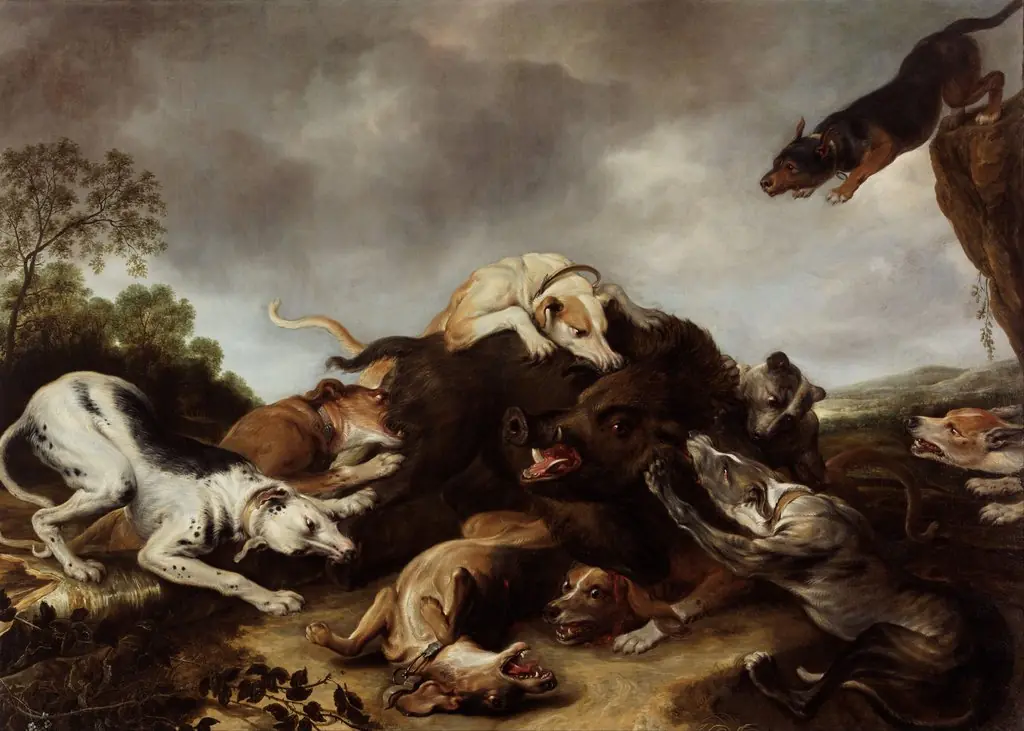
Paulus Potter, a prominent Dutch painter of the 17th century, created The Boar Hunt around 1650. This oil painting exemplifies his specialized focus on animal subjects within natural settings. Executed during the Dutch Golden Age, the work captures a dramatic confrontation between a wild boar, a pack of hounds, and human hunters, showcasing Potter's skill in depicting dynamic animal action.
Context
Created during the Dutch Golden Age, a period of flourishing art and culture, The Boar Hunt reflects a contemporary interest in genre scenes and detailed depictions of nature. Potter, despite his brief career, produced approximately 100 works before his death at age 28 from tuberculosis. His dedication to animal portraiture and landscape painting established him as a significant figure in 17th-century Dutch art, even with his limited lifespan.
Artist & collection
Artist
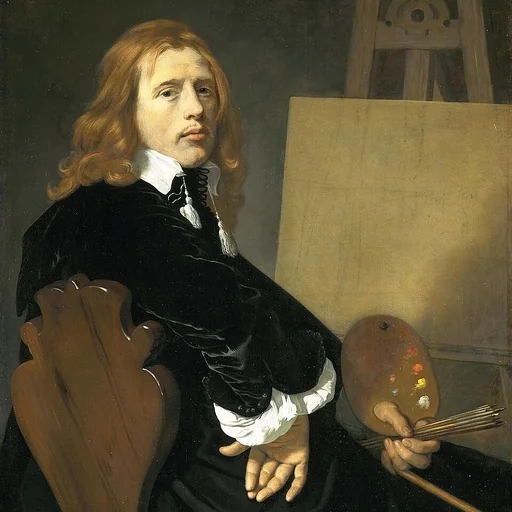
Paulus Potter (Dutch pronunciation:; 20 November 1625 (baptised) – 17 January 1654 (buried)) was a Dutch painter who specialized in landscapes featuring animals, often from a low vantage point.