Artwork
Frontispiece to "The Laws and Acts of Parliament Made by King James I ..."
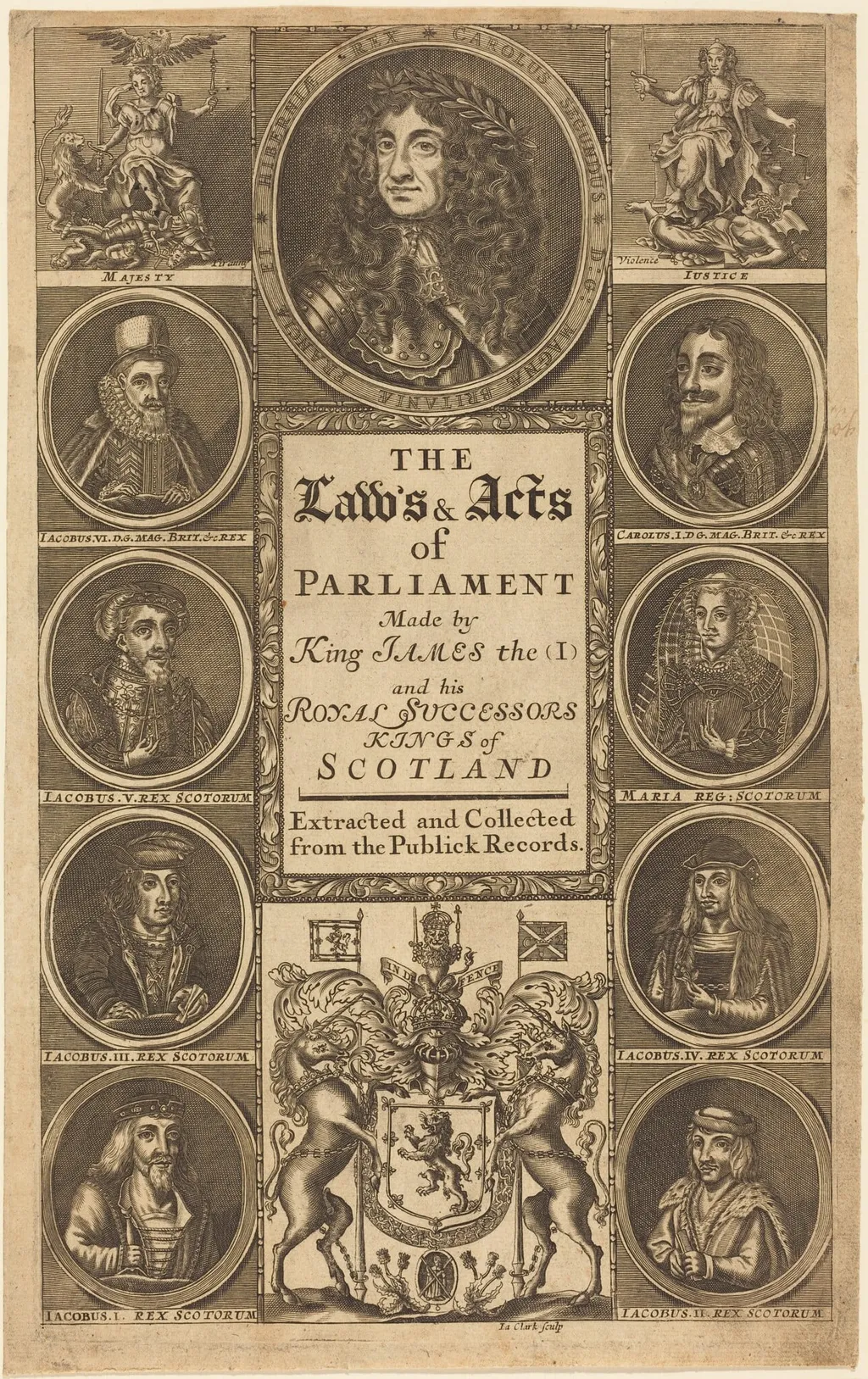
Frontispiece to "The Laws and Acts of Parliament Made by King James I ..." is an ink print by the Baroque artist James Clark. It dates from 1705 and is held in the collection of the National Gallery of Art.
About this work
Overview
The frontispiece for the volume titled The Laws and Acts of Parliament Made by King James I is an early 18th‑century engraving executed by James Clark in 1705. Designed as the opening illustration for the legal compilation, the print serves a decorative and authoritative function, framing the text with a complex arrangement of heraldic and allegorical elements.
Subject & Meaning
Central to the composition is a large portrait of a man with curly hair, likely representing King James I, set within an ornate frame.
Central to the composition is a large portrait of a man with curly hair, likely representing King James I, set within an ornate frame. Surrounding him are seven circular medallions depicting successive Scottish monarchs, while a coat of arms occupies the lower centre. Allegorical figures labeled "Majesty," "Justice," and "Violence" accompany symbols such as a lion and a crown, suggesting the monarch’s sovereign power and the dual nature of law.
Technique & Style
Clark employed the traditional line engraving method, using fine incised lines to render dense clusters of faces, heraldic devices, and symbolic motifs. The monochrome palette emphasizes contrast between heavily cross‑hatched areas and delicate stippling, creating a sense of depth and formality typical of early‑modern British printmaking.
History & Provenance
The print was produced to accompany the 1705 edition of the parliamentary statutes, a project intended to document the legislative output of James I and his successors. As a frontispiece, it would have been bound to each copy of the volume, circulating among legal scholars, government officials, and collectors of printed law.
Context
Issued shortly after the Union of England and Scotland (1707), the engraving reflects ongoing interest in the distinct lineage of Scottish royalty and the legal continuity between the two kingdoms. The inclusion of multiple Scottish monarchs underscores the historical legitimacy claimed by the new British state.
Legacy
While not widely reproduced beyond its original binding, the frontispiece exemplifies the role of print illustration in early modern statecraft, where visual authority reinforced textual law. It remains a reference point for scholars studying the intersection of heraldry, print technology, and political propaganda in the early 1700s.
Own this work as a print
Artist & collection

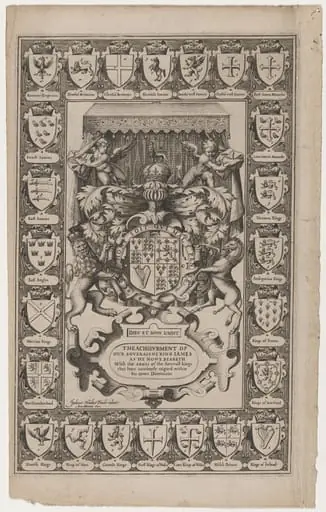 Title Page for the Achievement of our Soveraigne King James
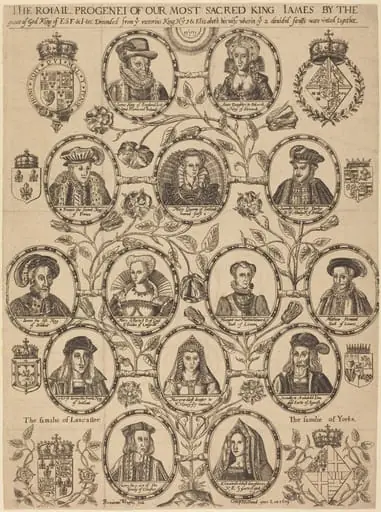 Royal Progeny of King James
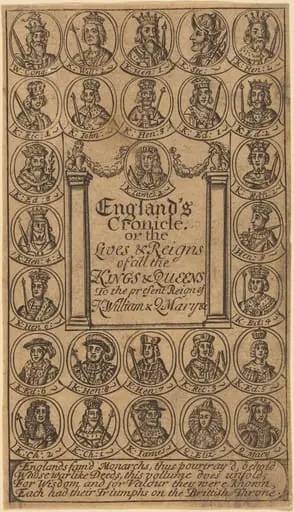 Frontispiece
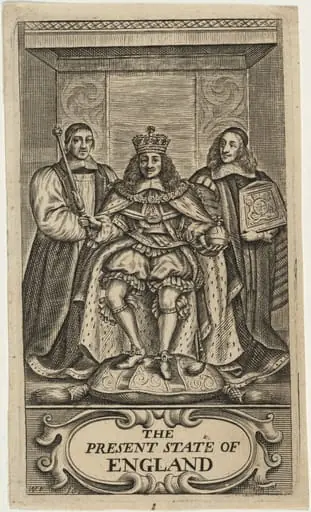 Title Page to The Edward Chamberlayne, The Present State of England
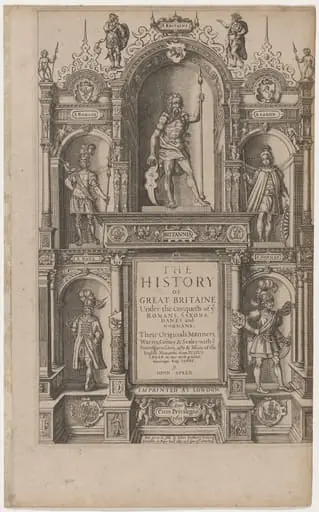 Title Page to "The History of Great Britaine" by John Speed
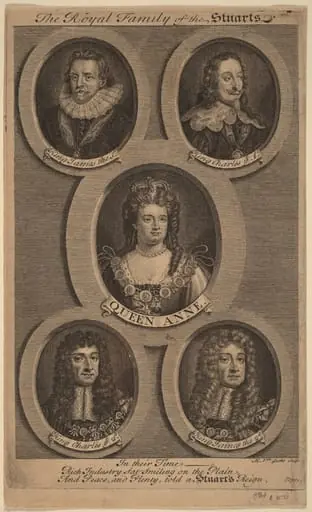 The Royal Family of the Stuarts
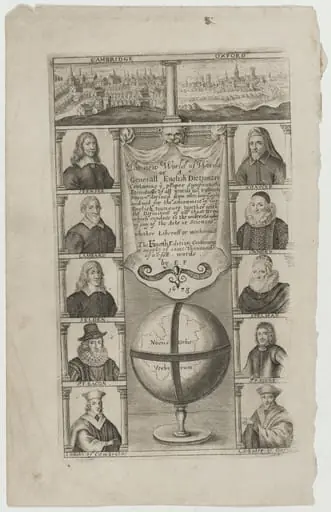 Title Page to The New World of Words or A General English Dictionary
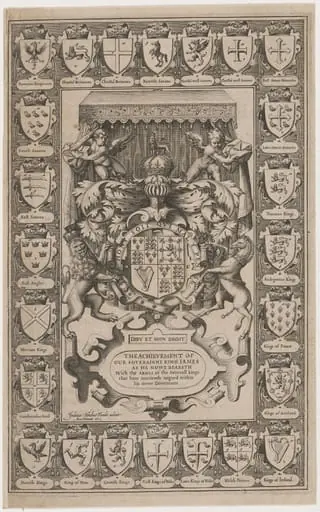 Title Page for the Achievement of our Soveraigne King James
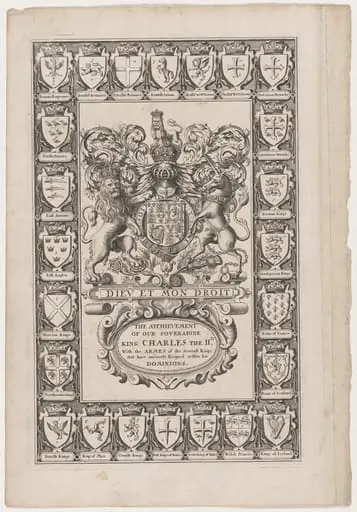 Title Page for the Achievement of Our Sovereign King Charles the Second
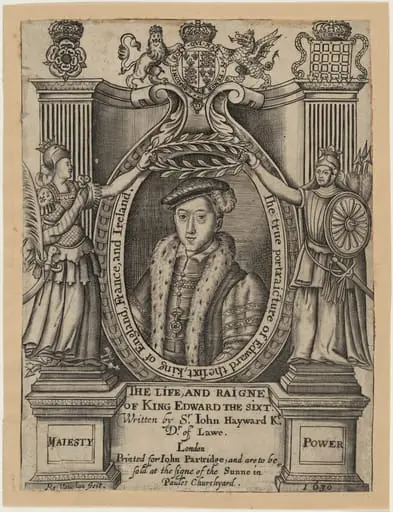 Title Plate to John Hayward, Life and Reigne of King Edward the Sixth
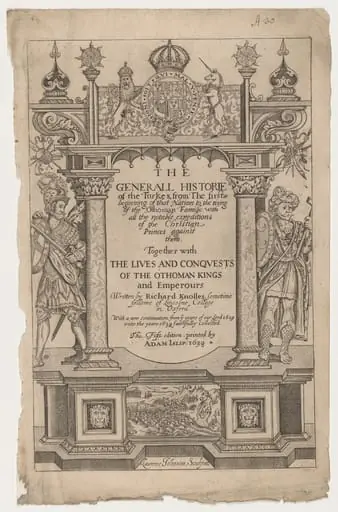 Title Page for R. Knolles Generall Historie of the Turkes
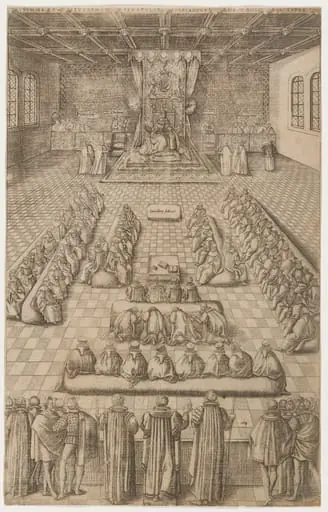
- James I in Parliament