Artwork
The Triumph of Saint Augustine
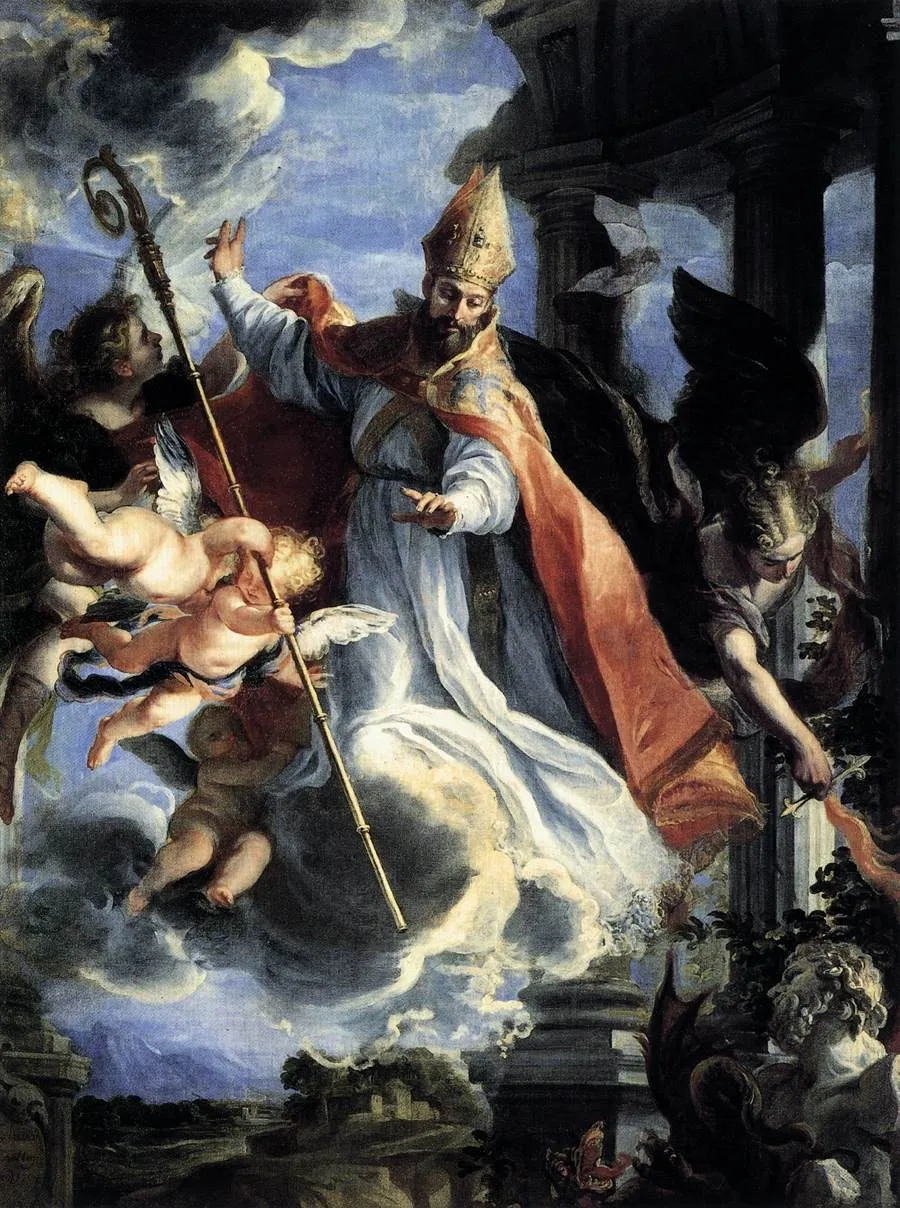
The Triumph of Saint Augustine is an oil painting by the Early Baroque Italian artist Claudio Coello. It dates from 1664 and is held in the collection of the Museo del Prado.
About this work
Subject & Meaning
The iconography includes specific attributes associated with the saint, namely a sword and a crosier, which are rendered alongside the main figure.
Created in 1664 by Claudio Coello, this religious painting depicts the figure of Augustine of Hippo as its central subject. The iconography includes specific attributes associated with the saint, namely a sword and a crosier, which are rendered alongside the main figure. These elements serve to identify the protagonist and symbolize his ecclesiastical authority and spiritual legacy within the context of the work.
The composition functions as a visual representation of the saint's triumph, utilizing these traditional symbols to convey his significance in religious history.
Technique & Style
Executed in 1664, The Triumph of Saint Augustine is an oil painting on canvas. The work measures 271 cm in height and 203 cm in width. As a piece of religious art, the composition depicts Augustine of Hippo alongside symbolic attributes, specifically a sword and a crosier.
The handling of the medium and the formal arrangement serve to highlight these iconographic elements within the large-scale format.
History & Provenance
The Triumph of Saint Augustine is an oil-on-canvas painting created by the Spanish artist Claudio Coello in 1664. This religious work depicts the figure of Augustine of Hippo accompanied by a sword and crosier. The piece measures 271 cm in height and 203 cm in width.
Originally associated with the Museo de la Trinidad, the artwork is currently held in the collection of the Museo del Prado.
The Triumph of Saint Augustine is currently held in the collection of the Museo del Prado in Madrid. The work was formerly part of the Museo de la Trinidad before its transfer to the Prado. Painted in 1664, this oil on canvas religious work depicts Saint Augustine alongside a sword and crosier. The painting measures 271 cm in height and 203 cm in width.
No specific exhibition history or accession numbers are provided in the available sources. The work remains a permanent fixture of the Prado's holdings, having originated from the earlier Trinidad collection.
Context
The Triumph of Saint Augustine is a 1664 oil painting by Claudio Coello depicting Augustine of Hippo with a sword and crosier. It belongs to the religious genre and is housed in the Museo del Prado as part of their collection. Coello's work reflects Baroque religious art traditions within 17th-century Spanish painting, situating this piece within his broader artistic practice and the devotional art of the period.
Scholarship on the work emphasizes its technical execution and spiritual subject matter, consistent with Coello's role in Spanish Baroque art. The painting's composition and iconography align with contemporary religious art conventions, contributing to understanding Coello's artistic legacy within the broader context of Iberian Baroque painting and religious visual culture.
Overview
Claudio Coello’s Triumph of Saint Augustine (1664) is an oil on canvas executed during the late Spanish Baroque. The work presents a solemn, robed figure elevated amid a stormy sky, illuminated by a dramatic contrast of light and shadow. It resides in the Museo del Prado, representing one of Coello’s mature religious commissions.

Artist & collection
Artist
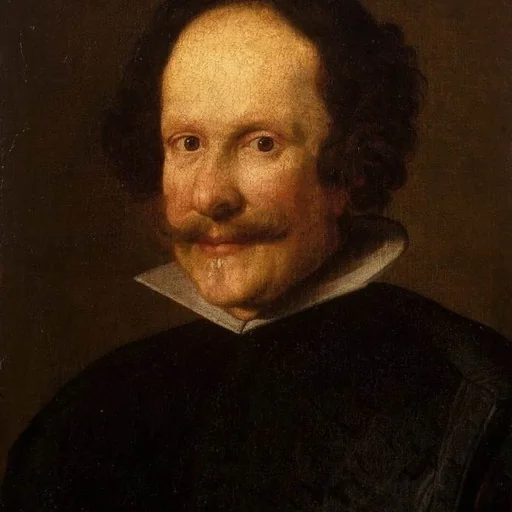
Claudio Coello (2 March 1642 – 20 April 1693) was a Spanish-Portuguese Baroque painter.

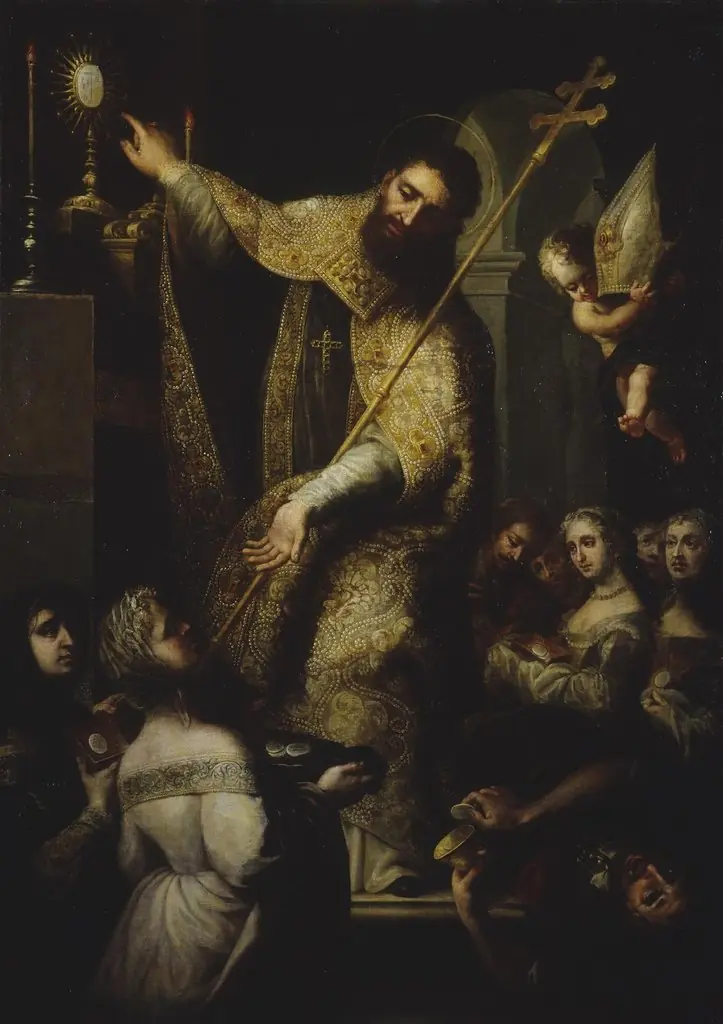 Triumph of St Norbert
 Madonna and Child Appearing to Saint Philip Neri
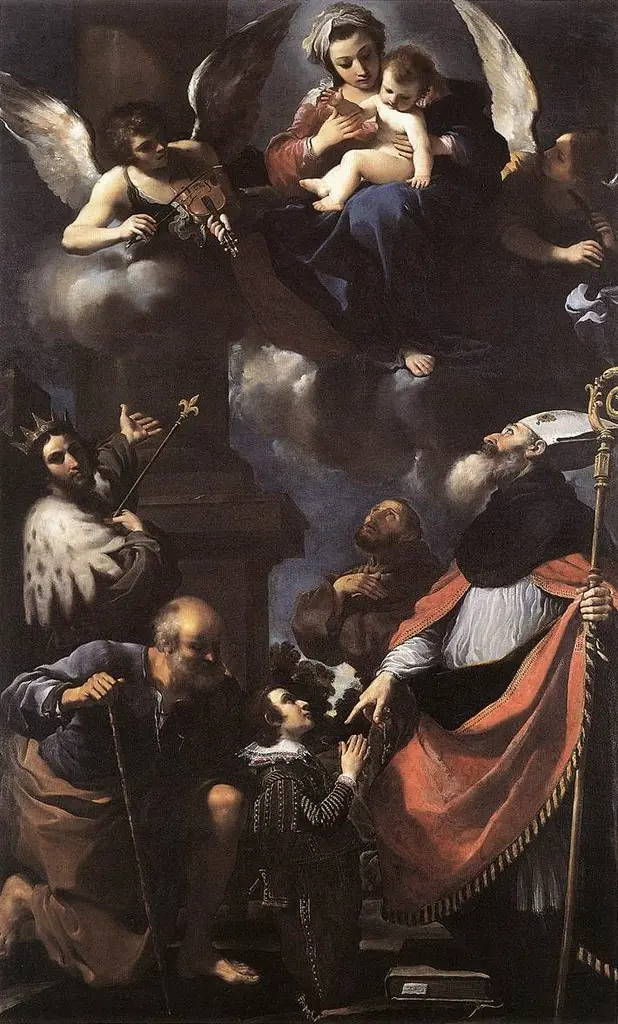 A Donor Presented to the Virgin
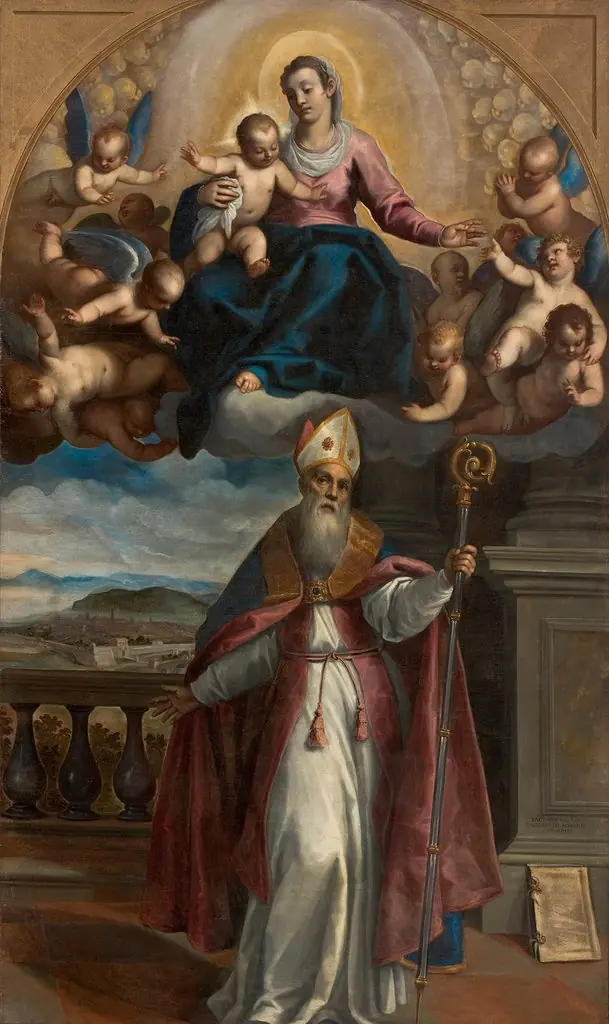 Aparição da Virgem com o Menino a santo Ubaldo, bispo de Gubbio, que indica ao fundo a cidade de Pesaro
 Miracle of Saint Martin of Tours
 The Apotheosis of St Martin
 St. Raymond Nonnatus
 Sacra conversazione
 St.Benno
 Saint Attila