Artwork
The Cross in the Wilderness
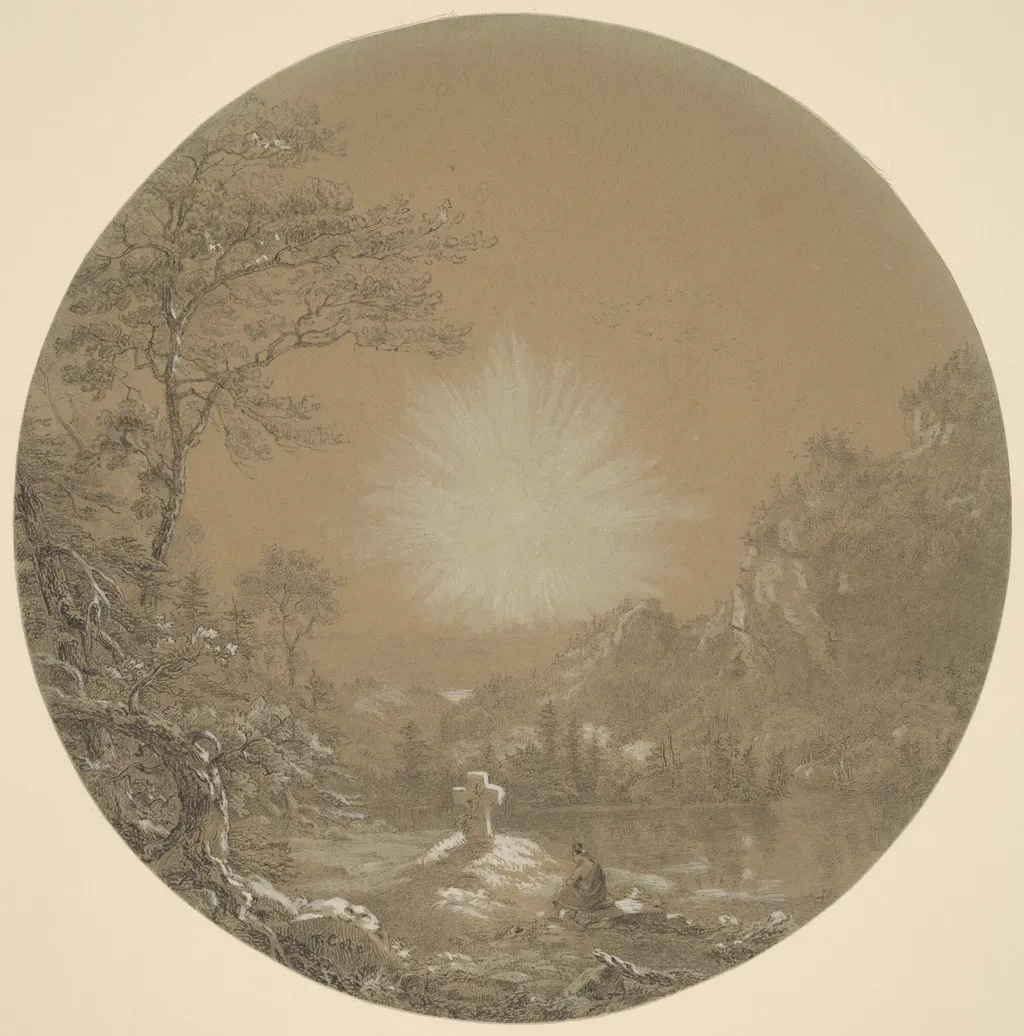
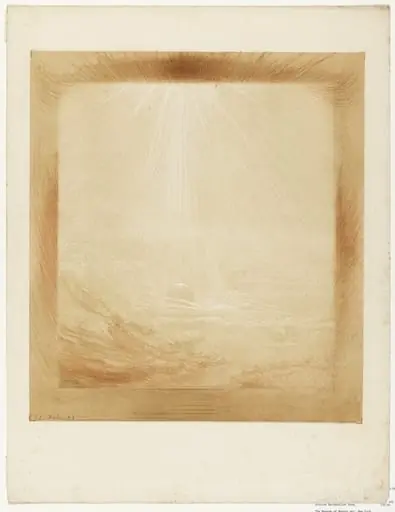
The Cross in the Wilderness is a graphite drawing by the Romanticist artist Thomas Cole. It dates from 1844 and is held in the collection of the National Gallery of Art.
- Inscription
- Inscribed:lower left in graphite: T. Cole
About this work
Overview
The Cross in the Wilderness, a graphite and chalk drawing on gray paper by Thomas Cole (c. 1844), presents a contemplative landscape centered on a cross, surrounded by trees, water, and a kneeling figure, all rendered in muted grays, browns, and subtle greens.
Subject & Meaning
At its core, the drawing conveys a sense of reverence and tranquility, with the central cross and kneeling figure evoking themes of devotion and introspection within a serene natural setting.
Technique & Style
Cole employs a restrained palette of graphite, gray-green, green-brown, and white chalk on gray paper, characteristic of Romantic-era drawing techniques, to achieve a soft, contemplative effect.
History & Provenance
Created circa 1844, specific details regarding the drawing's commission, early ownership, or exhibition history are not provided in available sources.
Context
The work aligns with the Romanticism movement's emphasis on emotion, nature, and spirituality, inviting viewers to reflect on the intersection of the divine and the natural world.
Legacy
While not individually renowned in broader cultural discourse, 'The Cross in the Wilderness' contributes to Thomas Cole's body of work exploring themes of nature, spirituality, and the human condition, characteristic of early 19th-century American Romantic art.
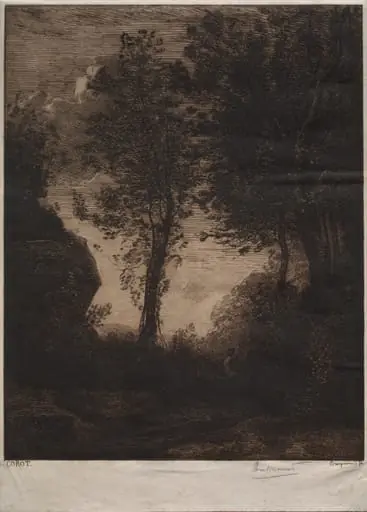
Own this work as a print
Artist & collection
Artist
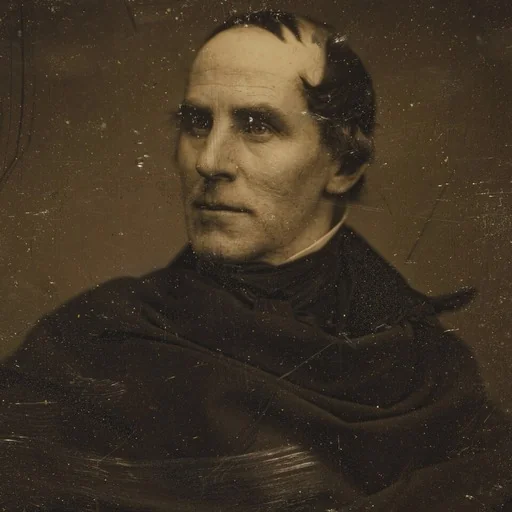
Thomas Cole (February 1, 1801 – February 11, 1848) was an Anglo-American artist who founded the Hudson River School art movement.

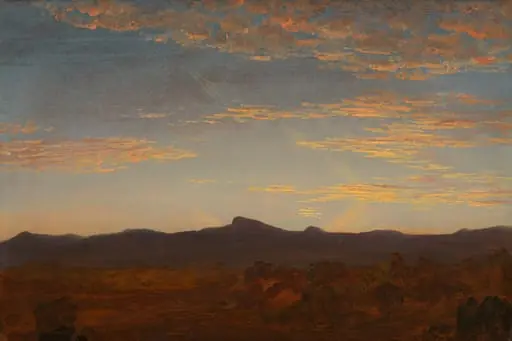
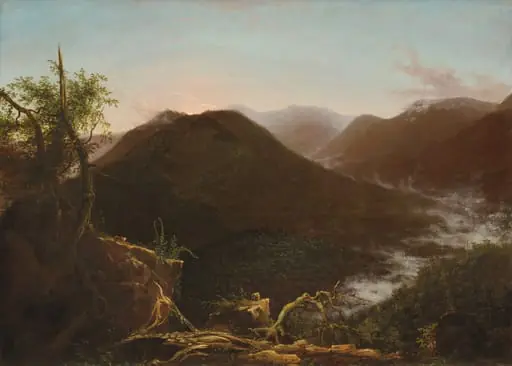
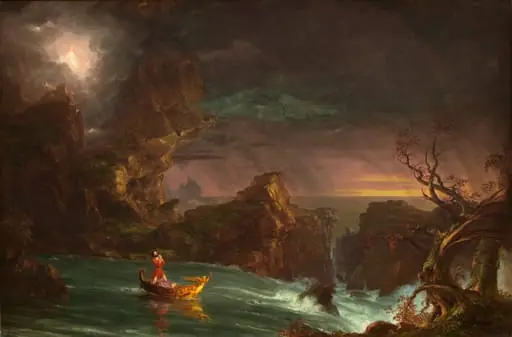
- Landscape: Sunset, after Corot
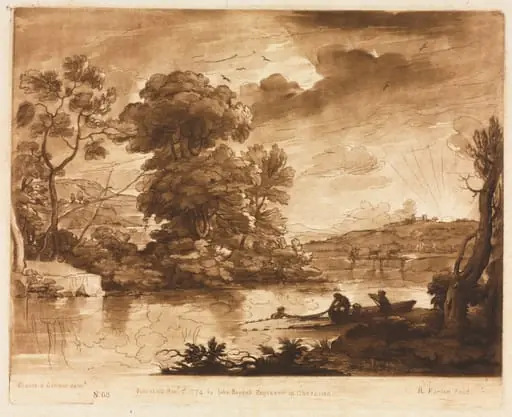 Liber Veritatis: No. 68, A Landscape at Sunset with Fishermen Drawing a Net
 Untitled
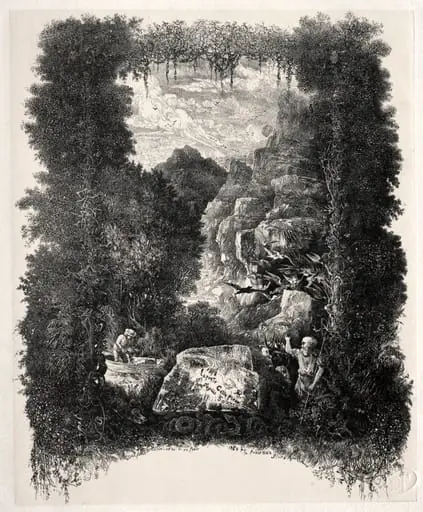 First frontispiece for Fables and Fairy-Tales by Thierry-Faletans
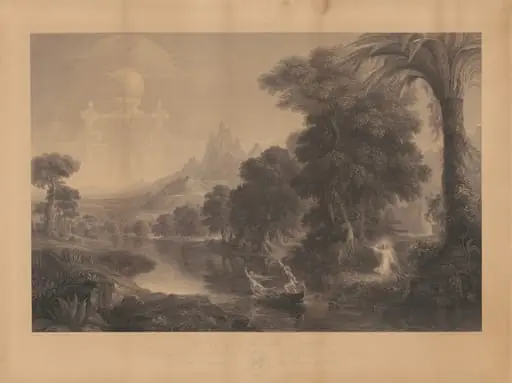 The Voyage of Life: Youth
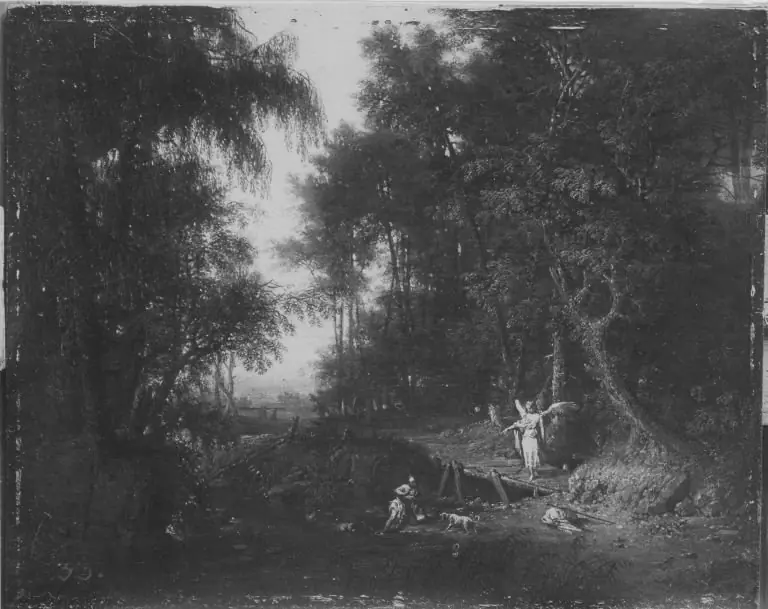 Waldlandschaft mit Engel und Tobias
 Forest Treetops Struck by Light
 Oeuvres de A. Calame: No. 52
 The Voyage of Life: Youth
 Lake George
 The Hudson at Nyack
 Frontispiece