Artwork
The Titan's Goblet
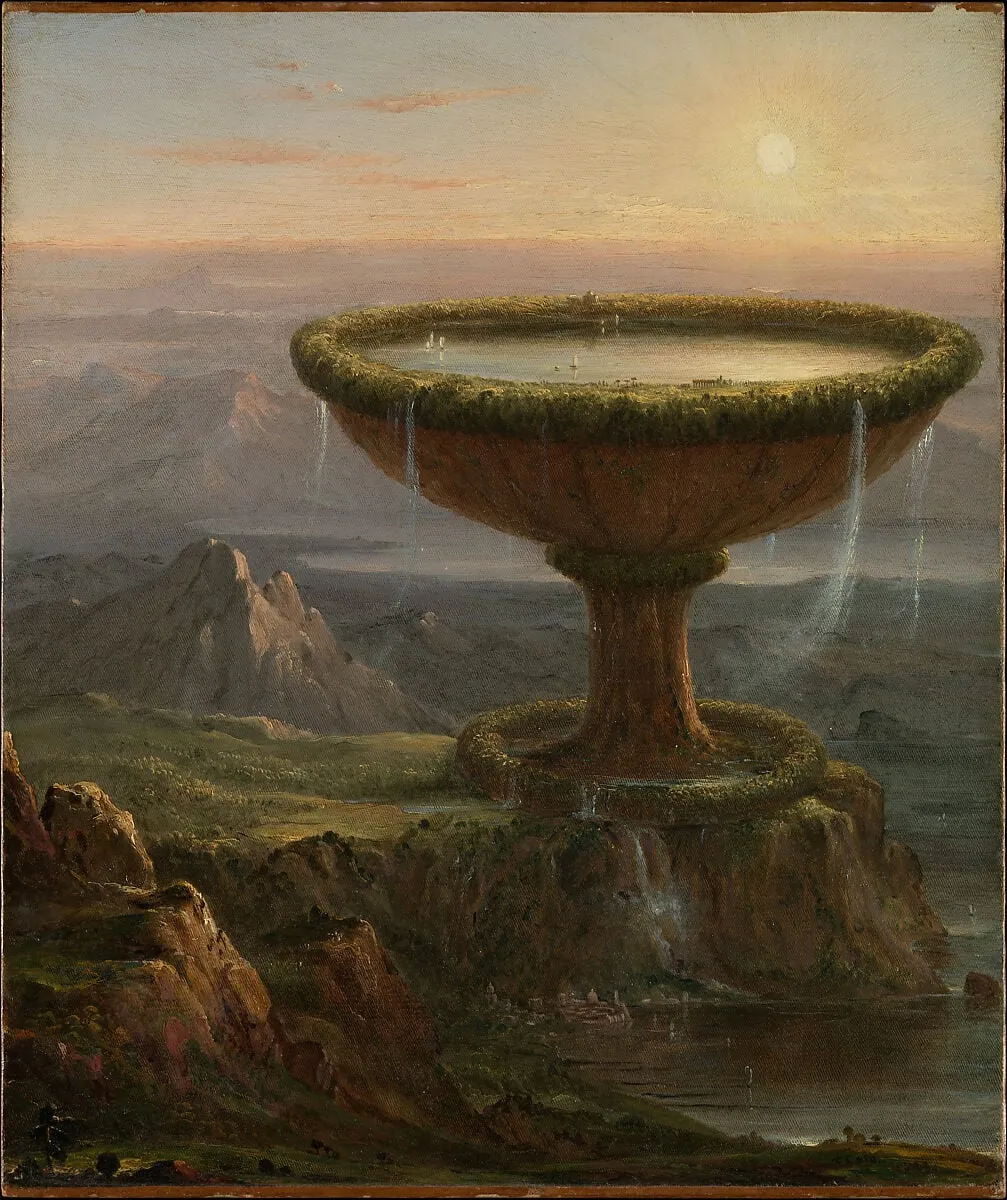
The Titan's Goblet is an oil painting by the Hudson River School artist Thomas Cole. It dates from 1833 and is held in the collection of the Metropolitan Museum of Art.
About this work
' It fuses Italian scenery with impossible scale into a self-contained world above the ordinary landscape.
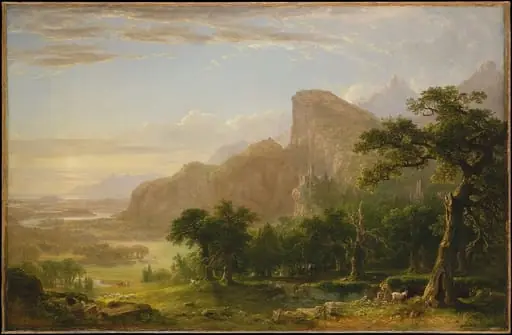
A colossal goblet crusted with vegetation towers over a rocky headland at sunset, its rim holding a Greek temple, an Italian palace, and tiny ships on an inland sea. Rejected by the patron Luman Reed in 1833, Thomas Cole's strange oil now hangs in the Metropolitan Museum of Art, where curators say it 'defies full explanation.' It fuses Italian scenery with impossible scale into a self-contained world above the ordinary landscape.
Subject & Meaning
The painting depicts a colossal stone goblet that functions as a self-contained world: its rim supports vegetation, a Greek temple and an Italian palace, and a body of water dotted with sailing vessels. The title and the contrast in scale between the goblet and the surrounding landscape have invited comparisons with giant artifacts from Greek mythology, an interpretation endorsed by art historian Erwin Panofsky. The setting sun serves as a romantic symbol of the passage of time.
The goblet's waters appear to exert a civilizing influence: where they spill onto the ground below, plant life and a rudimentary civilization emerge, while distant mountains remain desolate. Cole left no written commentary on the painting, so its meaning remains debated. Some explications have linked the goblet to the Norse world tree Yggdrasil, though the resemblance is limited to the stem shape.
Cosmological or religious readings are weakened by the off-center composition and absence of explicit iconography. The work ultimately "defies full explanation."
Technique & Style
The work is an oil painting on canvas, a medium typical of Thomas Cole's Hudson River School practice. The support is a canvas measuring 49.2 x 41 cm. From a formal and stylistic perspective, the composition is highly unusual and allegorical: a colossal stone goblet dominates the foreground, standing on conventional terrain, while its brim is densely covered with vegetation, dotted with tiny architectural structures, a Greek temple and an Italian palace, and sailing vessels upon its interior waters. This creates a "picture within a picture" effect, a landscape within a landscape.
The goblet is placed off-center, and the setting sun evokes a romantic sense of passage and transience. The handling is meticulous, rendering natural and architectural details with precision, though specific brushwork is not elaborated upon in the sources. No details regarding condition are provided.
Context
The Titan's Goblet has been described by the Metropolitan Museum of Art as a work that 'defies full explanation' and is often termed a 'picture within a picture.' Scholarship has offered varied interpretations: in the 1880s it was linked to the Norse world-tree Yggdrasil, a view repeated in a 1904 auction catalog, though Elwood C. Parry later argued Cole's familiarity with this concept is uncertain. Art historian Erwin Panofsky in the 1960s endorsed a Greek mythological reading of the goblet as a giant's relic.
Parry's 1971 study more concretely tied the painting to Cole's European tour, citing his sketches of Turner's Ulysses Deriding Polyphemus and a fantasy from Vitruvius involving a colossal statue holding a cup. Cole's friend and biographer Louis Legrand Noble offered no such analytical framework, instead romanticizing the scene. The work remains a unique enigmatic statement within Cole's oeuvre of allegorical landscapes.
Legacy
The Titan's Goblet has long been regarded as one of Thomas Cole's most enigmatic works, a reputation that has fueled its enduring legacy. Housed in the Metropolitan Museum of Art, the painting is described by the museum as a work that 'defies full explanation'. Scholarly interpretations have emerged since the late 19th century; an 1880s reading linked its imagery to the Norse Yggdrasil, and a 1904 auction catalog echoed this idea.
In the 1960s, art historian Erwin Panofsky endorsed a mythological interpretation, while Elwood C. Parry's 1971 article offered a detailed analysis tying the imagery to Cole's European travels. These and subsequent studies have cemented the work's status as a central puzzle in American landscape painting, ensuring its continued fascination.
Overview
Thomas Cole, an English-born American landscape painter, created The Titan's Goblet in 1833. This oil on canvas work is considered among his most puzzling allegorical or imaginary landscapes. It presents a scene that has been described as "defying full explanation" by curators, inviting viewers to ponder its unusual composition and potential meanings. The painting is a notable example of Cole's exploration of symbolic narratives within natural settings.
History & Provenance
Completed in 1833, The Titan's Goblet was initially commissioned but subsequently rejected by its patron, Luman Reed, perhaps due to its unconventional subject matter. Despite this early reception, the painting has since gained recognition for its unique vision. It is now part of the collection at the Metropolitan Museum of Art, where it is displayed in the American Wing, continuing to intrigue audiences.
Artist & collection

Artist
Thomas Cole (February 1, 1801 – February 11, 1848) was an Anglo-American artist who founded the Hudson River School art movement.

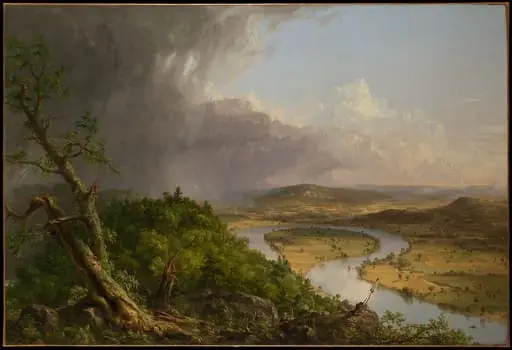 View from Mount Holyoke, Northampton, Massachusetts, after a Thunderstorm—The Oxbow
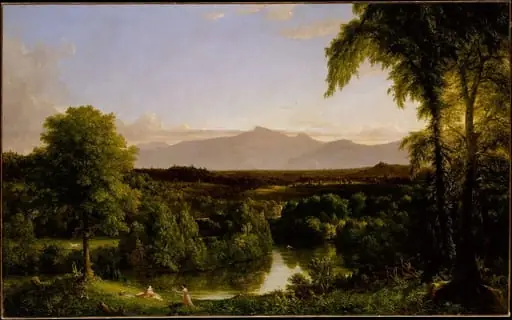 View on the Catskill—Early Autumn
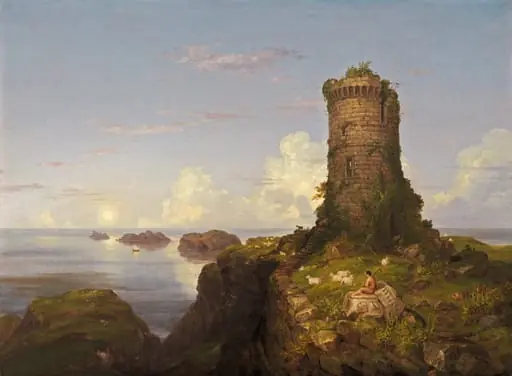 Italian Coast Scene with Ruined Tower
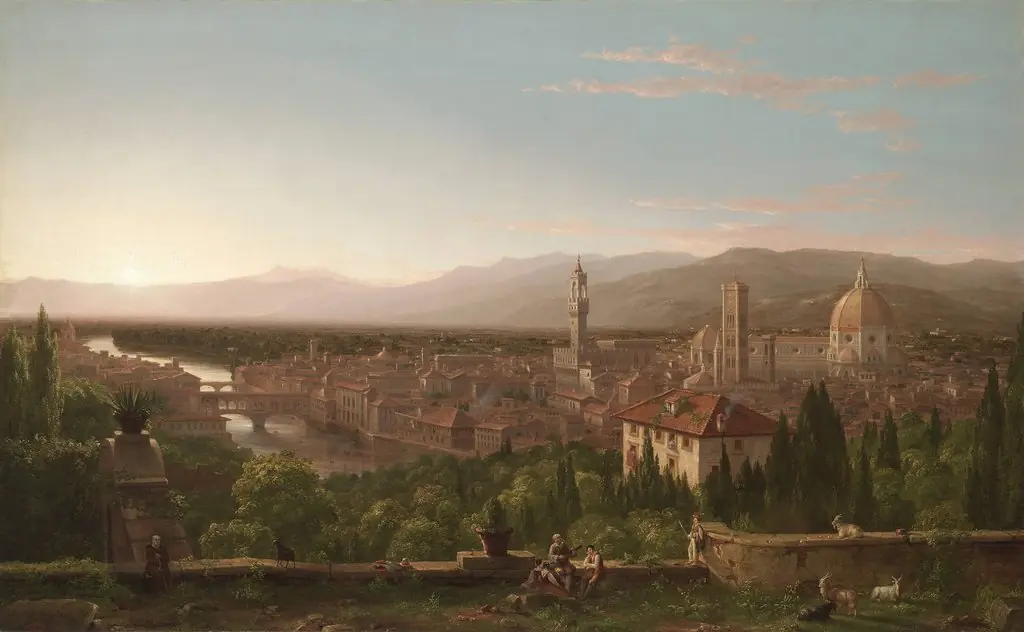 View of Florence
 Study for "Catskill Creek"
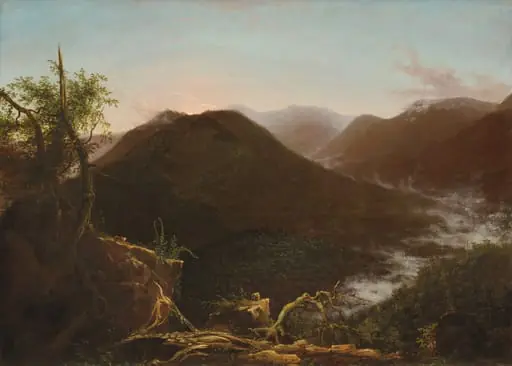 Sunrise in the Catskills
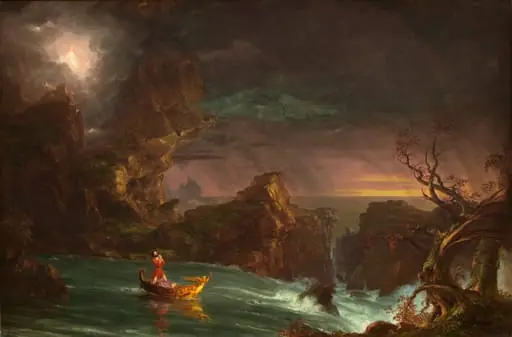 The Voyage of Life: Manhood
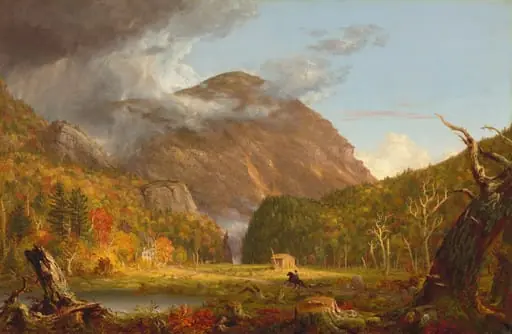 A View of the Mountain Pass Called the Notch of the White Mountains (Crawford Notch)
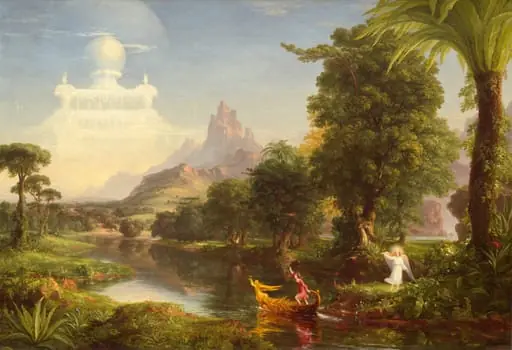
- The Voyage of Life: Youth
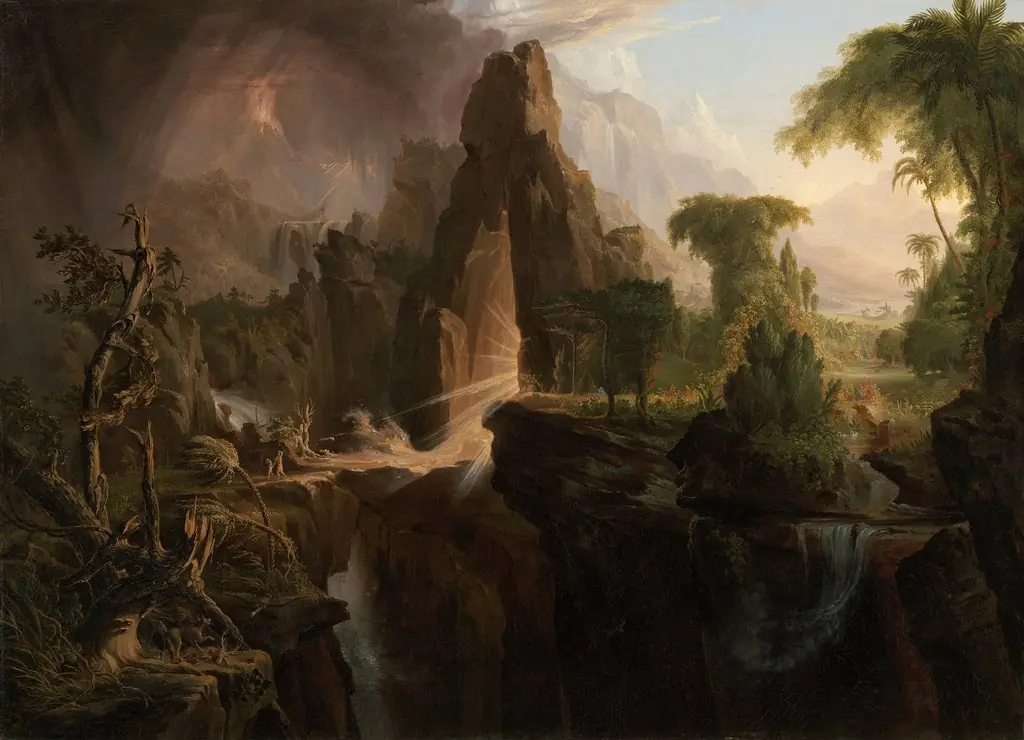 Expulsion from the Garden of Eden
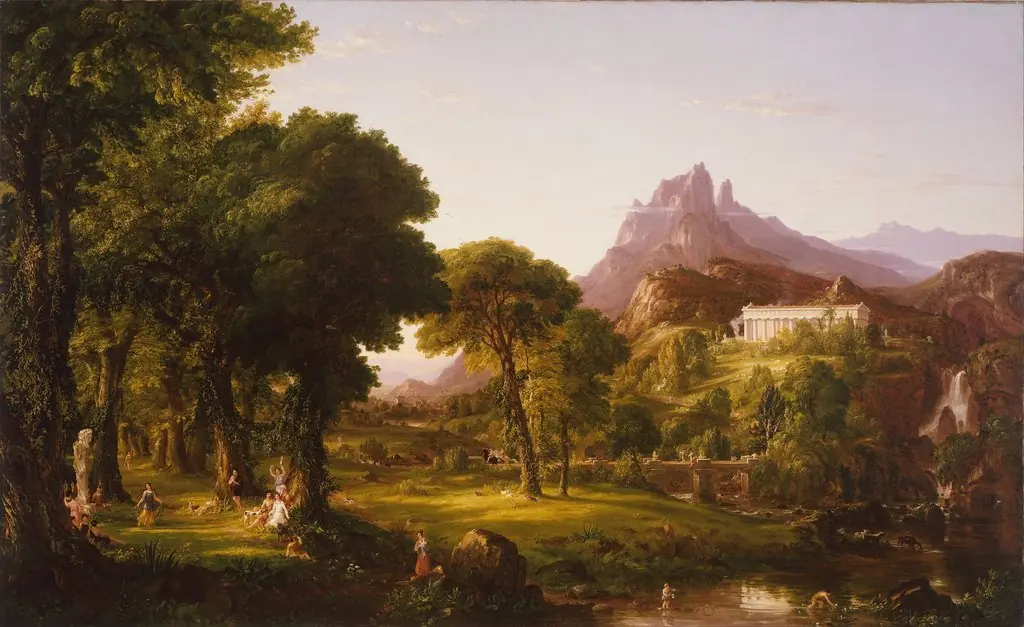 Dream of Arcadia
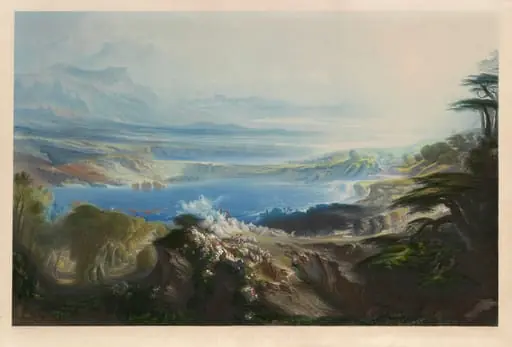 The Plains of Heaven
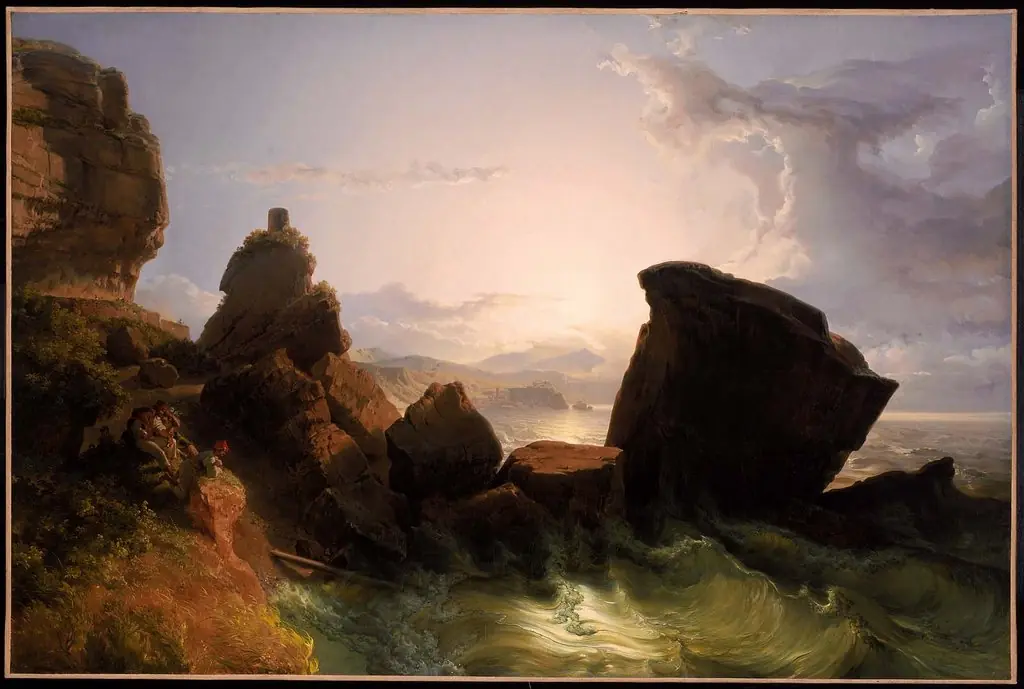 The Bay of Naples
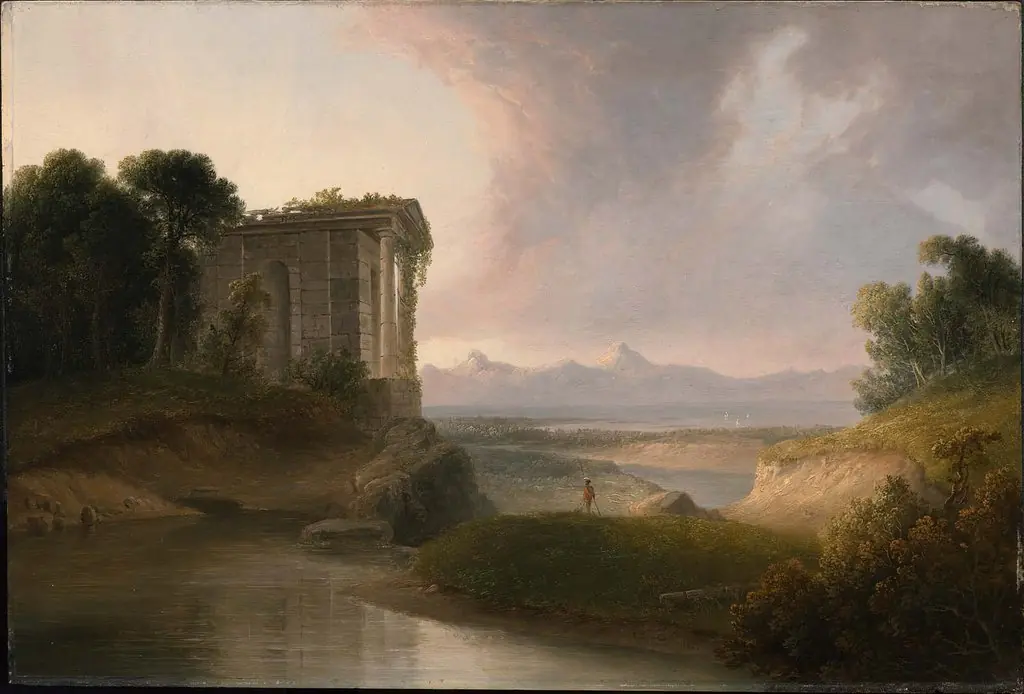 Romantic Landscape with a Temple
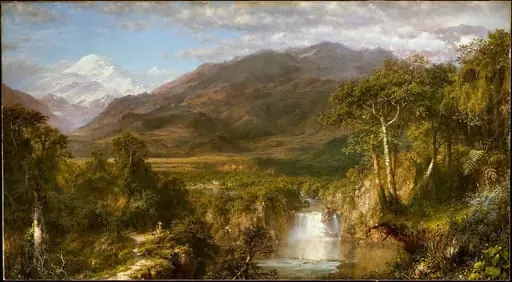 Heart of the Andes
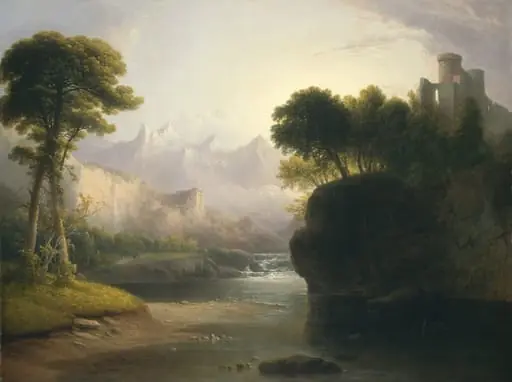 Fanciful Landscape
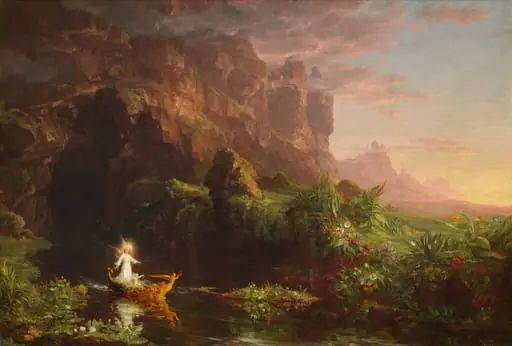 The Voyage of Life: Childhood
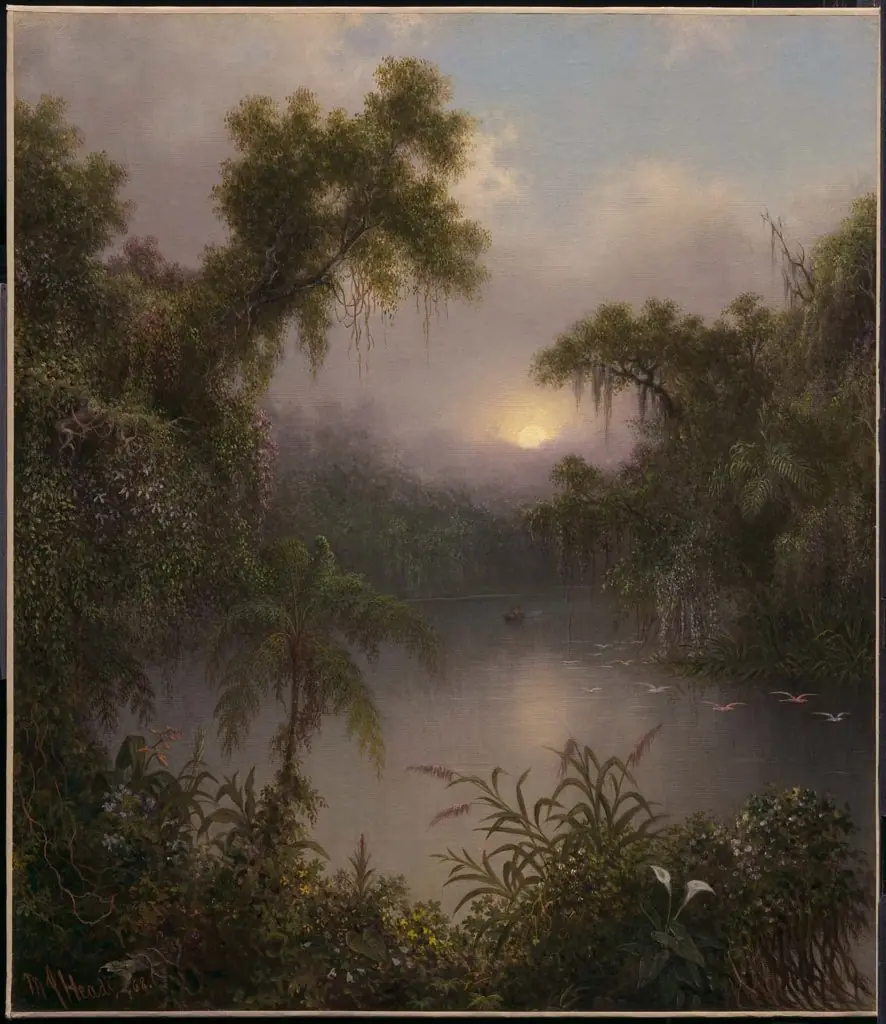 South American River
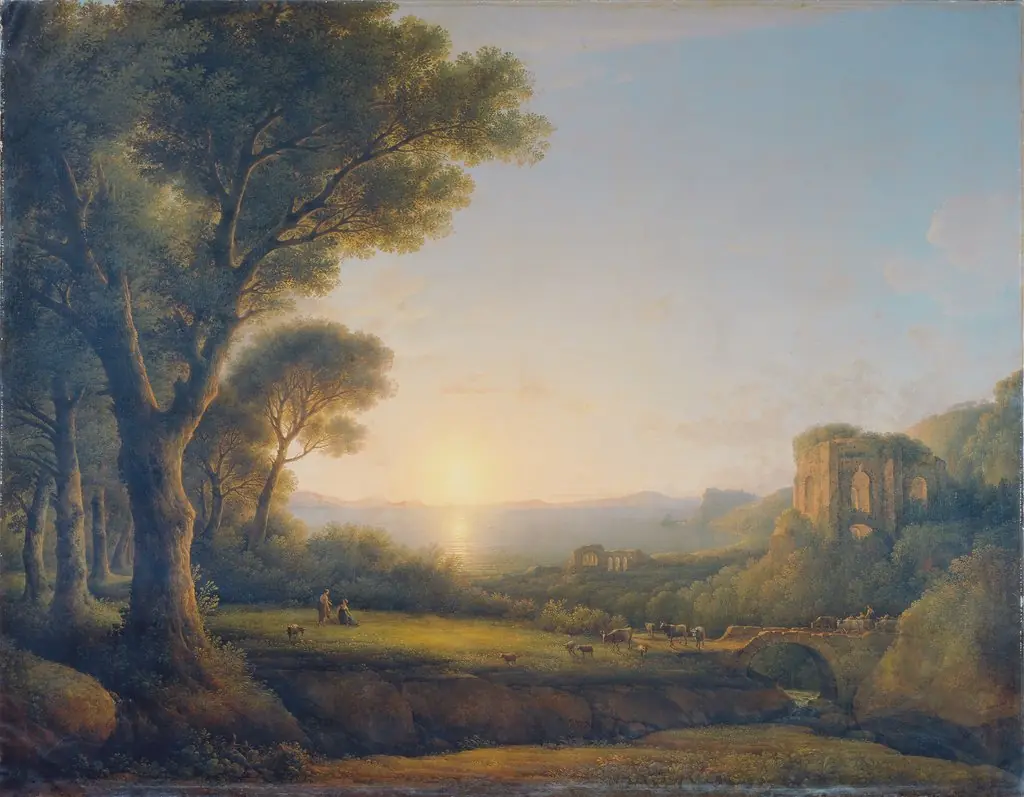 Der Meerbusen von Baiae bei Sonnenuntergang
 Landscape—Scene from "Thanatopsis"