Artwork
View of Florence
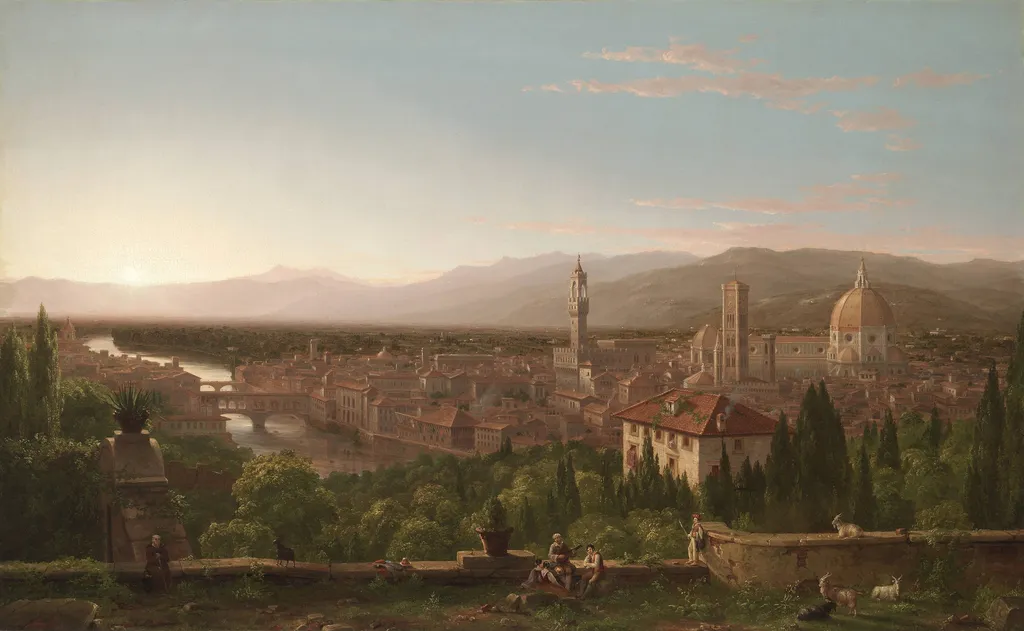
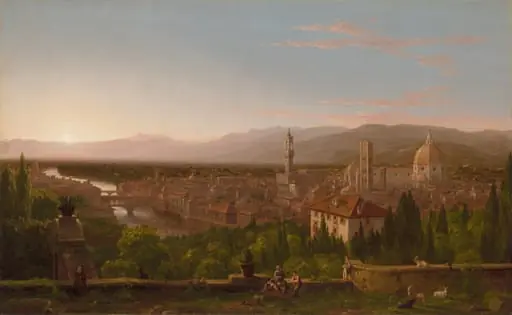
View of Florence is an oil painting by the Hudson River School artist Thomas Cole. It dates from 1837 and is held in the collection of the Metropolitan Museum of Art.
About this work
Subject & Meaning
Domestic elements such as houses and trees, along with a goat, populate the foreground, situating the monumental architecture within a pastoral setting.
View of Florence is a Romantic cityscape that presents a panoramic prospect of the Tuscan capital as seen from the elevated vantage point of the Basilica of San Miniato al Monte. The composition gathers together the city's most recognizable landmarks, including the Florence Cathedral, the Palazzo Vecchio, the Ponte Vecchio, and the Ponte Santa Trinita, with the Arno River winding through the urban fabric. Domestic elements such as houses and trees, along with a goat, populate the foreground, situating the monumental architecture within a pastoral setting.
The work reflects Cole's Romantic response to the Italian landscape, translating a pencil sketch made during his 1831 travels in Italy into a sweeping painted vista that celebrates Florence's historic skyline while framing it through the lens of nature and rural life.
Technique & Style
Thomas Cole's View of Florence (1837) is executed in oil paint on canvas, a medium and support consistent with his Romantic landscape works. Measuring 99.5 by 160.4 centimeters, the painting demonstrates Cole's meticulous handling, blending precise architectural detailing, such as the depiction of Florence Cathedral, Palazzo Vecchio, and the Ponte Vecchio, with atmospheric effects. The composition, developed from a pencil sketch made during the artist's 1831 Italian visit, reflects a Romantic sensibility, balancing topographical accuracy with idealized light and spatial depth.
Stylistically, the work exhibits smooth brushwork and a harmonious palette, evoking a serene yet dynamic panorama of the city viewed from San Miniato al Monte.
History & Provenance
The painting was created in 1837 by Thomas Cole, based on a pencil sketch executed in Italy in 1831 during his visit to Florence. Cole depicted the city from the vantage point of the basilica of San Miniato al Monte, capturing a panoramic view of Florence's landmarks. The work was later acquired by the Cleveland Museum of Art, where it has been held since 1961 under accession number 1961.39.
Context
Completed in 1837 in New York, Thomas Cole's View of Florence represents a significant Romantic engagement with the Italian landscape within the artist's broader oeuvre. Although painted in the United States, the cityscape was executed from a pencil sketch Cole made while in Italy in 1831, reflecting the profound impact of his European travels on his artistic vision. The work depicts Florence from the vantage point of the basilica of San Miniato al Monte, framing iconic landmarks such as the Florence Cathedral, Palazzo Vecchio, and the Ponte Vecchio.
By merging a detailed urban panorama with a Romantic sensibility, the painting exemplifies the 19th-century American fascination with European scenery and antiquity. Acquired by the Cleveland Museum of Art in 1961, the canvas remains an important example of Cole's Italianate landscapes and his role in translating Old World motifs into an American visual context.
Overview
View of Florence, painted by Thomas Cole in 1837, is an oil on canvas cityscape depicting the Italian capital from an elevated vantage point. The composition organizes the urban landscape into distinct planes: a foreground featuring a stone wall, scattered figures, and foliage leads the eye across the Arno River and its bridges toward the dense cluster of historic architecture in the middle ground. Dominating the skyline are the city's iconic domes and towers, rendered with precise detail against a backdrop of rolling Tuscan hills that fade into a soft, atmospheric distance.
Cole executed this work during his second voyage to Europe, a period that significantly influenced his mature style by integrating the grandeur of Old World history with the panoramic scope characteristic of the Hudson River School. Unlike his later allegorical landscapes, this painting focuses on the topographical reality of Florence, capturing the interplay of natural light and architectural form. It stands as a key example of Cole's ability to translate European subjects through an American lens, bridging the traditions of Romantic landscape painting with a keen observational eye for specific locales.
Own this work as a print
Artist & collection

Artist
Thomas Cole (February 1, 1801 – February 11, 1848) was an Anglo-American artist who founded the Hudson River School art movement.

 View from Mount Holyoke, Northampton, Massachusetts, after a Thunderstorm—The Oxbow
 View on the Catskill—Early Autumn
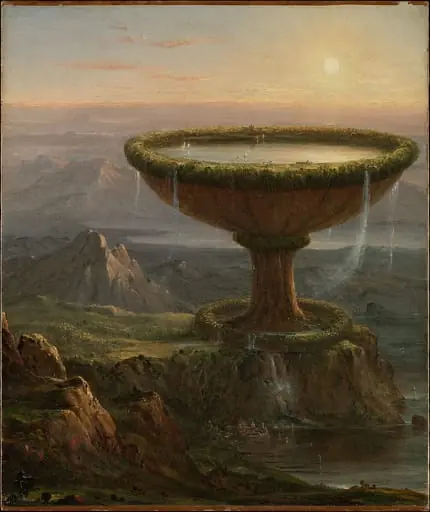 The Titan's Goblet
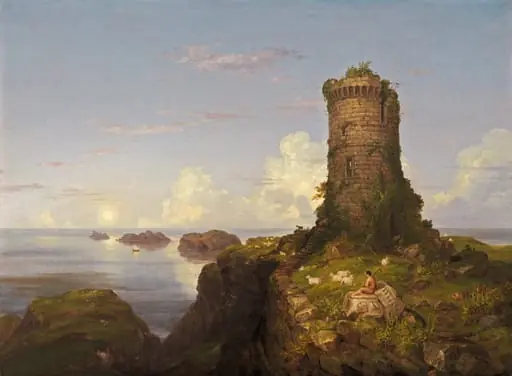 Italian Coast Scene with Ruined Tower
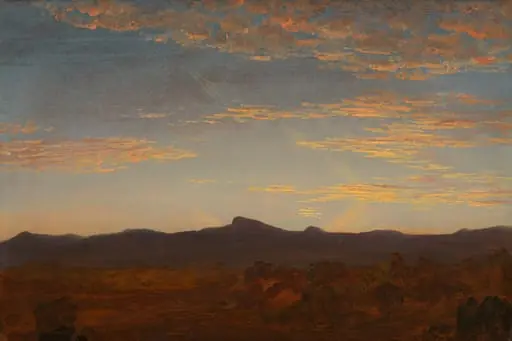 Study for "Catskill Creek"
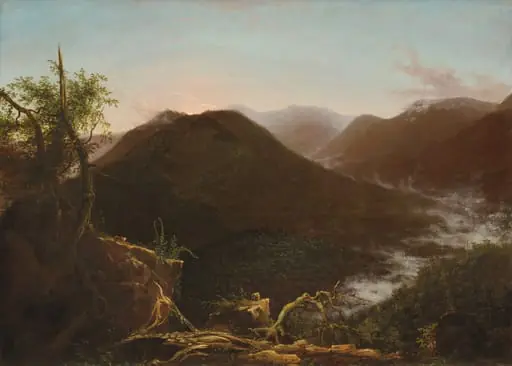 Sunrise in the Catskills
 The Voyage of Life: Manhood
 A View of the Mountain Pass Called the Notch of the White Mountains (Crawford Notch)
- II Penseroso
 View of Florence
 View of Mainz on the Rhine
 Southern Harbour Town
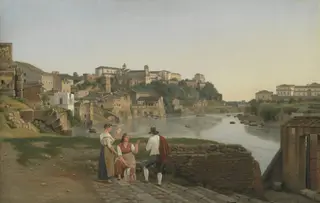 View of the Tiber towards the Aventin Hill in Rome
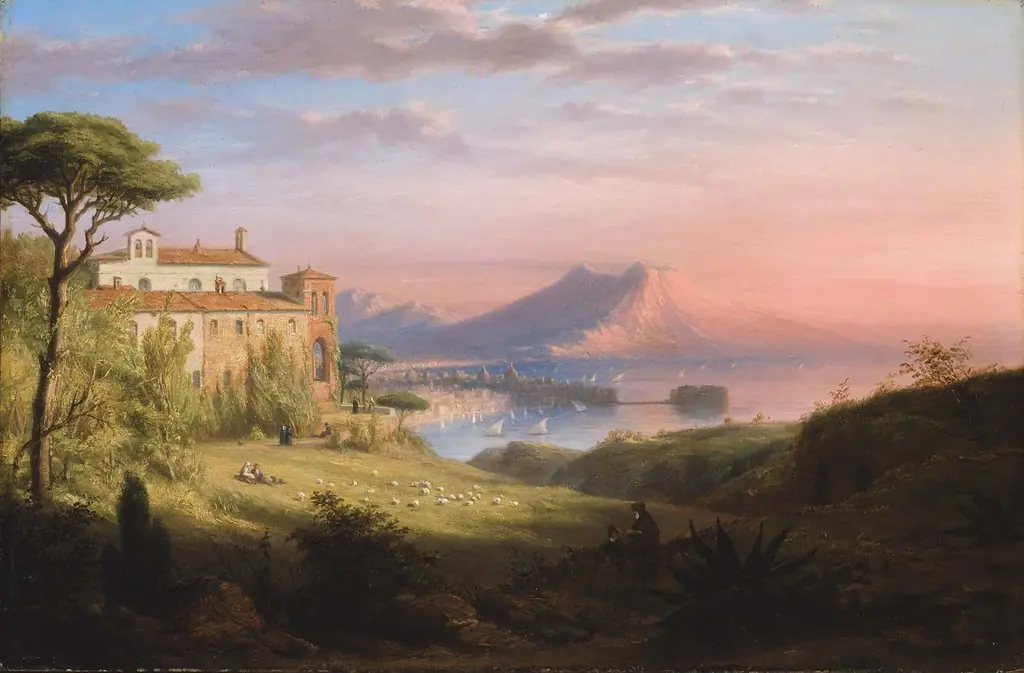 Bay of Naples
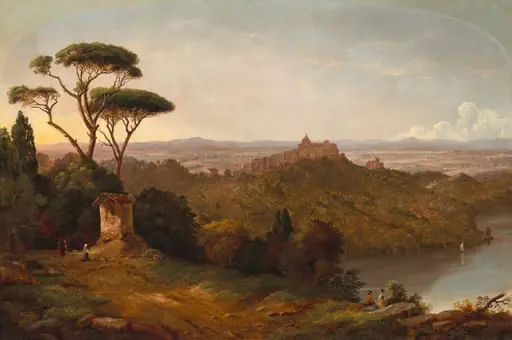 Castle Gondolfo, Lake Albano, Italy
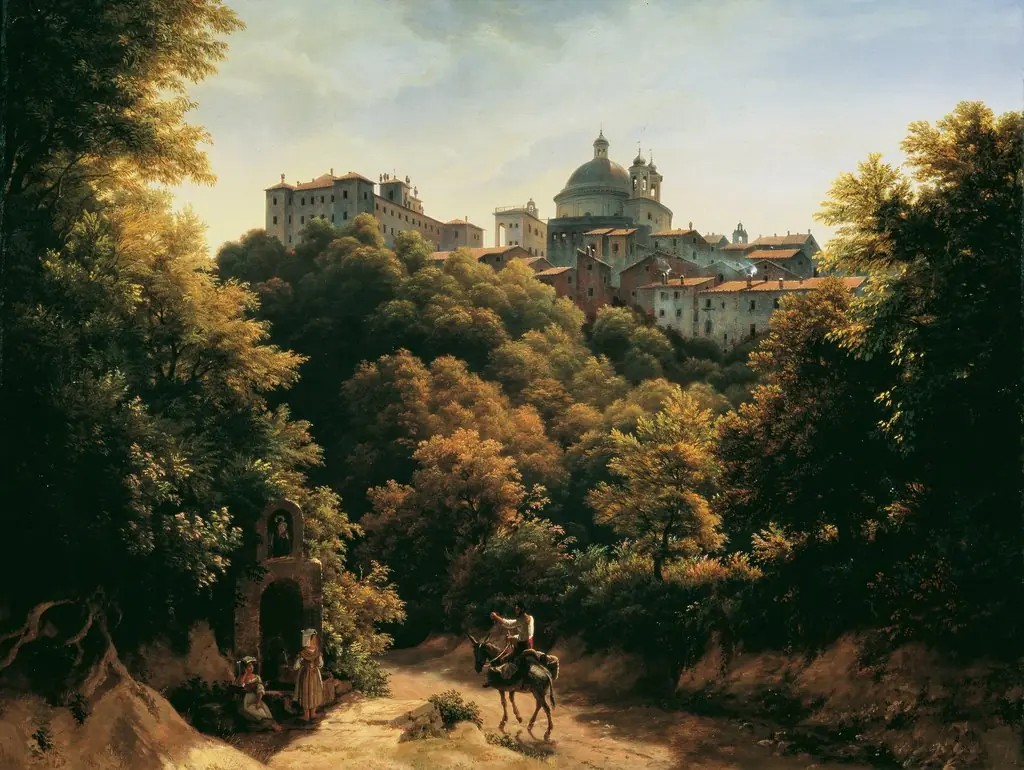 View of Ariccia
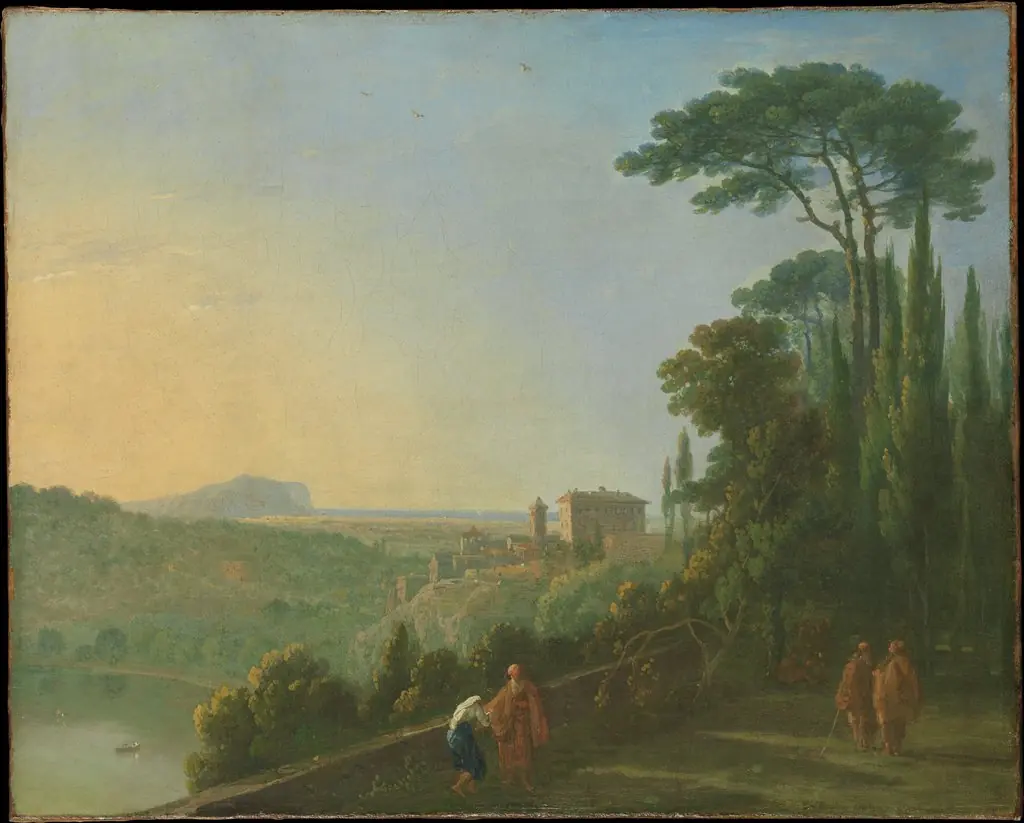 Lake Nemi and Genzano from the Terrace of the Capuchin Monastery
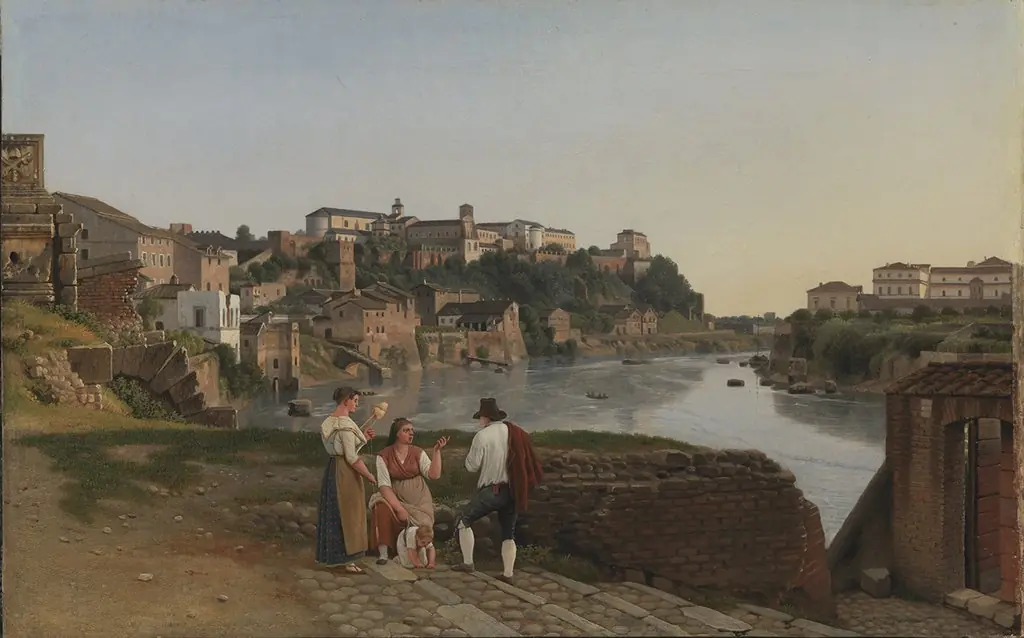 Udsigt over Tiberen i nærheden af den sammenstyrtede bro Ponte Rotto i Rom
 View of Tivoli in Italy
 A View Across Lake Leman Towards Mont Blanc and Geneva