Artwork
The Parable of the Kingdom of Heaven
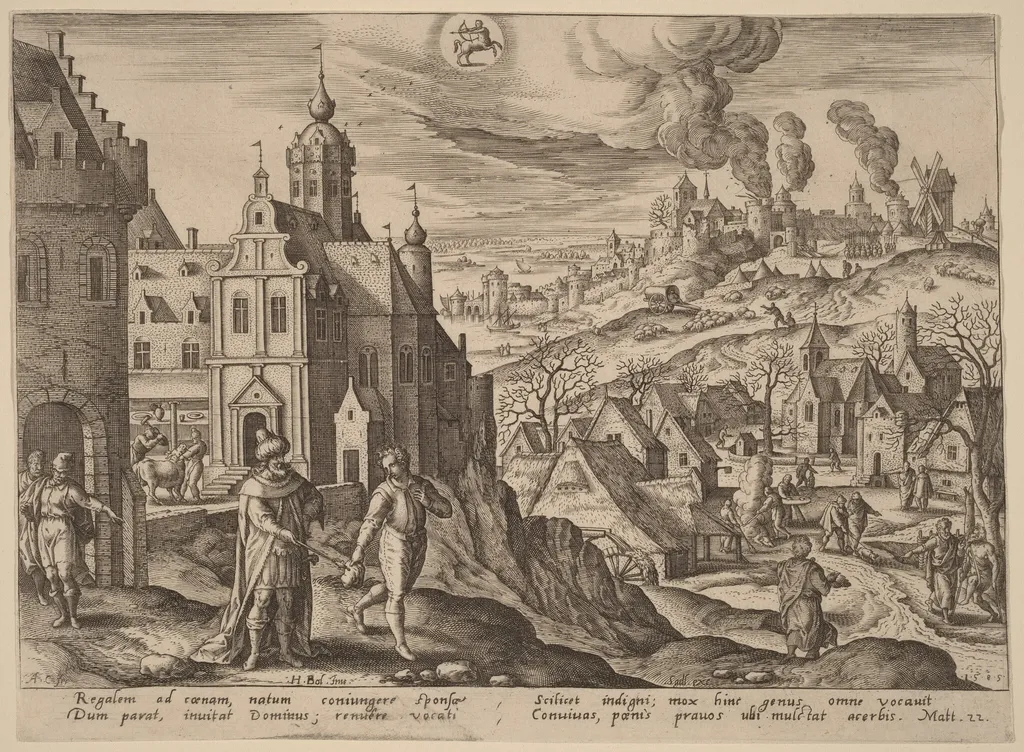
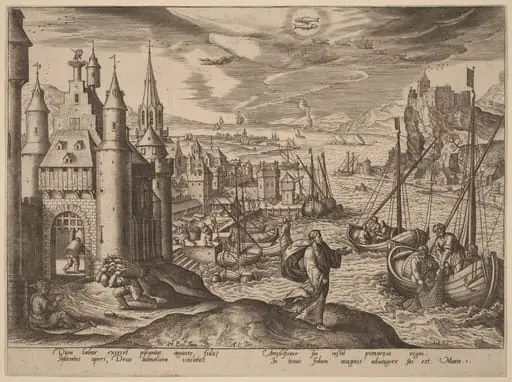
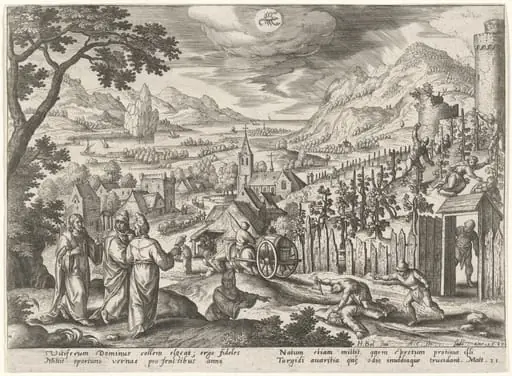
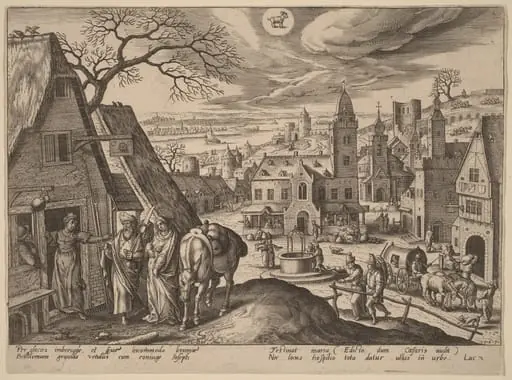
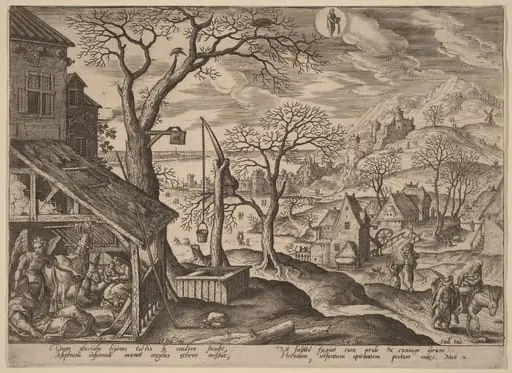
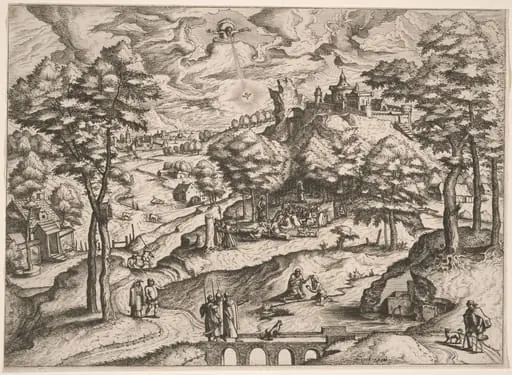
The Parable of the Kingdom of Heaven is an ink print by the Renaissance artist Adriaen Collaert. It dates from 1585 and is held in the collection of the National Gallery of Art.
- Inscription
- Inscribed:lower left, in plate, in image: .A.C fec.; lower center, in plate, in image: .H. Bol. Inu.; lower right, in plate, in image:.Sadl. exc.; lower right, in plate, in image: .1.5.8.5.; below image, in plate: Regalem ad coenam, natum coniungere sponsae, / Dum parat, invitat Dominus; renuere vocati, / Scilicet indigni; mox hinc genus omne vocavit / Convivas, poenis pravos ubi mulctat acerbis. Matt. 22. (While he prepares to join son and bride, the Lord issues invitations to a royal feast; evidently unworthy, the invitees decline; Hence he presently called upon every sort of table companion, and at the same time punished the wrongdoers with harsh penalties. Matthew 22. [translation from Melion, Walter S. and James Clifton_Through a Glass Darkly: Allegory & Faith in Nethlerlandish Prints from Lucas van Leyden to Rembrandt._Atlanta: Michael C. Carlos Museum, Emory University, 2019, p.153.])
About this work
Overview
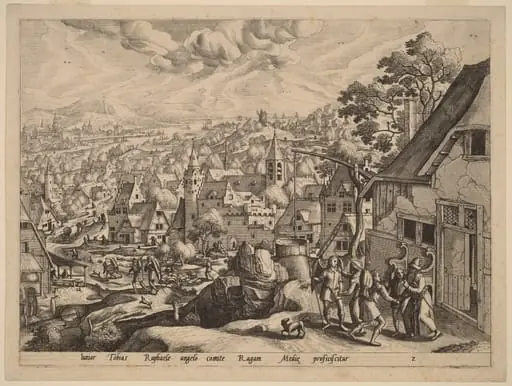
Created in 1585 by Adriaen Collaert, this engraving depicts a scene inspired by the Parable of the Kingdom of Heaven. Rendered in fine lines on laid paper, the composition balances intimate human interaction with widespread turmoil. The work exemplifies Northern Renaissance printmaking, where intricate detail and symbolic narrative converge to invite contemplation rather than direct instruction.
Subject & Meaning
Two figures in the foreground, dressed in contrasting attire, appear to exchange something, their gestures ambiguous amid surrounding chaos.
Two figures in the foreground, dressed in contrasting attire, appear to exchange something, their gestures ambiguous amid surrounding chaos. Behind them, a town burns, residents flee, and a lone horse emerges from smoke near a church tower. The scene suggests divine judgment or moral reckoning, but without explicit biblical figures, the viewer is left to interpret the parable’s lesson through visual metaphor and emotional contrast.
Technique & Style
Collaert employed fine, precise engraving lines with dense cross-hatching to model light and shadow, creating depth and texture without color. The sharp, controlled strokes define architectural details, clothing folds, and swirling smoke, demonstrating mastery of the medium. The composition is tightly packed, guiding the eye from the foreground figures to the distant inferno, reinforcing the tension between personal choice and collective consequence.
History & Provenance
The print was produced during Collaert’s active years in Antwerp, a center for reproductive engraving in the late 16th century. It likely circulated as part of a series illustrating biblical parables, intended for private devotion or scholarly study. No early ownership records are widely documented, but its survival in multiple institutional collections suggests it was valued for its technical precision and moral resonance.
Context
Produced in the wake of religious upheaval in the Low Countries, the image reflects a cultural moment where visual art served as a vehicle for theological reflection. Engravings like this allowed complex biblical ideas to reach literate and non-literate audiences alike. The burning town may echo contemporary fears of war and divine punishment, common themes in post-Reformation visual culture.
Legacy
Collaert’s engraving contributed to the tradition of narrative printmaking in Northern Europe, influencing later artists who used similar techniques to explore moral and spiritual themes. While not widely reproduced in modern times, its presence in museum collections ensures its role as a documented example of how religious parables were visually interpreted in the late Renaissance.
Own this work as a print
Artist & collection