Artwork
Kreuzigung Christi
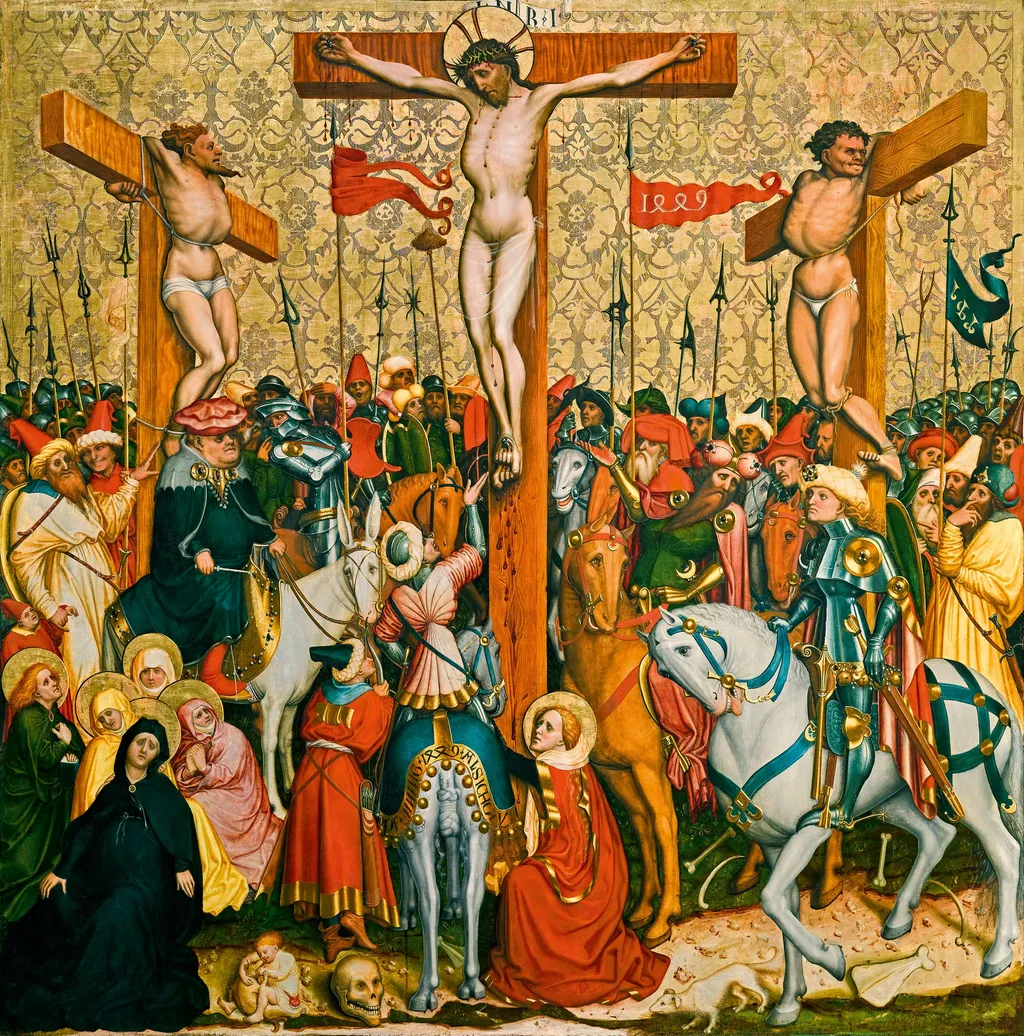
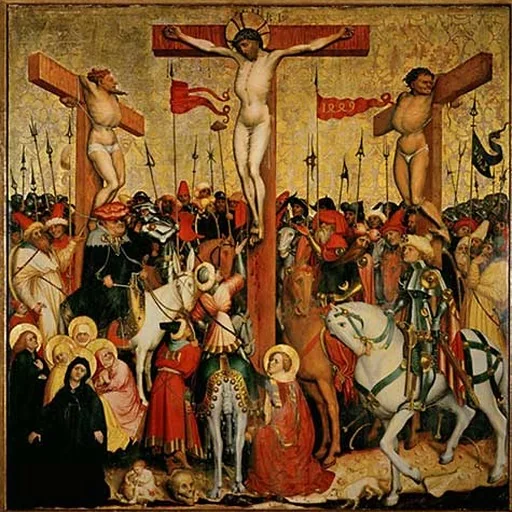
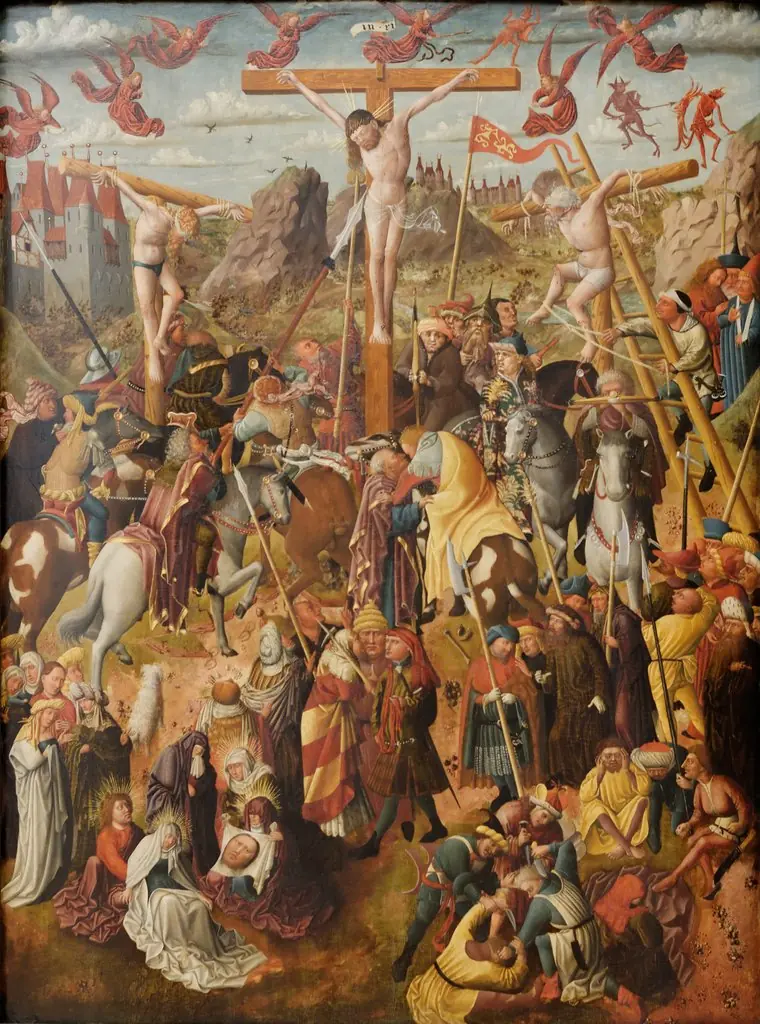
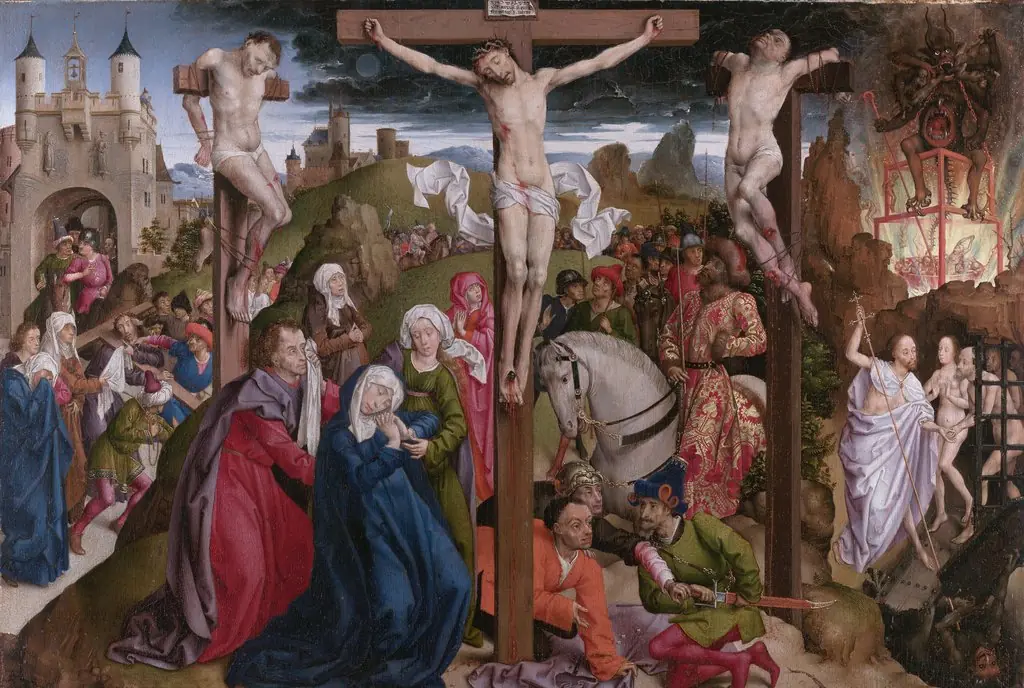
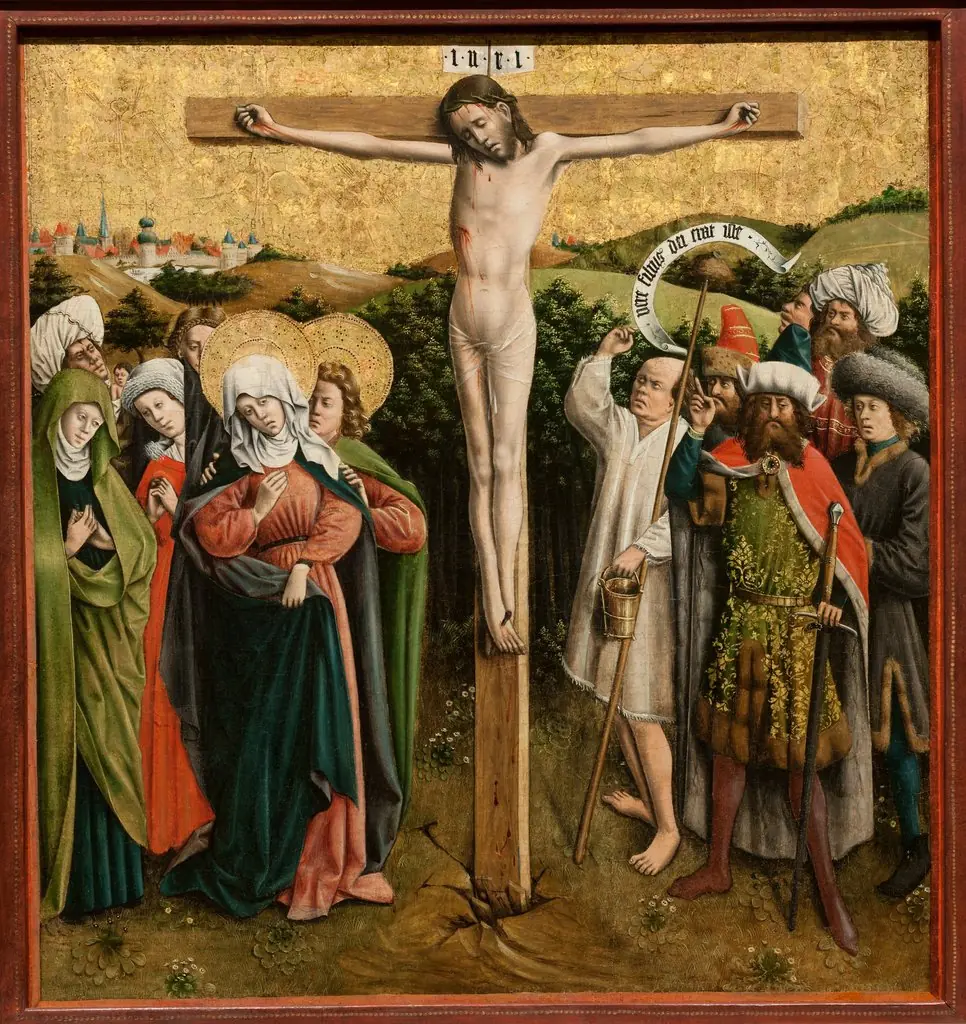
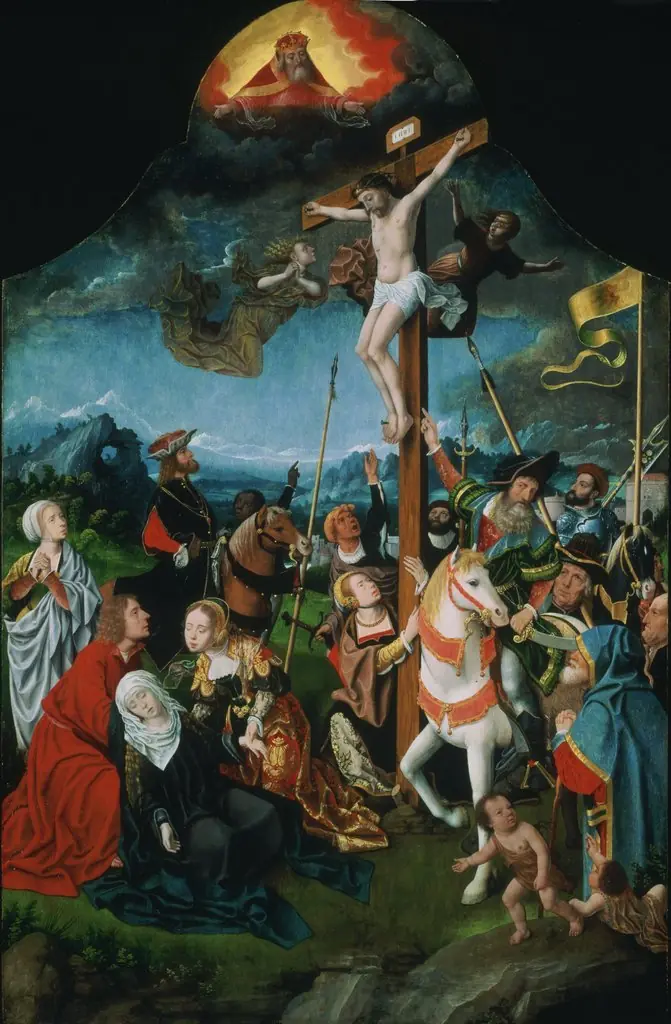
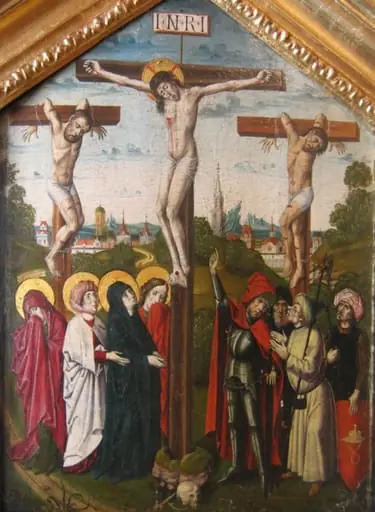
Kreuzigung Christi is an unspecified painting by the Northern Renaissance artist Conrad Laib. It dates from 1449 and is held in the collection of the Kunsthistorisches Museum.
About this work
Overview
Kreuzigung Christi (Crucifixion of Christ) is a panel painting by the German late Gothic painter Conrad Laib, dated 1449.
Kreuzigung Christi (Crucifixion of Christ) is a panel painting by the German late Gothic painter Conrad Laib, dated 1449. Executed in oil on spruce wood, the square panel measures 179 by 179 centimeters and is now held in the collection of the Österreichische Galerie Belvedere in Vienna under inventory number ÖG 4919. The work represents a pivotal moment in Central European art history, as Laib belonged to the first generation of German painters to introduce the innovations of the Netherlandish Ars Nova into the region. The painting's precise date, substantial scale, and sophisticated synthesis of northern and Italian influences make it a cornerstone of Laib's oeuvre and a significant document of mid-fifteenth-century artistic exchange.
Subject & Meaning
The painting depicts the Crucifixion of Jesus Christ, presenting a densely populated scene centered on three crosses. At the center, Christ appears with a halo and crown of thorns, a red banner positioned near his right hand. The two thieves, each nude and wearing white cloth, hang on flanking crosses. Below, a crowded assembly fills the pictorial space: mounted soldiers in armor and helmets occupy the middle ground, positioned on white, brown, and gray horses with elaborate bridles. Several figures wear red hats or turbans and gesture toward the crosses. In the lower left, a group of haloed figures in dark and colored robes stand together, with one figure in black prominently placed in front. A kneeling haloed figure in red and gold sits near the base of the central cross, while at the very bottom a skull rests on the ground beside a small winged figure, evoking the traditional identification of Golgotha as the place of the skull. The gold background with repeating floral patterns reinforces the sacred character of the scene, while the inclusion of the inscription on the horse blanket of the Good Centurion introduces a personal, even performative element that links devotional narrative to artistic self-consciousness.
Own this work as a print
Artist & collection