Artwork
The crucifixion
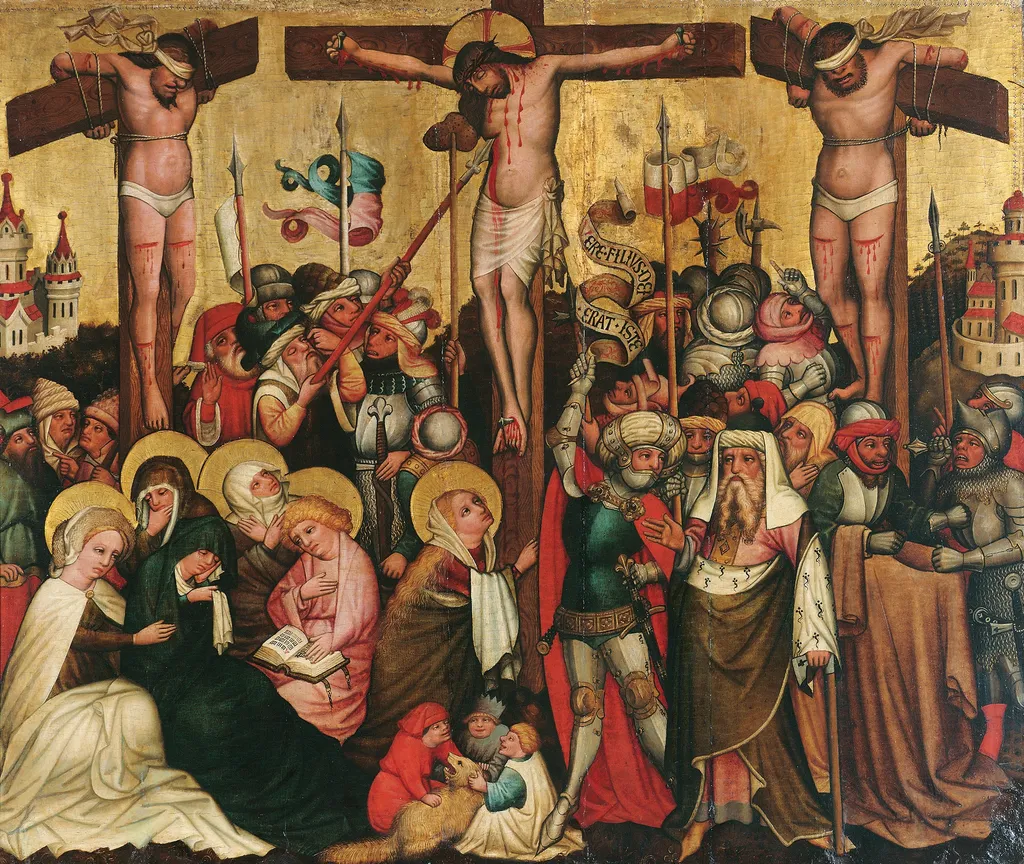
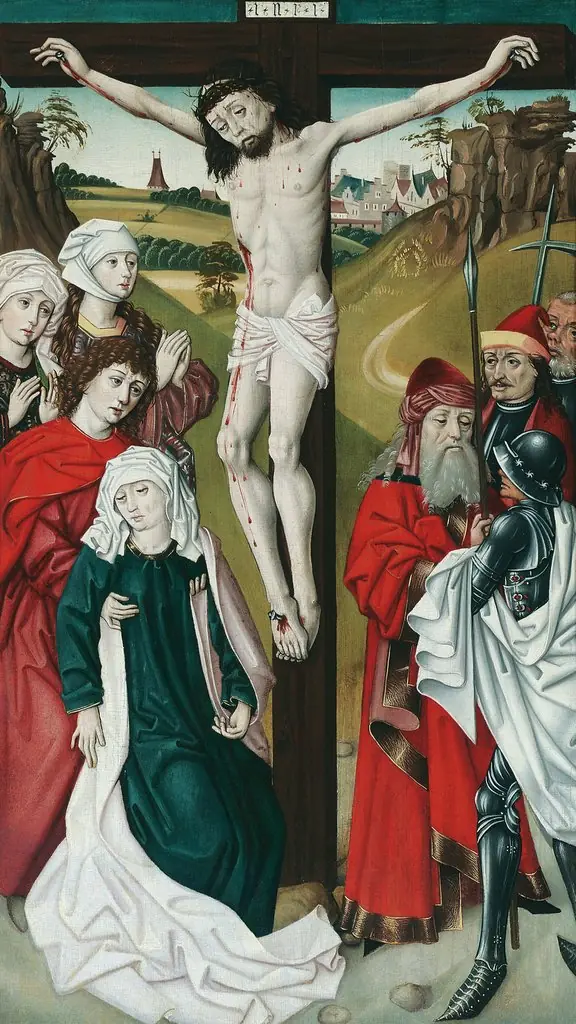
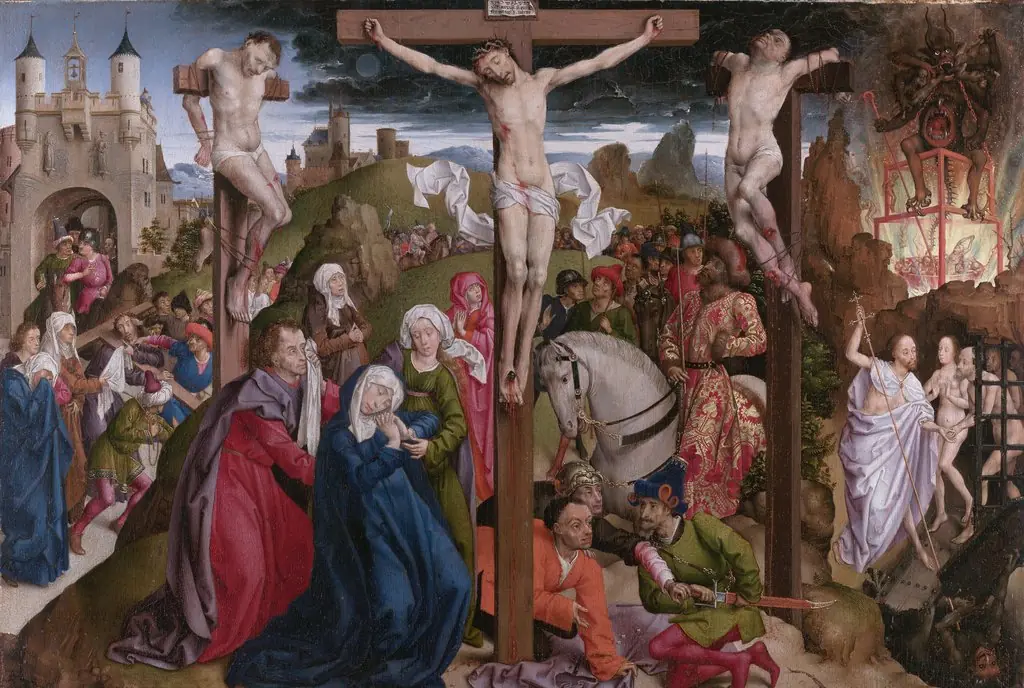
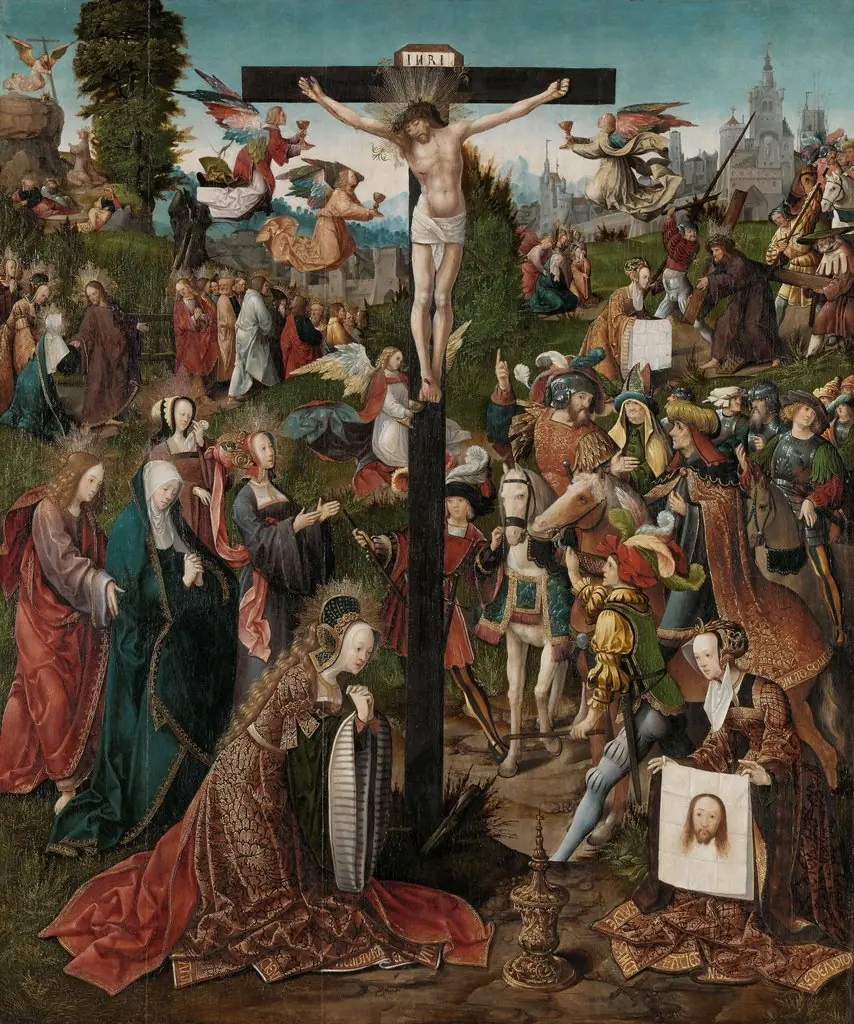
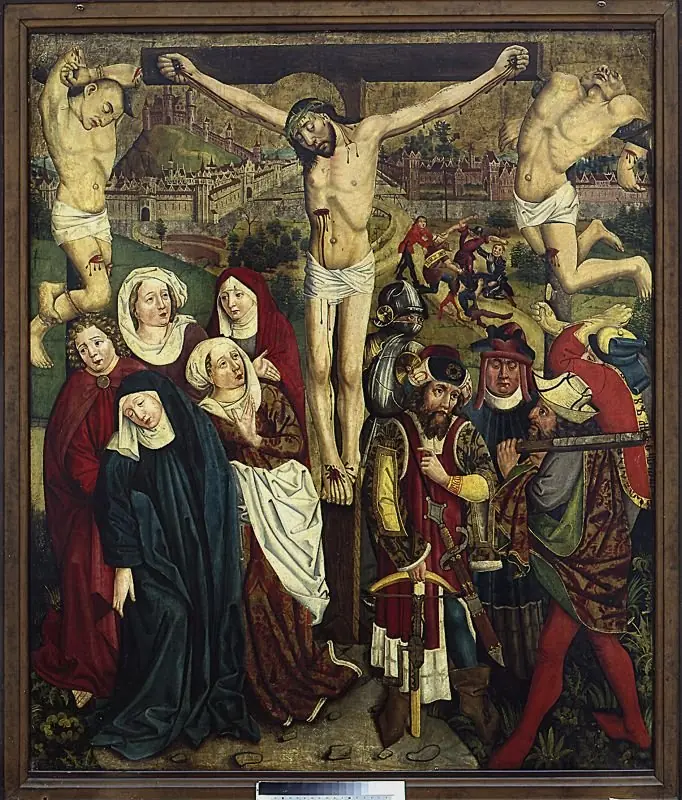
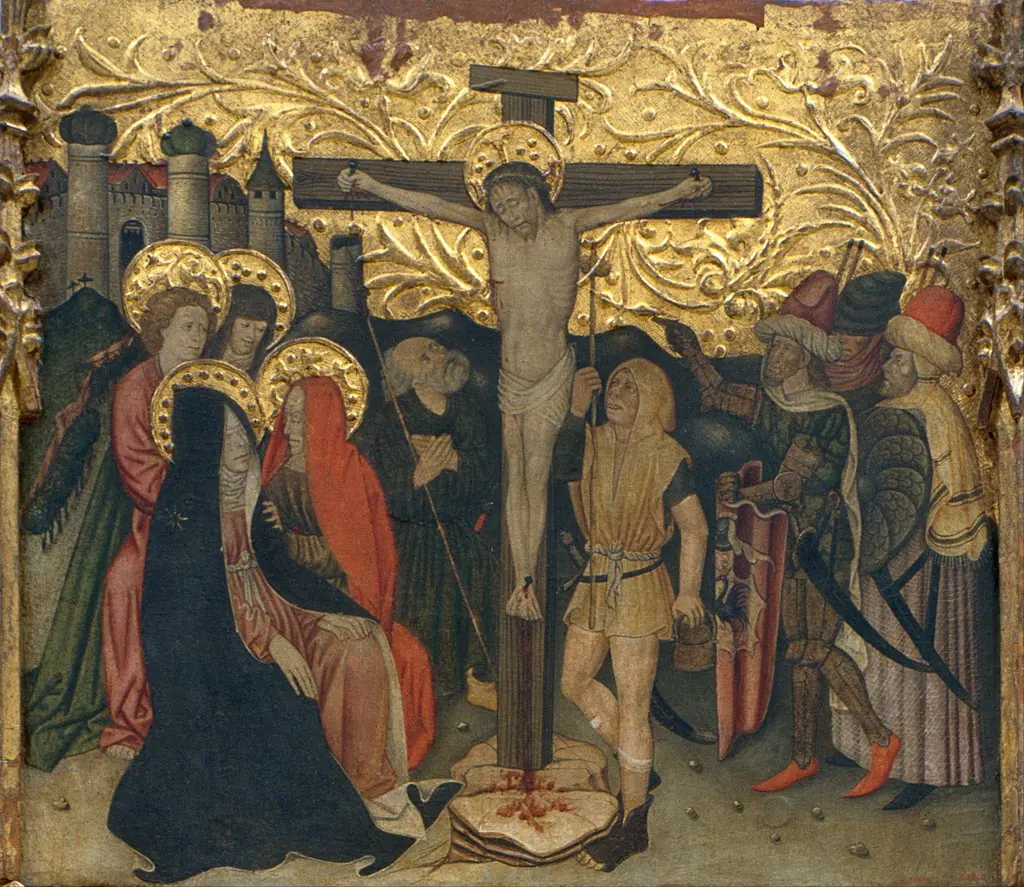
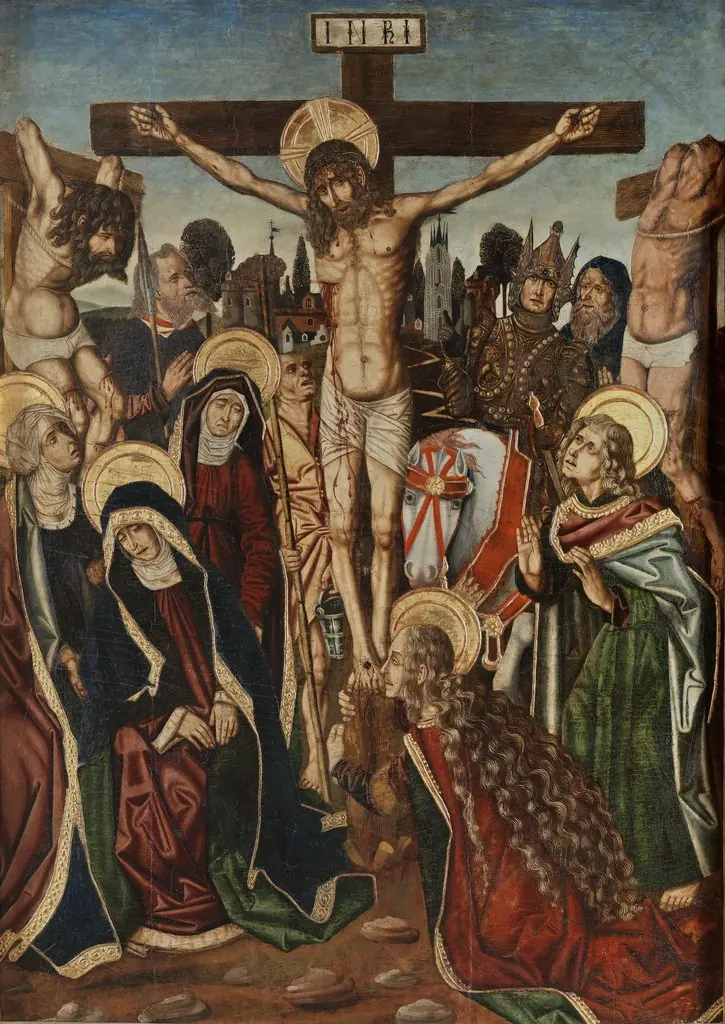
The crucifixion is an oil painting by the Northern Renaissance artist Meister von Laufen. It dates from 1457 and is held in the collection of the Kunsthistorisches Museum.
About this work
Subject & Meaning
These visual elements convey the theological meaning of Christ's suffering as a redemptive act within Christian iconography.
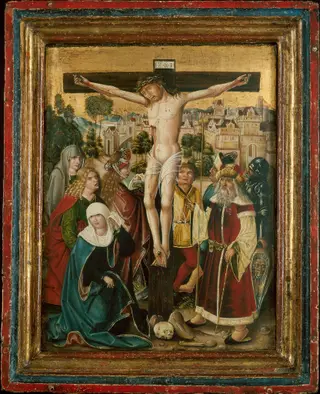
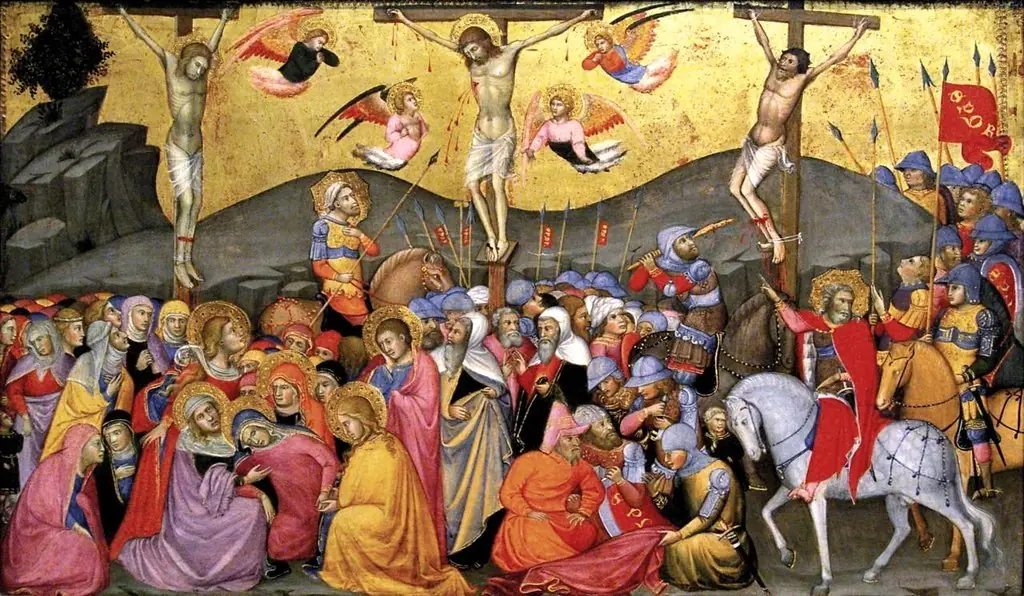
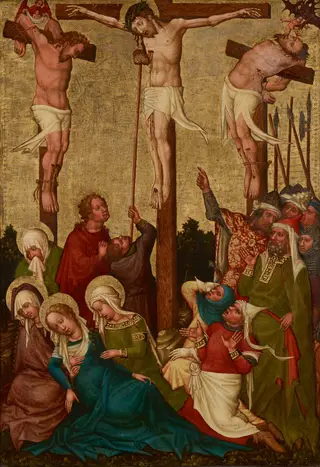
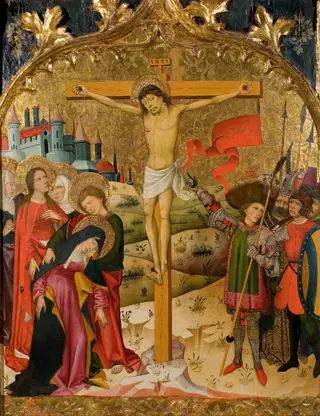
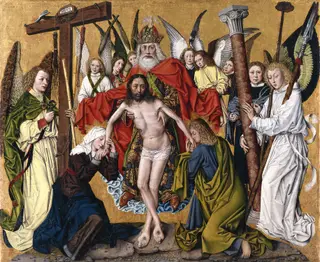
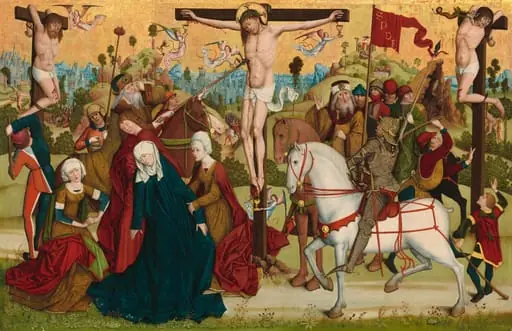
The painting shows the crucifixion of Jesus at the center of the composition, with the cross dominating the space and flanked by the two thieves and the grieving Virgin Mary. The artwork incorporates typical religious symbols such as the crown of thorns, the INRI plaque, and the presence of angels, emphasizing themes of sacrifice and redemption. These visual elements convey the theological meaning of Christ's suffering as a redemptive act within Christian iconography.
Technique & Style
The work is an oil painting executed on wooden panel, a technique typical of Early Netherlandish religious imagery. The surface bears the characteristic smoothness of oil pigments blended over a gessoed ground, allowing fine modeling of figures and subtle gradations of light and shadow. Brushwork is restrained yet precise, defining the contorted bodies of the mourners and the central crucifix with clear outlines and delicate hatching.
The composition adheres to a symmetrical layout, centering the cross while flanking it with grieving saints, a compositional balance that reinforces the devotional focus. Formal elements include a muted palette of earth tones and deep reds, reinforcing the somber mood, while the linear treatment of drapery conveys both narrative clarity and stylized elegance consistent with 15th‑century devotional painting.
History & Provenance
The Crucifixion was created in 1457 by the Meister von Laufen, executed in oil paint on panel. The work is held in the Belvedere collection in Vienna, with the Kunsthistorisches Museum also associated with the collection. The painting measures 97 cm in height by 114 cm in width.
Context
The Crucifixion by Meister von Laufen, painted in 1457 on panel, is a religious work housed in the Belvedere of the Kunsthistorisches Museum in Vienna. It forms part of the artist's established output within late medieval Austrian painting, reflecting devotional practices of the period. Scholarship situates the piece within broader discussions of 15th-century Central European religious art, emphasizing its role in shaping visual narratives of Christ's suffering.
Its formal qualities and iconography have been analyzed in studies of Meister von Laufen's stylistic development and the transmission of devotional imagery in the region.
The work is catalogued in major art historical references and has been featured in exhibitions focusing on medieval Austrian painting, underscoring its significance within the artist's oeuvre and the period's artistic culture.
Overview
Created in 1457 by the German painter known as Meister von Laufen, this oil on panel presents a conventional depiction of the crucifixion. The work is part of the collection of Vienna’s Kunsthistorisches Museum and measures the central drama of the Passion within a crowded, urban setting.
Own this work as a print
Artist & collection
Artist
A German painter active in the mid-1400s, this artist made altarpieces and devotional scenes in oil paint.