Artwork
Dancing Nymphs
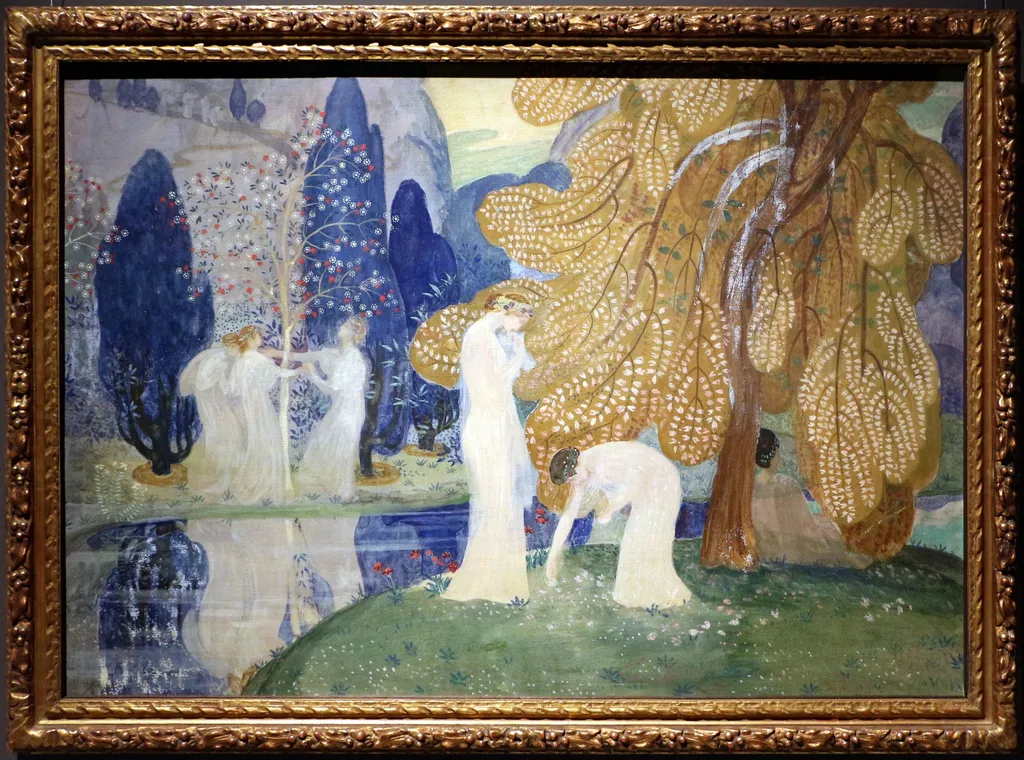
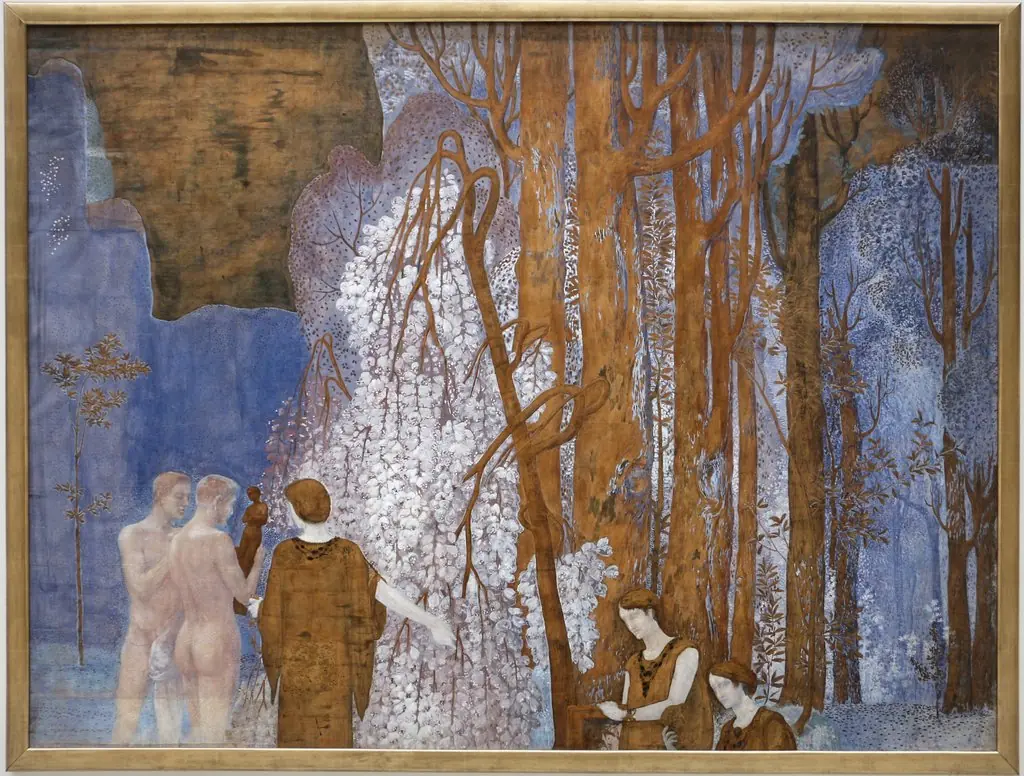
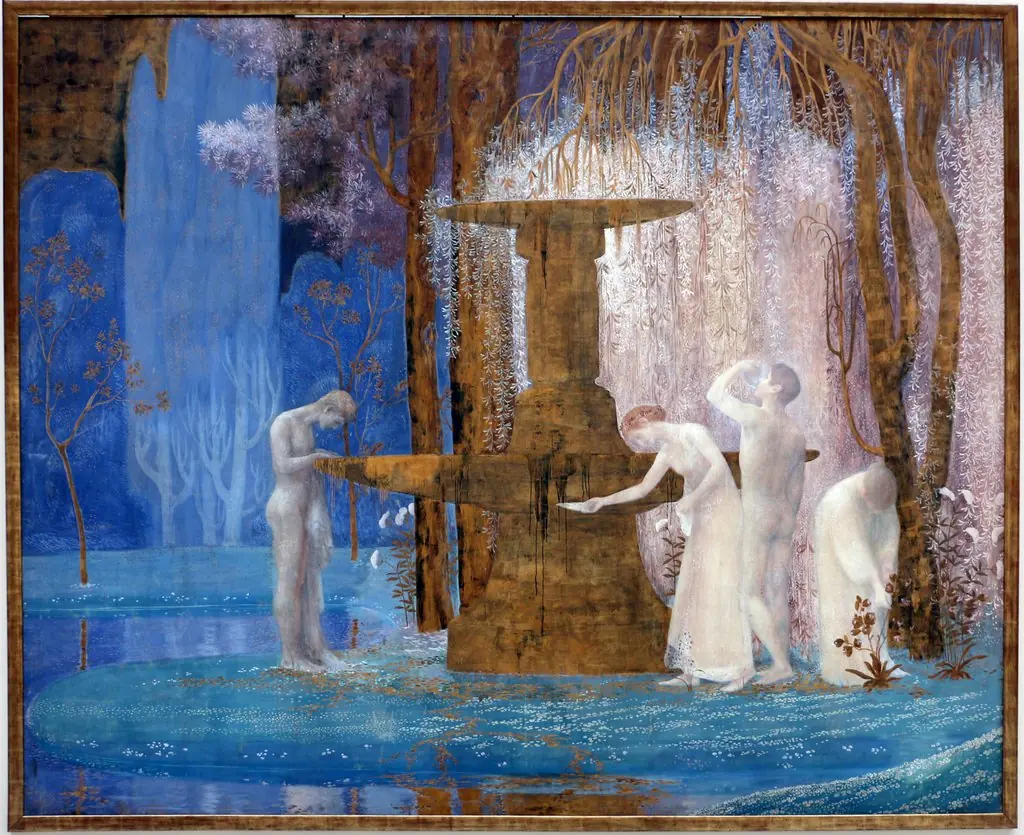
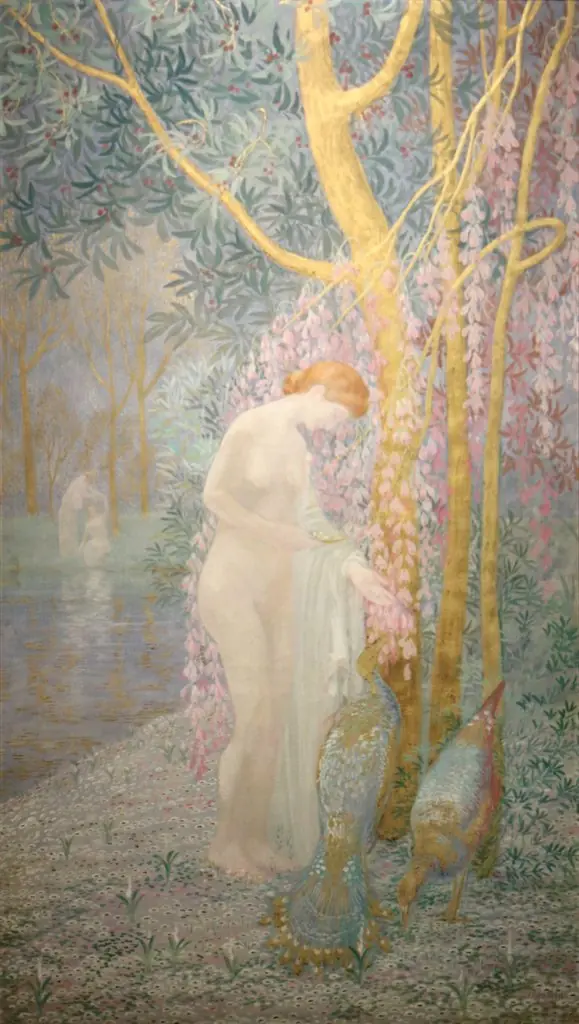
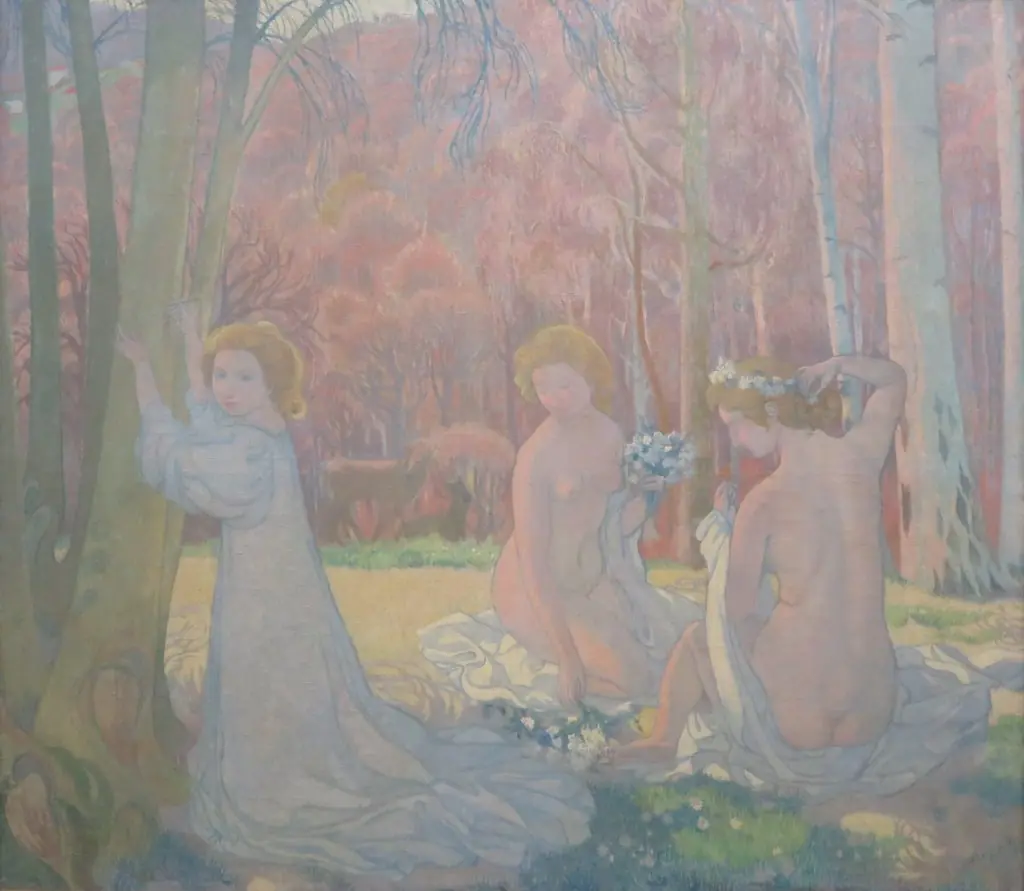
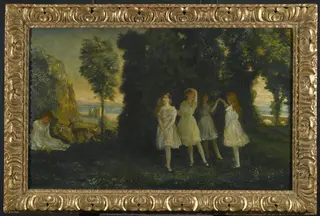
Dancing Nymphs is an oil painting by the Symbolist artist Constant Montald. It dates from 1900 and is held in the collection of the Royal Museums of Fine Arts of Belgium.
About this work
Subject & Meaning
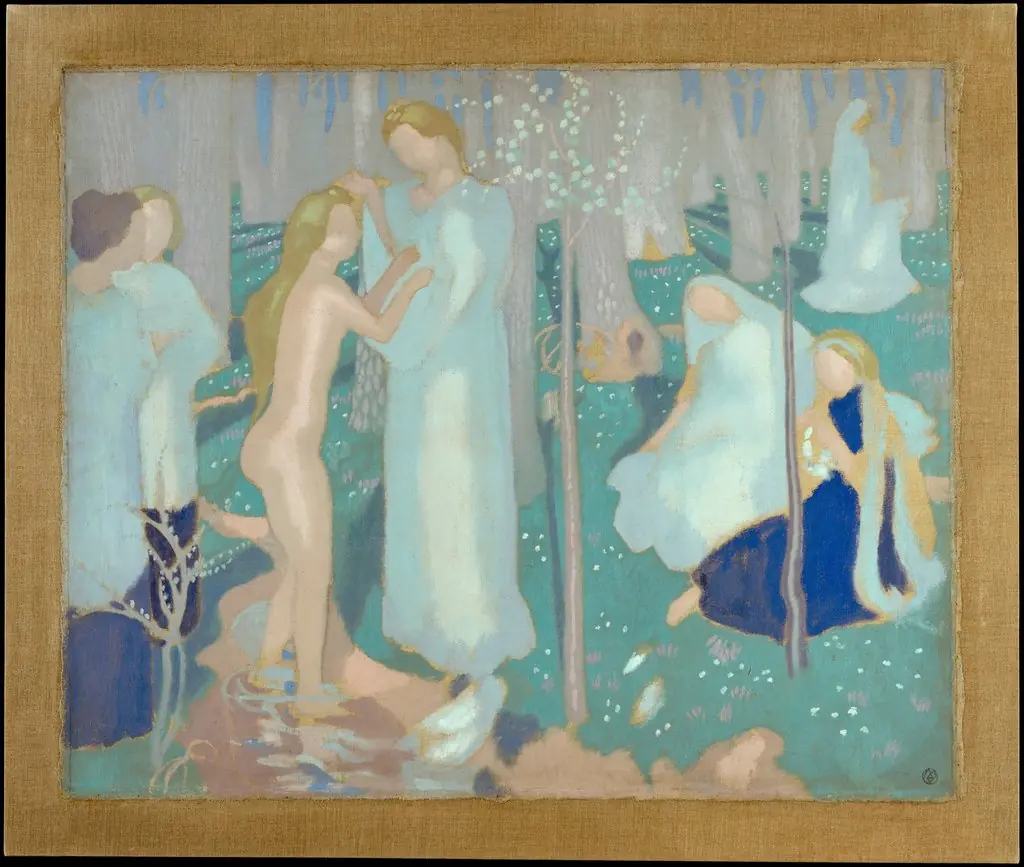
The work portrays a graceful nymph amid a wooded landscape, her presence suggested by a flowing stream and reflected light that echo themes of nature and fleeting beauty. Montald combines oil and tempera on canvas to render the figure with delicate brushwork, allowing the surrounding trees and distant mountains to frame her ethereal movement. The composition draws on mythological conventions that celebrate the harmony between human form and natural elements, a motif common in late‑19th‑century Symbolist painting.
The painting is housed in the Royal Museums of Fine Arts of Belgium’s Fin-de‑Siècle Museum, where it is displayed as part of the collection of mythological works.
Technique & Style
The painting combines oil paint and tempera techniques on a canvas support, reflecting the material practices characteristic of late 19th-century Belgian art.
Dancing Nymphs is a mythological painting executed in tempera on canvas, depicting a nymph within a natural setting that includes a tree, stream, and reflected mountain landscape. The work measures 95.5 cm in height by 135.5 cm in width and was created in 1898. It is part of the collection at the Royal Museums of Fine Arts of Belgium, specifically housed in the Fin-de-Siècle Museum.
The painting combines oil paint and tempera techniques on a canvas support, reflecting the material practices characteristic of late 19th-century Belgian art.
The composition emphasizes fluid line and delicate color modulation, aligning with Symbolist approaches to mythological subjects. Its handling conveys a sense of ethereal movement, while the stylistic treatment of the figure and environment demonstrates Montald’s interest in blending naturalistic detail with symbolic abstraction.
Overview
Constant Montald’s tempera work titled Dancing Nymphs was completed in 1900 and is part of the collection of the Royal Museums of Fine Arts of Belgium. The painting presents a tranquil outdoor setting populated by four female figures in white garments, situated beside a tree and a gently flowing stream that mirrors the surrounding landscape.
History & Provenance
Created at the turn of the twentieth century, the painting entered the holdings of the Royal Museums of Fine Arts of Belgium, where it remains on display. Its acquisition reflects the museum’s commitment to representing Belgian Symbolist and mythological art from this period.
Context
Dancing Nymphs aligns with the Symbolist tendency of the late 1800s to evoke mythic themes through allegorical figures and idealized nature. Montald’s interest in integrating decorative elements with narrative content places the work alongside contemporaneous European explorations of myth as a vehicle for expressing spiritual and aesthetic ideals.
Own this work as a print
Artist & collection

Museum
Royal Museums of Fine Arts of Belgium
Continue through works from the same source collection.