Artwork
Betenkrämer
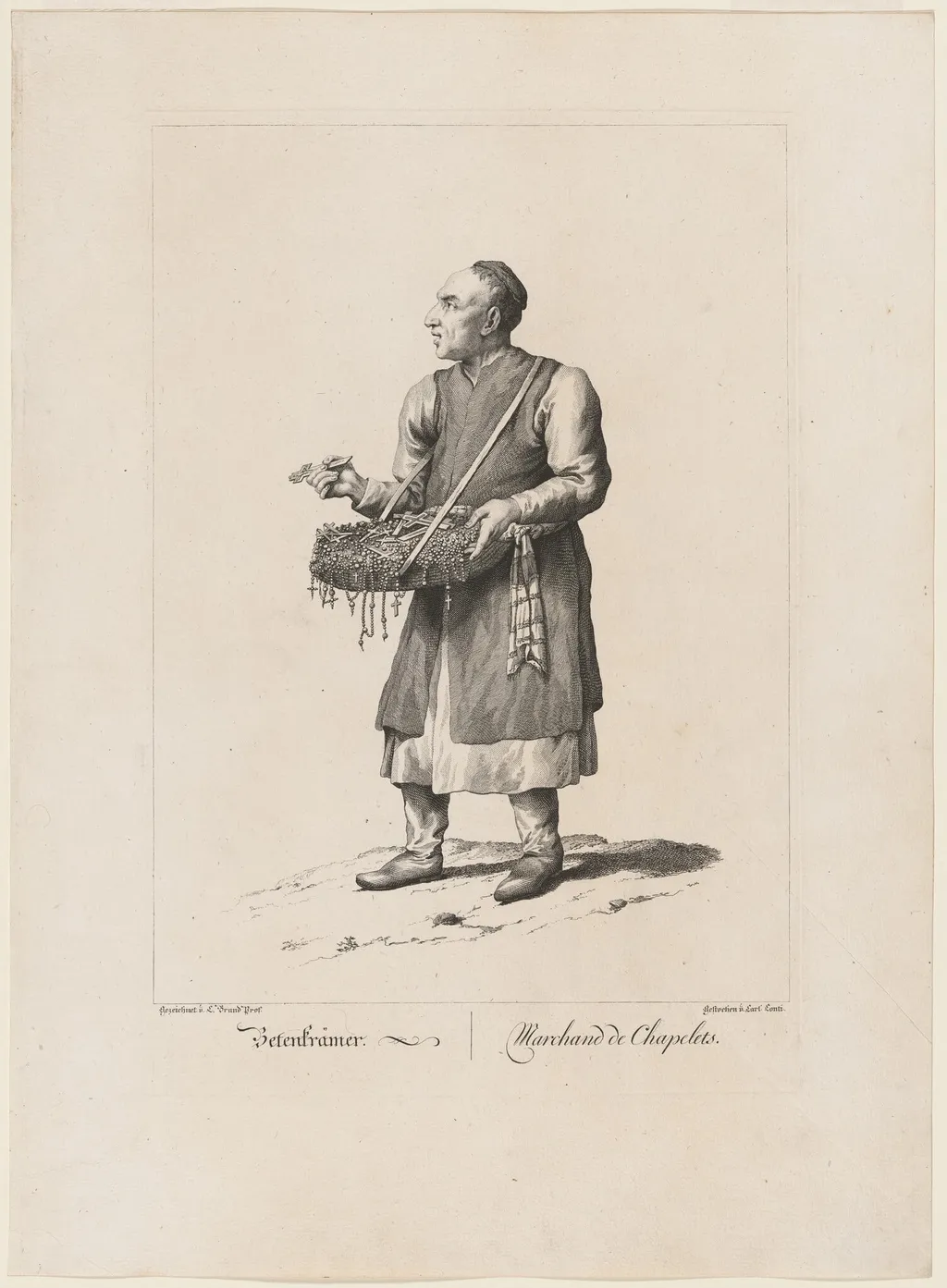
Betenkrämer is an ink print by the Romanticist artist Carl Conti. It dates from 1775 and is held in the collection of the National Gallery of Art.
- Inscription
- Inscribed:lower left in pate: Gezeichnet v. C. Brand Prof./ lower right in plate: Gestochen v Carl Conti; lower center in plate: Betenkrämer / Marchand de Chapelets
- Markings
- Marked:none
About this work
Overview
Betenkrämer / Marchand de Chapelets (Rosary Peddler) is an engraving on laid paper by Carl Conti, dated to 1775. The work depicts a street vendor selling rosary beads, capturing a moment of everyday life.
Subject & Meaning
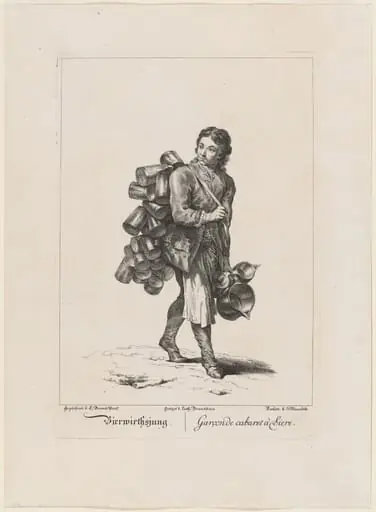
The engraving portrays a weary rosary peddler, dressed in a long coat with a sash and scuffed boots, lost in thought. His gaze is diverted, conveying a sense of fatigue or contemplation, while his merchandise - a basket of rosary beads and loose beads in hand - defines his humble profession.
Technique & Style
Conti employed fine lines to achieve detailed shading and texture, resulting in a nuanced, albeit slightly rough-hewn, visual quality characteristic of the engraving medium.
History & Provenance
Created in 1775 by Carl Conti, specific details regarding the engraving's provenance and historical context of creation are not provided.
Context
As a depiction of a common street vendor, the work reflects 18th-century interest in documenting everyday life, potentially catering to a growing middle-class audience interested in such scenes.
Legacy
The enduring significance or influence of 'Betenkrämer / Marchand de Chapelets' in the broader art historical canon is not explicitly outlined in available information.
Own this work as a print
Artist & collection