Artwork
Anna, Lady Bacon, Daughter of Sir Anthony Cooke and Wife of Sir Nicolas Bacon
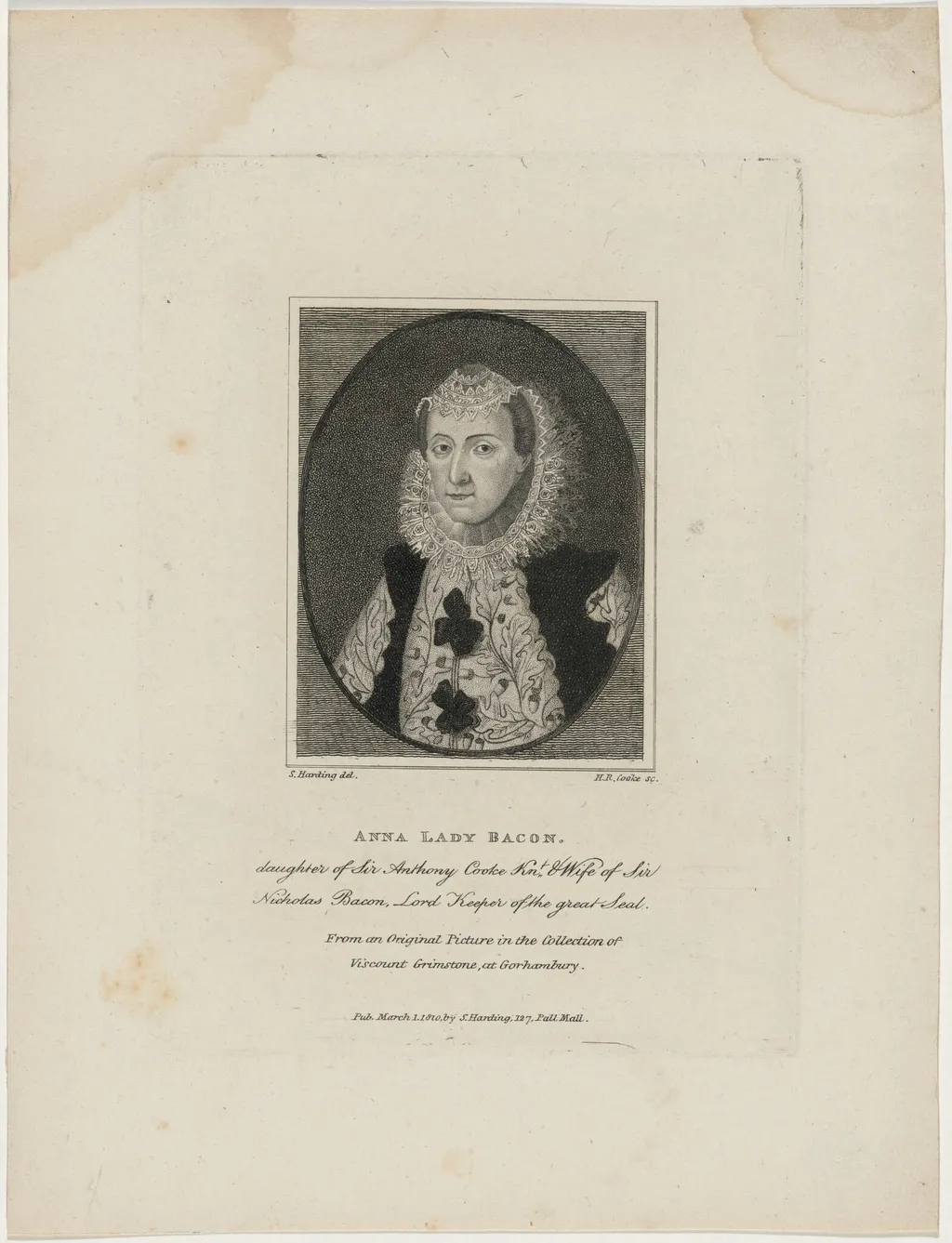
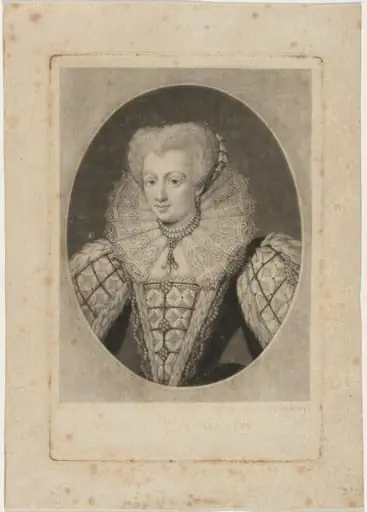
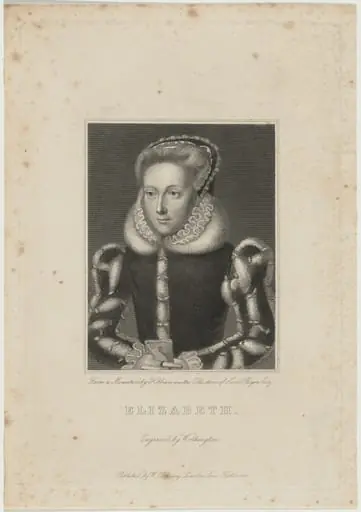
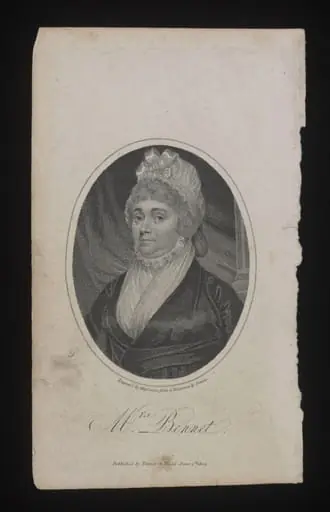
Anna, Lady Bacon, Daughter of Sir Anthony Cooke and Wife of Sir Nicolas Bacon is an ink print by the Romanticist artist Henry Richard Cook. It dates from 1810 and is held in the collection of the National Gallery of Art.
About this work
Overview
The technique relies on delicate dots and fine lines to suggest form and texture, avoiding bold outlines.
This 1810 stipple engraving depicts Anna, Lady Bacon, produced by Henry Richard Cook. It is a monochrome reproductive print, derived from an earlier painted portrait. The technique relies on delicate dots and fine lines to suggest form and texture, avoiding bold outlines.
The image preserves the likeness of its subject with quiet precision, characteristic of early 19th-century printmaking practices aimed at disseminating portraiture beyond original canvases.
Subject & Meaning
Anna, Lady Bacon, was the daughter of Sir Anthony Cooke and wife of Sir Nicolas Bacon, both prominent figures in Tudor England. The portrait emphasizes her status through restrained elegance rather than overt display. Her composed gaze and modest attire reflect ideals of aristocratic femininity in the late 16th century, when the original painting was likely made.
The engraving serves as a visual record of lineage and social standing, preserving her identity for later generations.
Technique & Style
The image was created using stipple engraving, a method employing tiny ink dots to build tonal gradations. This technique allowed for subtle modeling of the face and fabric without relying on hatching or cross-contour lines. The lace collar and floral dress are rendered with fine, controlled punctuations, giving texture while maintaining clarity.
The absence of color aligns with the print’s function as a faithful, accessible reproduction rather than an original artistic statement.
History & Provenance
The engraving was made in 1810 by Henry Richard Cook, who specialized in reproducing historic portraits. It was based on an earlier painting, now lost or unlocated, which likely dated to the late 1500s. Cook’s version was part of a broader trend in the early 19th century to revive and circulate images of notable historical figures through print. Its production suggests continued interest in Tudor-era lineage and aristocratic heritage during the Georgian period.
Context
In the early 1800s, stipple engraving was widely used to reproduce portraits for private collections and public institutions. Anna’s image, though centuries removed from her lifetime, was circulated as part of a cultural effort to preserve and memorialize Tudor nobility. The print reflects a period when historical identity was being systematically documented, often through mechanical reproduction, as interest in genealogy and national heritage grew among the educated classes.
Legacy
This engraving remains a tangible link to Anna, Lady Bacon, whose original portrait no longer survives in known collections. As a reproductive print, it helped sustain her public presence into the modern era. Though not an original work of art, it exemplifies how printmaking functioned as a tool of historical preservation, ensuring that figures of aristocratic lineage continued to be visually remembered beyond the lifespan of their painted likenesses.
Own this work as a print
Artist & collection

 H Beard Print Collection
 Queen Elizabeth
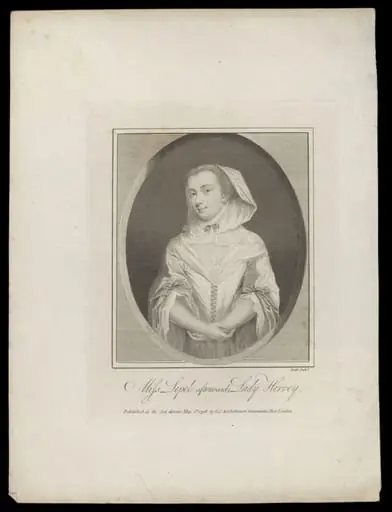 H Beard Print Collection
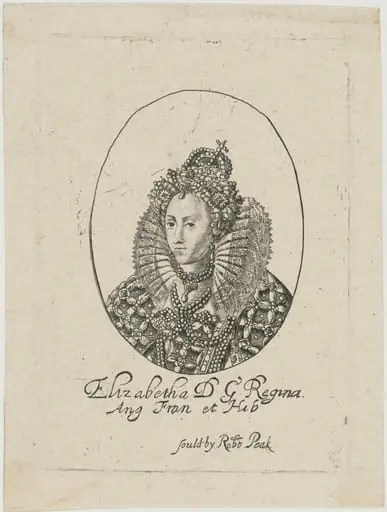 Queen Elizabeth
 Princess Elizabeth
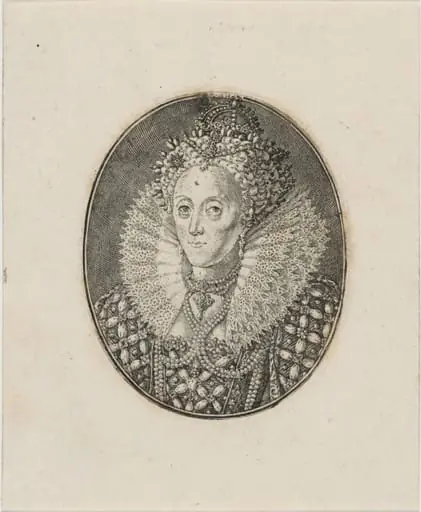 Elizabeth, Queen of England
 Elizabeth
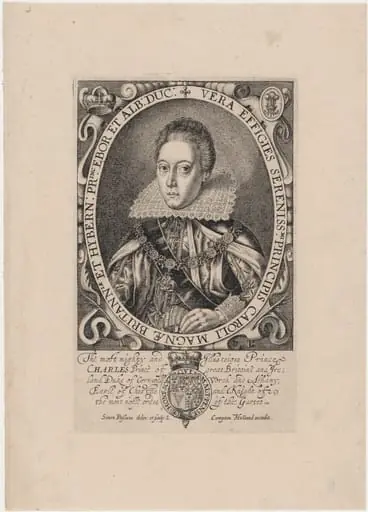 Charles I, Prince of Great Britain and Ireland, Duc of Cornwall and Yorck
 H Beard Print Collection
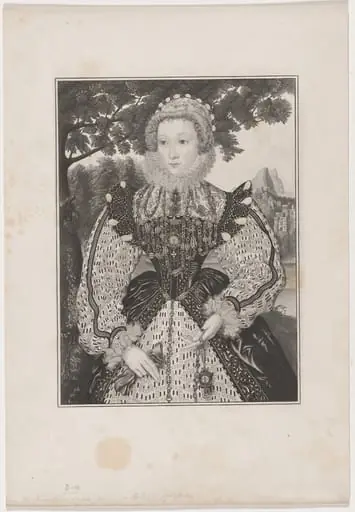 Mary of Guise
 H Beard Print Collection
- Anna, Lady Bacon, Daughter of Sir Anthony Cooke and Wife of Sir Nicolas Bacon