Artwork
Badeanstalt (The Bath House)
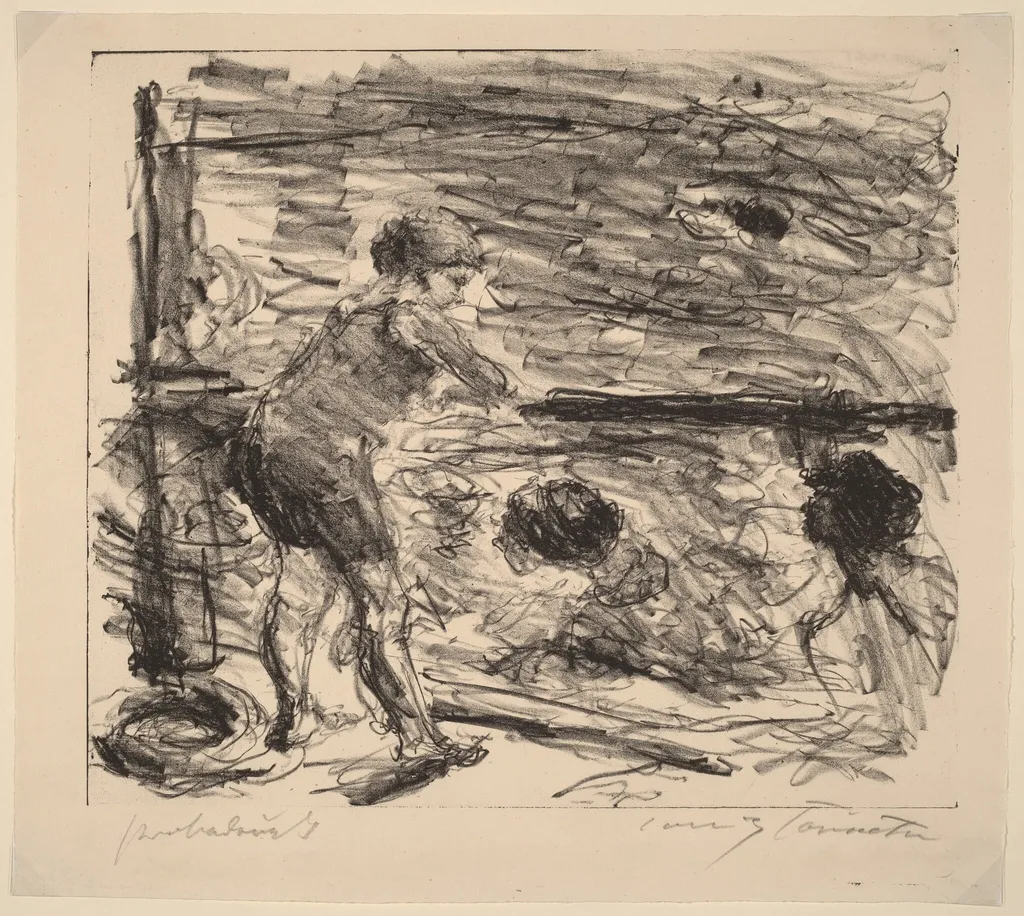
Badeanstalt (The Bath House) is an ink print by Lovis Corinth. It dates from 1920 and is held in the collection of the National Gallery of Art.
- Inscription
- Inscribed:lower left in graphite: Probedruck; lower right in graphite: Lovis Corinth; lower right verso in graphite by unknown hand: CIII493
- Markings
- Marked:stamped center verso in black ink: R
About this work
Overview
Badeanstalt (The Bath House) is a 1920 lithograph by Lovis Corinth, a German artist known for his work in multiple mediums. The print is executed in black on laid paper.
Subject & Meaning
The lithograph depicts a scene of three nude figures in a bathhouse, captured through expressive black lines and shading that convey a sense of movement and energy.
Technique & Style
Corinth's use of bold lines and shading gives the figures depth, while the light background and darker structural lines evoke the bathhouse setting, reflecting his evolving style that blended elements of impressionism and expressionism.
History & Provenance
Created in 1920, the work reflects Corinth's artistic development following a stroke in 1911, which led to more expressive qualities in his art. Corinth was associated with the Berlin Secession, a group he later led.
Own this work as a print
Artist & collection
Artist
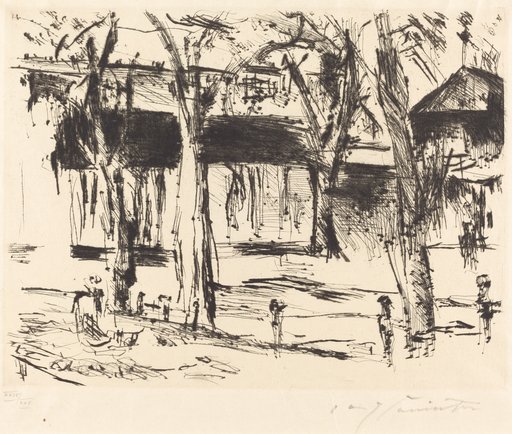
Lovis Corinth (21 July 1858 – 17 July 1925) was a German artist and writer whose mature work as a painter and printmaker realized a synthesis of impressionism and expressionism.

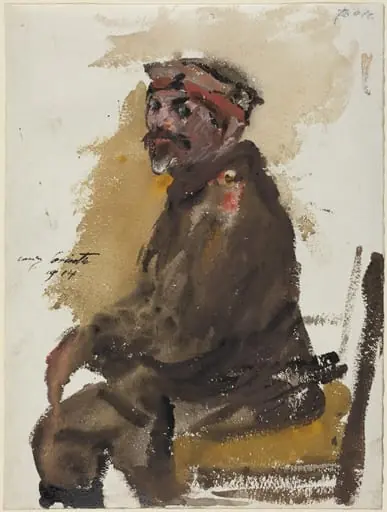
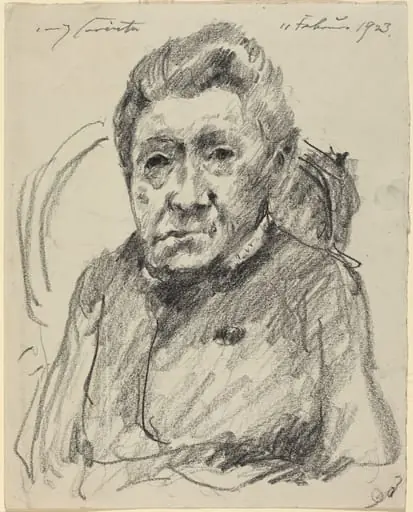
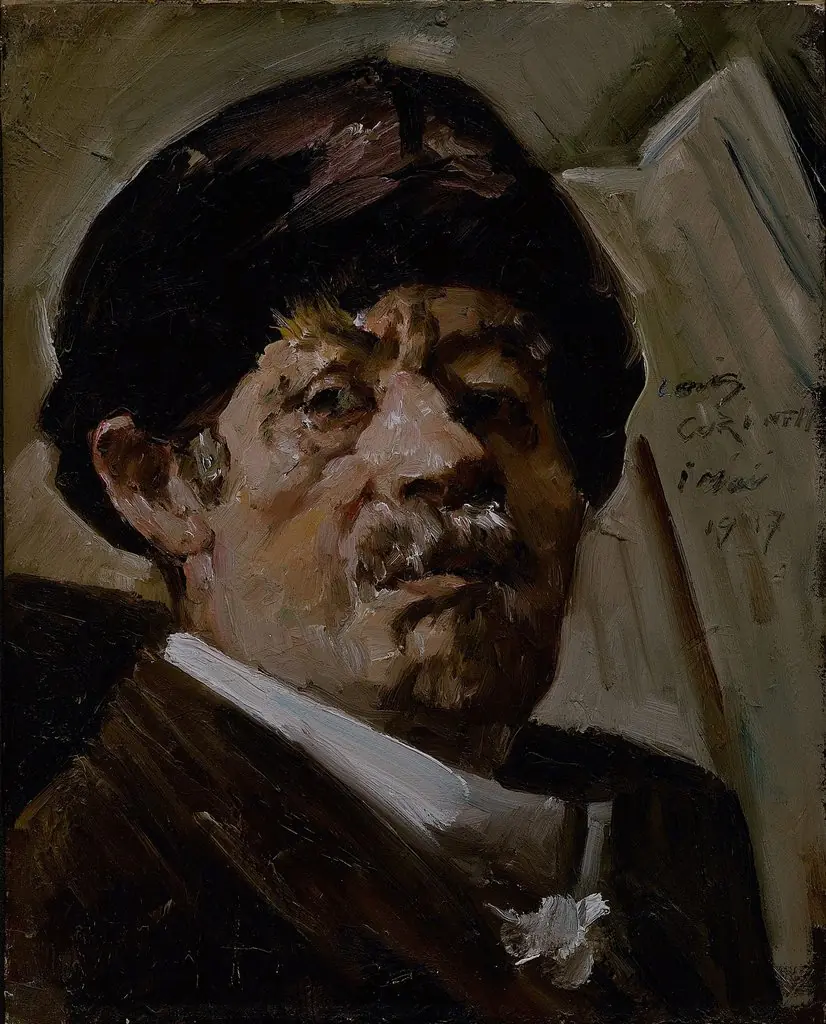
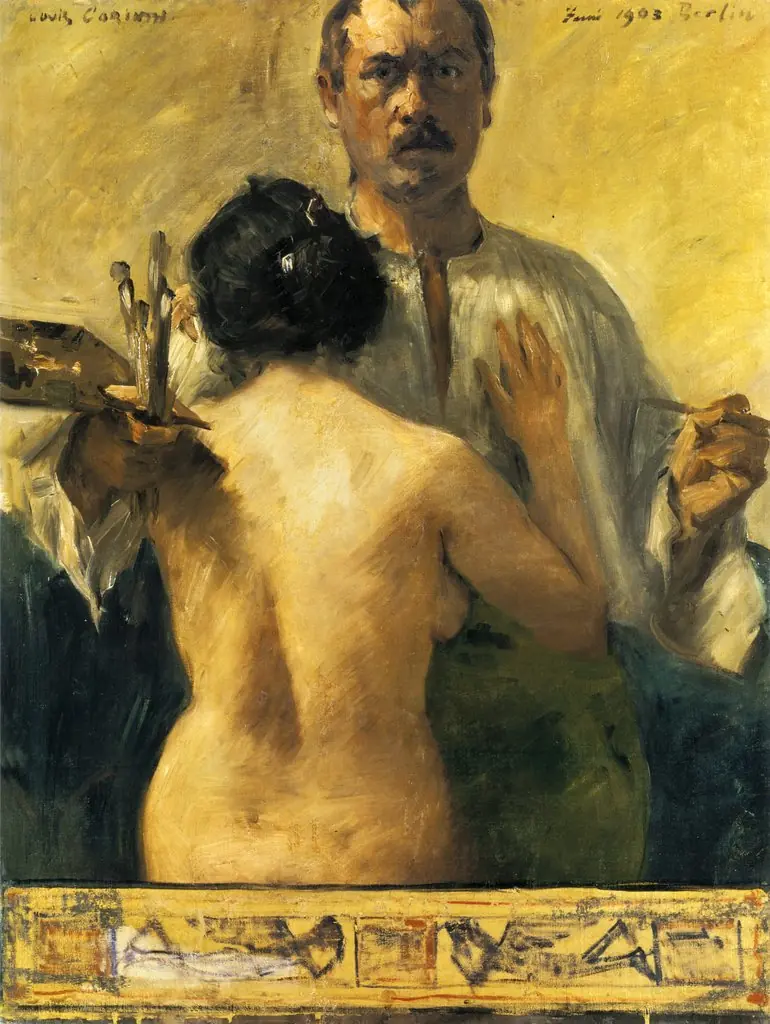
 Das Gastmahl des Trimalchio: pl. VII (The Banquet of Trimalchio: pl. VII)
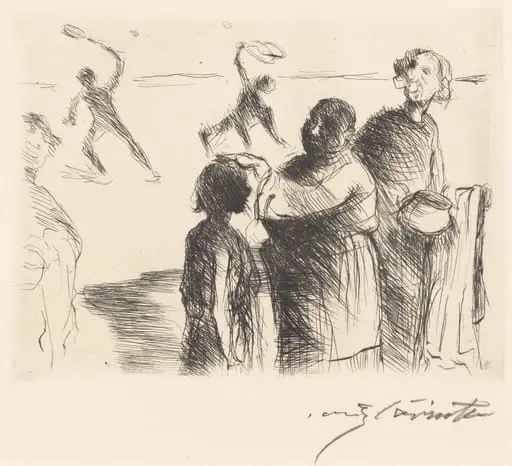 Das Gastmahl des Trimalchio: pl. II (The Banquet of Trimalchio: pl. II)
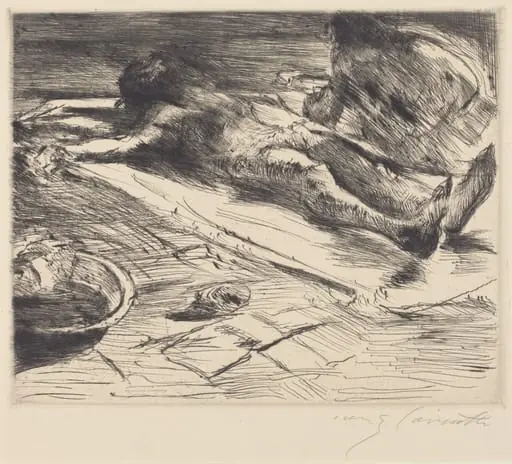 Pietà
Pietà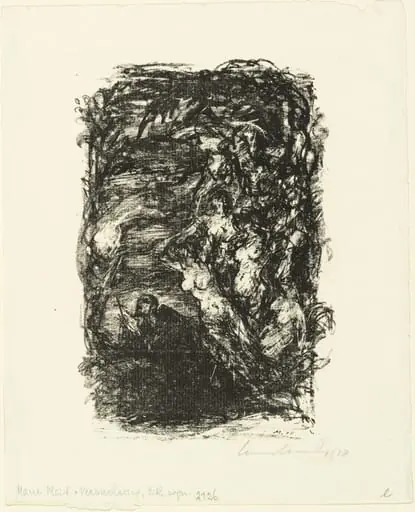 Untitled
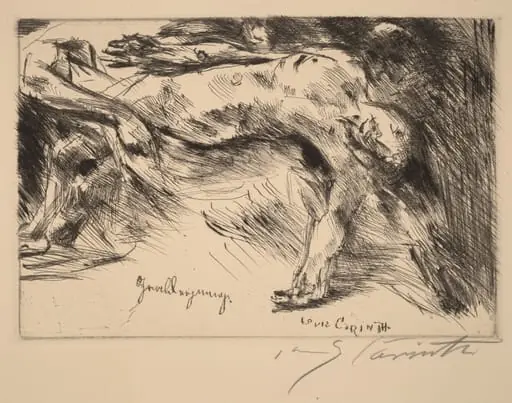 Grablegung (Burial)
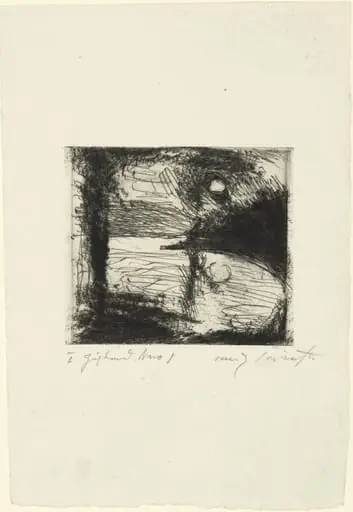 Untitled
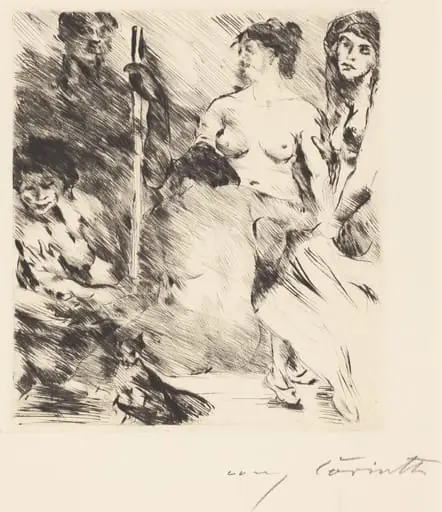 Der Harem (The Harem)
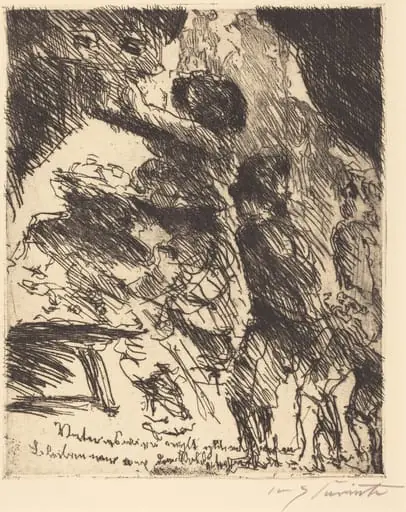 "Vater, es wird nicht gut ablaufen, bleiben wir von dem soldatenhaufen" ("Father, This Won't Turn Out Well, We should stay away from the gang of soldiers")
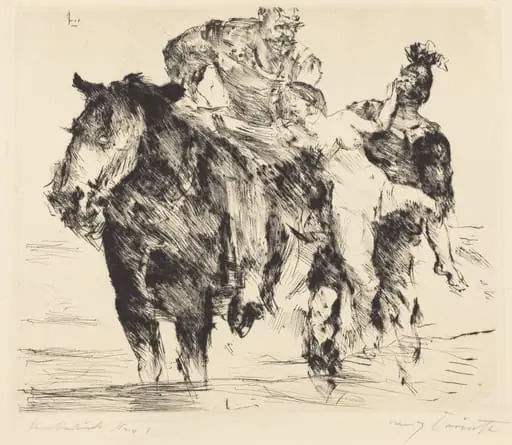 Frauenräuber (Rape)
 The Old Smith's Story