Artwork
Bannerträger (Standard Bearer)
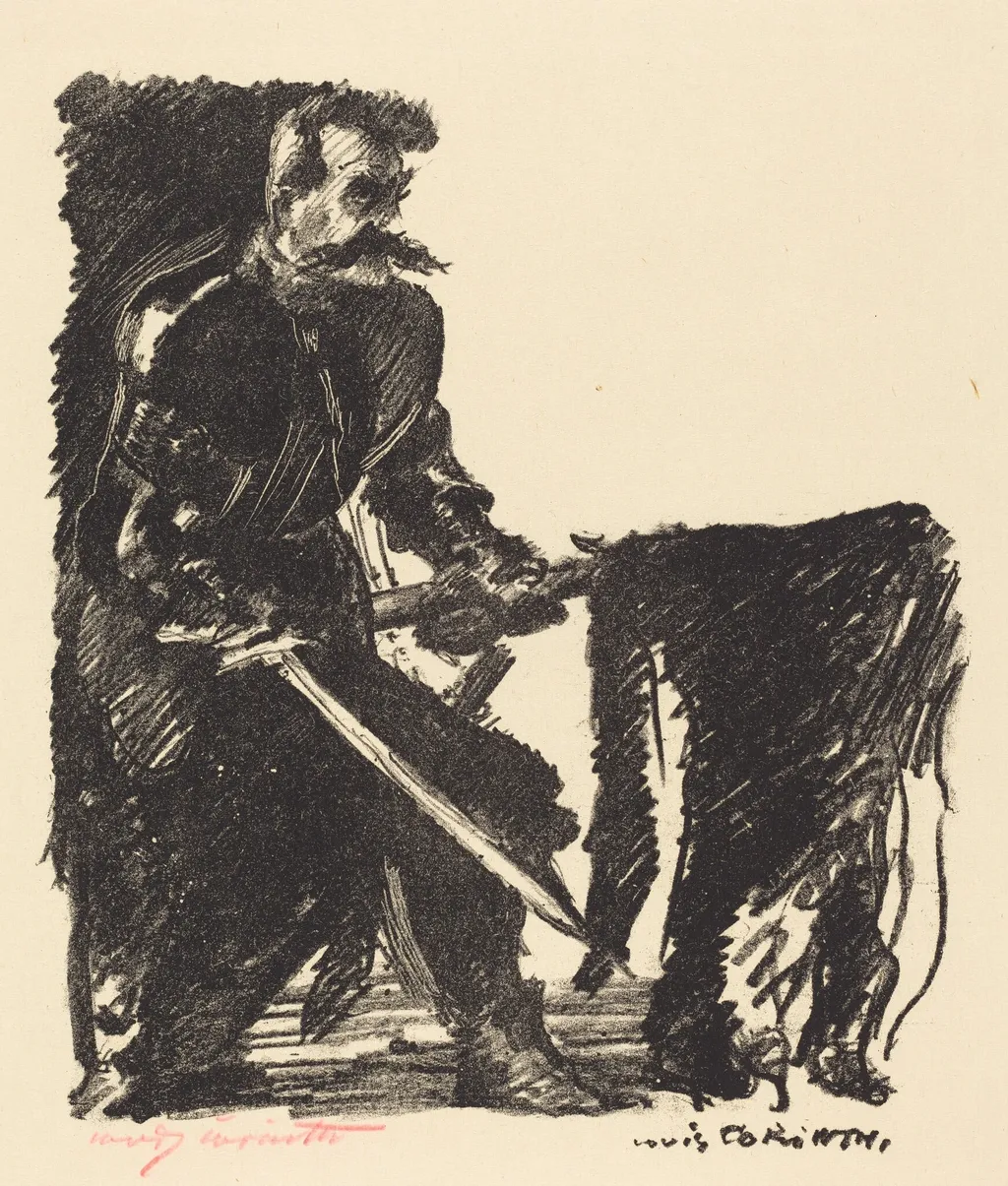
Bannerträger (Standard Bearer) is an ink print by Lovis Corinth. It dates from 1915 and is held in the collection of the National Gallery of Art.
- Inscription
- Inscribed:lower right on stone: Lovis Corinth.; lower left in red pencil: Lovis Corinth; lower left verso in graphite by unknown hand: Schw. 201
- Markings
- Marked:embossed: [man wrestling dragon]; stamped lower right: Lovis Corinth : Bannerträger
About this work
Overview
This print emerged during a period of formal transformation in his work, following a stroke in 1911 that altered his approach to line and composition.
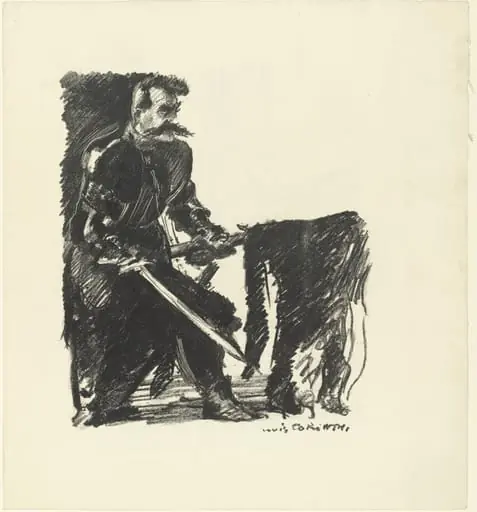
Lovis Corinth produced the lithograph Bannerträger in 1915, using black ink on wove paper. This print emerged during a period of formal transformation in his work, following a stroke in 1911 that altered his approach to line and composition. The image captures a solitary figure with minimal detail, emphasizing gesture over definition. Its raw, hurried execution reflects Corinth’s evolving engagement with expressive mark-making in printmaking.
Subject & Meaning
The figure holds a tall pole topped with a draped fabric, suggesting a ceremonial or military standard. The blurred face and indistinct features obscure identity, shifting focus from individuality to the weight of the object and the posture of bearing it. The lack of contextual detail isolates the figure, evoking themes of duty, isolation, or the burden of representation without explicit narrative.
Technique & Style
Corinth employed lithography to achieve a spontaneous, sketch-like quality. The lines are loose and uneven, with areas of dense black ink contrasting against sparse, eroded strokes. The rough texture of the wove paper enhances the tactile immediacy of the image. By limiting palette to black and relying on gestural pressure, he prioritized emotional resonance over technical polish.
History & Provenance
Created during World War I, the print belongs to Corinth’s post-stroke period, when his artistic language became more visceral and less naturalistic. While specific ownership history is not documented here, the work aligns with his broader print output from 1912–1918, which often explored psychological and physical vulnerability through simplified forms and urgent execution.
Context
In 1915, Germany was entrenched in war, and many artists responded to trauma through intensified expression. Corinth’s move away from naturalism mirrored broader shifts in German art toward emotional authenticity. His lithographs from this time, including Bannerträger, reflect a departure from academic tradition, embracing fragmentation and immediacy as tools for conveying inner states.
Legacy
Bannerträger exemplifies Corinth’s contribution to modern printmaking through its fusion of expressive line and psychological depth. Though less celebrated than his paintings, these prints influenced later German Expressionists who valued rawness and emotional candor. The work remains a quiet testament to how personal crisis can reshape artistic vision, prioritizing feeling over fidelity.
Own this work as a print
Artist & collection
Artist
Lovis Corinth (21 July 1858 – 17 July 1925) was a German artist and writer whose mature work as a painter and printmaker realized a synthesis of impressionism and expressionism.

 Untitled
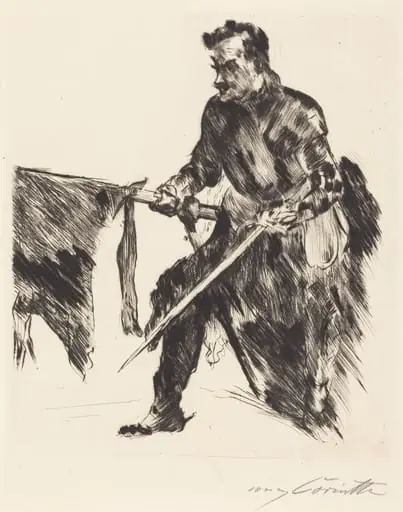 Rudolf Rittner als Florian Geyer (Rudolf Rittner as Florian Geyer)
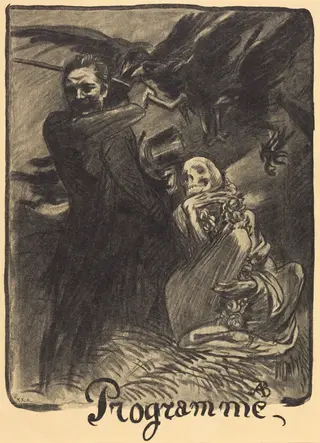 Les Honnêtes femmes; Conférence, Poésies inédites d'Henry Becque; La Parisienne
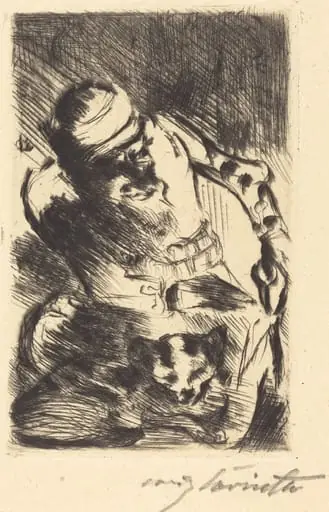 Die Katze des Propheten (The Cat of the Prophet)
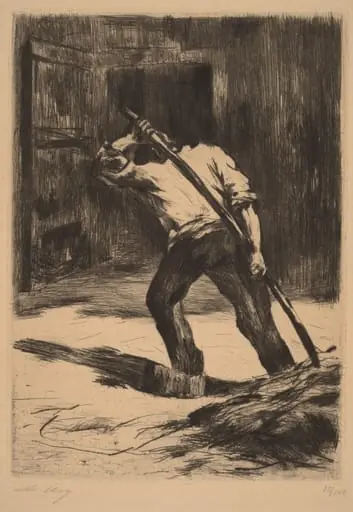 On the Floor of the Barn
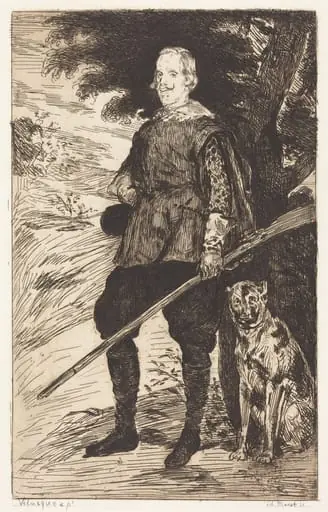 Philip IV (Philippe IV)
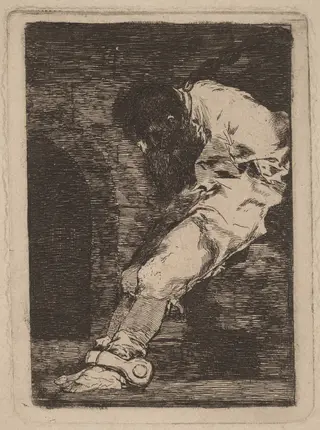 Si es delinquente qe. muera presto (If He is Guilty, Let Him Die Quickly)
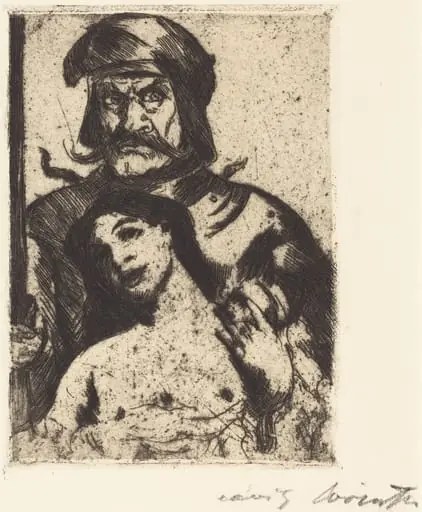 Der Ritter (The Knight)
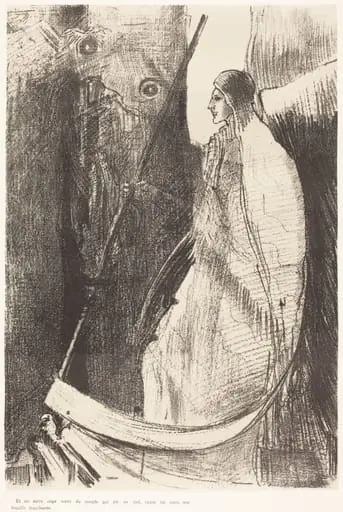 Et un autre ange sortit du temple qui est au ciel, ayant lui aussi une faucille tranchante (And another angel came out of the temple which is in heaven, and he also having a sharp sickle)
 The Pig Butcher
 Cheval aile (Winged Horse)
- Der Fahnenträger (The Standard Bearer)