Artwork
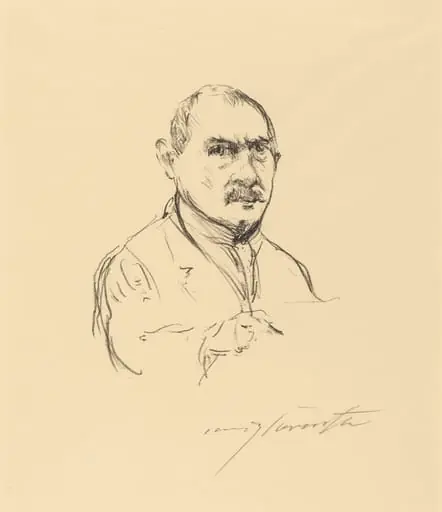
Selbstbildnis (Self-Portrait)
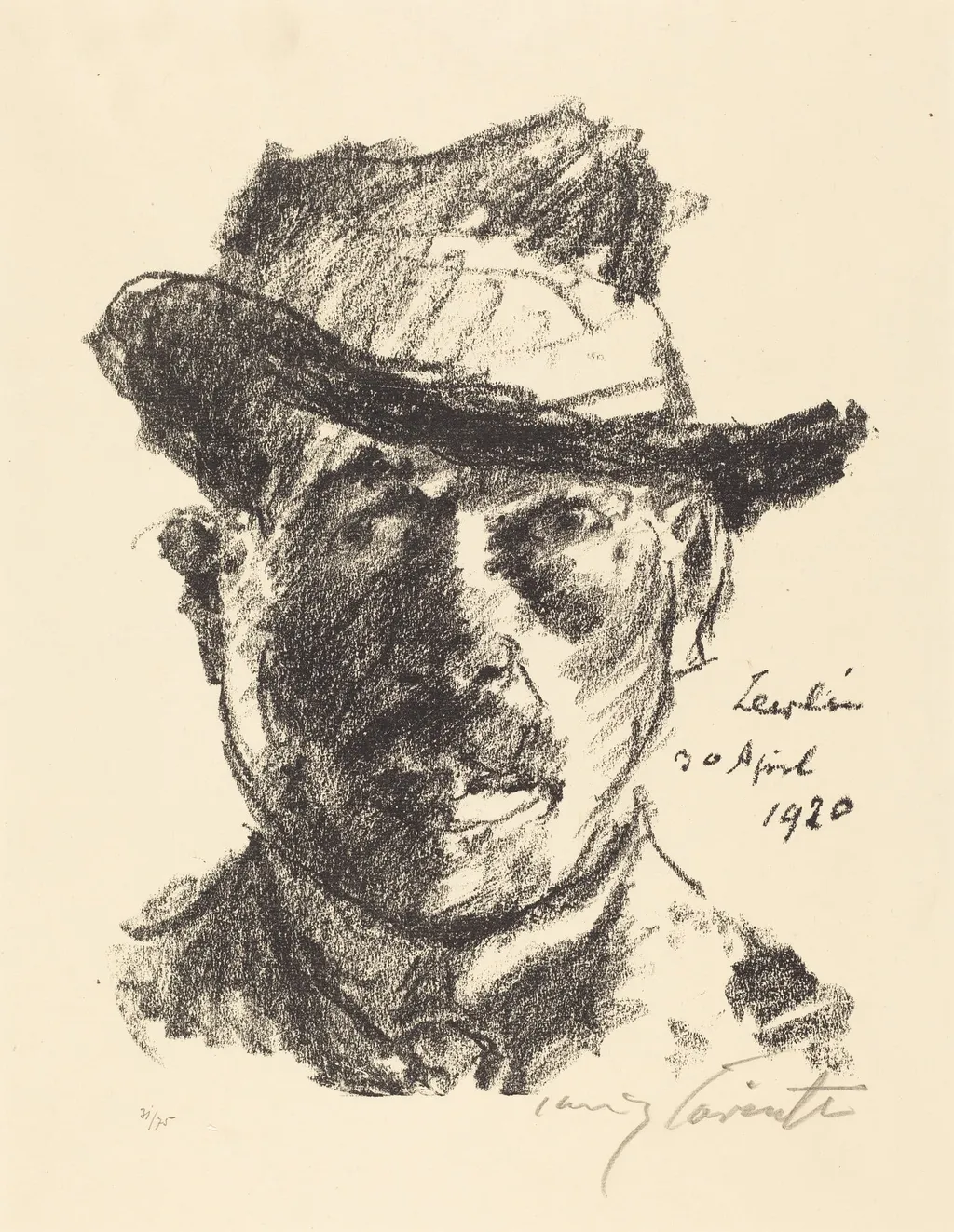
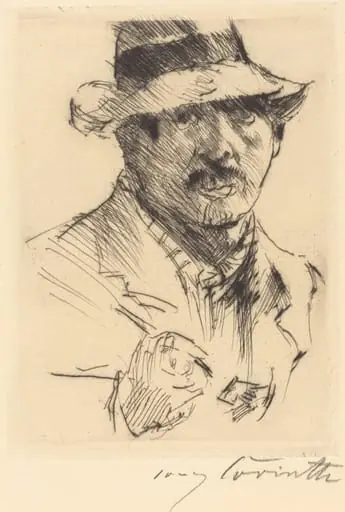
Selbstbildnis (Self-Portrait) is an ink print by Lovis Corinth. It dates from 1920 and is held in the collection of the National Gallery of Art.
- Inscription
- Inscribed:lower right in graphite: Lovis Corinth
- Markings
- Marked:stamped verso in black ink: COMISION NACIONAL DE MUSEOS / Y MONUMENTOS HISTORICOS / JOSE LUIS BUSANICHE / SECRETARIO GENERALE
About this work
His face is drawn with quick, rough lines, just enough to suggest eyes, a nose, and a mustache.
This sketch shows a man wearing a flat cap pulled low over his forehead. His face is drawn with quick, rough lines, just enough to suggest eyes, a nose, and a mustache. The hat’s brim is thick and shadowy, almost hiding his eyebrows.
The artist signed it in the corner, along with the year 1920. The drawing looks like it was made fast, with smudges and uneven marks.
Want to learn more about how this kind of drawing was made? Try looking up lithography.
Overview
Lovis Corinth’s self‑portrait is a black lithographic print created in 1920. The image presents the artist in a flat cap, his features rendered with swift, sketch‑like lines that hint at eyes, nose and a moustache. The composition is marked by uneven strokes and smudges, suggesting a rapid execution. The work bears Corinth’s signature and the date in the lower corner.
Subject & Meaning
The portrait captures Corinth himself, emphasizing his own presence through a modest headwear and a partially concealed brow. The loose handling of line conveys a personal, introspective tone, while the limited tonal range focuses attention on the sitter’s expression rather than decorative detail.
Technique & Style
Executed as a lithograph, the image relies on the artist’s direct drawing on a stone or metal plate, later transferred to paper. The black‑only palette and vigorous, unfinished lines reflect Corinth’s post‑stroke shift toward expressionist tendencies, moving away from his earlier naturalist precision.
History & Provenance
Corinth, born in 1858, studied in Paris and Munich before becoming a leading figure in the Berlin Secession. After a debilitating stroke in 1911, his artistic language altered dramatically, adopting looser forms and heightened emotional content. This 1920 print exemplifies his mature graphic output during that later period.
Context
The self‑portrait sits within a broader transition in early‑20th‑century German art, where impressionist influences merged with emerging expressionist sensibilities. Corinth’s role in the Secession and his later leadership positioned him at the forefront of this stylistic synthesis, which is evident in the work’s blend of spontaneous draftsmanship and expressive force.
Own this work as a print
Artist & collection
Artist
Lovis Corinth (21 July 1858 – 17 July 1925) was a German artist and writer whose mature work as a painter and printmaker realized a synthesis of impressionism and expressionism.

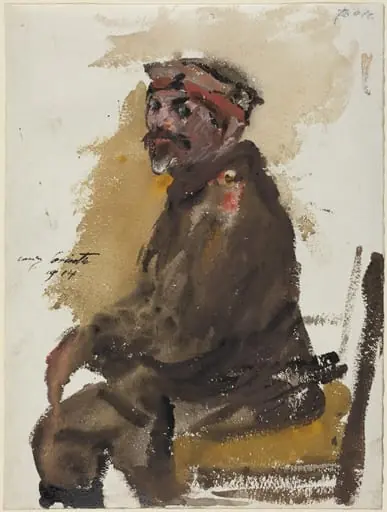
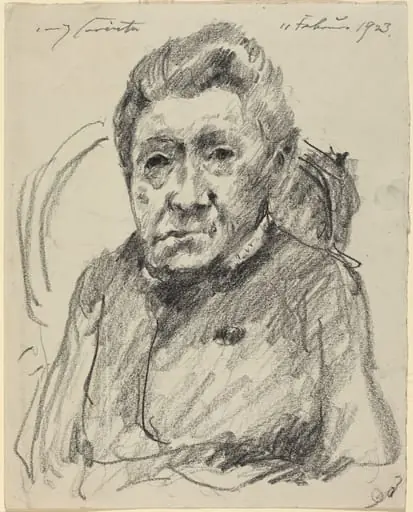
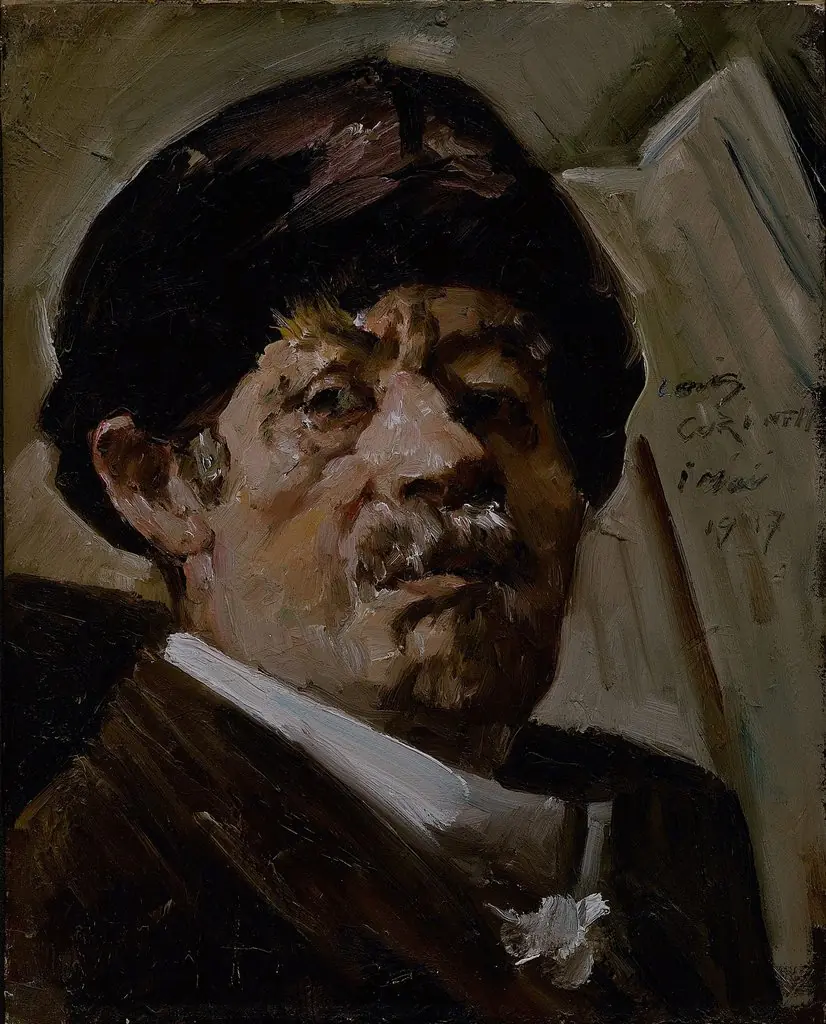
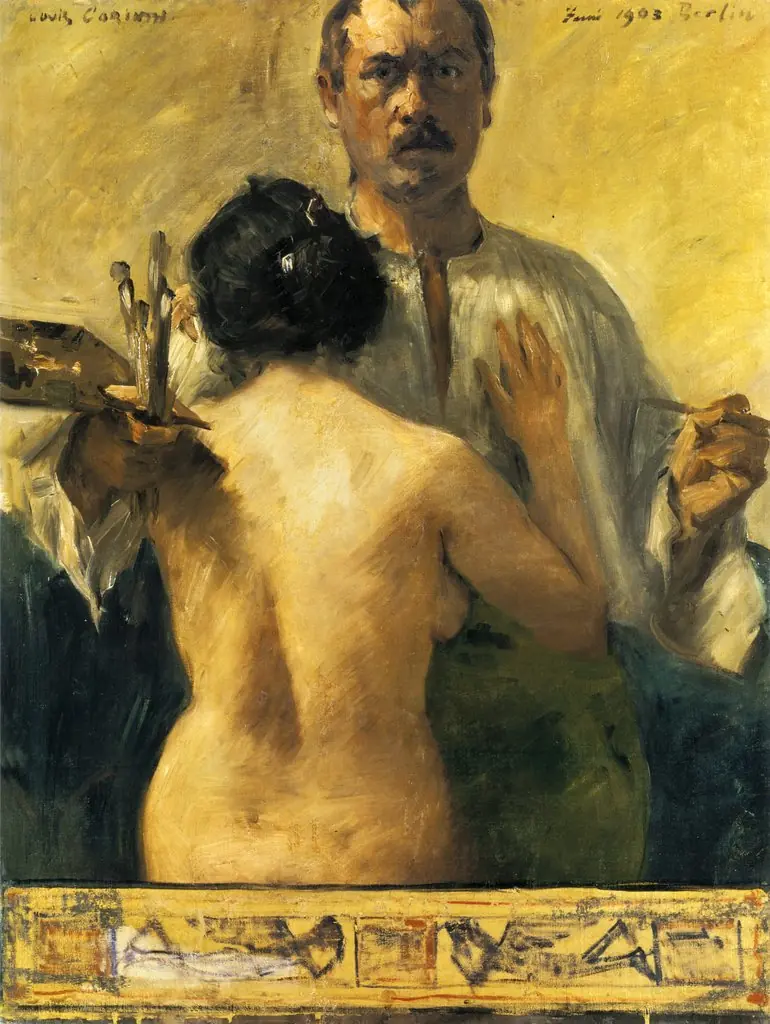
- Selbstbildnis (Self-Portrait)
 Selbstbildnis (Self-Portrait)
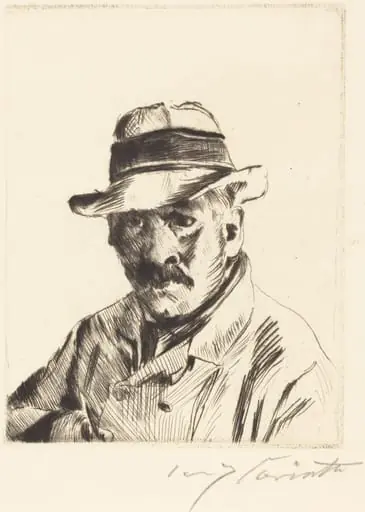 Selbstbildnis im Strohhut (Self-Portrait in a Straw Hat)
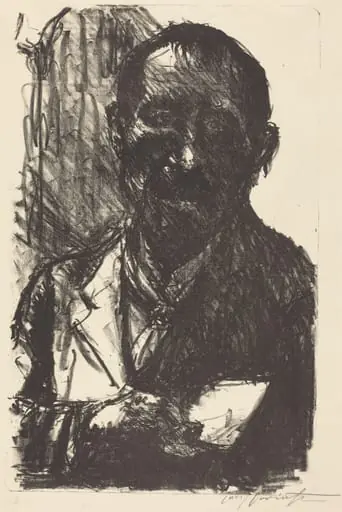 Selbstbildnis 1919 (Self-Portrait 1919)
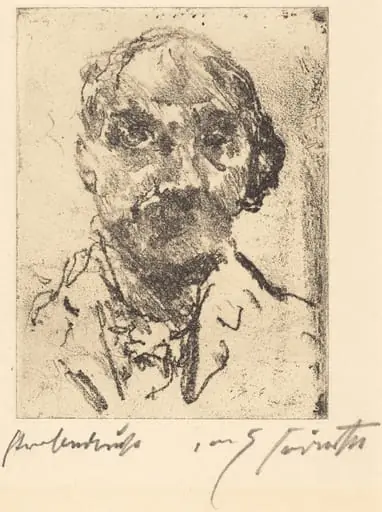 Selbstbildnis (Self-Portrait)
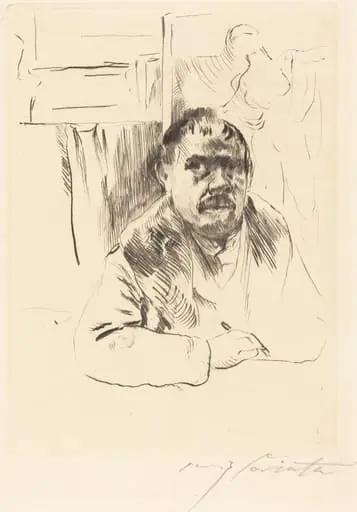 Selbstbildnis im Pelz (Self-Portrait in a Fur Coat)
 Selbstbildnis (Self-Portrait)
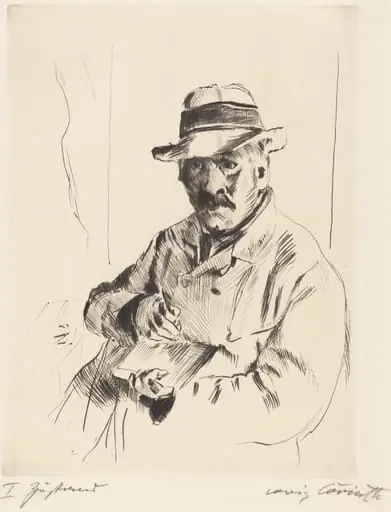 Selbstbildnis im Strohhut (Self-Portrait in a Straw Hat)