Artwork
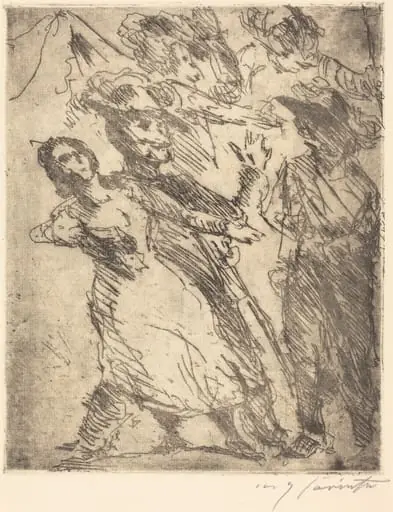
"Was der blitz! Das ist ja die gustel von blasewitz" ("What's That! It's Gustel von Blasewitz")
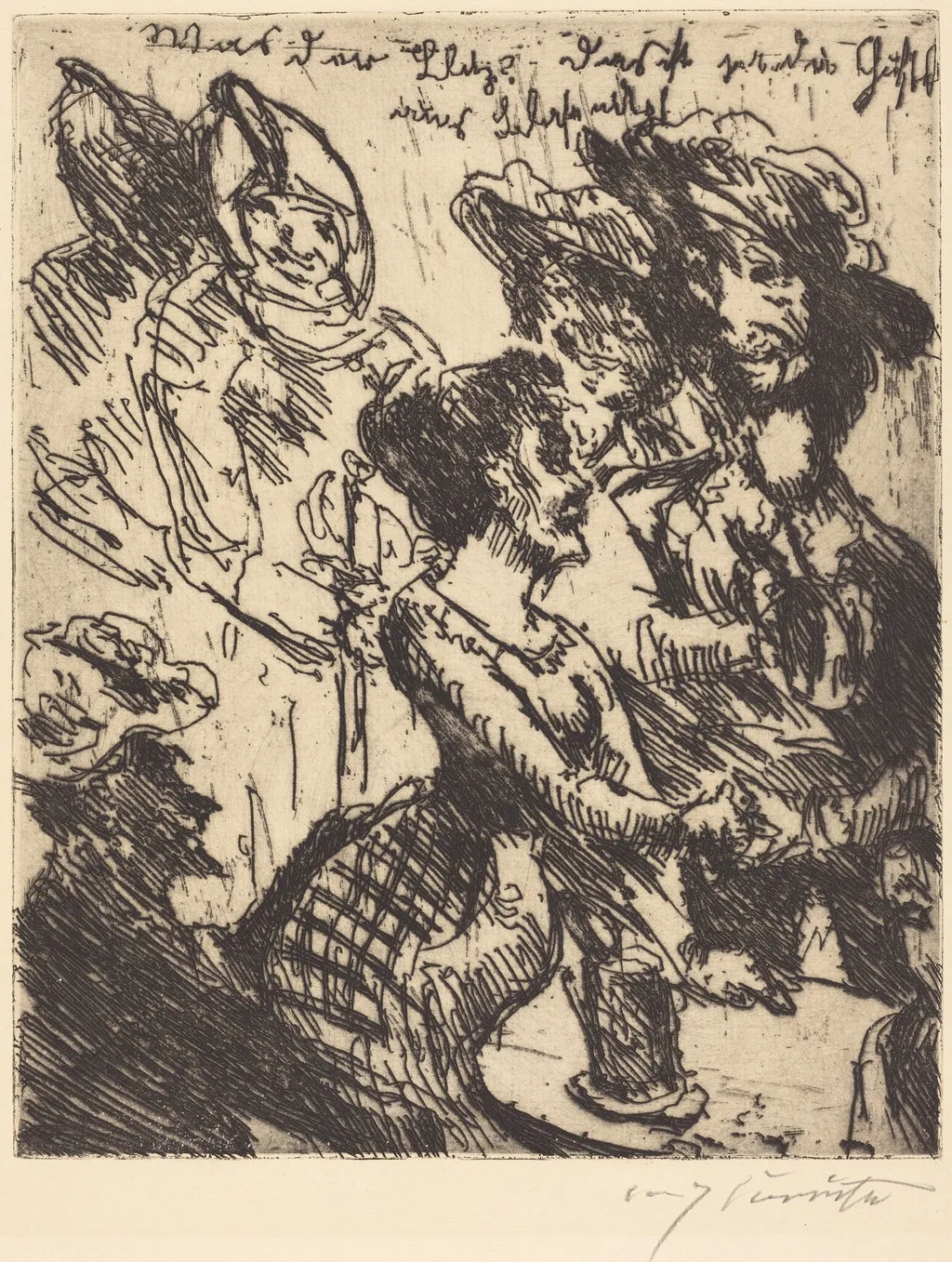
"Was der blitz! Das ist ja die gustel von blasewitz" ("What's That! It's Gustel von Blasewitz") is an ink print by Lovis Corinth. It dates from 1923 and is held in the collection of the National Gallery of Art. Created in 1923, 'Was der blitz!
- Inscription
- Inscribed:upper center in plate: [undeciphered]; lower right in graphite: Lovis Corinth
About this work
Overview
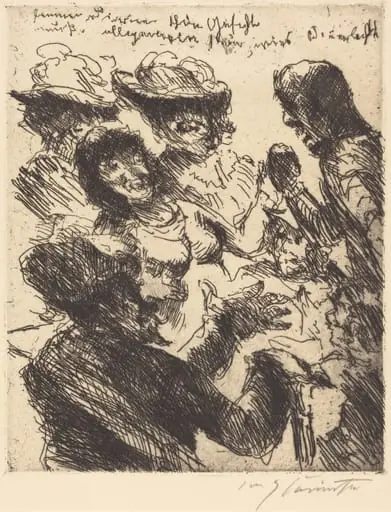
Created in 1923, 'Was der blitz! Das ist ja die gustel von blasewitz' is an etching on laid paper by German artist Lovis Corinth, characterized by a dark, chaotic scene of tangled figures with rough, blurred faces and scratchy, uneven lines.
Subject & Meaning
The subject of the etching appears to be a tumultuous gathering, with the title referencing 'Gustel von Blasewitz', potentially alluding to a specific individual or event. The chaotic depiction may reflect Corinth's expressive response to the scene's subject.
Technique & Style
Executed in black etching on laid paper, the work showcases Corinth's later expressionistic style, marked by loose, scratchy lines and blurred forms. The etching technique, involving acid-etched metal plates, contributes to the work's jagged, restless quality.
History & Provenance
Part of Corinth's post-1911 oeuvre, following a stroke that shifted his style towards expressionism, this etching blends impressionistic and expressionistic elements. Corinth's artistic evolution was influenced by his studies in Paris and Munich, and his presidency of the Berlin Secession.
Context
Emerging from Corinth's later period, the etching reflects the artistic climate of early 20th-century Germany, where expressionism flourished as a response to modern life's complexities and the aftermath of World War I.
Legacy
As a work from Corinth's expressive later phase, 'Was der blitz...' contributes to the broader legacy of German Expressionism, illustrating the movement's emphasis on emotional intensity and distorted forms in printmaking.
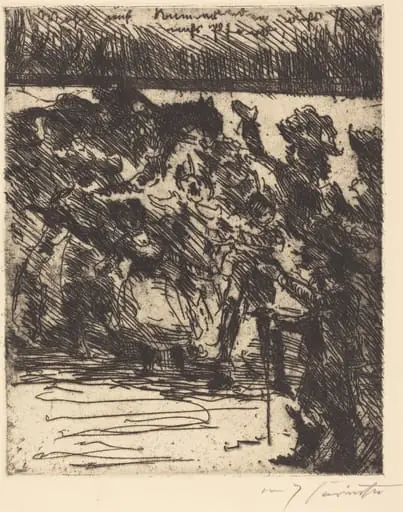
Own this work as a print
Artist & collection
Artist
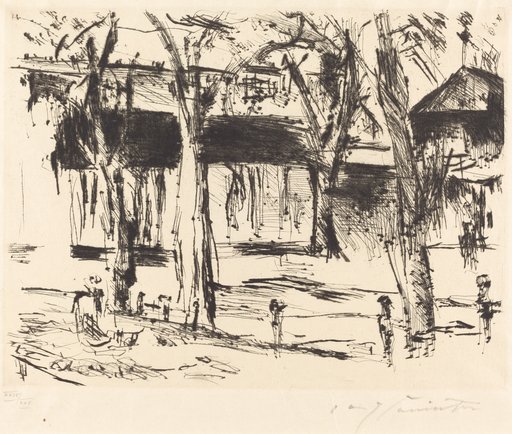
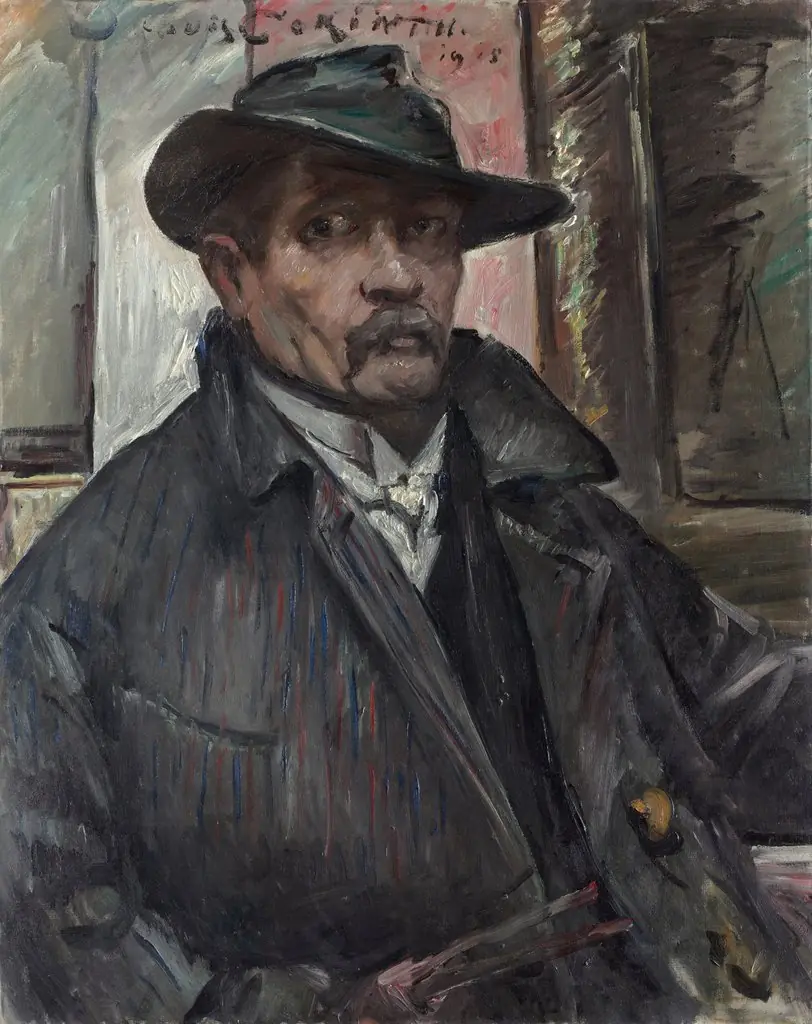
Lovis Corinth (21 July 1858 – 17 July 1925) was a German artist and writer whose mature work as a painter and printmaker realized a synthesis of impressionism and expressionism.

 "Einer dirne schön gesicht muss allgemein sein wie's sonnenlicht" ("A Pretty Girl's Face is Like the Sunshine")
 Kavaliere mit einer frau (Cavaliers with a Woman)
 Women at a Table in a Room (recto) / Nude Woman (verso)
 Le Bar
 "Vater, es wird nicht gut ablaufen, bleiben wir von dem soldatenhaufen" ("Father, This Won't Turn Out Well, We should stay away from the gang of soldiers")
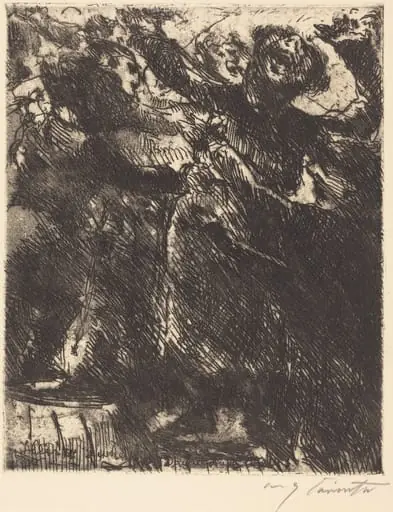 Kapuzinerpredigt—"Hetzt sich lieber herum mit der Dirn'" (The Capuchin's Sermon—"He Prefers to Run Around with a Girl")
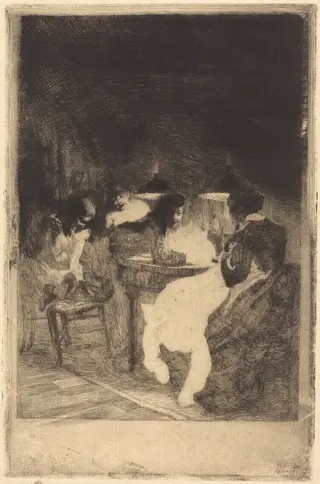 The Childhood of Pierre Clémenceau (L'Enfance de Pierre Clémenceau)
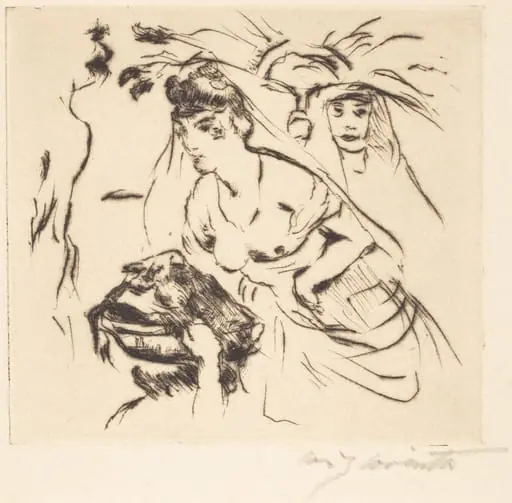 Salome
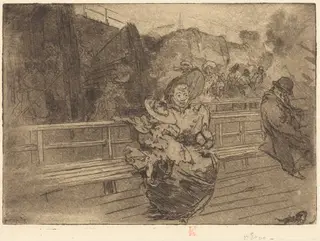 Departure for Greenwich (Depart pour Greenwich)
 Suspension d'audience (Recess of the Hearing)
 The Orgy (L'orgie)
- "Wohl auf, kameraden, aufs pferd, aufs pferd! Ins feld, in die freiheit gezogen!" ("Come On, Comrades, to Horse, to Horse! To Battle, Bound for Liberty!")