Artwork
Le Bar
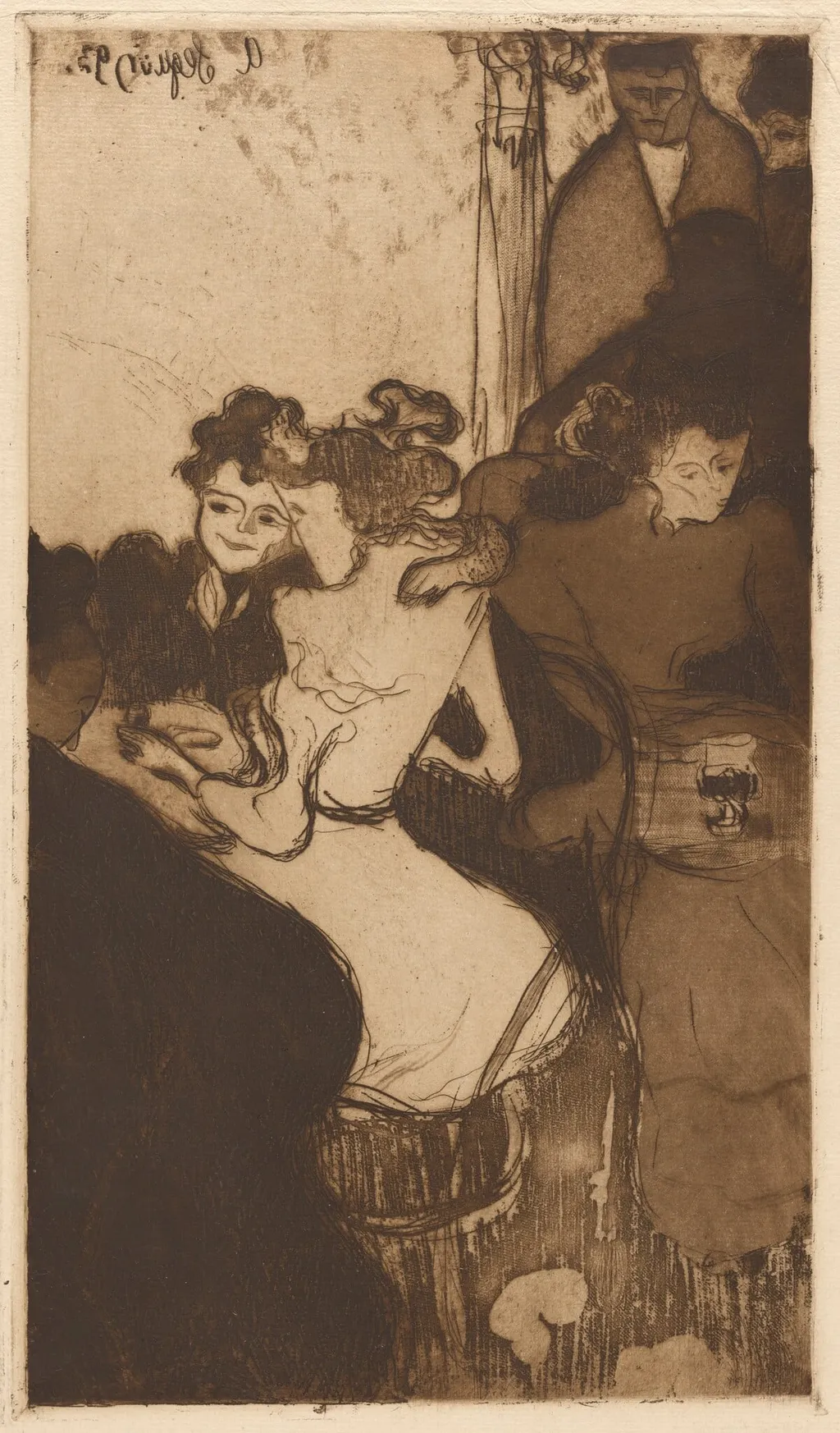
Le Bar is an ink print by the Impressionist artist Armand Séguin. It dates from 1893 and is held in the collection of the National Gallery of Art.
- Inscription
- Inscribed:upper left in plate: A Seguin 93 [reversed]
- Markings
- Marked:Henri Marie Petiet [1894-1980] Paris (Lugt 5031).
About this work
Overview
Le Bar is a 1893 print by Armand Séguin, a French artist associated with the Pont-Aven School.
Subject & Meaning
The print depicts two women in a dimly lit room, one seated with a cat, the other standing with a glass. A man's face is faintly visible in the background. The scene conveys a sense of intimacy and informality.
Technique & Style
Séguin created Le Bar using softground etching with aquatint and roulette, printing in brown on laid paper. The technique yields rough, sketchy lines and a worn appearance, contributing to the work's smoky, intimate atmosphere.
History & Provenance
Séguin produced Le Bar in 1893, a year in which he worked closely with Paul Gauguin and collaborated with Roderic O'Conor on printmaking. The print reflects his engagement with the Pont-Aven circle during his time in Brittany.
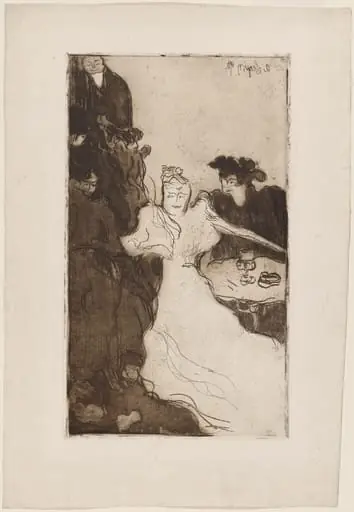
Artist & collection
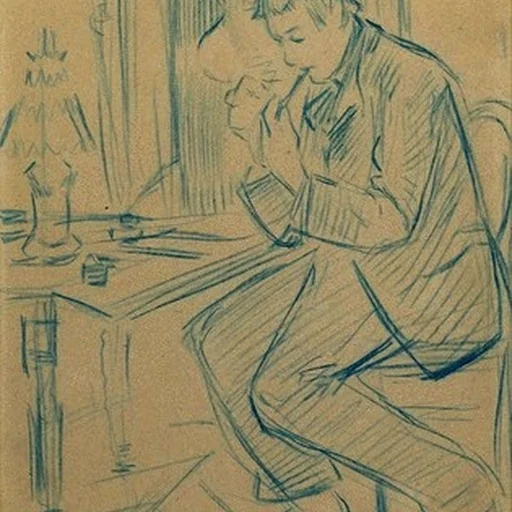
Artist
Armand Séguin (1869–1903) was a post-Impressionist French painter who is remembered for his involvement in the Pont-Aven School beginning in 1891.

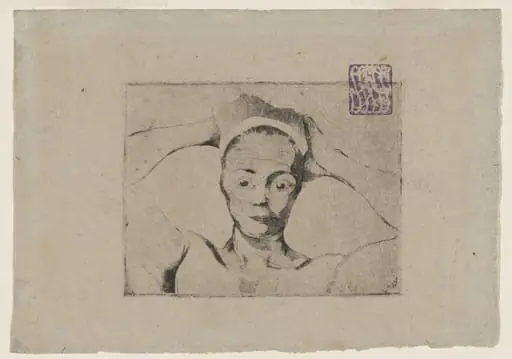
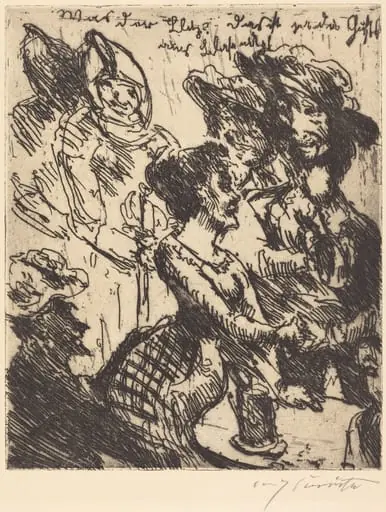 "Was der blitz! Das ist ja die gustel von blasewitz" ("What's That! It's Gustel von Blasewitz")
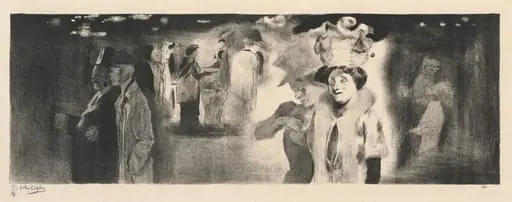 A Night Scene
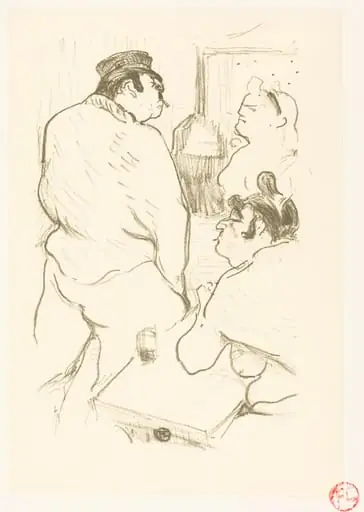 Terror of Grenelle (La terreur de Grenelle)
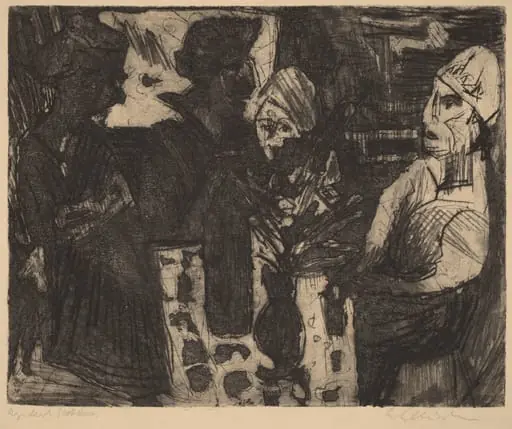 Women at a Table in a Room (recto) / Nude Woman (verso)
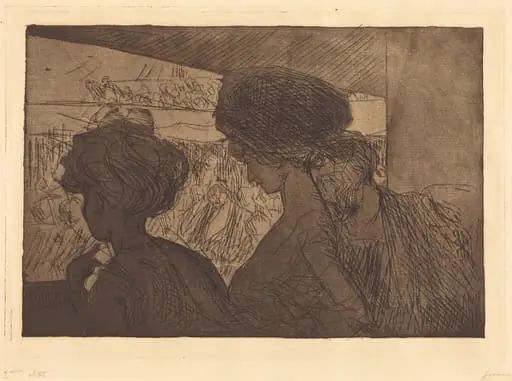 Baignoire au théatre (Lower Box at the Theater)
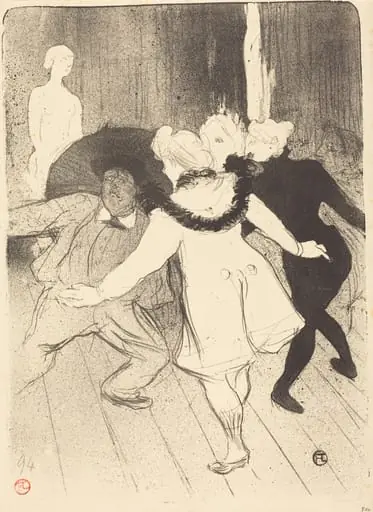 Folies-Bergere: The Censors of M. Prudhomme (Folies-Bergère: Les pudeurs de M. Prudhomme)
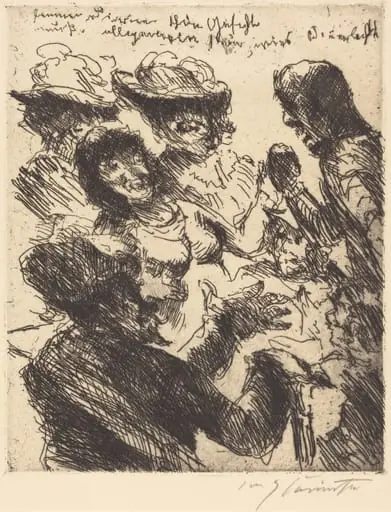 "Einer dirne schön gesicht muss allgemein sein wie's sonnenlicht" ("A Pretty Girl's Face is Like the Sunshine")
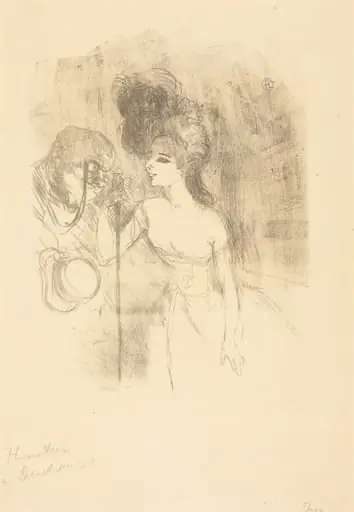 Anna Held and Baldy (Anna Held et Baldy)
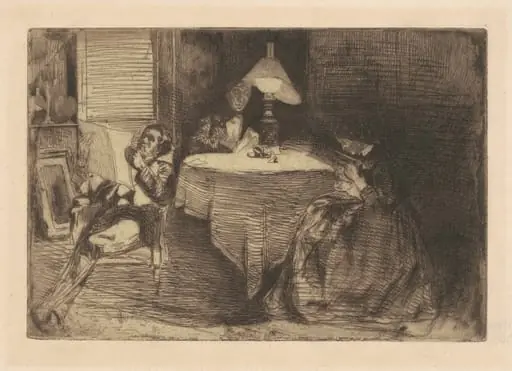 The Music Room
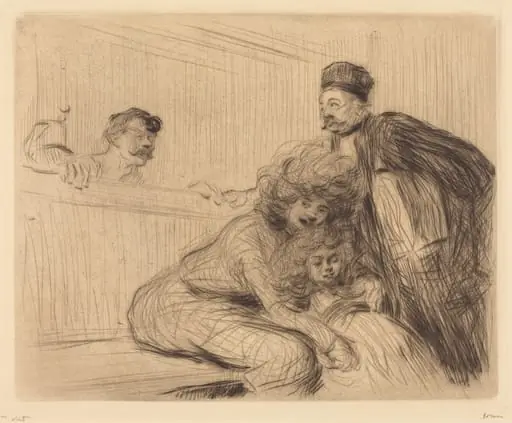 L'avocat parlant au prévenu (1ère planche) (The Lawyer Talking to the Prisoner) (first plate)