Artwork
Früchtestück
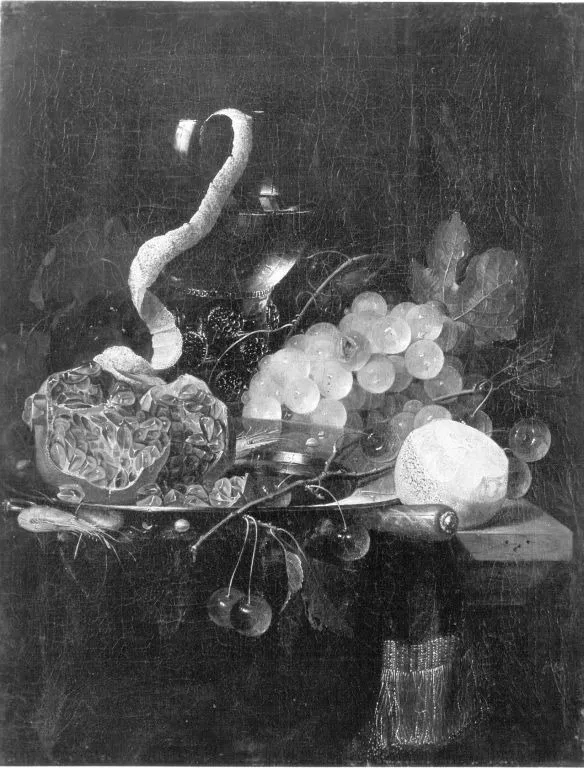
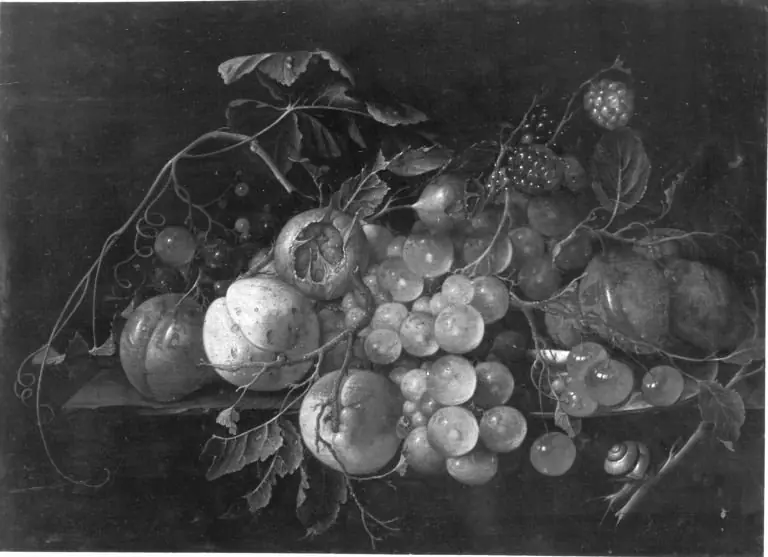
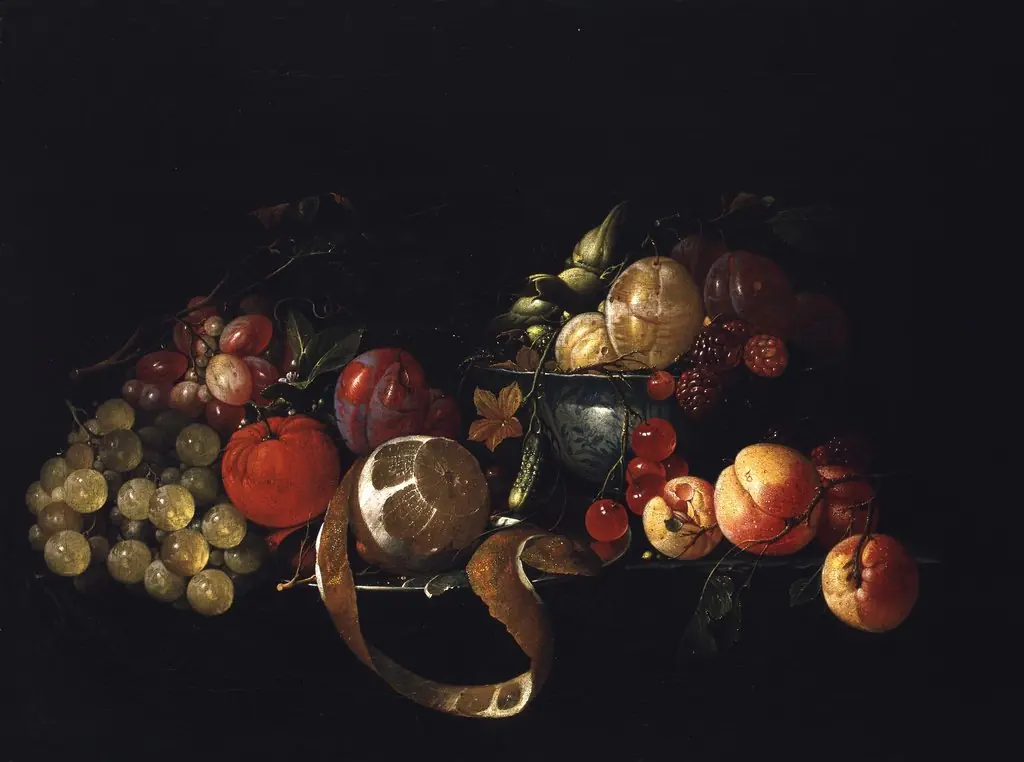
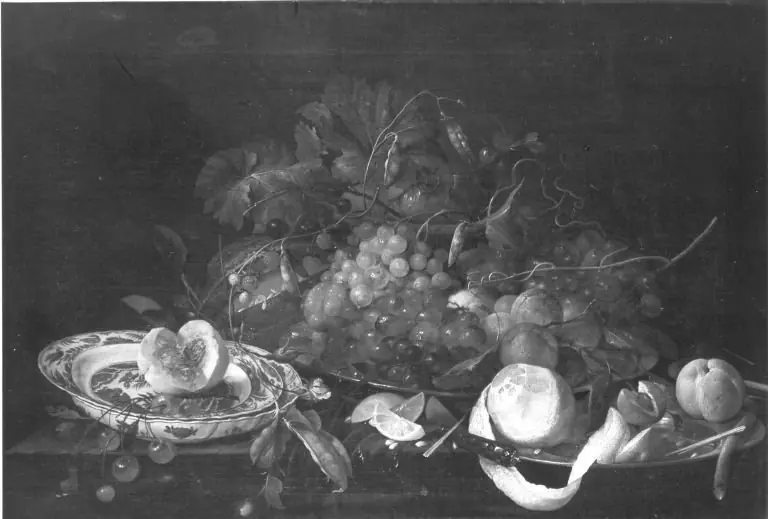
Früchtestück is an unspecified painting by the Dutch Golden Age artist Cornelis de Heem. It dates from 1663 and is held in the collection of the Bavarian State Painting Collections.
About this work
Overview
Executed in 1663, during the height of his career in Amsterdam, the work reflects the Flemish Baroque influence inherited from his father, Jan Davidsz.
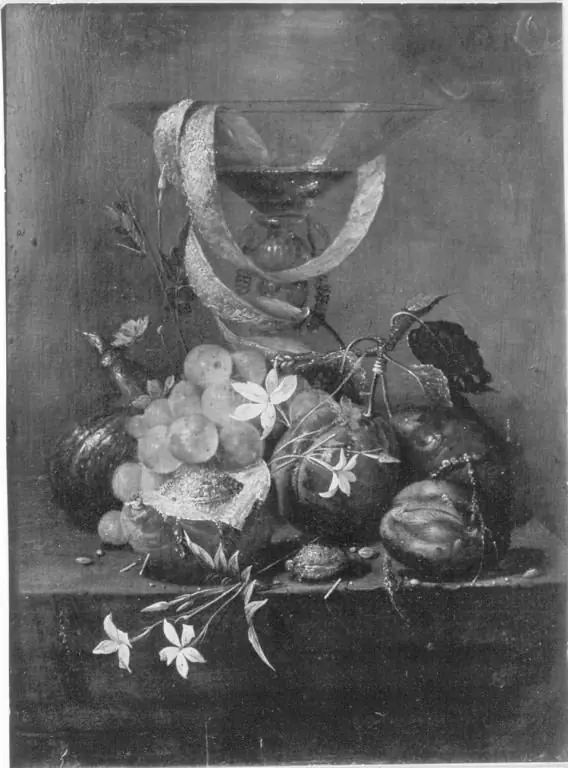
Cornelis de Heem's 'Früchtestück' (1663) is a quintessential example of Dutch Golden Age still life painting, showcasing the artist's mastery in rendering natural forms with hyper-realistic precision. The composition centers on a lavish arrangement of fruit, dominated by a cluster of grapes that transitions from plump, sunlit spheres to shriveled, darkened skins, illustrating the passage of time and the theme of vanitas. Surrounding this focal point are a peeled lemon revealing its textured rind, a ripe pear, a sliced melon, and scattered cherries, all resting upon a draped cloth that adds textural contrast.
De Heem employs a dramatic interplay of light and shadow, likely derived from a single light source, to model the volume of each object and highlight the varied surfaces, from the waxy sheen of the grapes to the matte finish of the pear. Executed in 1663, during the height of his career in Amsterdam, the work reflects the Flemish Baroque influence inherited from his father, Jan Davidsz. de Heem, while demonstrating the specific Dutch interest in the tactile qualities of everyday objects. The painting serves as a celebration of abundance and a subtle meditation on mortality, characteristic of the genre's intellectual depth.
Subject & Meaning
At the composition’s centre lies a cluster of grapes, varying from ripe plumpness to withered spots, surrounded by a lemon, a pear, a melon, and a handful of cherries. A folded piece of cloth lies nearby, adding a modest domestic touch and reinforcing the painting’s focus on the fleeting abundance of nature.
Technique & Style
De Heem employs a pronounced chiaroscuro, using stark contrasts between illuminated fruit and the surrounding darkness to enhance the illusion of three‑dimensionality. Careful modelling of light on skin and peel, together with subtle reflections, creates a tactile sense of volume that underscores the artist’s mastery of baroque still‑life conventions.
History & Provenance
The canvas has remained in the public domain since its acquisition by the Alte Pinakothek, where it has been displayed as part of the museum’s Dutch Golden Age holdings. Its documented provenance traces directly to the artist’s workshop, confirming its authenticity as an original 1663 work by de Heem.
Artist & collection

Artist
Cornelis de Heem was a still-life painter associated with both Flemish Baroque and Dutch Golden Age painting.

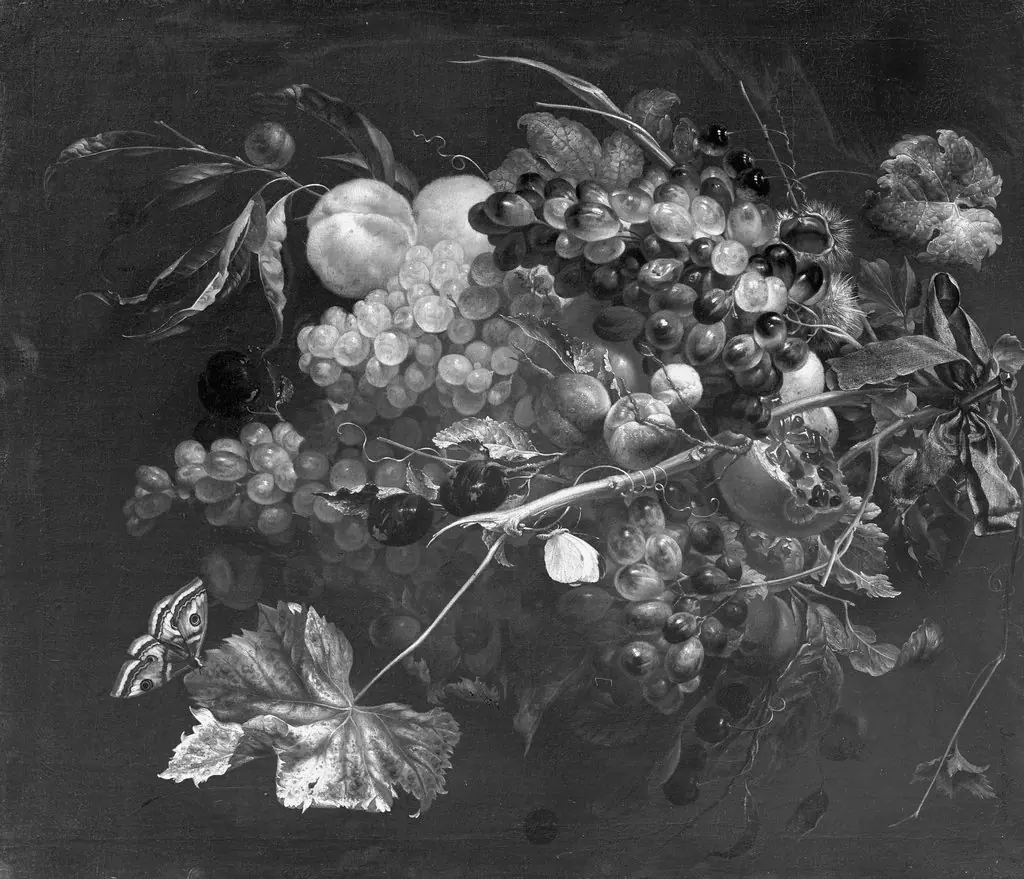
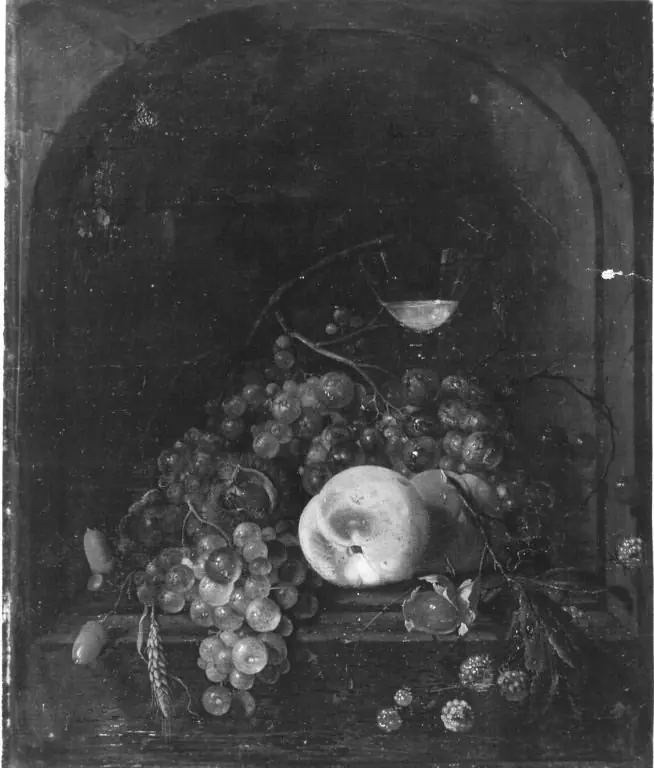 Früchtestück (zugeschrieben)
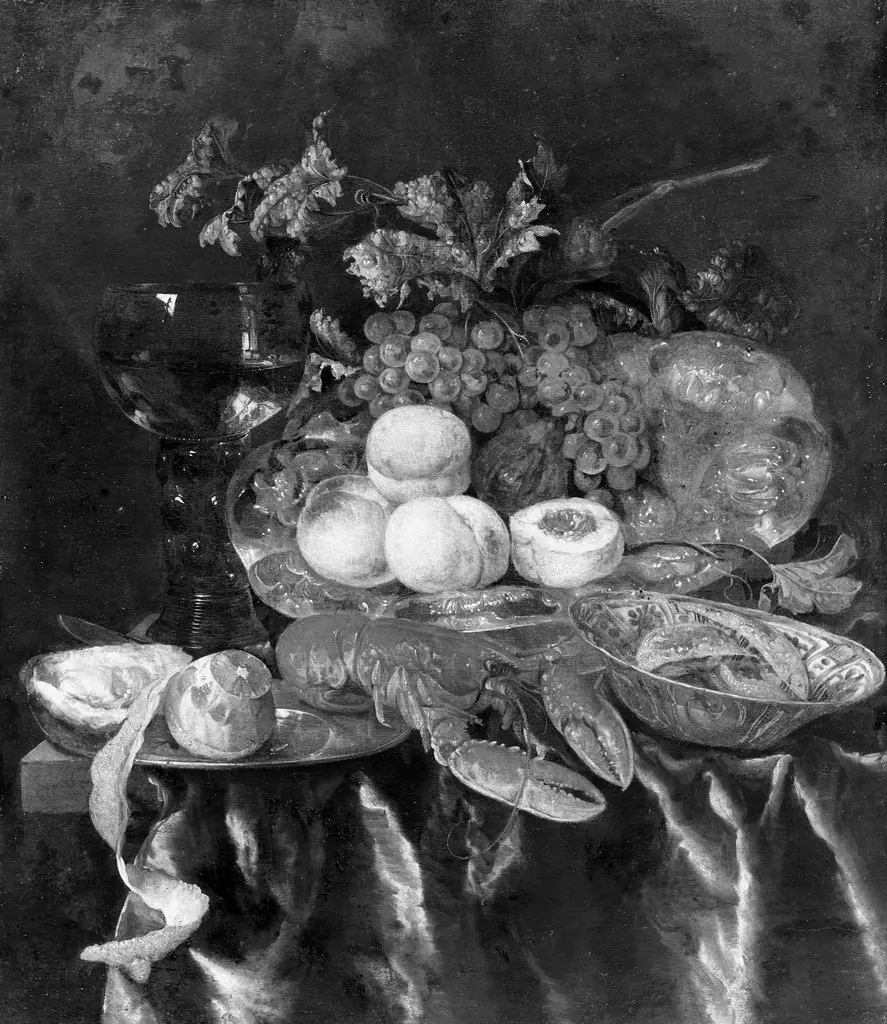 Still life with lobster, fruit, peeled lemon, rummer, silver dish and faience dish on a dark tablecloth
 Fruit piece
 Still life with a nautilus cup
 Früchtestück
 Stillleben mit Früchten und toten Vögeln
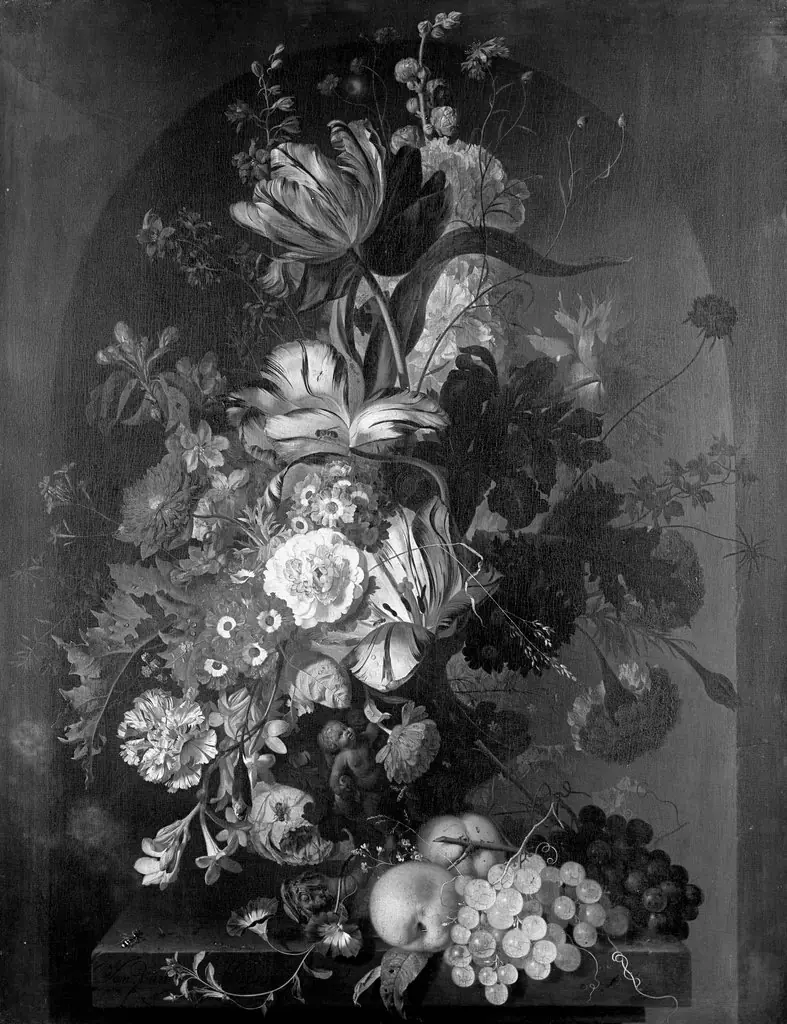 Blumenstrauß vor Nische
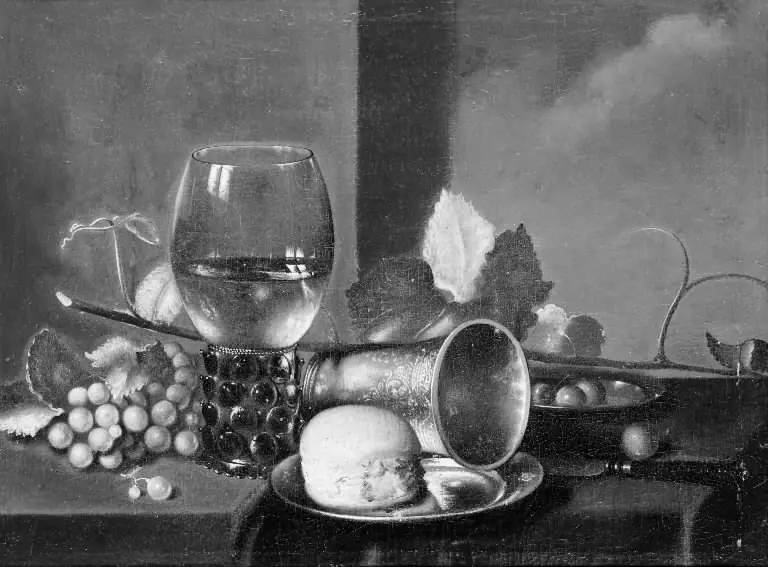 Stone Table with Glass, Cake and Fruit
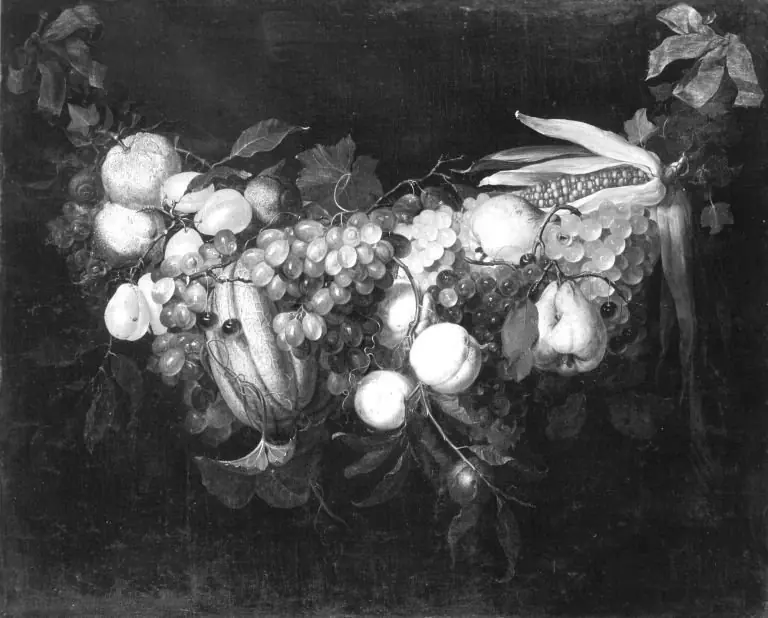 Früchtegirlande
- Früchtestück