Artwork
Portrait of Abraham Grapheus
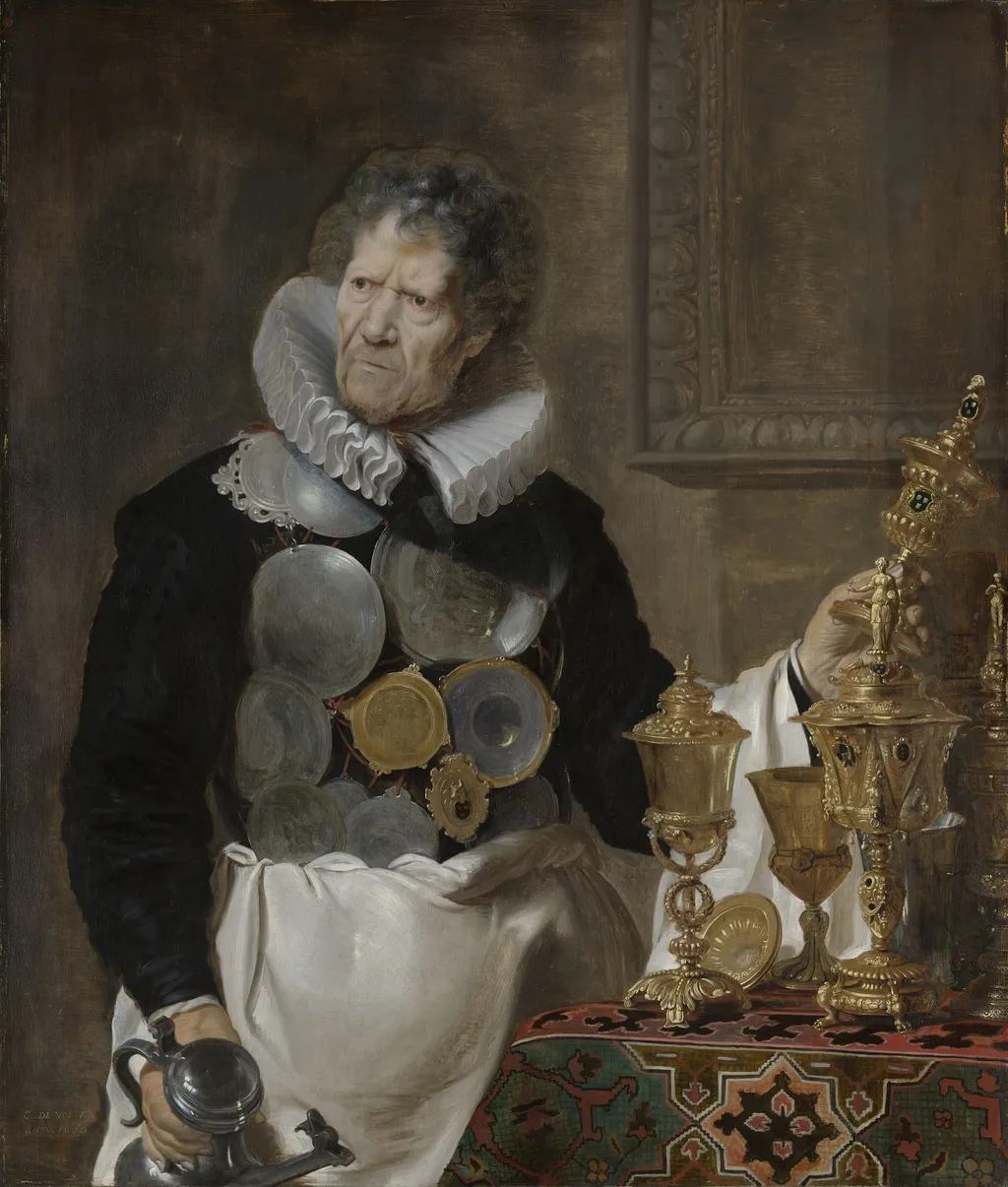
Portrait of Abraham Grapheus is an oil painting by the Flemish Baroque painting artist Cornelis de Vos. It dates from 1619 and is held in the collection of the Royal Museum of Fine Arts Antwerp.
About this work
Subject & Meaning
Luke, joining in 1572 and later serving as dean when Cornelis de Vos painted this portrait in 1619.
The subject, Abraham Grapheus, was a long-serving member of Antwerp’s Guild of St. Luke, joining in 1572 and later serving as dean when Cornelis de Vos painted this portrait in 1619. Grapheus’s regalia, a linked series of silver plates bearing the ox’s head of Saint Luke and the guild’s arms, signifies his office, normally worn by the guild’s head. In his left hand he holds a covered beaker engraved with images of Apelles, Zeuxis, Raphael, and Albrecht Dürer, emblematic predecessors revered by guild painters. The foreground cup on the right is topped by a personification of Painting, a motif commissioned from Sebastiaan Vrancx in 1612 by Cornelis van der Geest and other Antwerp notables, underscoring the collective esteem for the art of painting.
Technique & Style
Executed in 1620, this oil painting on panel depicts Abraham Grapheus in a half-length format. Cornelis de Vos modeled the seventy-year-old subject's head with broad brushstrokes, capturing deep wrinkles, grey curly hair, and intense eyes rimmed with red. The composition features an atypical averted gaze, lending the work distinct artistic value.
The portrait includes precise renderings of guild insignia, specifically silver plates on a chain bearing the ox-head symbol of Saint Luke. Grapheus holds a chalice decorated with images of Apelles, Zeuxis, Raphael, and Albrecht Dürer, topped with an ox-head lid. A second cup on the table, designed by Sebastiaan Vrancx, displays a personification of Painting.
History & Provenance
Cornelis de Vos executed this oil painting on panel in 1620, likely presenting it to the Antwerp Guild of Saint Luke to commemorate his tenure as dean, which began in 1619. The subject, Abraham Grapheus, served as the guild's clerk and had been a member since 1572. Following its completion, the work hung in the guild's painters' room.
During the French occupation of the Southern Netherlands between 1794 and 1796, authorities confiscated the portrait and transported it to Paris. It was returned to Antwerp in 1815, subsequently entering the collection of the Antwerp Academy before becoming part of the Royal Museum of Fine Arts Antwerp.
Portrait of Abraham Grapheus is held in the collection of the Royal Museum of Fine Arts Antwerp, where it is accessioned under inventory number 1876. It was exhibited in the Antwerp Academy after its return in 1815.
The work was painted in 1619 by Cornelis de Vos, a member of the Antwerp Guild of St. Luke, and originally presented to the guild in 1619. It was taken to Paris between 1794 and 1796 during French occupation, then returned to Antwerp in 1815 and displayed in the Antwerp Academy.
The painting remained in the guild’s portrait room from 1620 until it entered the museum’s collection.
Context
The critical reception of Portrait of Abraham Grapheus emphasizes its significance within Cornelis de Vos’s oeuvre and its role in Antwerp’s artistic culture. Scholarship situates the work as an early achievement by de Vos during his tenure as dean of the Antwerp Guild of St. Luke, reflecting the guild’s symbolic traditions and intellectual networks. The painting’s depiction of Abraham Grapheus, a guild member, incorporates emblems of the Guild of St. Luke, including the ox’s head symbol of Saint Luke and a chalice referencing Apelles, Zeuxis, Raphael, and Dürer, which served as role models for guild artists. Its provenance traces a complex journey from Antwerp to Paris during the French occupation (1794-1796) and back in 1815, where it entered the Royal Museum of Fine Arts Antwerp collection. The work’s subject, attire, and symbolic objects, such as the silver guild insignia and a cup designed by Sebastiaan Vrancx, highlight its connection to Antwerp’s elite patrons, including Cornelis van der Geest. Art historians note its distinctive composition, particularly the sitter’s averted gaze and the detailed rendering of his aged features, which align with broader trends in 17th-century portraiture. The painting also reflects de Vos’s dual role as both artist and art dealer, as evidenced by his activities documented in guild records and his collaborations with contemporaries like Rubens and Jordaens.
Own this work as a print
Artist & collection
Artist
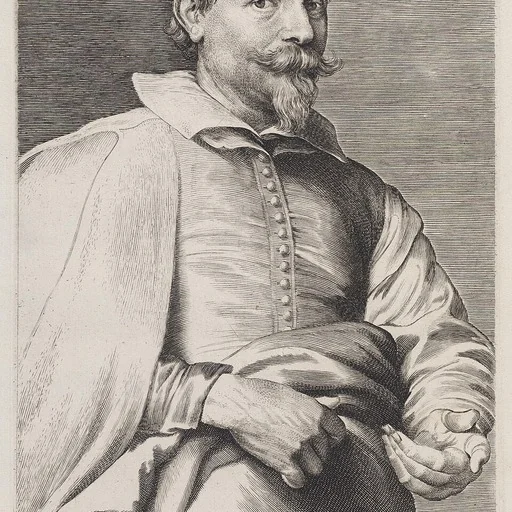
Cornelis de Vos (1584 - 9 May 1651) was a Flemish painter, draughtsman and art dealer.

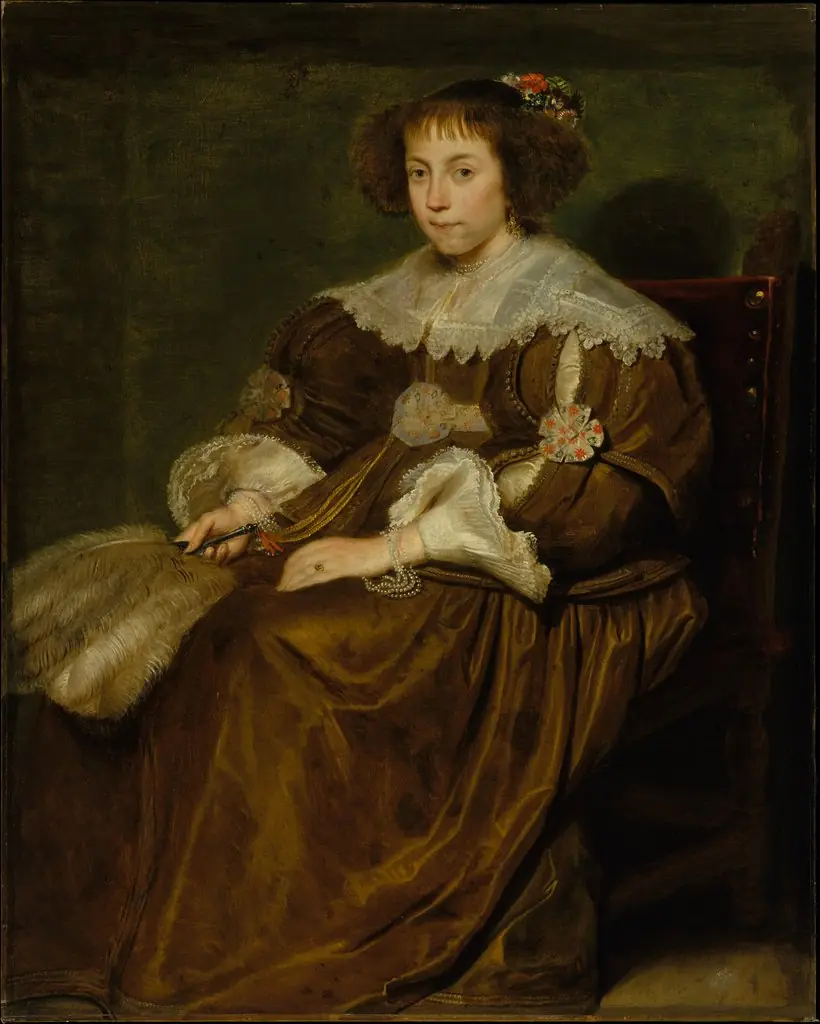 Portrait of a Young Woman
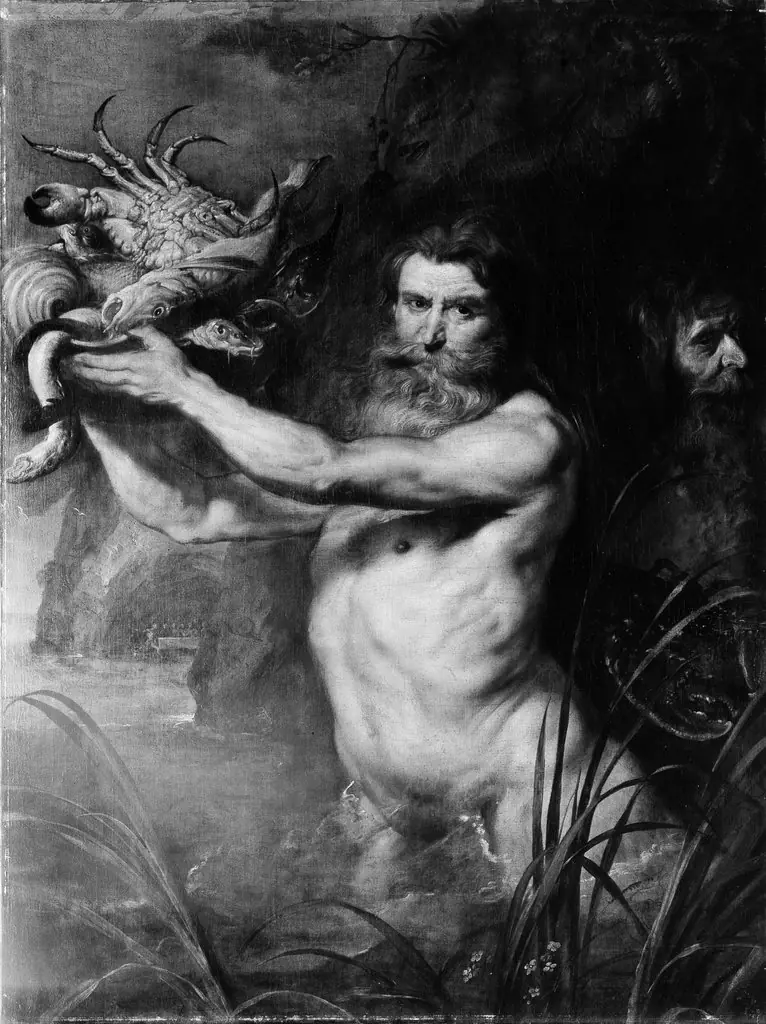 Two Tritons at the Feast of Acheloüs
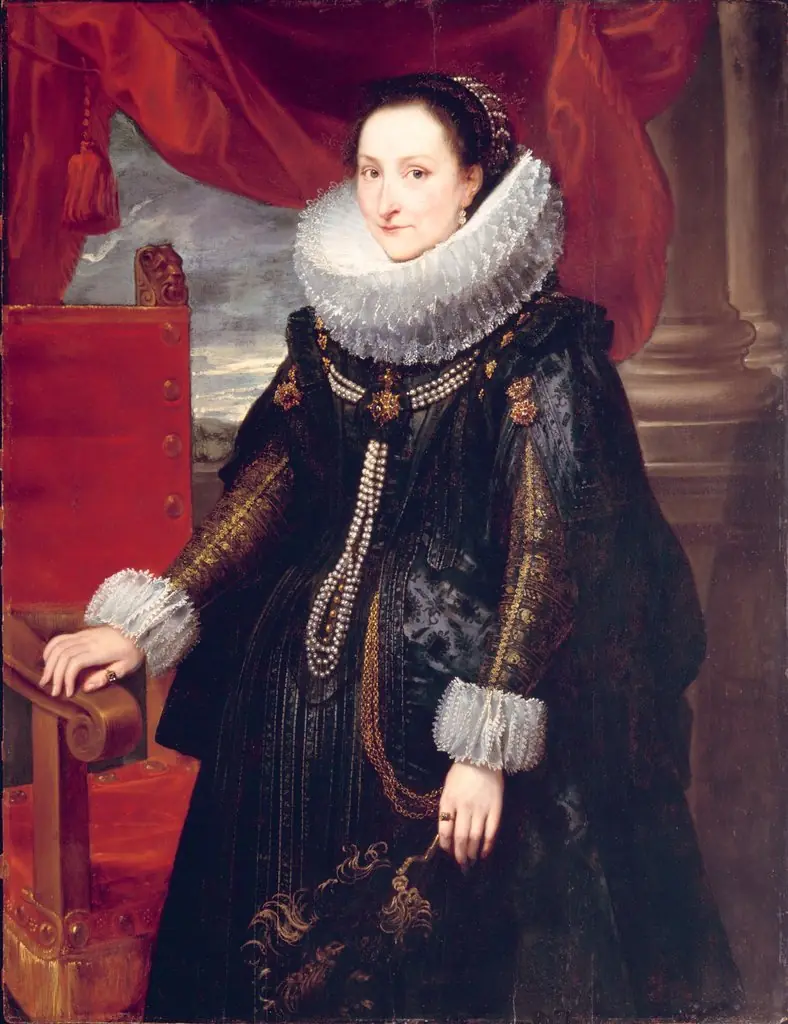 Portrait of a Woman
 The Holy Family with John the Baptist as child
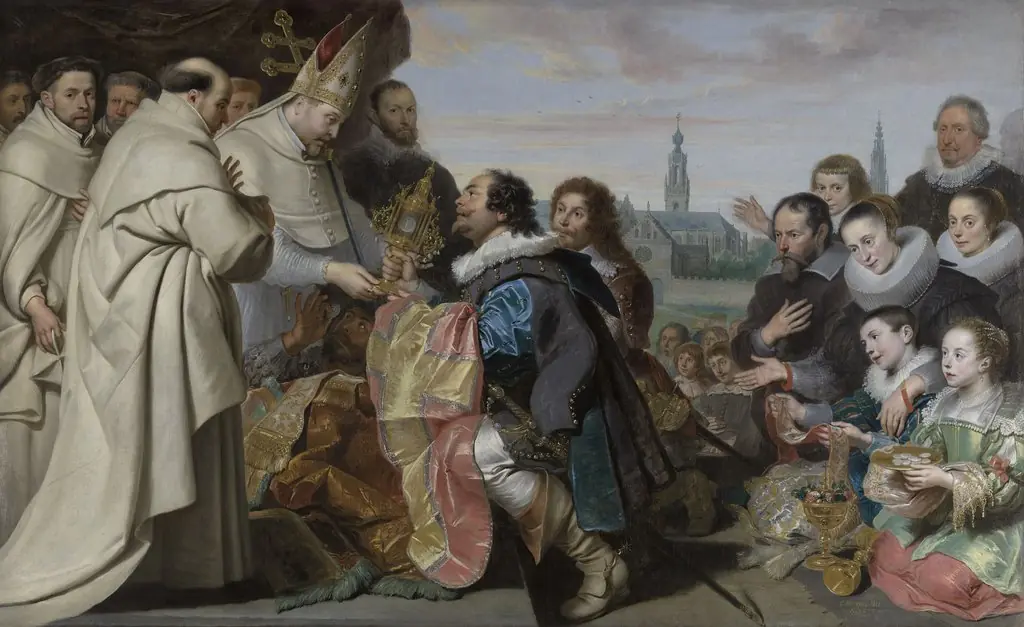 The Citizens of Antwerp bring back to Saint Norbert the Monstrance and other Sacred Vessels that they had hidden from Tankelin
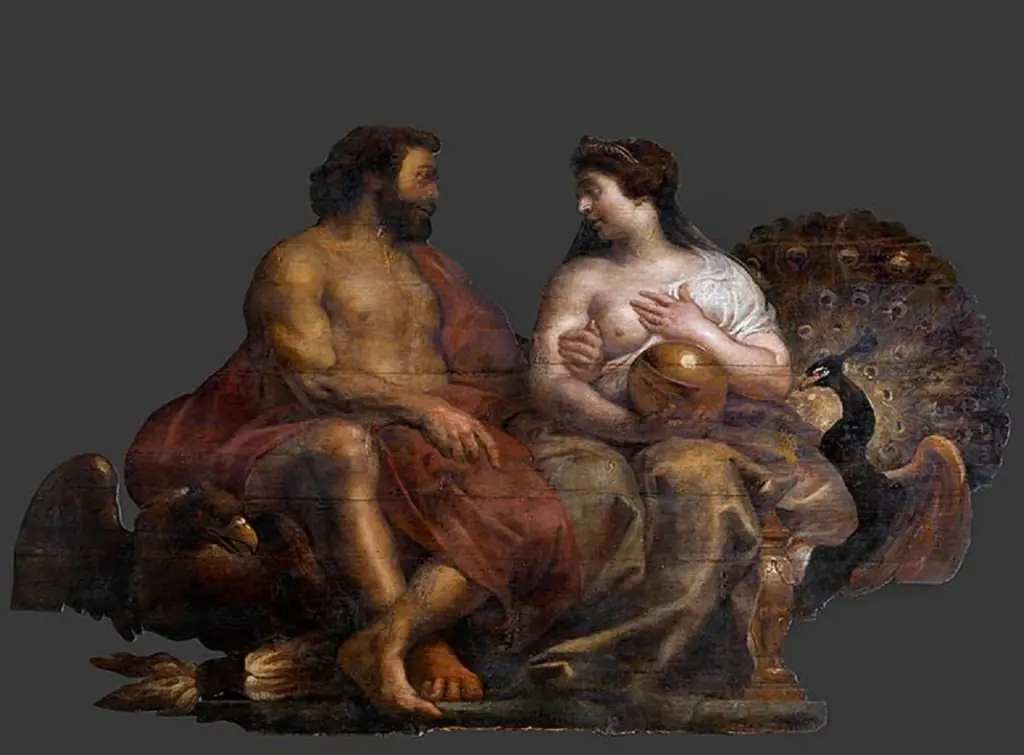 Jupiter and Juno
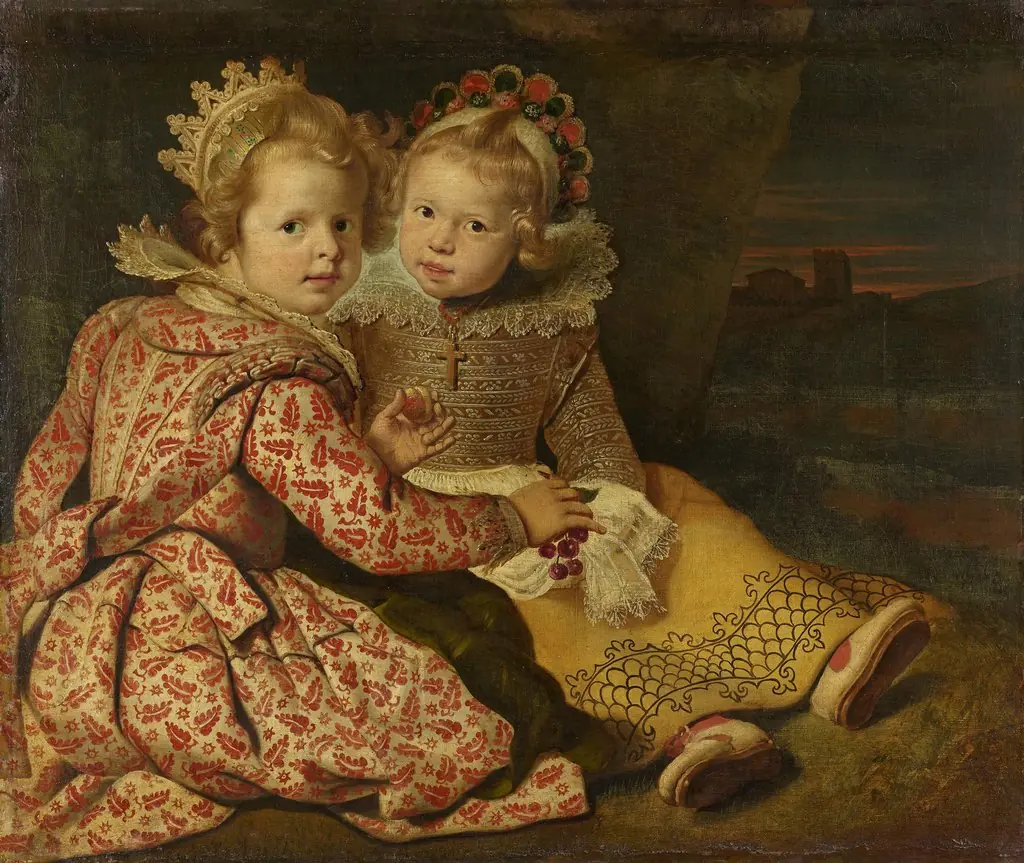 Magdalena and Jan-Baptist de Vos, Children of the Painter
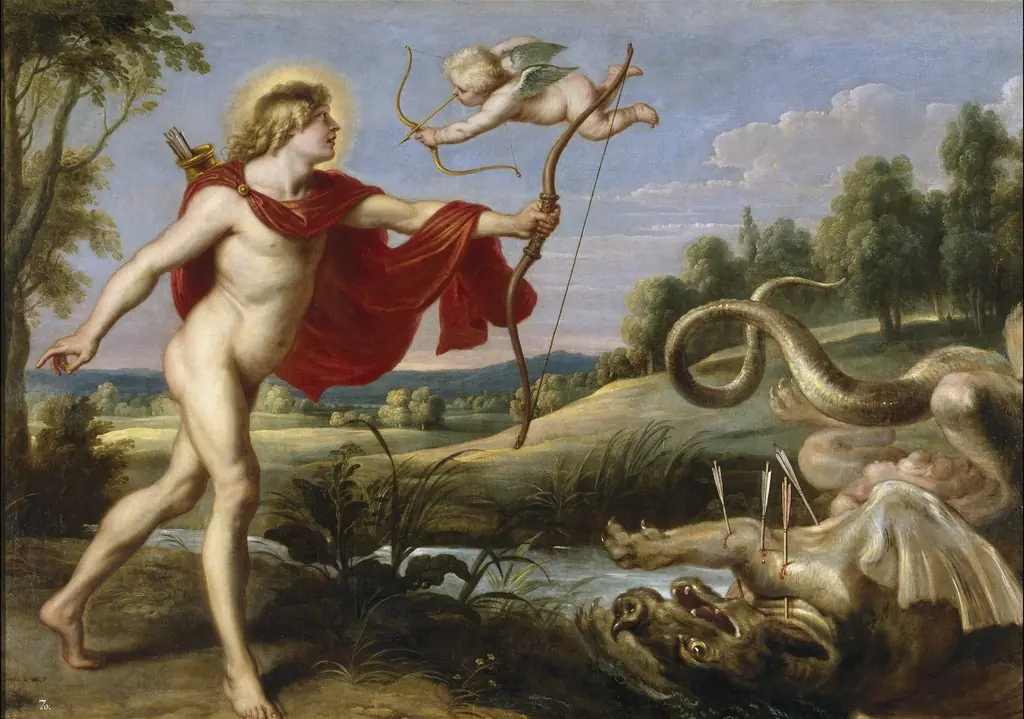 Apollo and the Python
- Portrait of a Man
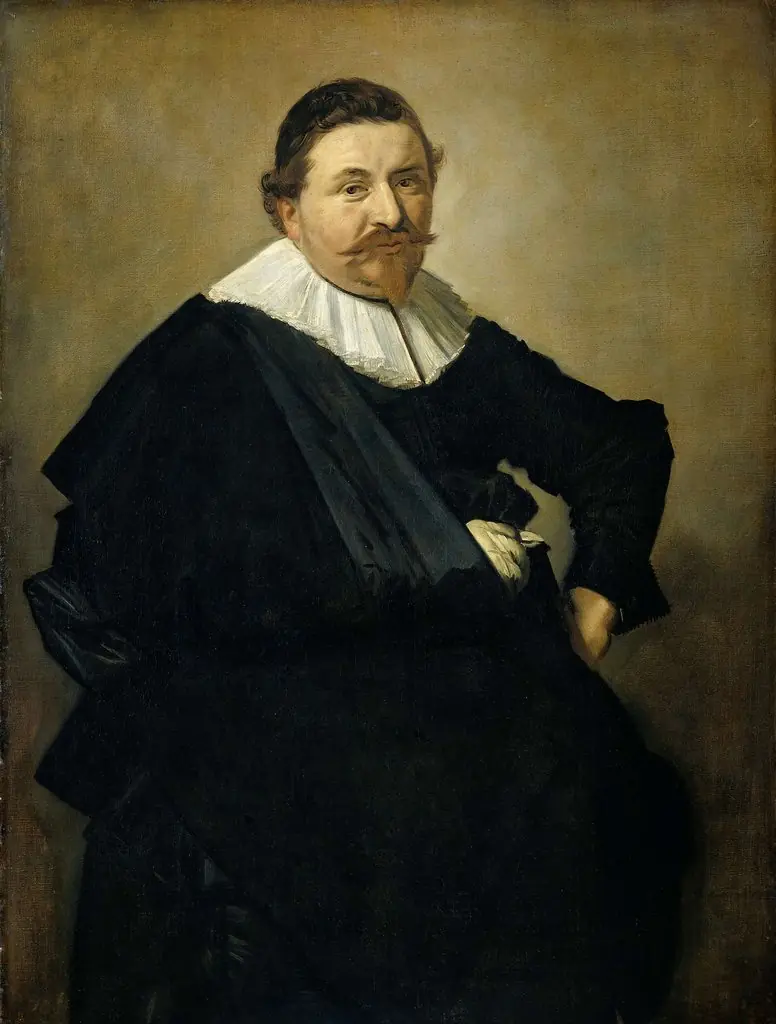 Portrait of Lucas de Clercq
 A Militiaman Holding a Berkemeyer, Known as the ‘Merry Drinker’
 Portrait of a Guild functionary
 An Old Lady with a Book
 Portrait of Nicolaes Hasselaer (1593-1635)
 Joannes Gaspard Gevartius, (1593-1666)
 Seventeenth-century tinsmith
 Portrait of a Man, probably Hans van Hogendorp
 Portrait of Jan van de Poll (1597-1678)
 Portrait of a Woman Aged Sixty
 Portrait of a Man Seated