Artwork
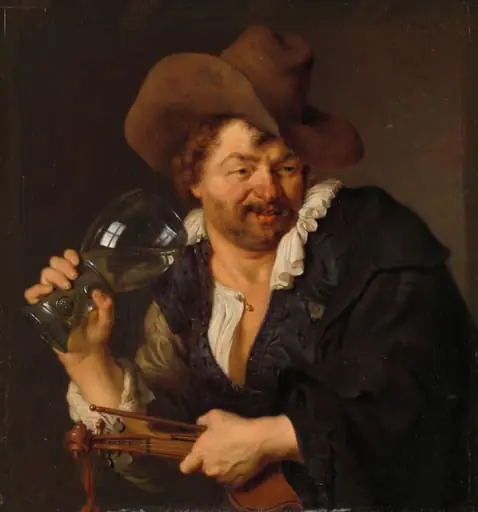
A Militiaman Holding a Berkemeyer, Known as the ‘Merry Drinker’
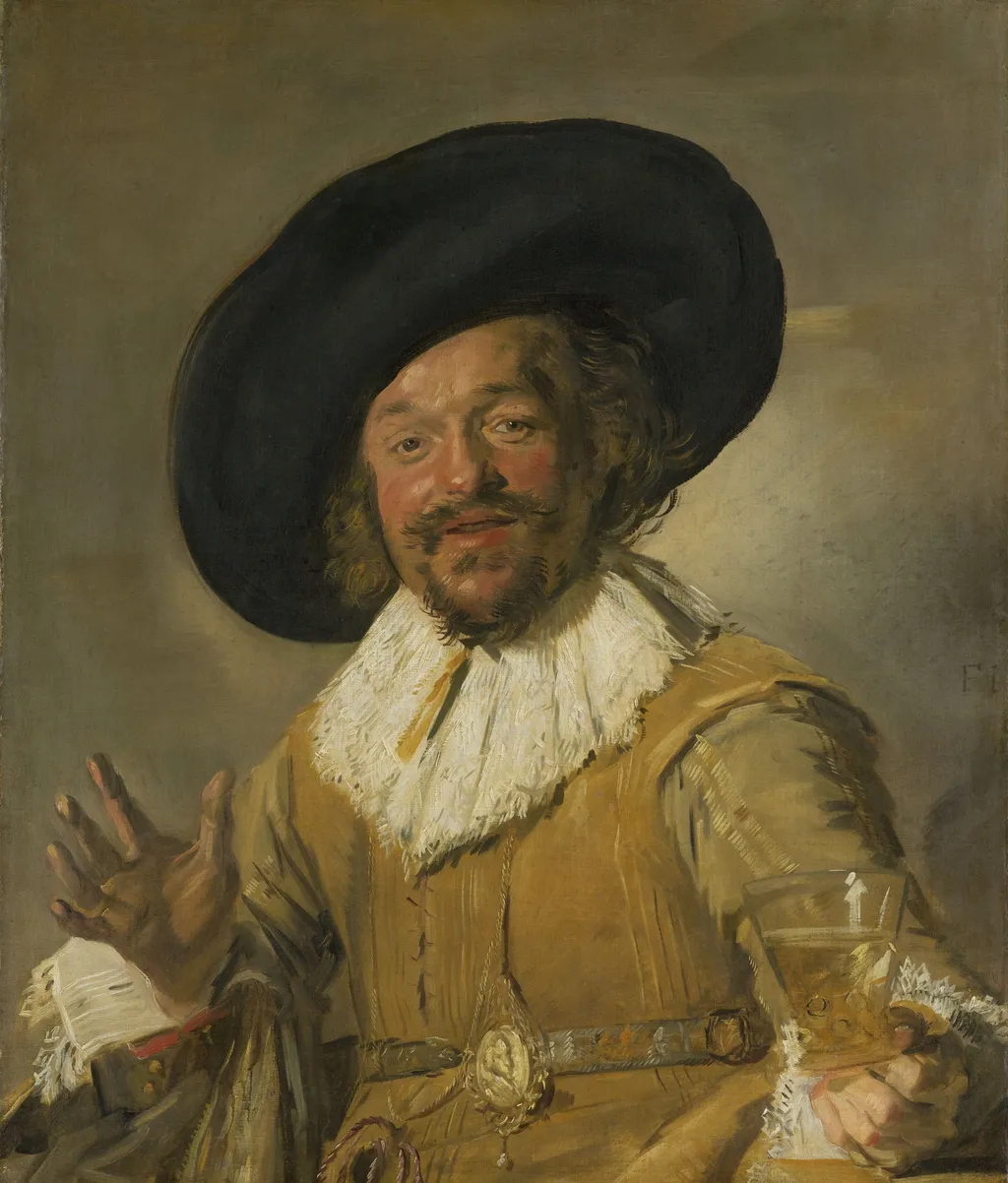
A Militiaman Holding a Berkemeyer, Known as the ‘Merry Drinker’ is an oil painting by the Dutch Golden Age artist Frans Hals. It dates from 1629 and is held in the collection of the Rijksmuseum. Created around 1628–1630, this oil painting measures roughly 81 × 66.
About this work
Technique & Style
This handling results in a robust, textured surface that appears almost chaotic up close but coalesces into a brilliant, lifelike image from a distance.
Created between 1628 and 1630, A Militiaman Holding a Berkemeyer is an oil painting on canvas measuring 81 by 66.5 centimeters. Frans Hals employed a spontaneous technique characterized by loose, irregular brushstrokes that range from thin to thick, creating a sense of movement and immediate vitality. He often worked in layers, allowing base grounds of white, ochre, brown, or gray to dry before applying subsequent colors, though he also utilized wet-in-wet application for specific effects.
To capture details like the reflection on the glass or the texture of the beard, Hals used the end of his brush to scratch forms into the wet paint and applied isolated dabs of white and black pigment. The artist favored affordable, readily available materials over expensive pigments like lapis lazuli, focusing instead on the visual impact of his dynamic, hatching strokes. This handling results in a robust, textured surface that appears almost chaotic up close but coalesces into a brilliant, lifelike image from a distance.
History & Provenance
Frans Hals painted A Militiaman Holding a Berkemeyer, Known as the ‘Merry Drinker’ in Haarlem around 1628–1630, with the work executed in oil on canvas. The painting entered the collection of the Rijksmuseum in Amsterdam in 1806, when it was acquired from the collection of Baroness Van Leyden. It has remained in the Rijksmuseum since that purchase and is identified with that institution in both Dutch and international records.
The sources do not provide information on who originally commissioned the work, who owned it before the Baroness Van Leyden collection, or any earlier provenance details.
The painting is held in the collection of the Rijksmuseum in Amsterdam, where it was acquired in 1806 from the collection of Baroness Van Leyden. The work is cataloged under the title 'A Militiaman Holding a Berkemeyer,' though it is commonly known as 'The Merry Drinker.' It has been featured in several exhibitions, including 'The Golden Age of Dutch Painting: masterpieces from the Rijksmuseum Amsterdam' and 'Haarlem: The Cradle of the Golden Age.'
Additionally, the work was included in the Europeana 280 digital initiative, highlighting its status as a significant masterpiece of the Dutch Golden Age.
Context
The work has been discussed since the early 20th century as both a genre scene and a portrait, with scholars debating its function in Dutch society. Early catalogues by Cornelis Hofstede de Groot positioned it as a genre piece linked to the ‘merry drinker’ motif common in Dutch inventories, while later British historians such as Hugh Honour and John Fleming interpreted it as an allegory of taste. Contemporary analyses highlight Hals’s loose brushwork, rapid execution, and use of affordable materials, noting how his technique prefigures impressionism and reflects the vibrant, commercially driven culture of the Dutch Golden Age.
The painting’s depiction of a well‑dressed figure offering wine, his medallion possibly referencing Maurice of Orange, and the open‑mouthed laughter underscore both the social freedoms of the newly independent Republic and the emergence of a market for secular, everyday subjects.
Legacy
The Merry Drinker has long been regarded as one of the Rijksmuseum's most popular works, valued for its originality and candor as a reflection of the Dutch Golden Age. Its loose, layered brushwork and in-the-moment characterization have led commentators to describe it as a precursor to impressionism, with later modernist painters drawing on Hals's technique as an example. The painting has also shaped scholarly discussion of genre versus portrait classification: Cornelis Hofstede de Groot reclassified it as a genre piece in his 1910 update of John Smith's catalog raisonné, while Hugh Honour and John Fleming have read it as an allegory of taste.
It has been featured in exhibitions including Europeana 280 and "The Golden Age of Dutch Painting: masterpieces from the Rijksmuseum Amsterdam," and is cited in standard art-historical surveys of seventeenth-century Netherlandish painting.
Overview
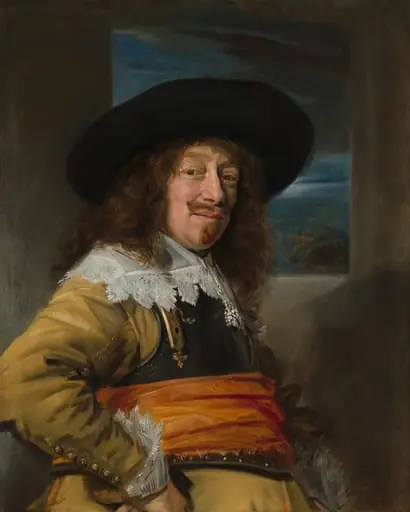
Created around 1628–1630, this oil painting measures roughly 81 × 66.5 cm and is held by the Rijksmuseum in Amsterdam. It depicts a jovial figure, a militiaman, clutching a small drinking glass while a half‑filled wine vessel rests on a nearby table. The work’s informal pose and direct gaze have made it a frequently referenced example of Dutch 17th‑century portraiture.
Subject & Meaning
The sitter, dressed in a wide‑brimmed hat, a white ruff, and a brown coat cinched with a gold‑trimmed belt, appears caught in a moment of merriment after a drink. The composition suggests a fleeting, candid glimpse rather than a formal representation, inviting viewers to consider the social customs of camaraderie and leisure among civic militia members of the period.
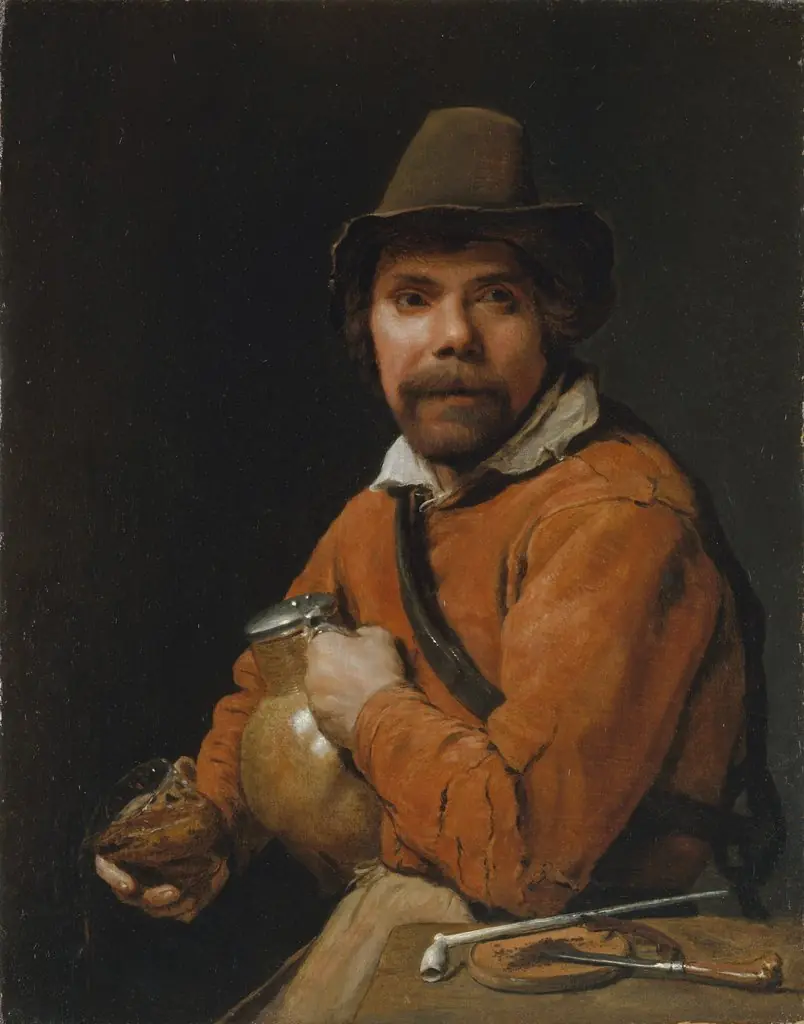
Own this work as a print
Artist & collection
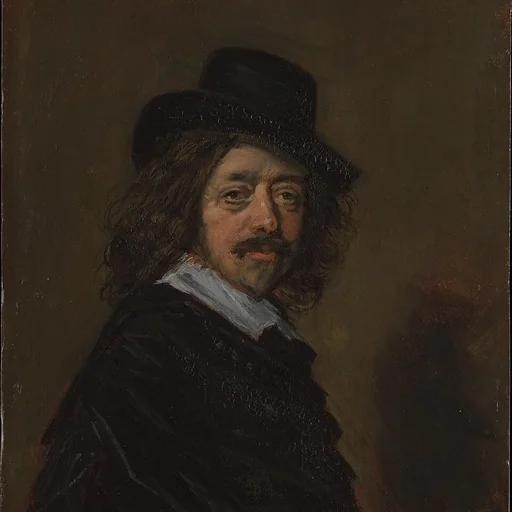
Artist
Frans Hals the Elder (UK: US:; Dutch:; c. 1582 – 26 August 1666) was a Dutch Golden Age painter. He lived and worked in Haarlem, a city in which the local authority of the day frowned on religious painting in places of…