Artwork
Village Street
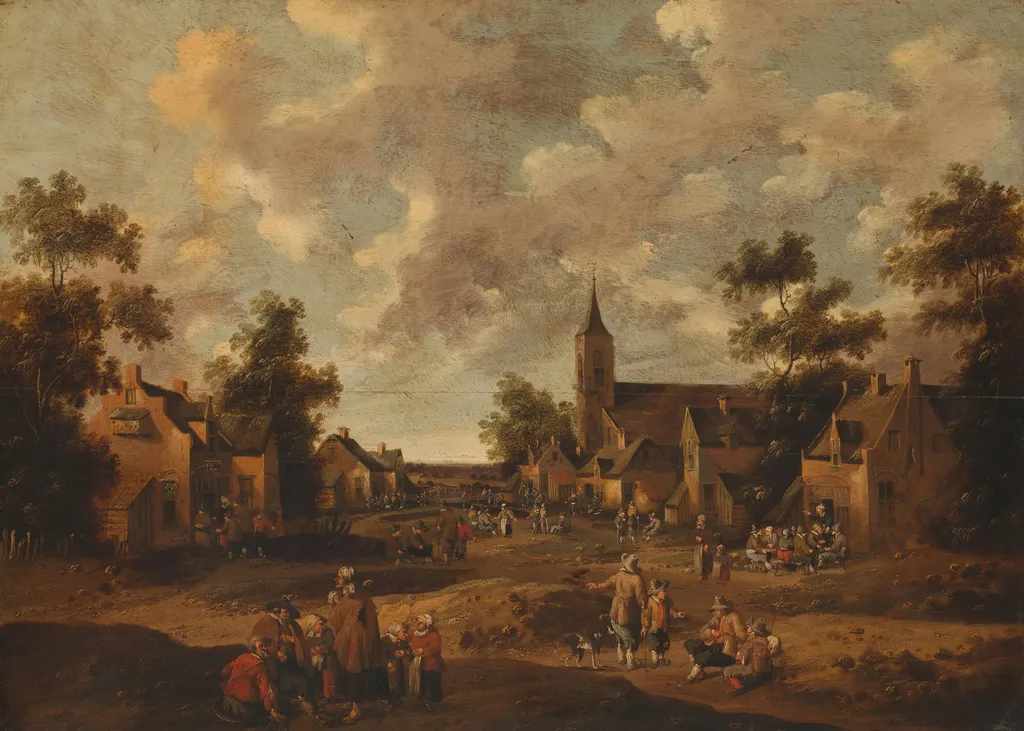
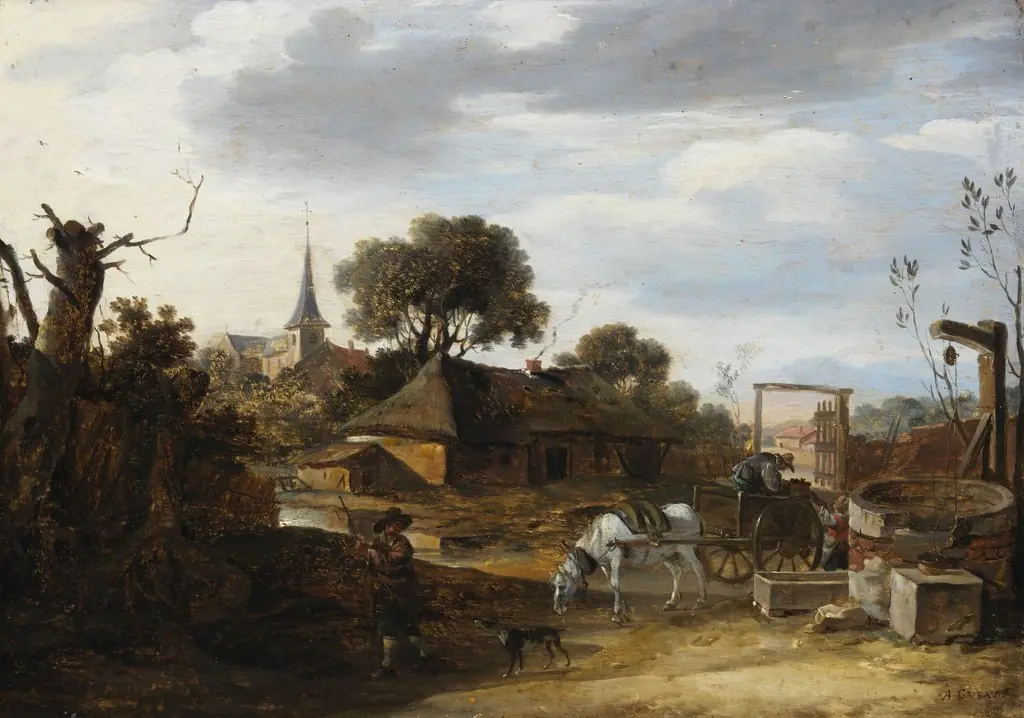
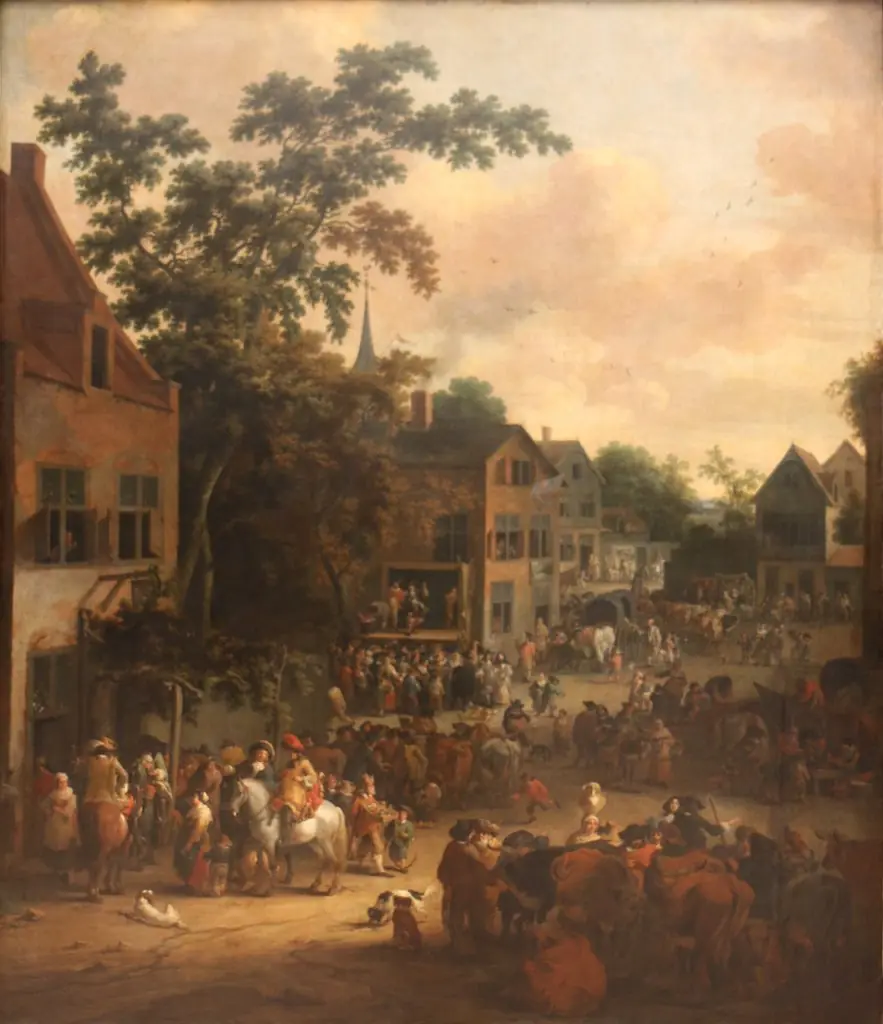
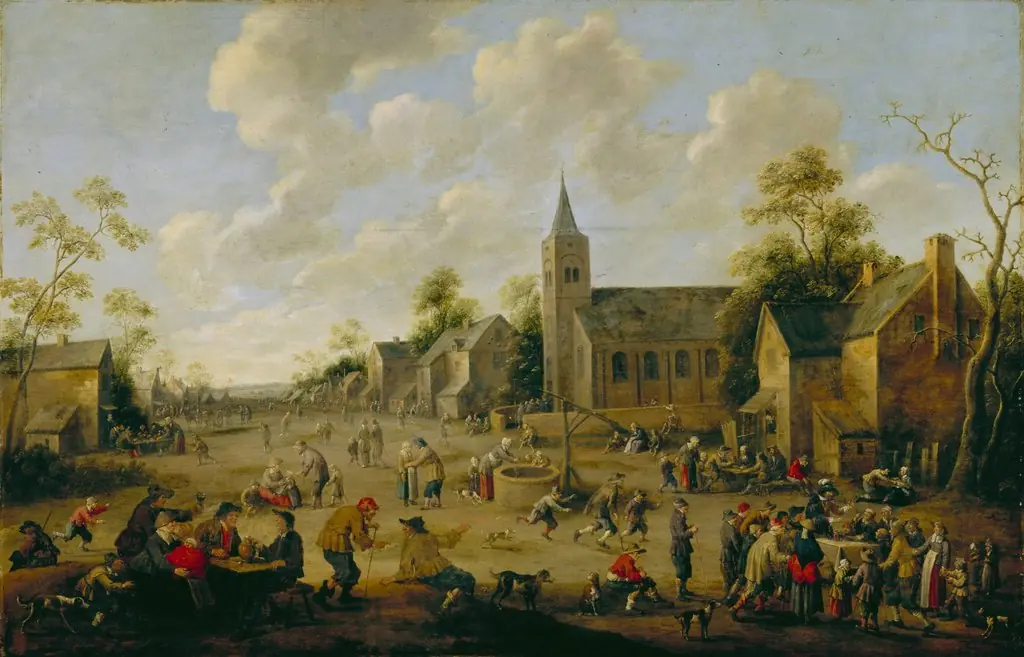
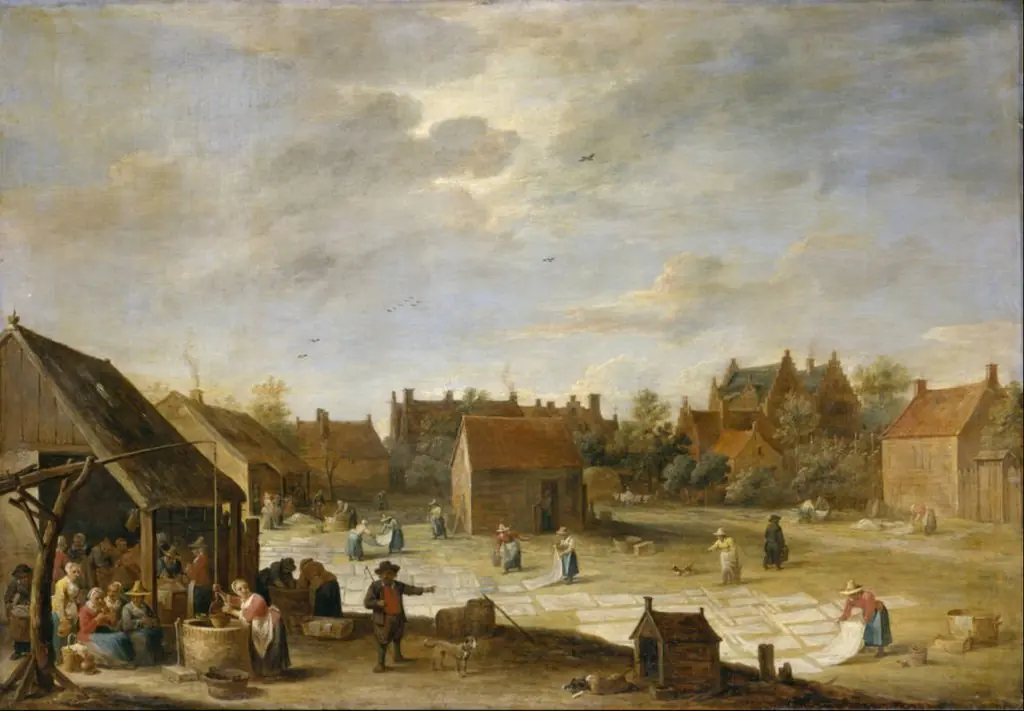
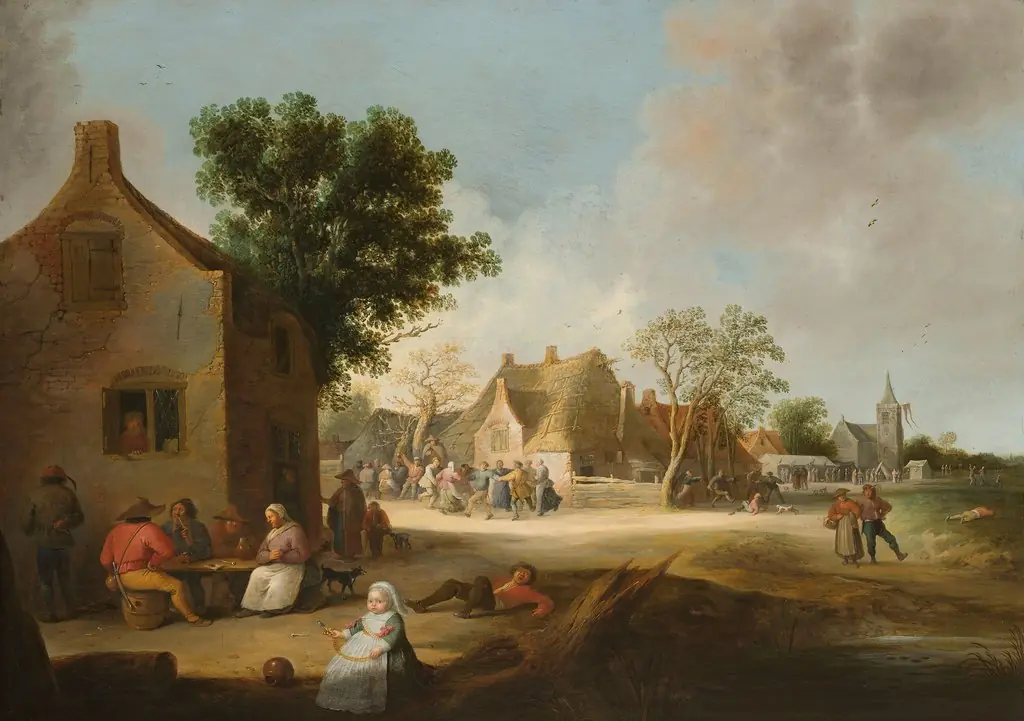
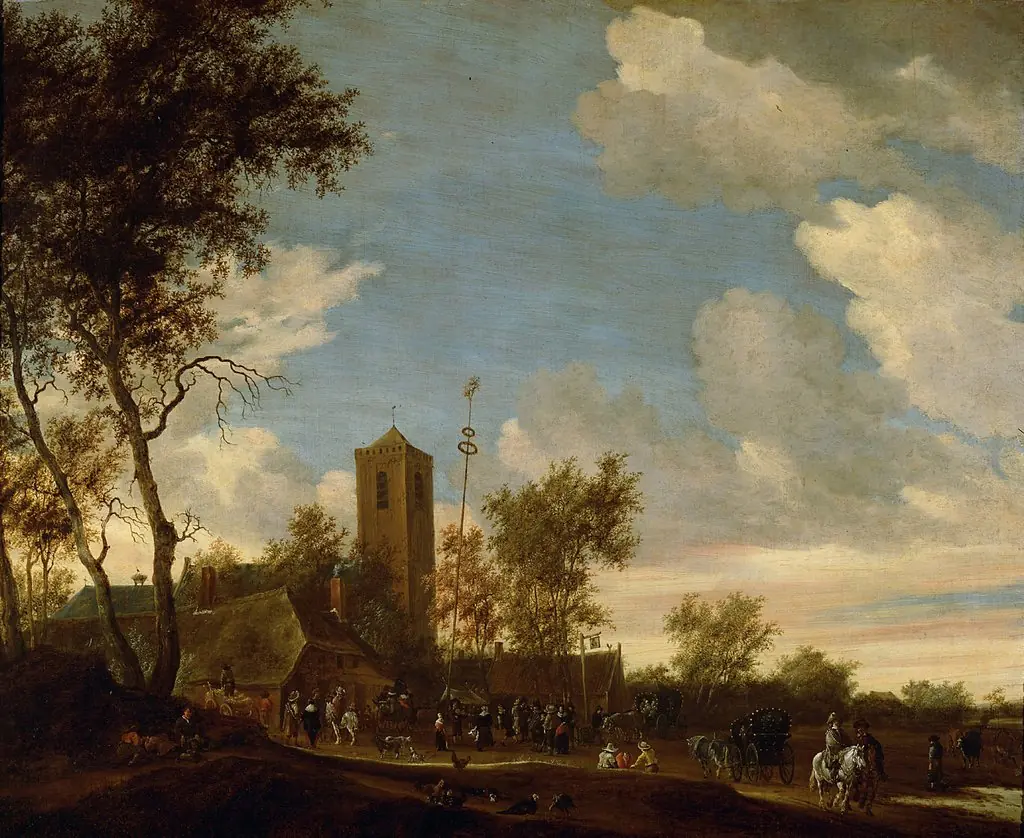
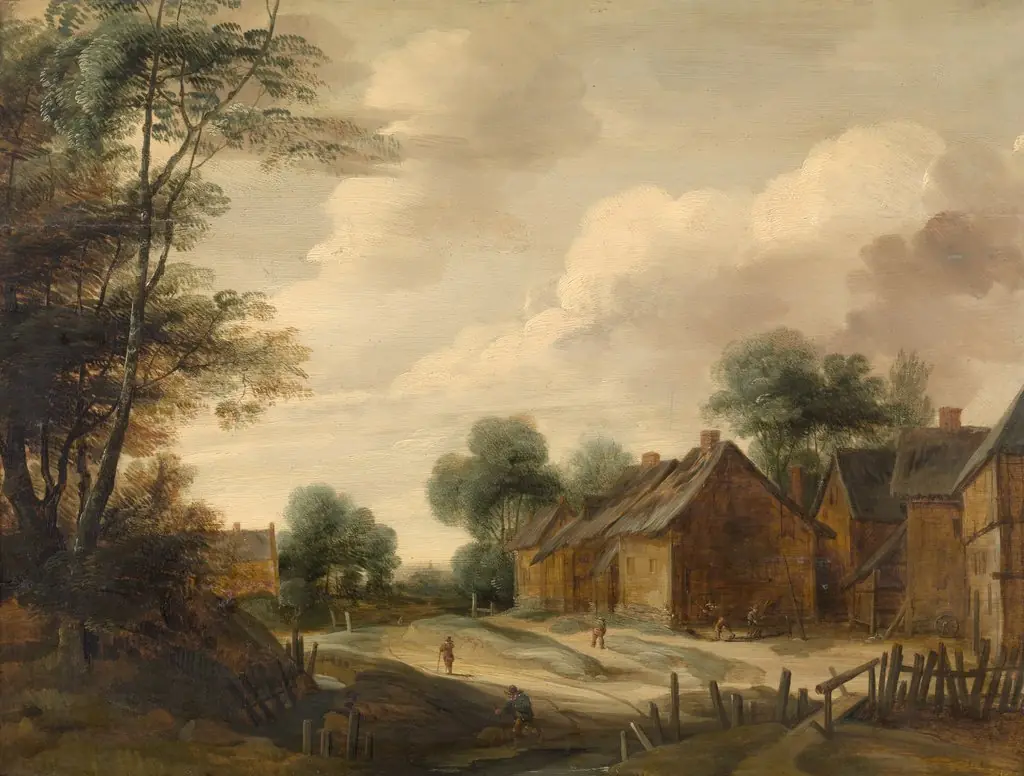
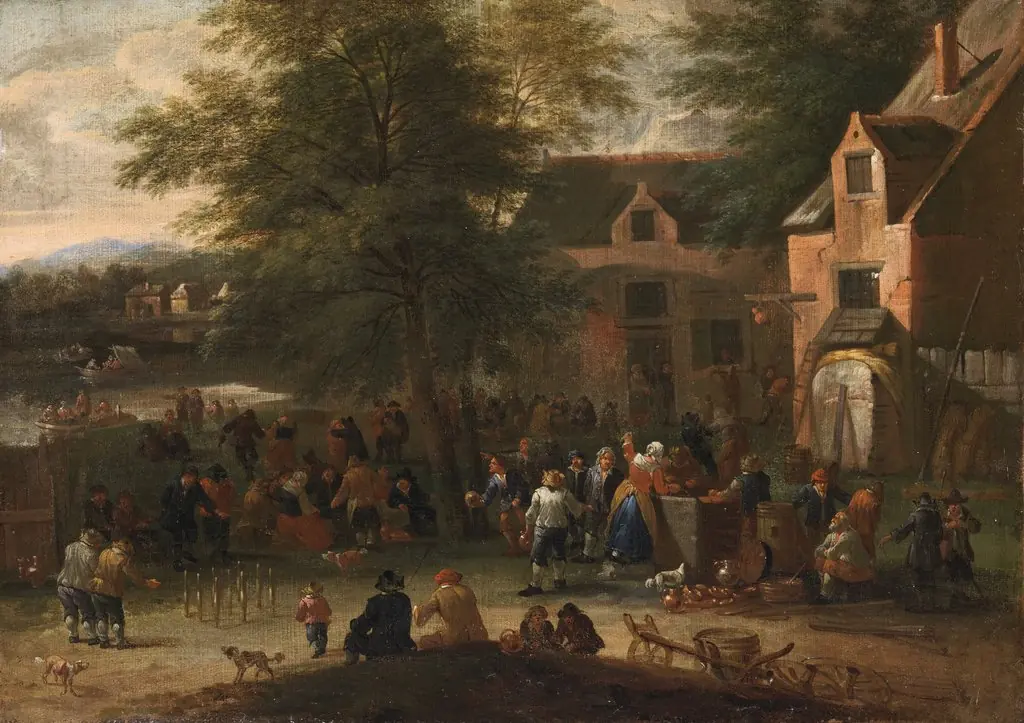
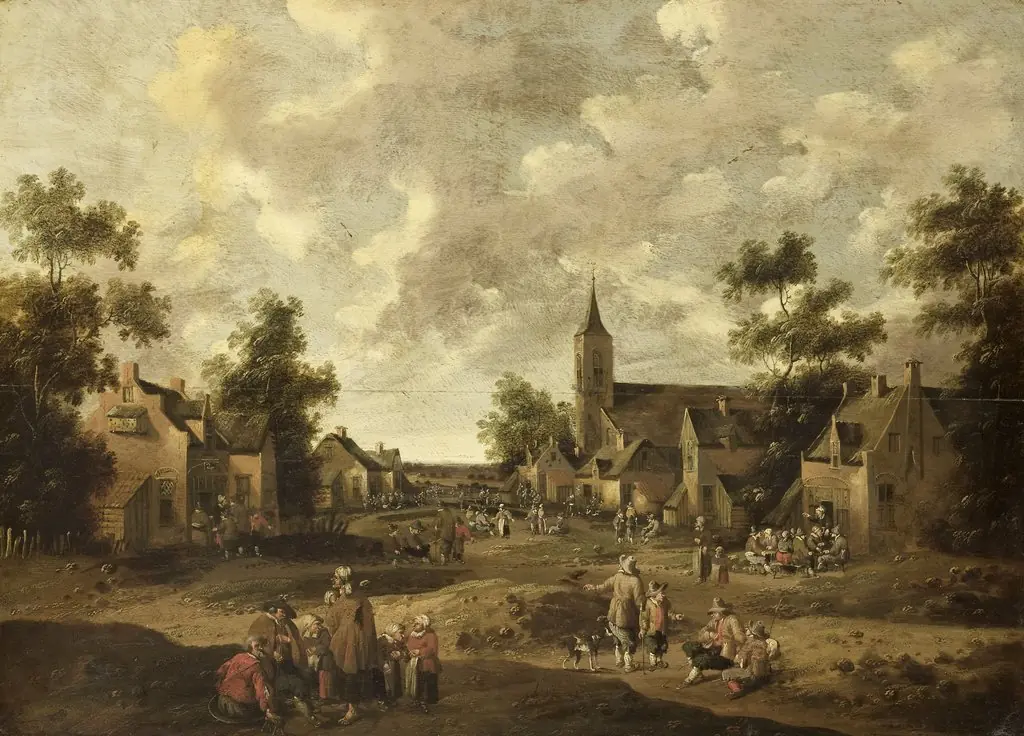
Village Street is an unspecified painting by the Dutch Golden Age artist Cornelis Droochsloot. It dates from 1664 and is held in the collection of the Rijksmuseum. The canvas depicts a tranquil village thoroughfare bathed in sunlight.
About this work
That happens a lot with Dutch Golden Age works, many were painted by people who never became famous.
You see a quiet village street on a sunny day. People chat outside a tavern, kids play near doorsteps, and a church steeple rises in the distance. Everything feels still, like a snapshot of ordinary life.
This painting was made in 1664, but the artist’s name is lost. That happens a lot with Dutch Golden Age works, many were painted by people who never became famous. The details are so small you can almost hear the clinking of glasses at the tavern.
If you like this, look up more Dutch Golden Age painting. The Rijksmuseum has hundreds of scenes just like it.
History & Provenance
The painting Village Street was created in 1664 by the Dutch Golden Age artist Cornelis Droochsloot. Droochsloot, who was active in Utrecht between 1655 and 1673, received his artistic training from his father, Joost Cornelisz Droochsloot. The work is currently held in the collection of the Rijksmuseum in Amsterdam.
No further details regarding the specific commission, earlier ownership history, or provenance chain of this particular piece are provided in the available records.
Village Street is held by the Rijksmuseum in Amsterdam under inventory number SK-A-1543. The work was exhibited in the museum’s 1950 exhibition of Dutch Golden Age paintings and has been part of the permanent collection display since 1975. It was also included in the 1985 traveling exhibition Dutch Landscape in the Seventeenth Century, which toured major European institutions.
The painting’s exhibition history includes a showing at the 1950 Dutch Paintings exhibition at the Rijksmuseum and a 1985 showing at the Kunsthalle Hamburg as part of the Dutch Landscape exhibition.
Context
Cornelis Droochsloot's Village Street (1664) is a landscape work situated within the Dutch Golden Age, reflecting the artistic traditions of Utrecht during the Baroque period. The painting exemplifies the genre scenes and rural themes characteristic of the artist, who was trained by his father, Joost Cornelisz Droochsloot. Art historical analysis notes that Droochsloot's oeuvre is frequently difficult to distinguish from that of his father, a factor that complicates specific critical attribution and scholarship regarding his individual style.
Despite this challenge, the work remains a documented example of mid-seventeenth-century Dutch landscape painting, contributing to the broader understanding of the Droochsloot family's influence on genre and farm scenes in the region.
Overview
The canvas depicts a tranquil village thoroughfare bathed in sunlight. A modest inn occupies the right side, where a small group gathers at outdoor tables. Children linger near the doorways, while a church spire punctuates the distant skyline, lending a sense of communal routine to the scene.
Subject & Meaning
The composition records everyday activity in a 17th‑century Dutch settlement, emphasizing social interaction and the rhythm of local life. By juxtaposing the bustling inn with the quiet presence of the church, the work hints at the balance between leisure and spirituality that characterized rural communities of the period.
Technique & Style
Executed in the detailed manner typical of the Dutch Golden Age, the painting employs fine brushwork to render textures such as stone façades, wooden shutters, and the reflective surfaces of glassware. A restrained palette of earth tones and muted blues conveys natural light without dramatic contrast, reinforcing the scene’s calm realism.
Own this work as a print
Artist & collection
Artist
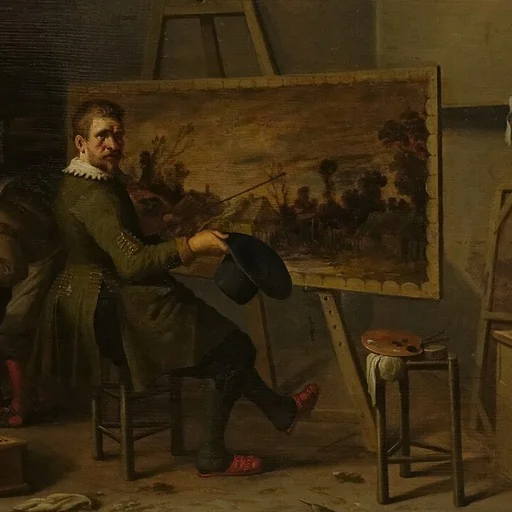
Cornelis Droochsloot (c. 1640 in Utrecht – after 1673 in Utrecht) was a Dutch Golden Age painter. According to the RKD he was the son and pupil of Joost Cornelisz Droochsloot and is known for genre works, landscapes and farm scenes.