Artwork
The Weaver
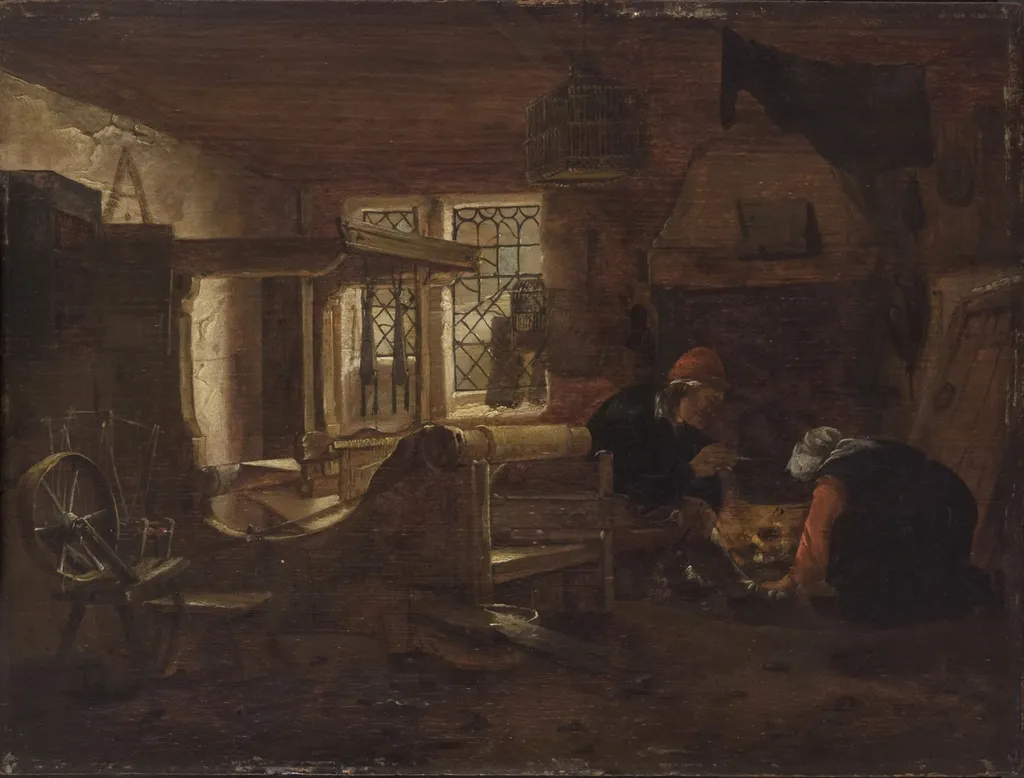
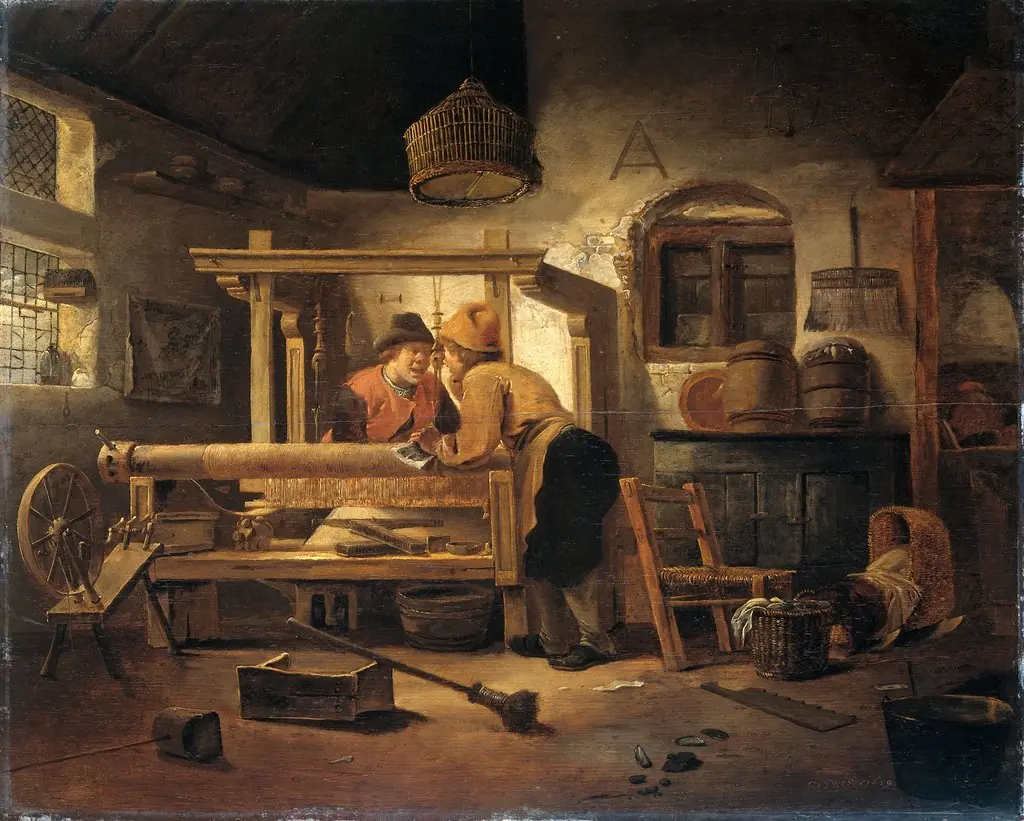
The Weaver is an oil painting by the Dutch Golden Age artist Cornelis Gerritsz Decker. It dates from 1660 and is held in the collection of the Philadelphia Museum of Art.
About this work
Subject & Meaning
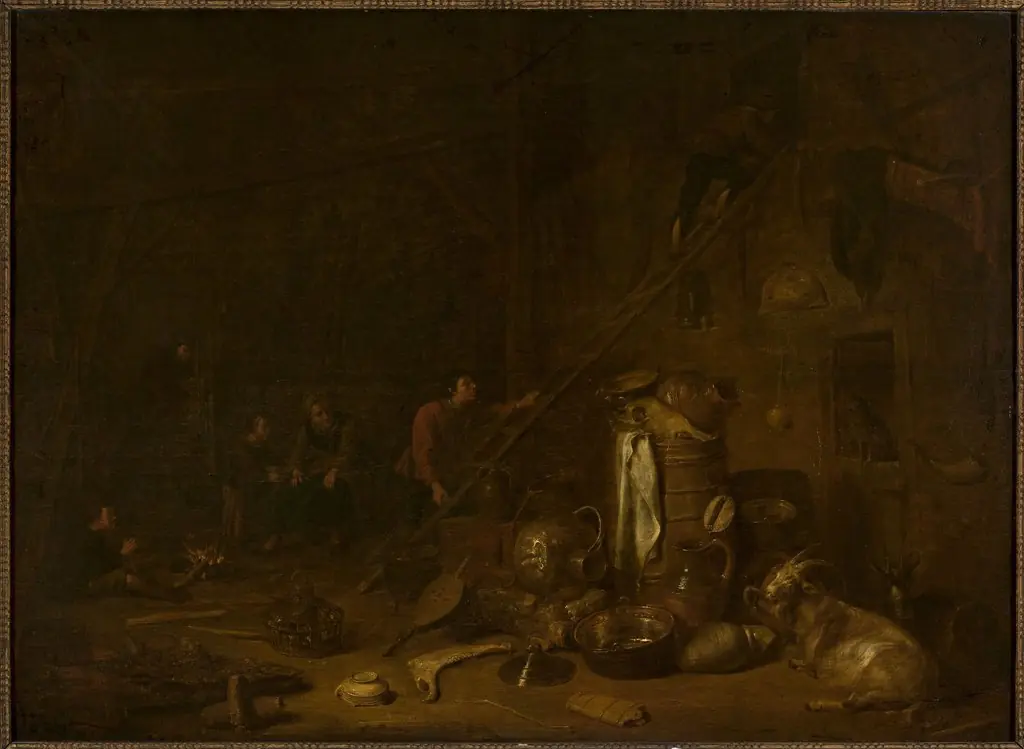
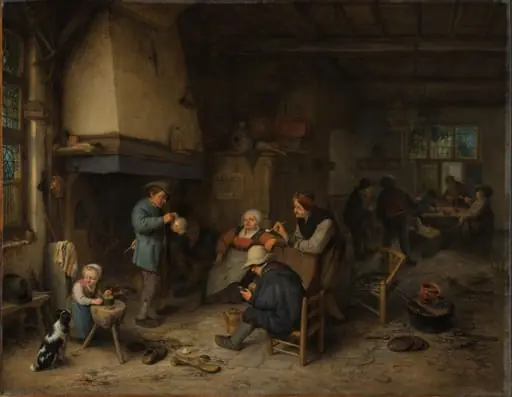
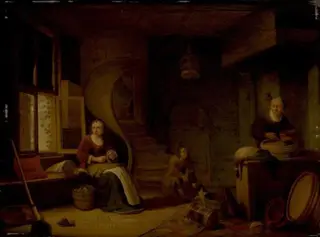
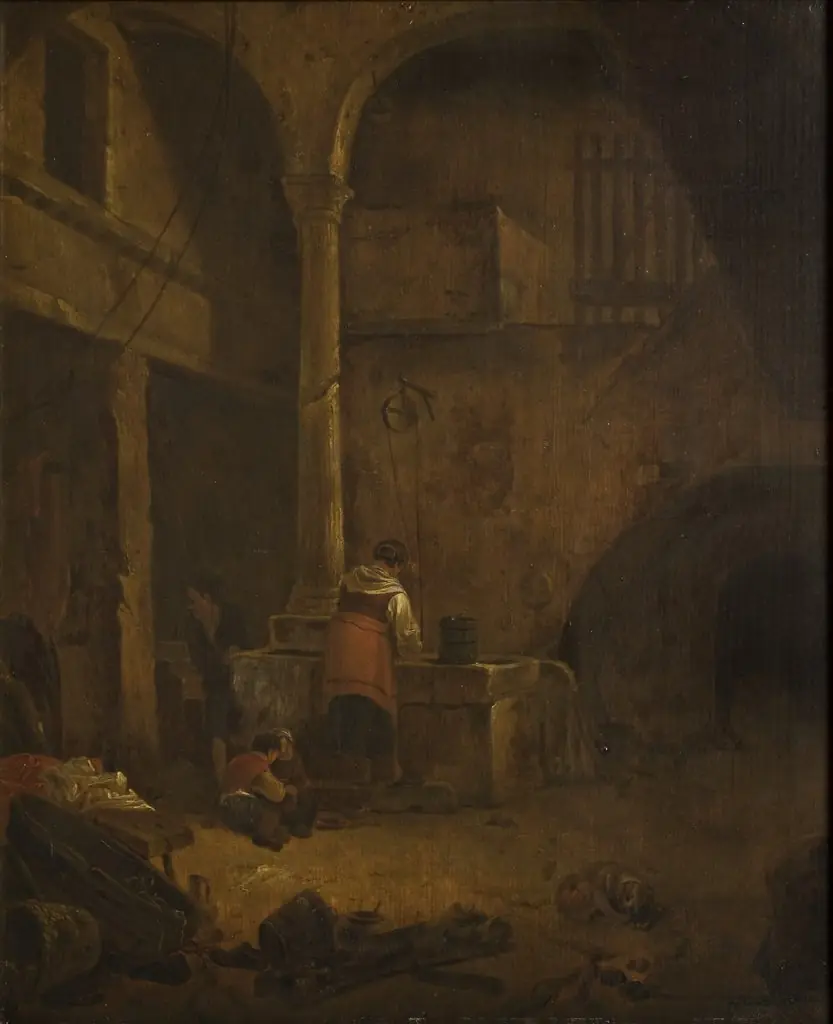
The painting depicts a weaver at a loom, an activity emblematic of the Dutch Republic’s textile industry in the seventeenth century.
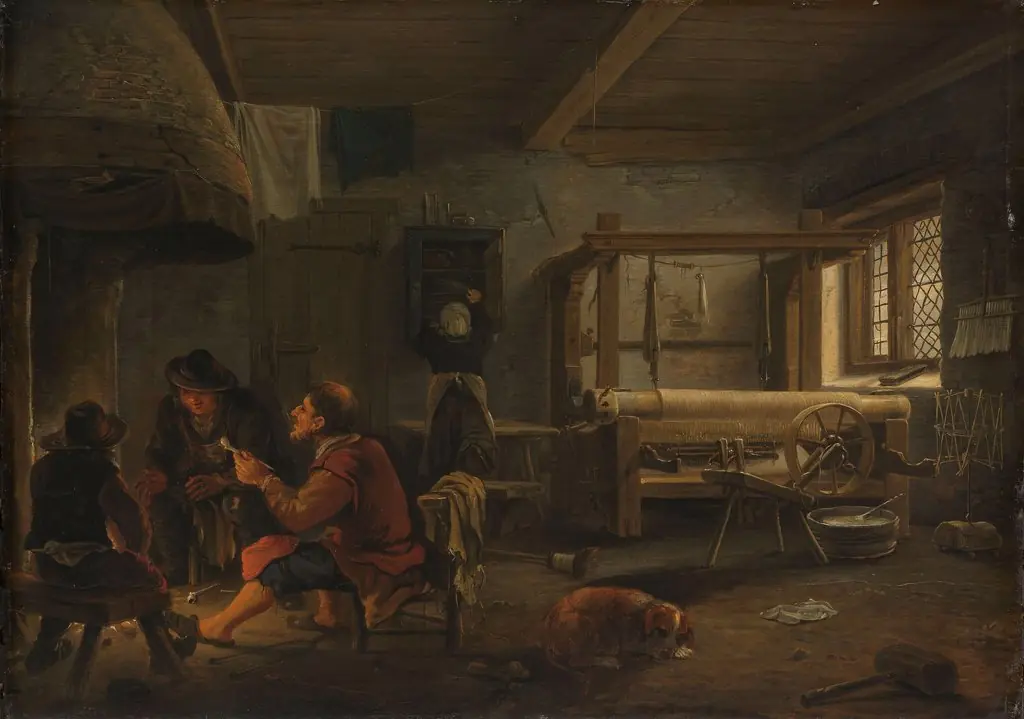
The painting depicts a weaver at a loom, an activity emblematic of the Dutch Republic’s textile industry in the seventeenth century. A man works the loom while a woman stands nearby, suggesting a domestic workshop setting.
The interior also includes a fireplace and earthenware, grounding the scene in a lived environment rather than an idealized studio. The presence of both figures may point to the collaborative nature of weaving in household production during this period.
Technique & Style
Cornelis Gerritsz Decker's The Weaver, dated 1660, is executed in oil paint on a panel support. As a genre scene, the work depicts a domestic interior featuring a man at a loom, accompanied by a woman, a fireplace, and various household items including a crock. The medium and support are consistent with Dutch Golden Age painting practices of the period, utilizing the durability of wood panels for detailed narrative compositions. The painting is currently held in the collection of the Philadelphia Museum of Art.
History & Provenance
Cornelis Gerritsz Decker executed The Weaver in 1660. Created as an oil painting on panel, the work depicts a domestic genre scene featuring a weaver at a loom alongside a woman, a fireplace, and crockery. The painting entered the collection of John G. Johnson, who owned the work prior to its acquisition by the Philadelphia Museum of Art, where it is currently held.
The painting is part of the Philadelphia Museum of Art's collection, listed under inventory number PMA 1912-132. It has been included in several exhibitions at the museum, including a 1976 show highlighting Dutch Golden Age genre scenes and a 2018 display focused on domestic life in 17th-century Dutch painting. The work was previously owned by John G. Johnson before entering the museum's collection.
Context
The Weaver, painted in 1660 by Cornelis Gerritsz Decker, depicts a domestic scene featuring a man at a loom alongside a woman and child near a fireplace, reflecting 17th-century Dutch genre painting traditions. The work, created on panel in oil, is part of the Philadelphia Museum of Art's collection, which acquired it from John G. Johnson's bequest, situating it within the artist's documented output during his Amsterdam period.
Scholarship identifies Decker as a minor figure in the Dutch Golden Age, known for detailed interior genre scenes that capture contemporary household activities. The painting's composition and subject matter align with the stylistic conventions of mid-1600s Dutch domestic realism, though it remains less studied than works by more prominent contemporaries, contributing to ongoing research into lesser-known figures of the era.
Legacy
The Weaver exerted limited immediate influence but later gained recognition as a representative example of Dutch Golden Age genre painting. Its scholarly reputation grew through inclusion in studies of 17th-century domestic scenes and as part of the John G. Johnson collection, which shaped early American museum acquisitions. The work is frequently cited in art historical surveys examining genre painting's role in documenting contemporary occupations, securing its place in narratives of cultural documentation rather than direct stylistic impact.
The painting's legacy is anchored in its provenance and scholarly attention rather than widespread imitation
Overview
Cornelis Gerritsz Decker’s oil painting The Weaver, dated 1660, portrays a modest interior where two figures are engaged in textile work by the light of a fireplace. The scene is rendered in a small format and is part of the collection of the Philadelphia Museum of Art.
Artist & collection
Artist
Cornelis Gerritsz Decker (1618–1678) was an artist, born in Haarlem.