Artwork
Woman at a Well in an Italian Farmhouse
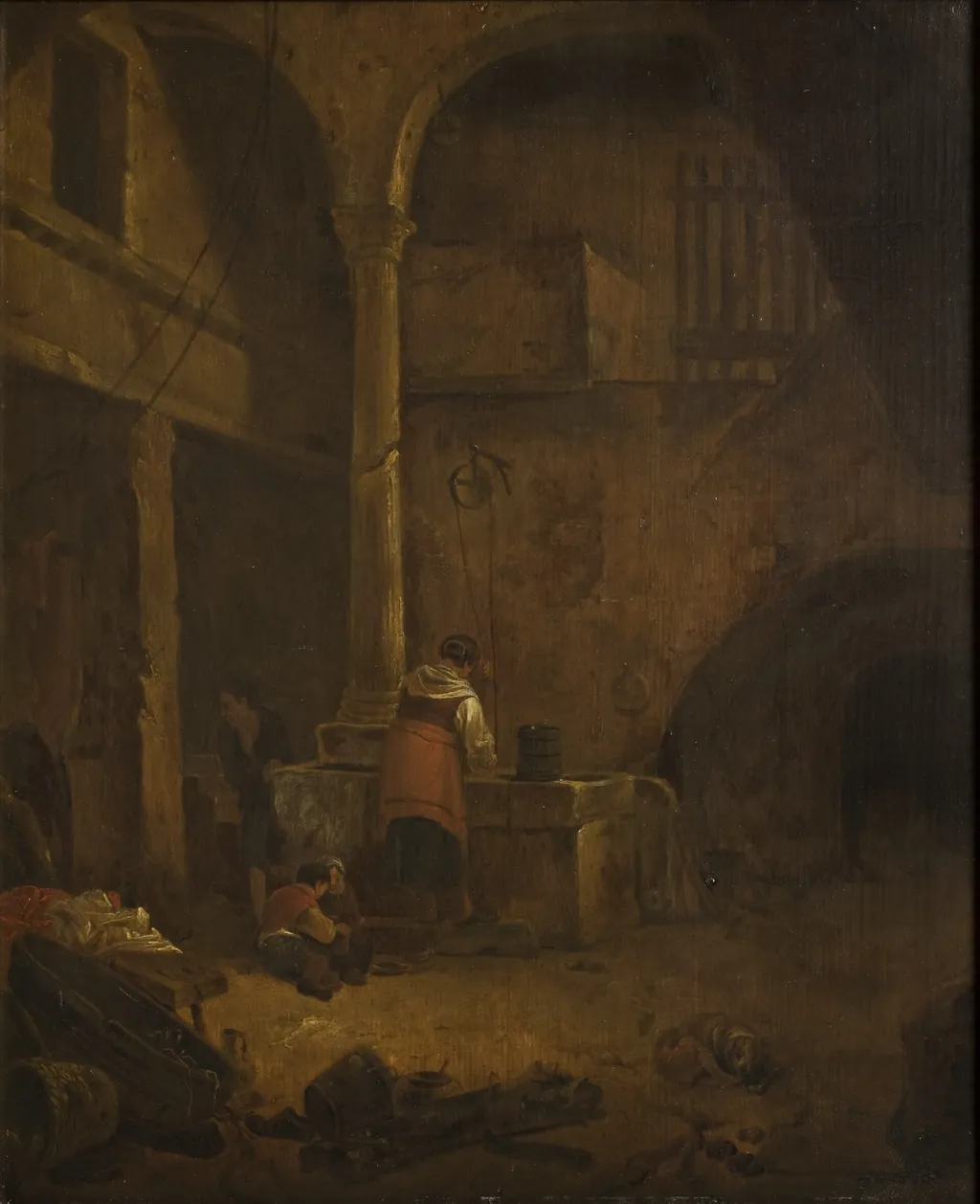
Woman at a Well in an Italian Farmhouse is an oil painting by the Early Baroque Italian artist Unknown. It dates from 1654 and is held in the collection of the Nationalmuseum.
About this work
Subject & Meaning
The inclusion of the child alongside the woman in traditional regional dress suggests a focus on everyday life and rural customs of the Italian countryside.
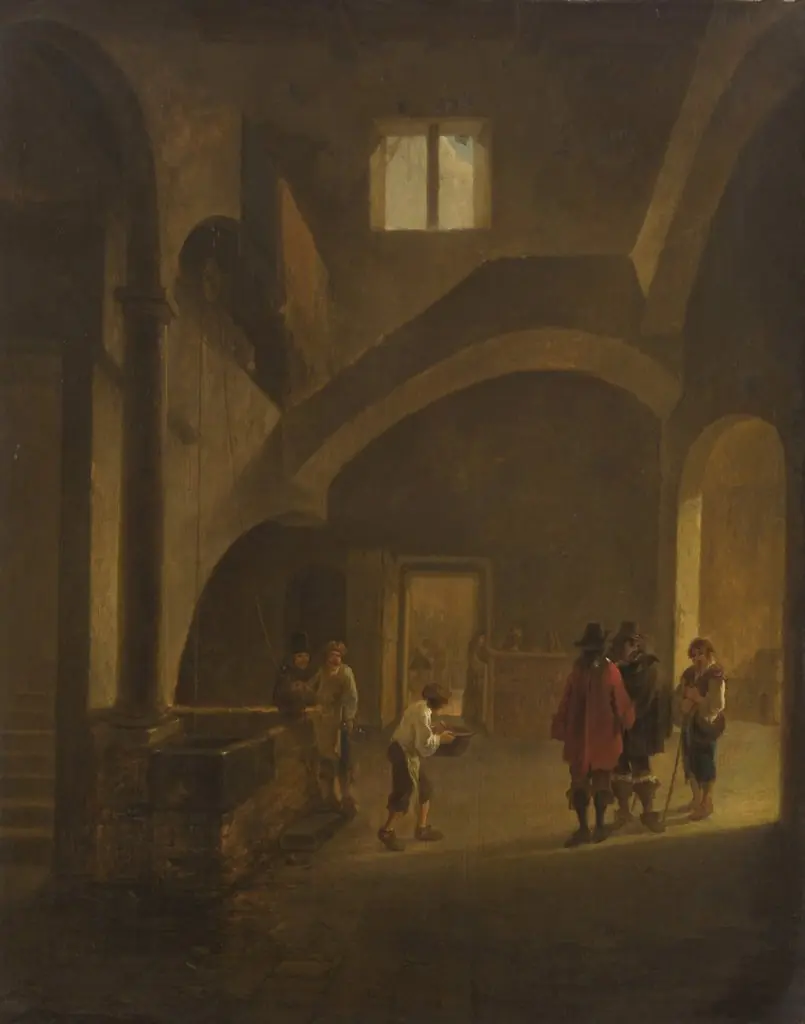
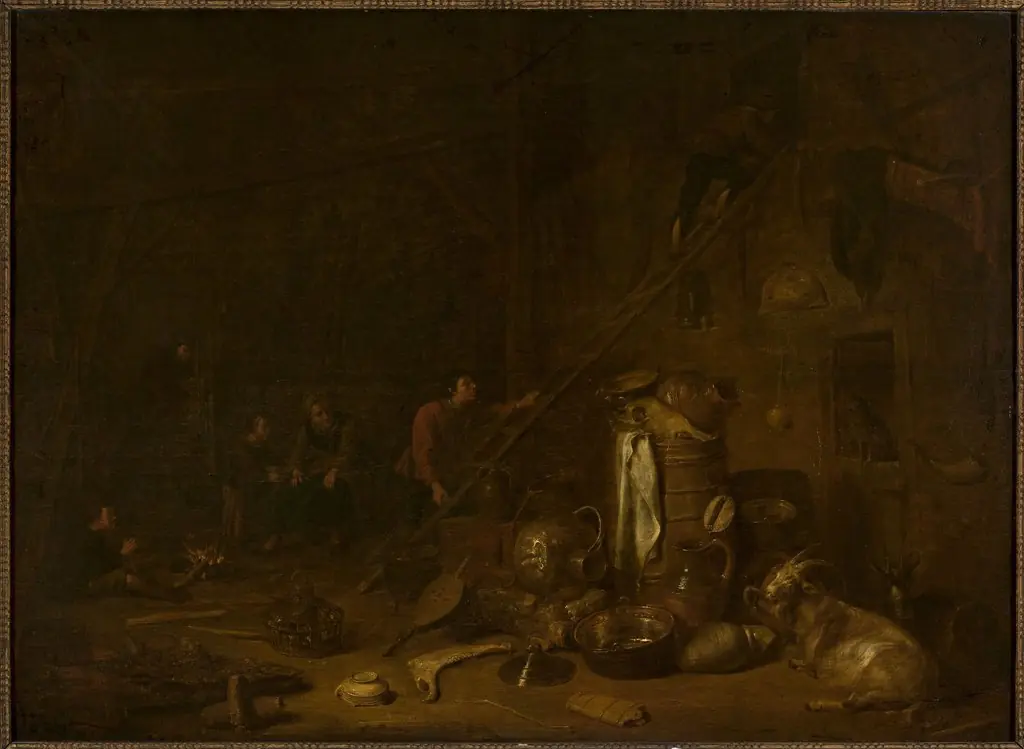
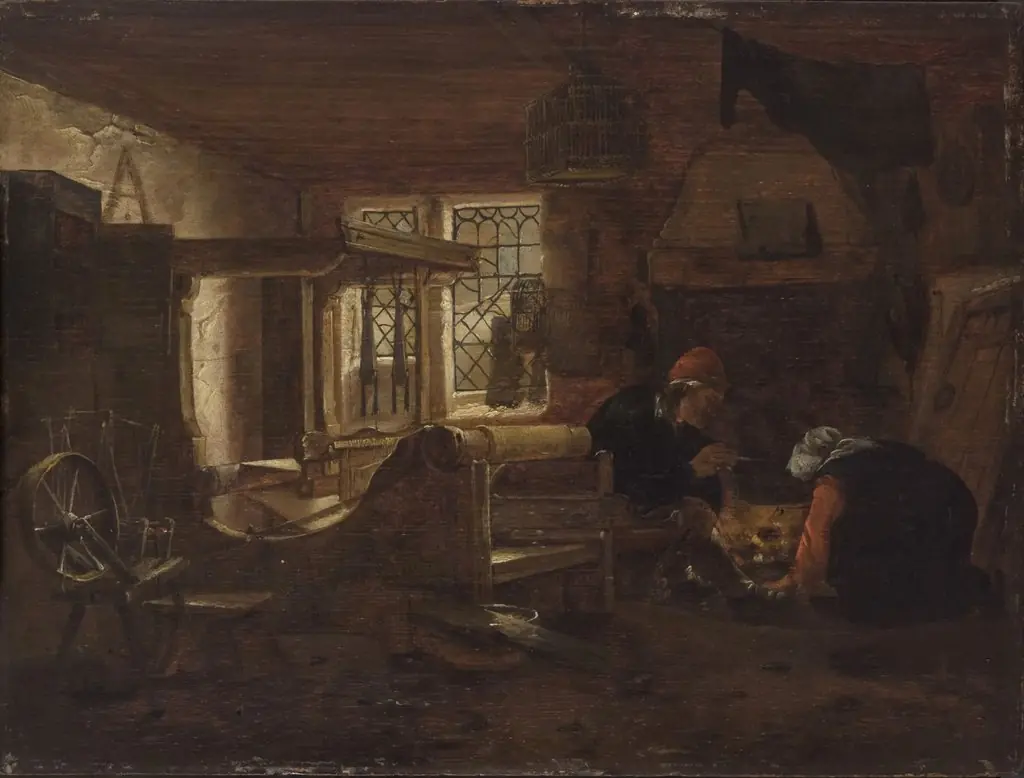
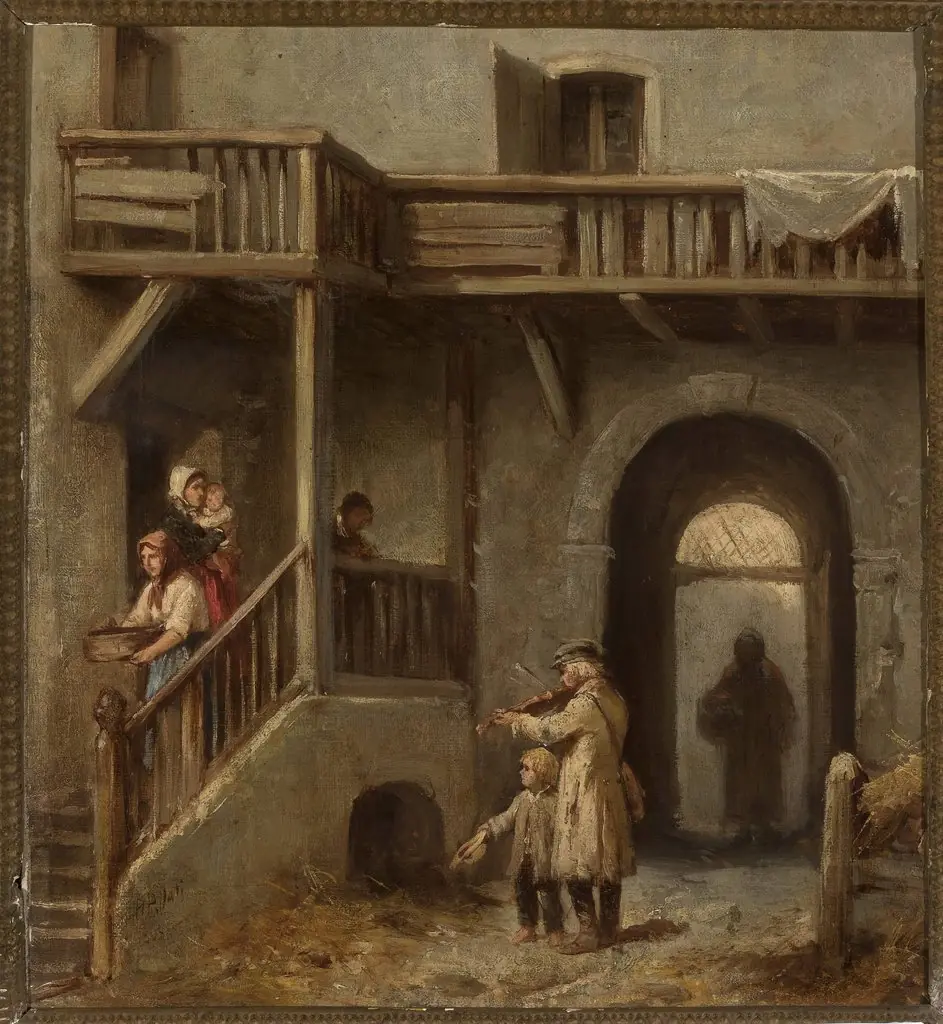
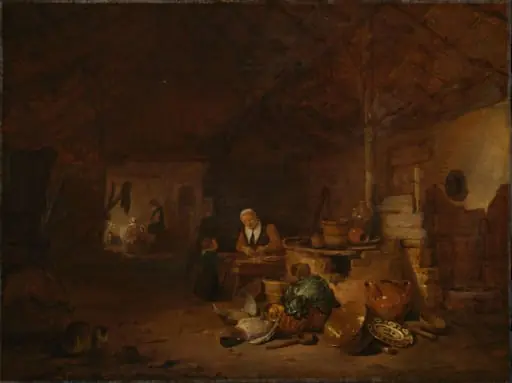
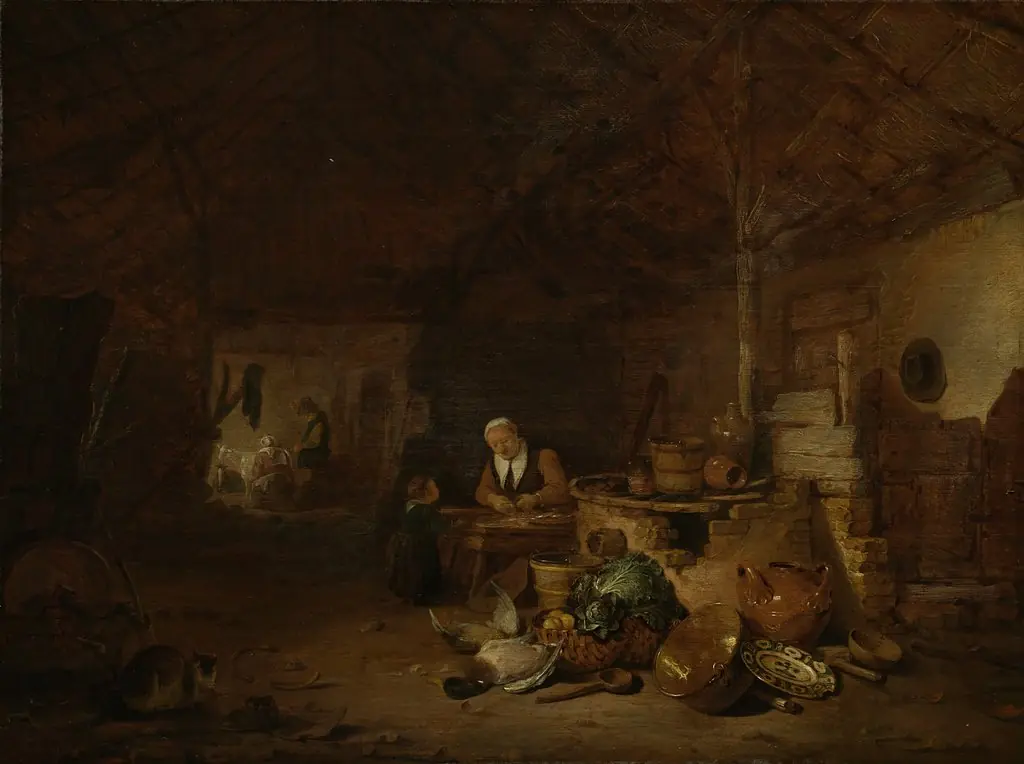
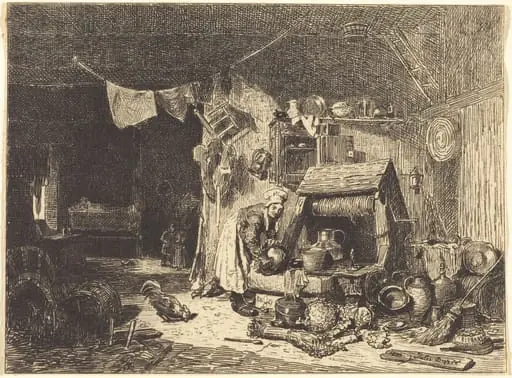
The painting depicts a woman dressed in Ciociaro costume standing at a well within an Italian farmhouse setting, accompanied by a child. Created as a work of genre art and portraiture, the scene captures a specific domestic moment rather than a mythological or allegorical narrative. The inclusion of the child alongside the woman in traditional regional dress suggests a focus on everyday life and rural customs of the Italian countryside.
The composition centers on these figures to illustrate the daily activities and attire associated with the Ciociaro people.
Technique & Style
The work is executed in oil paint on a wooden panel, characteristic of 17th‑century Dutch‑influenced portraiture. Its handling displays a smooth finish and precise modeling of figures, while the composition emphasizes a quiet domestic interior with a woman drawing water from a well. Formal elements include a restrained palette, careful rendering of the Ciociaro costume and subtle chiaroscuro that model the faces and furnishings, and a balanced arrangement that conveys narrative intimacy.
History & Provenance
Created in 1654, Woman at a Well in an Italian Farmhouse is an oil painting on panel executed in the manner of Thomas Wijck. The work depicts a woman dressed in Ciociaro costume alongside a child within a farmhouse setting. While the specific circumstances of its commission and early ownership history remain undocumented in the available records, the painting's inception is firmly established at 1654.
The artwork currently resides in the collection of the Nationalmuseum, where it is held as part of their genre art holdings.
Context
The painting Woman at a Well in an Italian Farmhouse reflects the artist's engagement with genre scenes popular in 17th-century Dutch and Flemish art, particularly the subcategory of low-country genre painting that emphasized everyday domestic life. Its depiction of a peasant woman in a Ciociaro costume alongside a child aligns with the ethnographic interest in regional attire found in the works of Thomas Wijck and his contemporaries. The composition and handling of light demonstrate a synthesis of naturalistic detail and compositional balance characteristic of the Dutch Golden Age, situating the work within broader currents of European genre painting.
The use of oil on panel and its modest dimensions of 42 cm by 34 cm support its classification as an intimate domestic scene rather than a grand narrative work.
Legacy
Later scholarship identifies the painting as part of a tradition of genre scenes depicting rural life in the Dutch and Italianate styles, influencing subsequent artists who explored domestic interiors with narrative detail. The work's composition and portrayal of a woman in a Ciociaro costume have been cited in studies of cross-cultural representation in 17th-century European art, contributing to broader discussions of genre painting's role in shaping perceptions of vernacular dress and household activity. Its inclusion in the Nationalmuseum collection has ensured continued public and academic attention to the artist's oeuvre and the diffusion of stylistic motifs associated with Thomas Wijck's workshop.
Overview
Woman at a Well in an Italian Farmhouse is an oil painting depicting a serene domestic scene. A woman, dressed in traditional Ciociaro attire, tends to a well within a dimly lit Italian farmhouse, accompanied by children engaged in play.
Artist & collection