Artwork
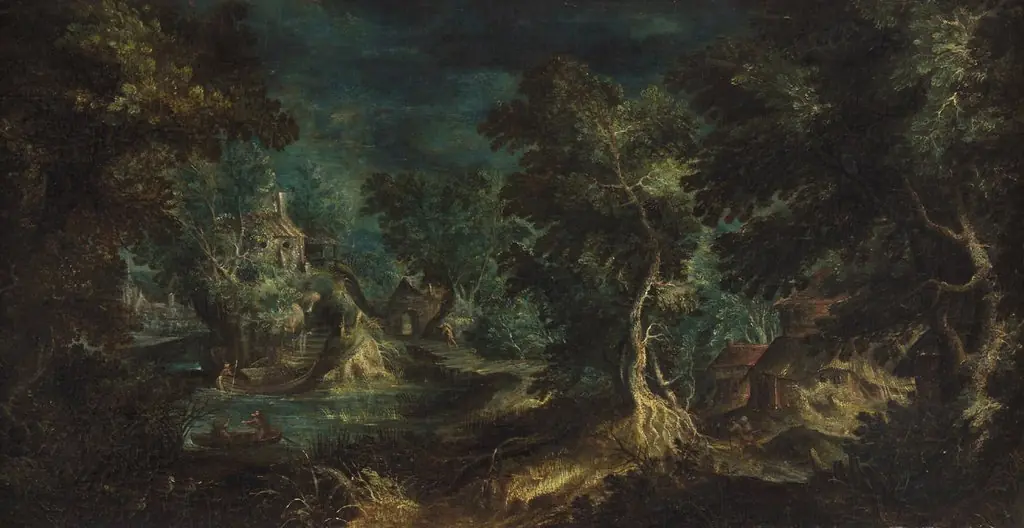
Shepherd's cabin in the forest
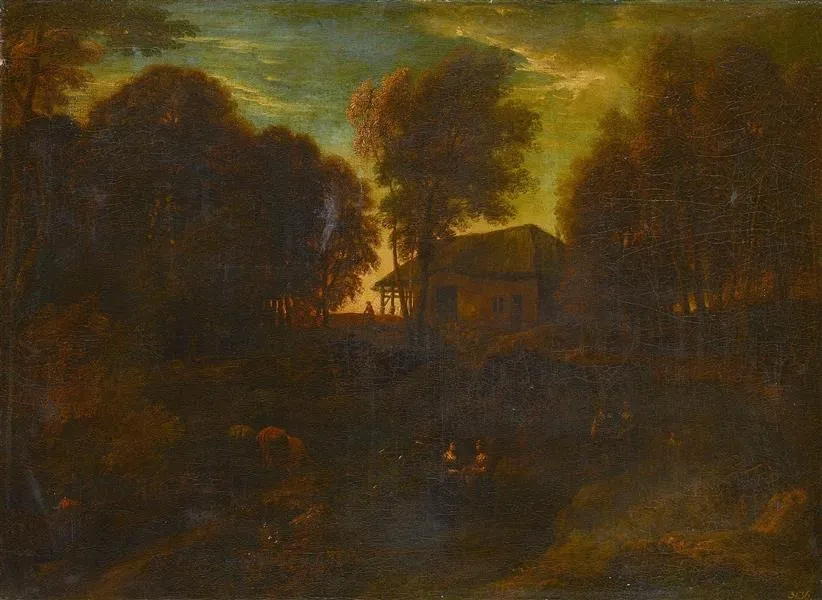
Shepherd's cabin in the forest is an oil painting by the Dutch Golden Age artist Cornelis Huysmans. It dates from 1700 and is held in the collection of the Gemäldegalerie Alte Meister.
About this work
Overview
Painted in 1700 by Cornelis Huysmans, this oil on canvas depicts a secluded shepherd’s hut within a wooded landscape.
Painted in 1700 by Cornelis Huysmans, this oil on canvas depicts a secluded shepherd’s hut within a wooded landscape. Huysmans, active across Flemish cities including Antwerp and Brussels, specialized in idealized natural scenes that blended local topography with imagined Italianate elements. The work belongs to the broader tradition of 17th-century Northern landscape painting, though it diverges from strict realism through its atmospheric composition and stylized lighting.
Subject & Meaning
The scene centers on a modest wooden cabin, barely visible amid thick foliage, with a narrow path leading to its door. No human figures are present, emphasizing solitude and quietude. The cabin symbolizes a retreat from urban life, reflecting contemporary ideals of pastoral simplicity.
The untouched forest and gentle light suggest harmony between human habitation and nature, without overt moralizing or narrative.
Technique & Style
Huysmans employed subtle chiaroscuro to model forms and suggest depth, using soft transitions between light and shadow rather than stark contrasts. The foliage is rendered with layered brushwork, creating texture without excessive detail. Warm tones in the late-day sunlight highlight the cabin and ground, while cooler greens recede into the background, enhancing spatial illusion. His style merges Flemish precision with the compositional calm of French and Italian precedents.
History & Provenance
The painting entered the Gemäldegalerie Alte Meister collection in Dresden, likely through 18th-century acquisitions of Flemish works. Its attribution to Huysmans is consistent with his known output from the turn of the 18th century. No significant alterations or restorations are documented, and the work has remained in institutional custody since at least the 19th century, preserving its original surface and tonal balance.
Context
Created during the waning years of the Dutch Golden Age, the painting reflects a broader European taste for idealized nature, even in regions outside the Netherlands. While Dutch painters often depicted flat, open landscapes, Huysmans and his Flemish contemporaries favored wooded, hilly settings influenced by Italianate models. This work aligns with a growing interest in tranquil, contemplative scenery over bustling or dramatic subjects.
Legacy
Huysmans’s landscapes, including this one, contributed to the persistence of pseudo-Italianate themes in Northern Europe beyond the 17th century. Though not widely celebrated in his time, his work influenced later regional painters seeking to reconcile naturalism with poetic atmosphere. Today, the painting remains a quiet example of how Flemish artists adapted foreign styles to express local sensibilities of solitude and stillness.
Artist & collection
Artist
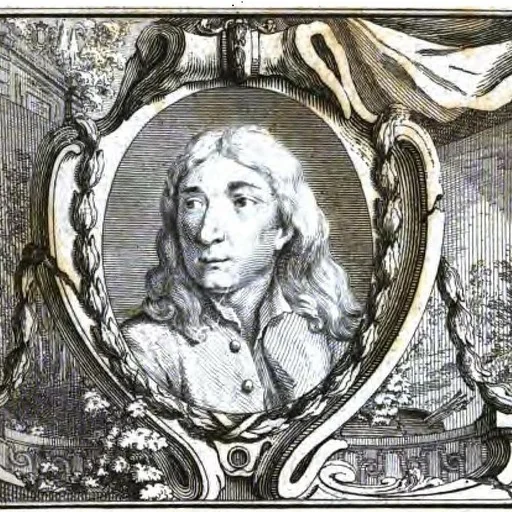
Cornelis Huysmans (baptized 2 April 1648 in Antwerp; died 1 June 1727 in Mechelen) was a Flemish landscape painter who was active in Antwerp, Brussels and Mechelen.

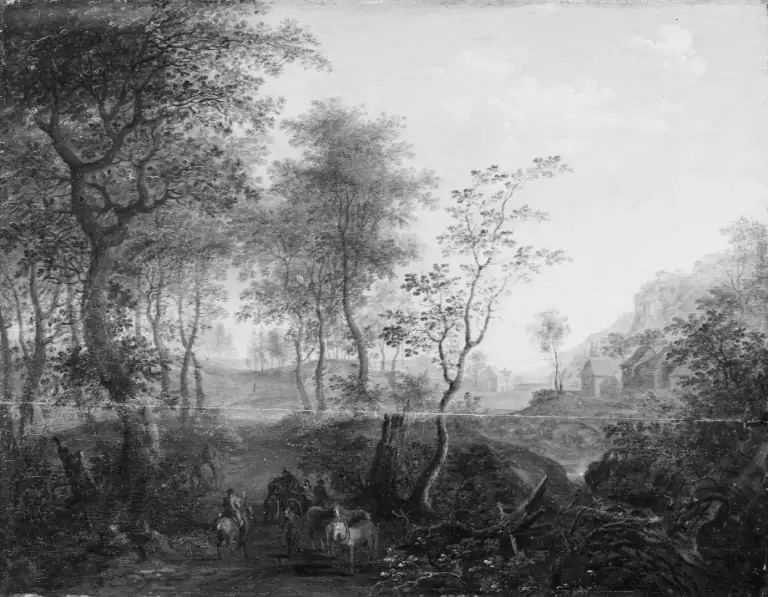
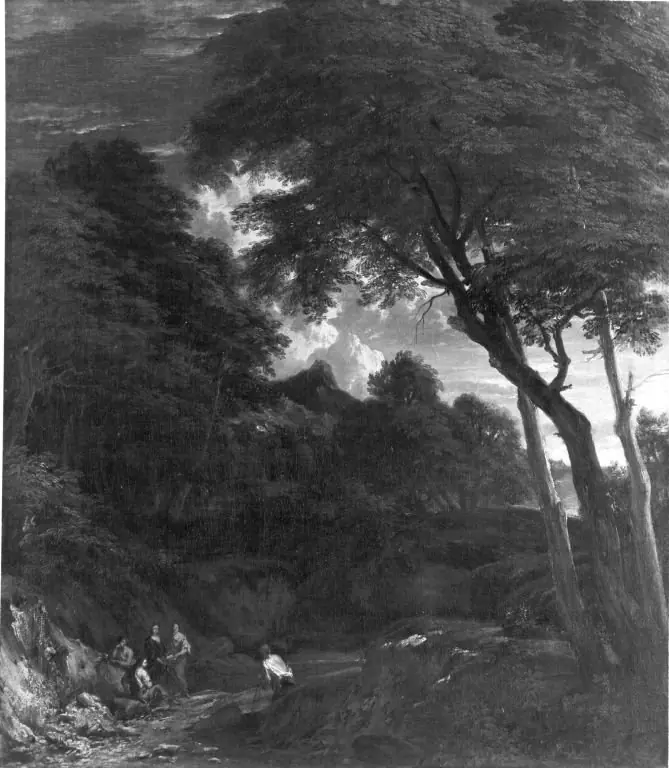
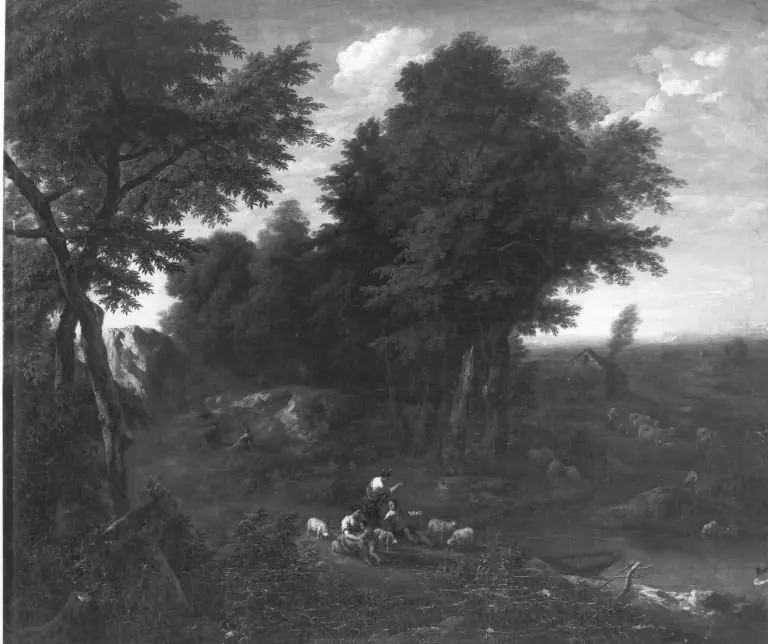
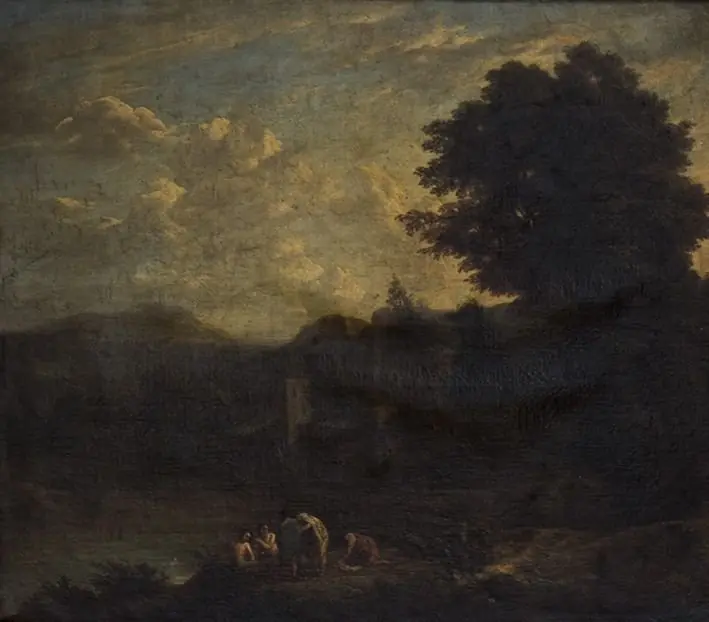
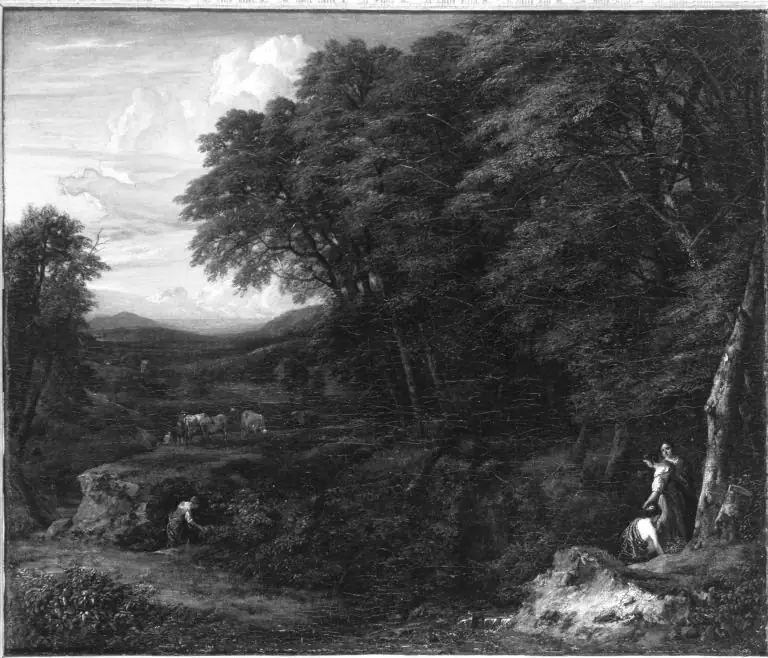
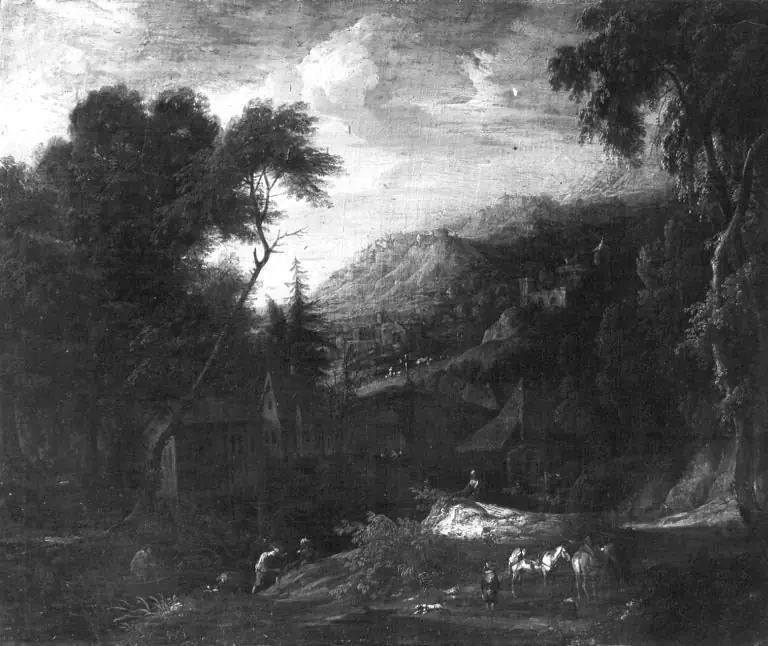
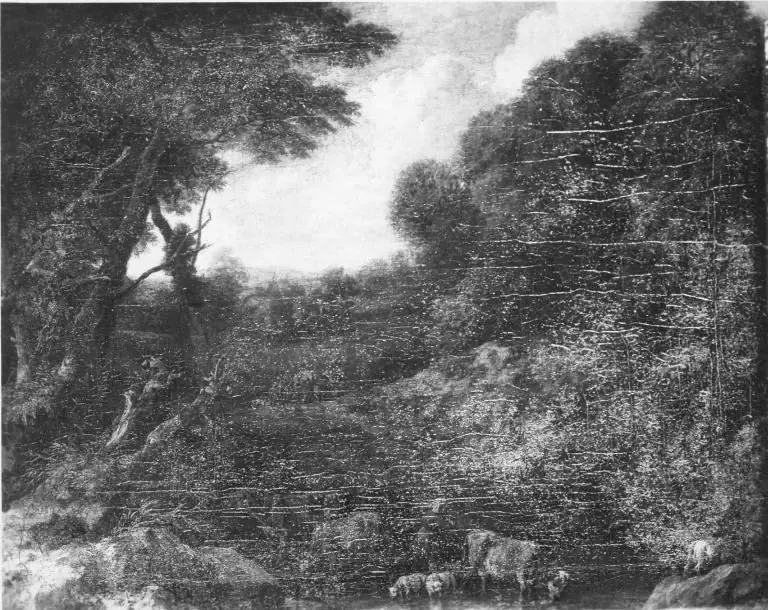
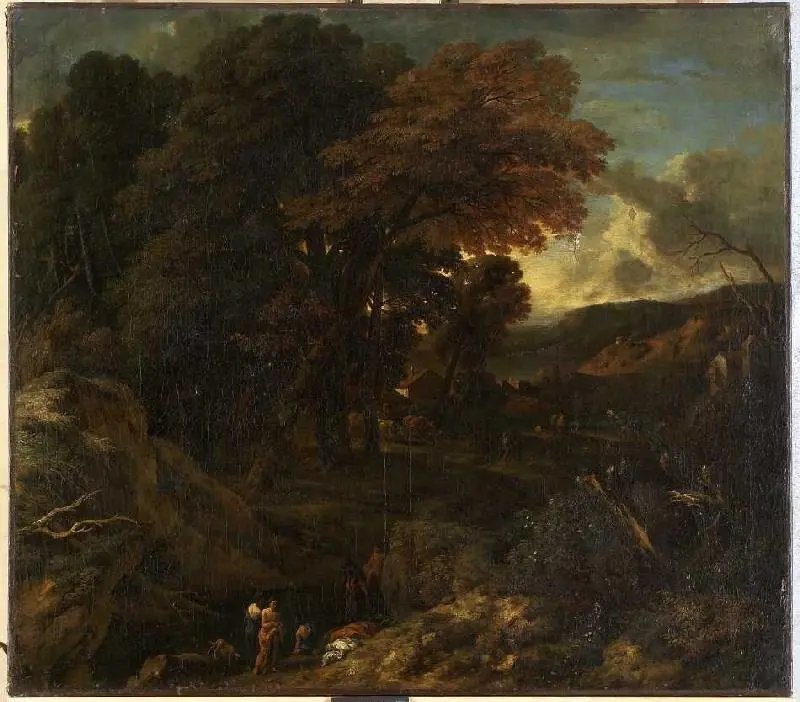 Italian forest landscape with bathers
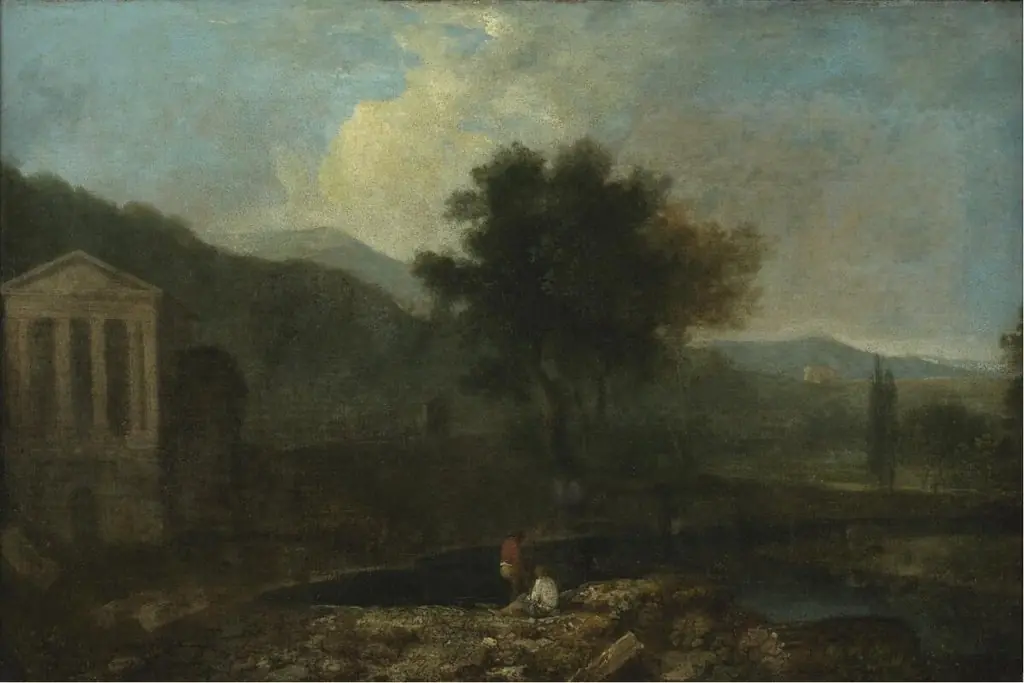 Temple of Clitumnus
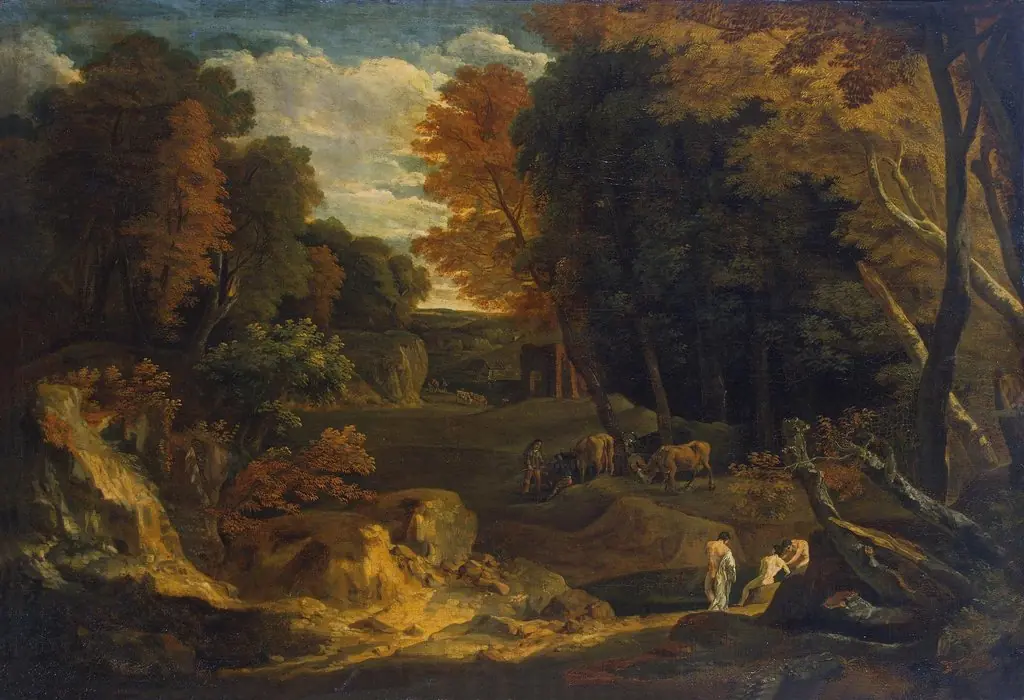 Forest Landscape with a River
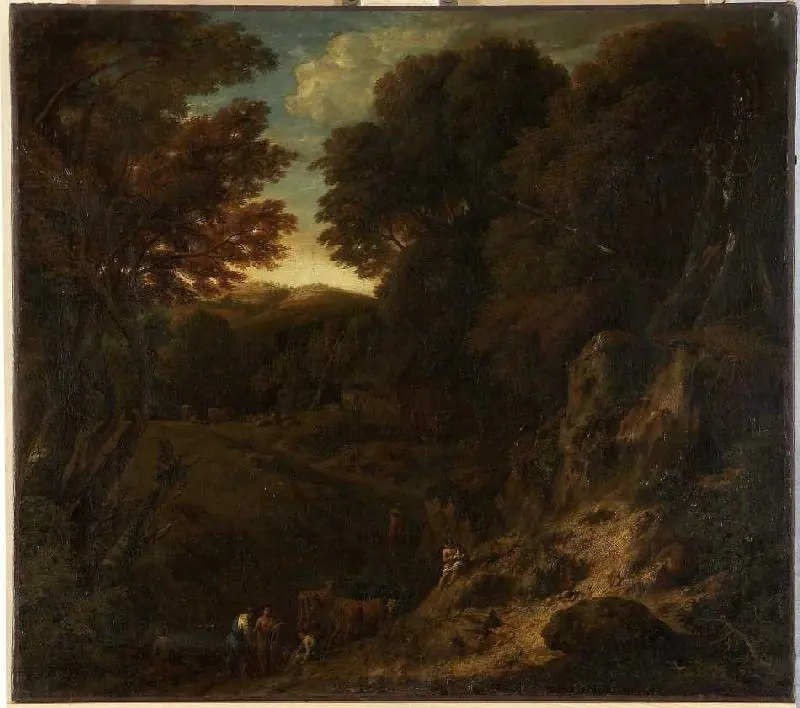 Italian forest landscape with cattle watering tanks
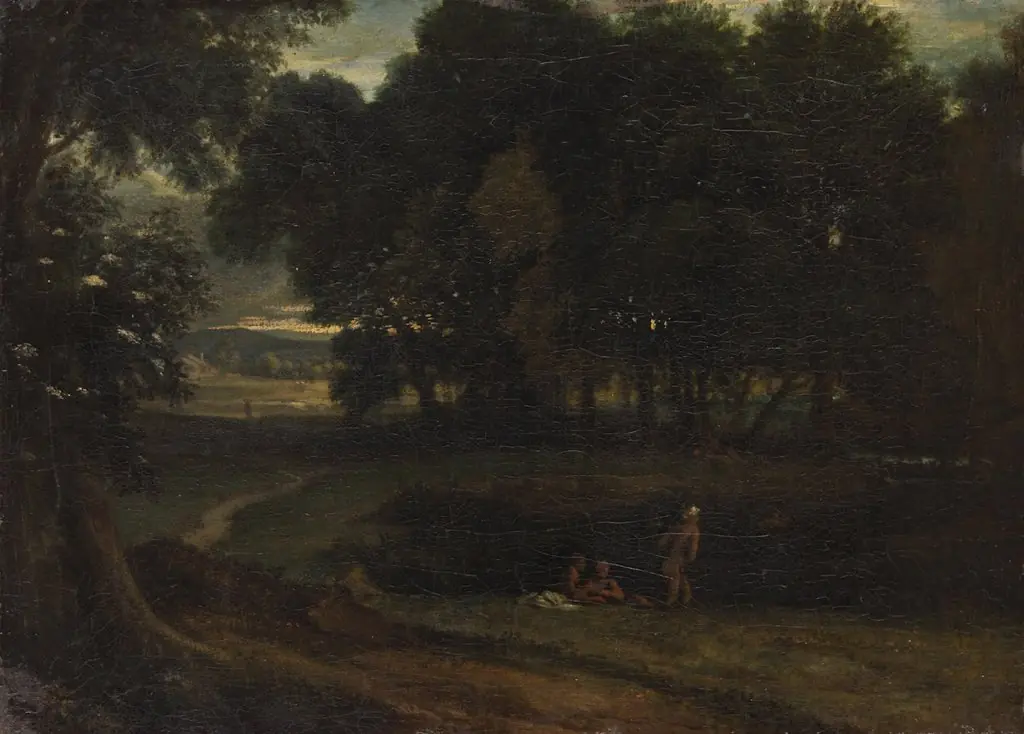 Waldlandschaft mit Badenden
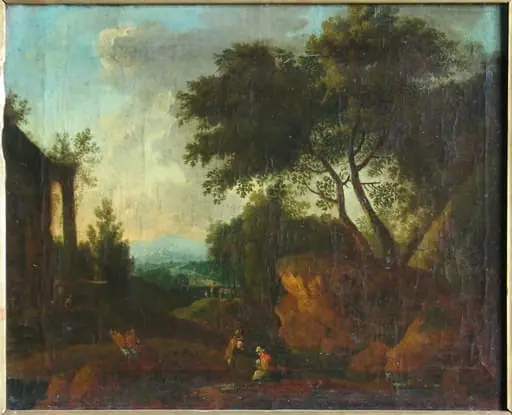 Peisaj cu copaci și ruine antice ; pandant: Peisaj cu copaci și pod
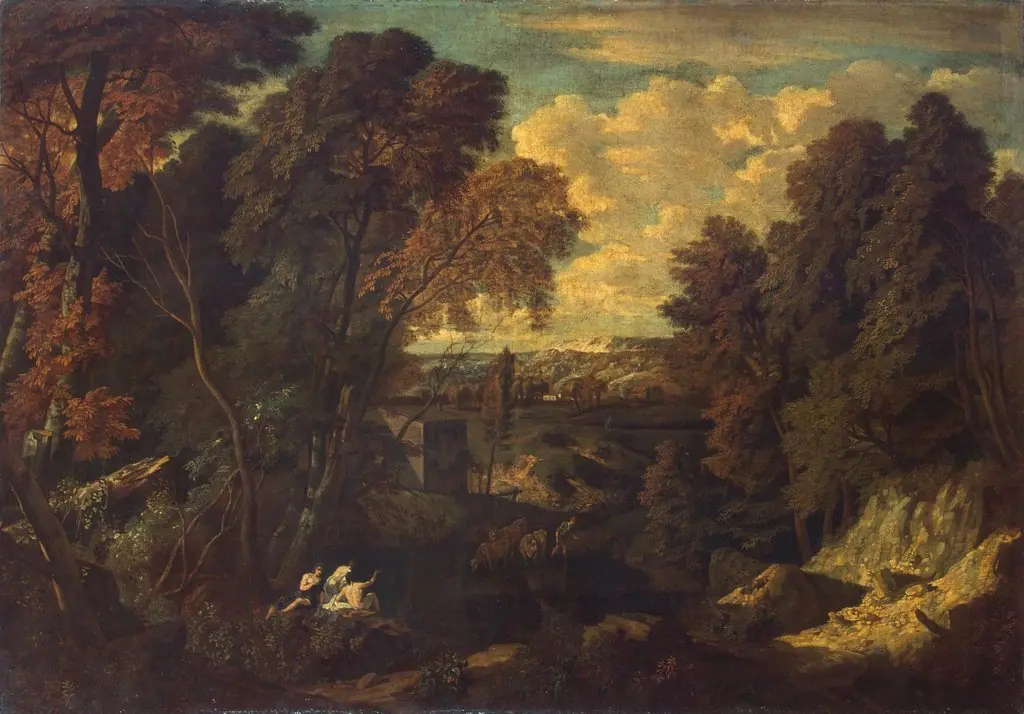 Landscape with a Ruined Tower
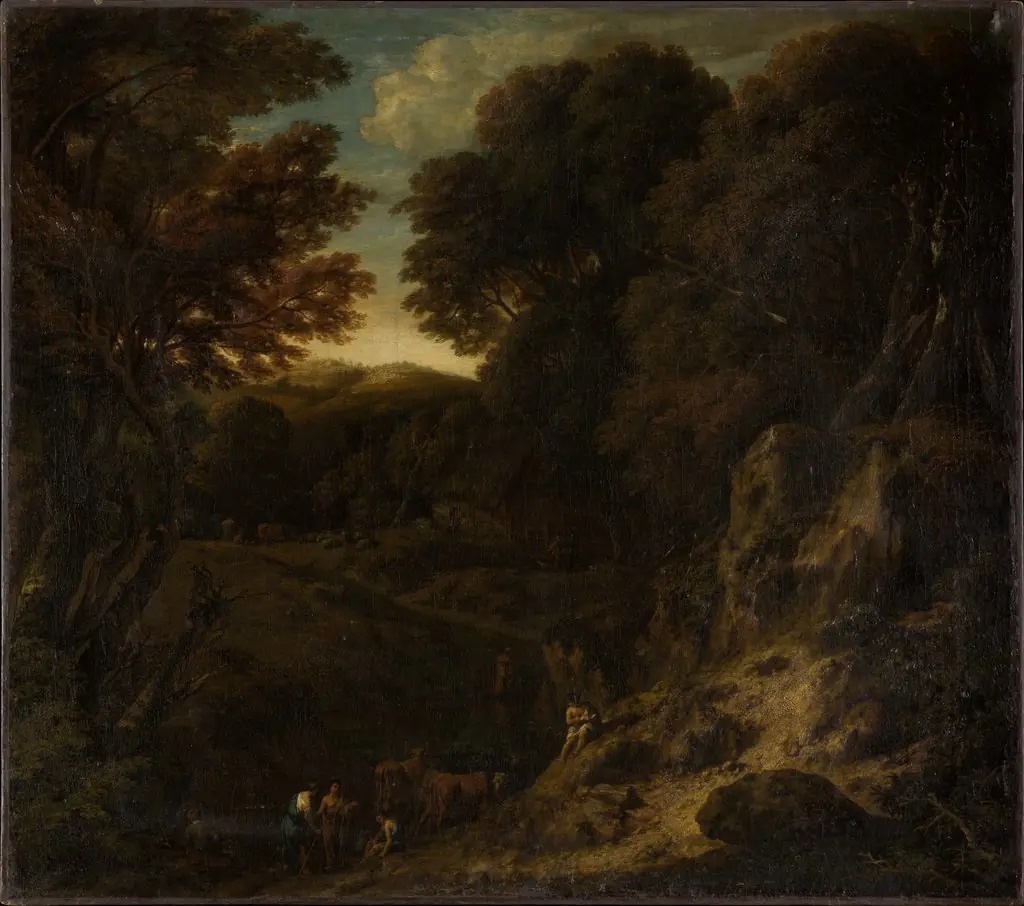 Italian Wooded Landscape with Cattle Pond
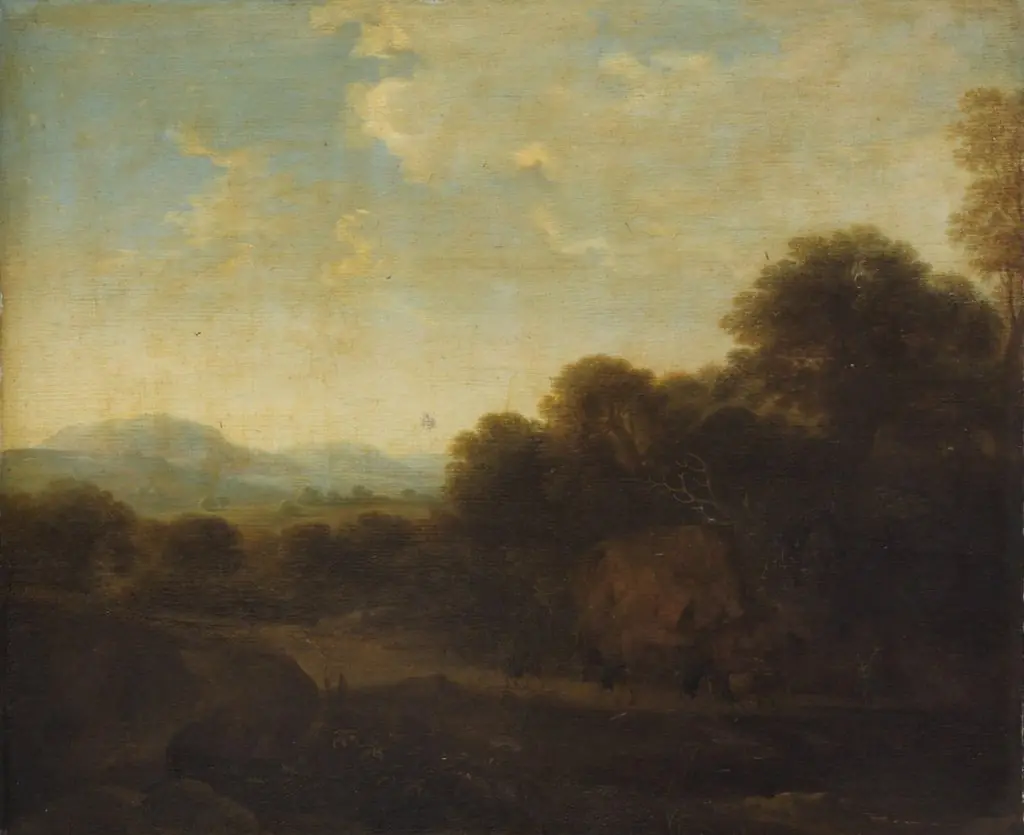 Abendlandschaft mit Maultieren
 Phantastische Landschaft mit Hirten und Bäumen
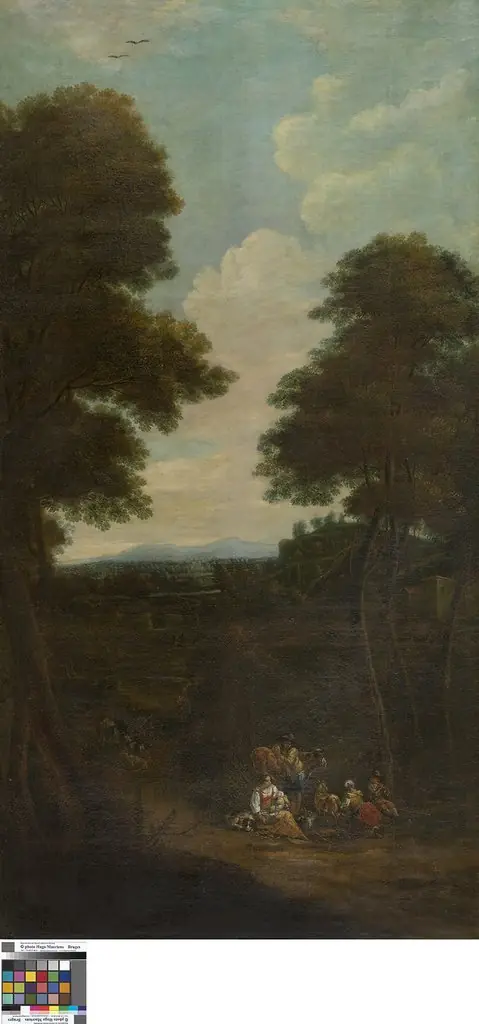 Landschap
- Forest