Artwork
Trompe l'oeil. Letter Rack with a Barber-Surgeon's Instruments
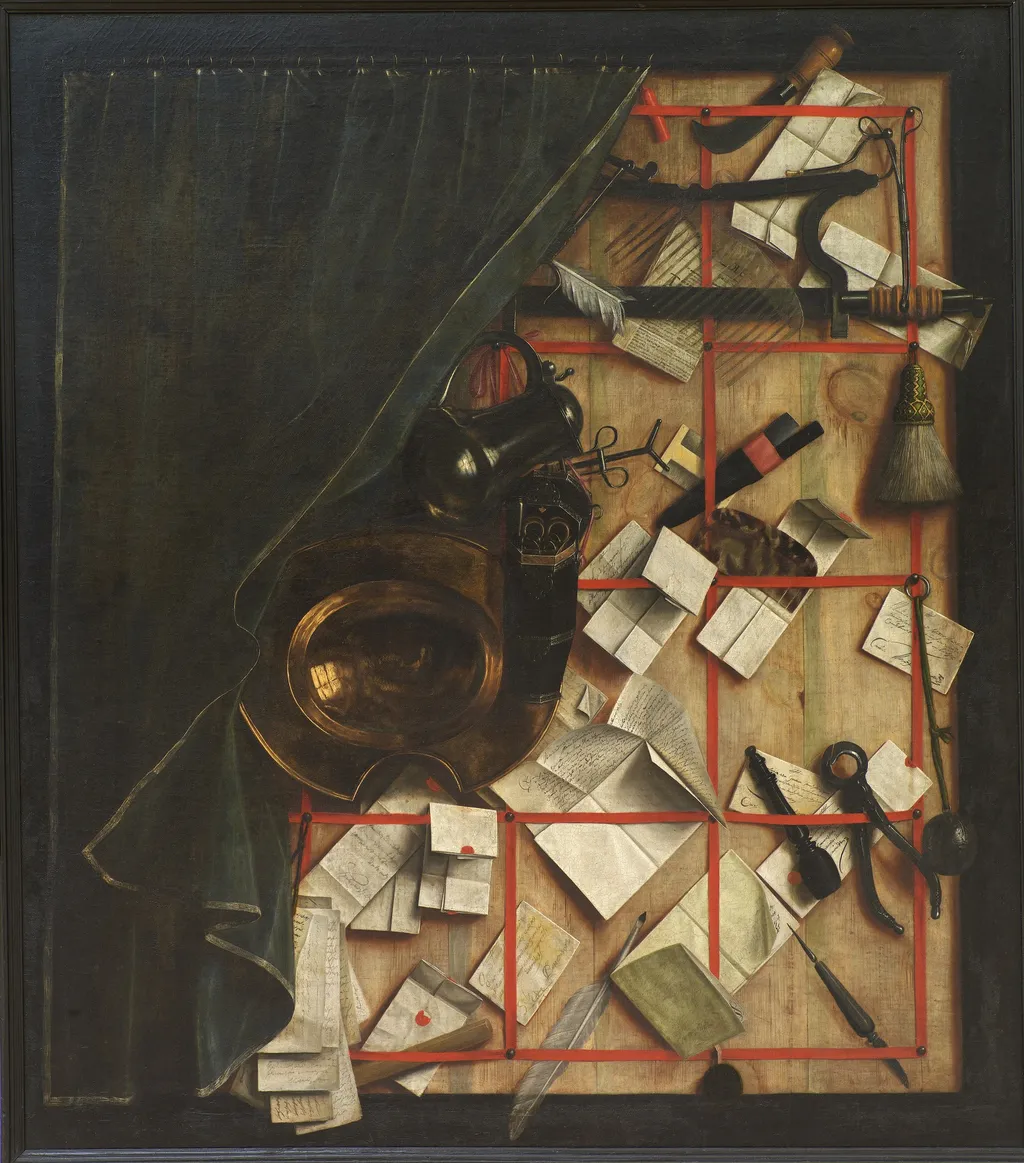
Trompe l'oeil. Letter Rack with a Barber-Surgeon's Instruments is an oil painting by the Dutch Golden Age artist Cornelis Norbertus Gijsbrechts. It dates from 1668 and is held in the collection of the Statens Museum for Kunst. Trompe l'oeil.
About this work
Overview
Letter Rack with a Barber-Surgeon's Instruments is an oil on canvas painting by the Flemish artist Cornelis Norbertus Gijsbrechts, dated 1668.
Trompe l'oeil. Letter Rack with a Barber-Surgeon's Instruments is an oil on canvas painting by the Flemish artist Cornelis Norbertus Gijsbrechts, dated 1668. Measuring 129 by 113.9 centimetres, it is held in the collection of the Statens Museum for Kunst in Copenhagen, where it is accessioned as KMS3060. The work belongs to the genre of trompe l'oeil still life, a specialty of Gijsbrechts, and represents a significant example of the artist's output during his tenure as court painter to the Danish royal family. Its combination of epistolary and medical paraphernalia within a rigorously illusionistic format exemplifies the intellectual and technical ambitions of seventeenth-century Flemish still-life painting.
Subject & Meaning
The painting depicts a letter rack viewed head-on, its light wooden board divided by red ribbon straps into compartments that hold numerous folded letters sealed with red wax alongside open letters bearing visible handwriting. A dark green curtain sweeps diagonally across the left portion of the composition, partially concealing the arrangement. Among the items affixed to the rack, a large brass barber-surgeon's basin dominates the left centre, its reflective surface catching light from the upper left. Above it hangs a black metal helmet with a red interior lining. Scattered throughout are various instruments, scissors, a straight razor, tweezers, a small saw, and other metal tools, together with a small broom hanging on the right edge, quill pens positioned near the top and bottom, and a black and red cylindrical container in the middle right. The inclusion of barber-surgeon's instruments alongside correspondence suggests a meditation on the professions and perhaps on the intersection of personal communication and bodily care. The vanitas undertones implicit in such meticulously rendered objects, reminders of human activity and mortality, align with Gijsbrechts's earlier practice in that genre.
Technique & Style
The painting is executed in oil on canvas with extremely smooth, almost invisible brushwork designed to deceive the eye into perceiving painted surfaces as actual three-dimensional objects. Strong directional lighting from the upper left creates sharp shadows and highlights the metallic sheen of the basin and helmet. The palette relies heavily on browns, blacks, and muted greens, with the red ribbons and wax seals providing strategic accent. Gijsbrechts renders each material with precise illusionistic detail: the crisp paper of the letters, the soft fabric of the curtain, the polished metal of the instruments, and the worn wood of the rack board. This technical approach aims to collapse the distance between representation and reality, the defining ambition of the trompe l'oeil genre. The handling is more Baroque and fluid than that associated with his son Franciscus, whose works have sometimes been confused with those of his father.
History & Provenance
The work was painted in 1668, the year Gijsbrechts arrived in Denmark to serve as court artist. He was engaged by the autocratic King Frederik III from 1668 to 1670, and subsequently by Christian V from 1670 to 1672. During this period he maintained his studio in the Royal Garden by Rosenborg Castle, calling himself court painter from 1670. The bulk of his known output was created during this Copenhagen period, and of the 22 trompe l'oeil paintings he executed there, 19 entered the collection that would become the Statens Museum for Kunst. The painting's current location is the Statens Museum for Kunst, where it is held with the accession number KMS3060. The museum's digital catalogue provides the primary source for its documentation. No specific exhibition history is recorded in the available sources.
Context
Gijsbrechts was a Flemish painter active across the Spanish Netherlands, Germany, Denmark, and Sweden in the second half of the seventeenth century. Born between 1625 and 1629, probably in Antwerp, he married in 1648 and joined the Guild of St Luke in 1659. His earliest known painting dates to 1657, and he initially produced vanitas still lifes before shifting to trompe l'oeil from the mid-1660s. His appointment at the Danish court placed him within a sophisticated culture of collecting and illusionistic display. The King's Perspective Chamber at Rosenborg Castle, part of the Royal Cabinet of Curiosities, housed 29 paintings including 15 by Gijsbrechts according to a 1690 inventory. Art historian Eva de la Fuente has interpreted this chamber as a symbolic representation of a worldview with the autocratic king at its centre, dominating and understanding the hidden context of things. Gijsbrechts's precise recording of everyday objects, scientific instruments, weapons, and other items makes his paintings valuable historical documents. His name does not appear in contemporary art historical literature, and details of his final years remain unknown.
Legacy
Approximately 70 works by Gijsbrechts are known, with the Copenhagen period representing his most prolific and significant phase. The concentration of his trompe l'oeil paintings in Danish royal collections, particularly the Statens Museum for Kunst, has ensured their preservation and continued scholarly attention. His works serve as important sources for historians of material culture, given their accurate depiction of seventeenth-century objects, arts and crafts, musical instruments, and scientific equipment. The attribution of certain works has been complicated by the activity of his son Franciscus, who painted similar subjects in a closely related style, though the father's more Baroque and fluid handling is generally distinguishable. The Letter Rack with a Barber-Surgeon's Instruments stands as a representative example of Gijsbrechts's contribution to the trompe l'oeil tradition, demonstrating the genre's capacity to engage viewers through intellectual play and technical virtuosity.
Own this work as a print
Artist & collection
Artist
Cornelis Norbertus Gijsbrechts
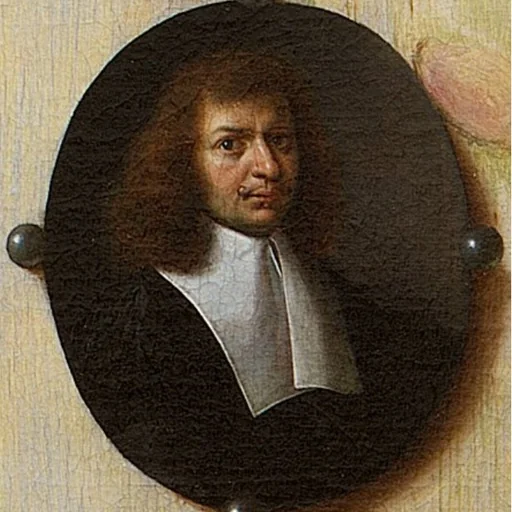
Cornelis Norbertus Gijsbrechts (1625/1629 – after 1675), was a Flemish painter who was active in the Spanish Netherlands, Germany, Denmark and Sweden in the second half of the seventeenth century.

 Trompe l'oeil with Violin, Music Book and Recorder
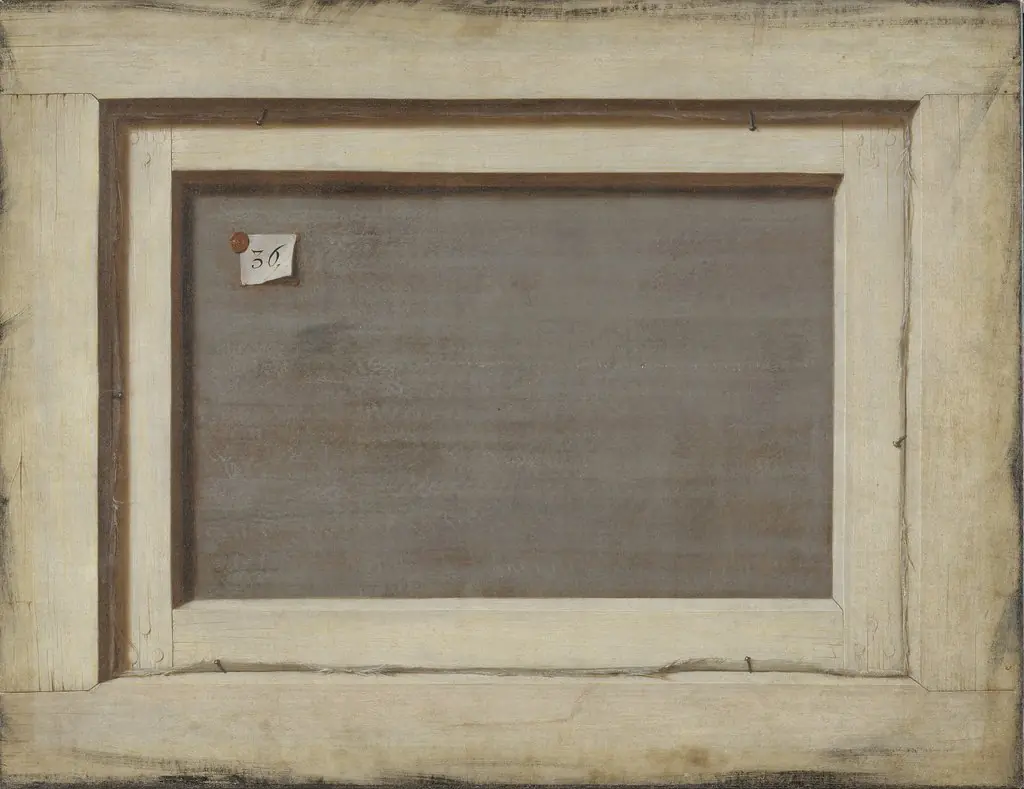 Trompe l'oeil. The reverse of a framed painting.
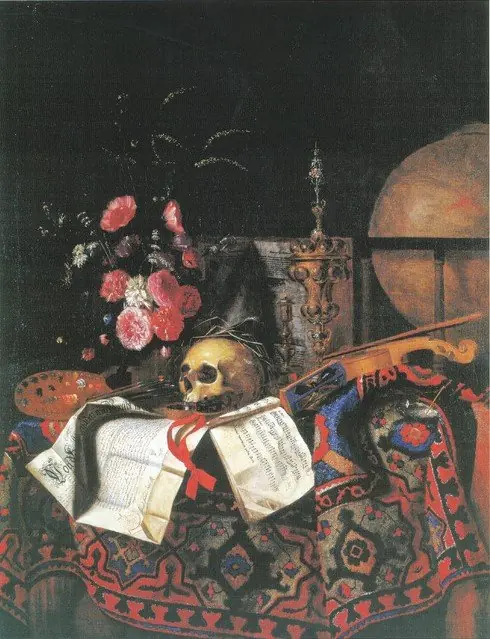 Vanitas still life with bouquet of flowers, painters palette, globe, violin and acorn cup
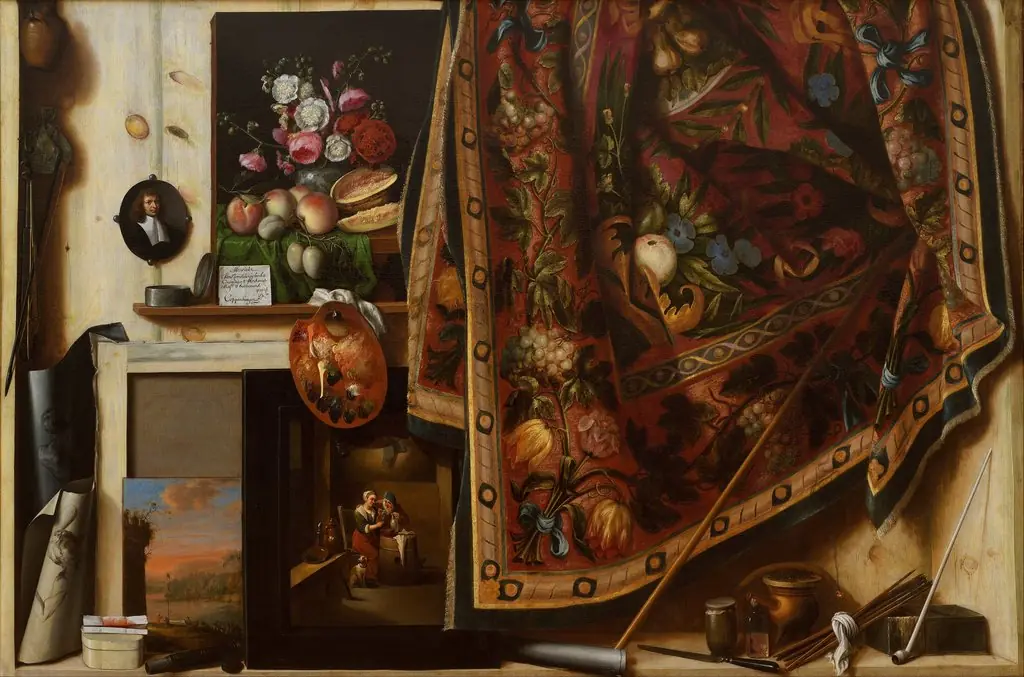 Trompe-l'œil. A Cabinet in the Artist's Studio
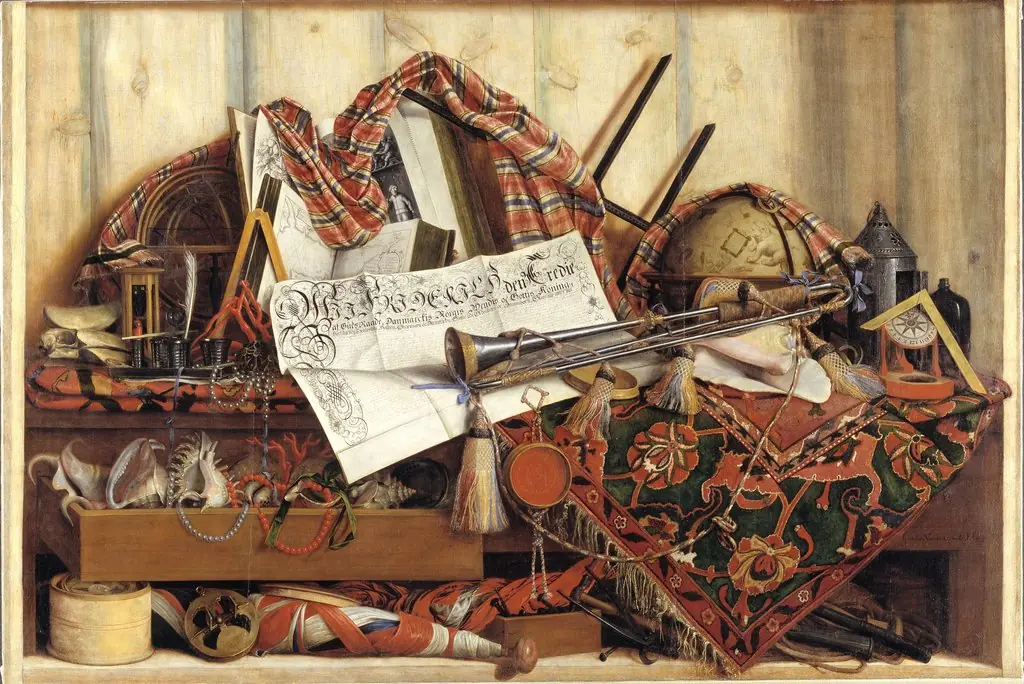 Trompe l'Oeil with Trumpet, Celestial Globe and Proclamation by Frederik III
 Trompe l'Oeil with Falconer's Bag and other Equipment for Falconry
 A Cabinet of Curiosities with an Ivory Tankard
 Trompe l'Oeil. An Open Cabinet of Curiosities with a Hercules Group
- Trompe l'oeil. Letter Rack with a Barber-Surgeon's Instruments
 Trompe l'oeil. Board Partition with Letter Rack and Music Book
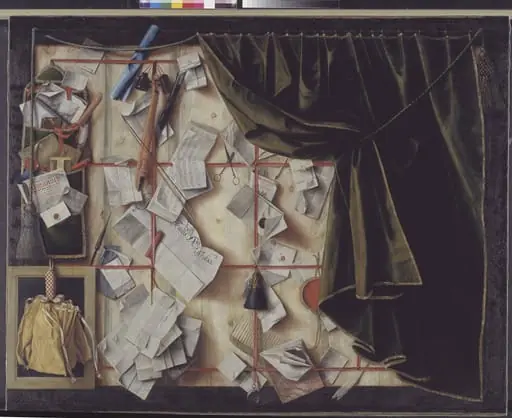 Trompe l'oeil of a Letter Rack with Proclamation by Frederik III
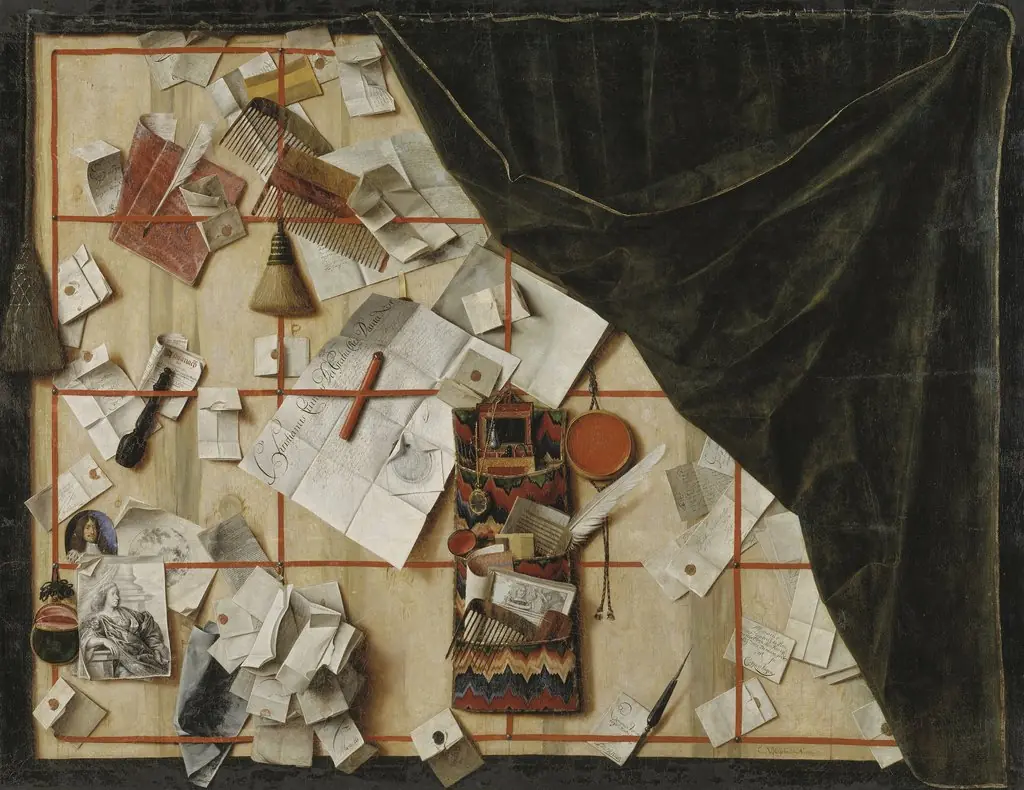 Trompe l'oeil of a Letter Rack with Christian V's Proclamation
 Trompe l'oeil of a Letter Rack with Christian V's Proclamation
 Trompe l'oeil of a Letter Rack with Proclamation by Frederik III
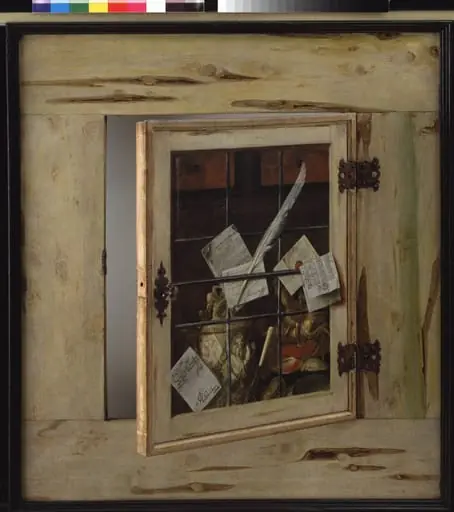 Trompe l'Oeil. A Cabinet of Curiosities with an Ivory Tankard
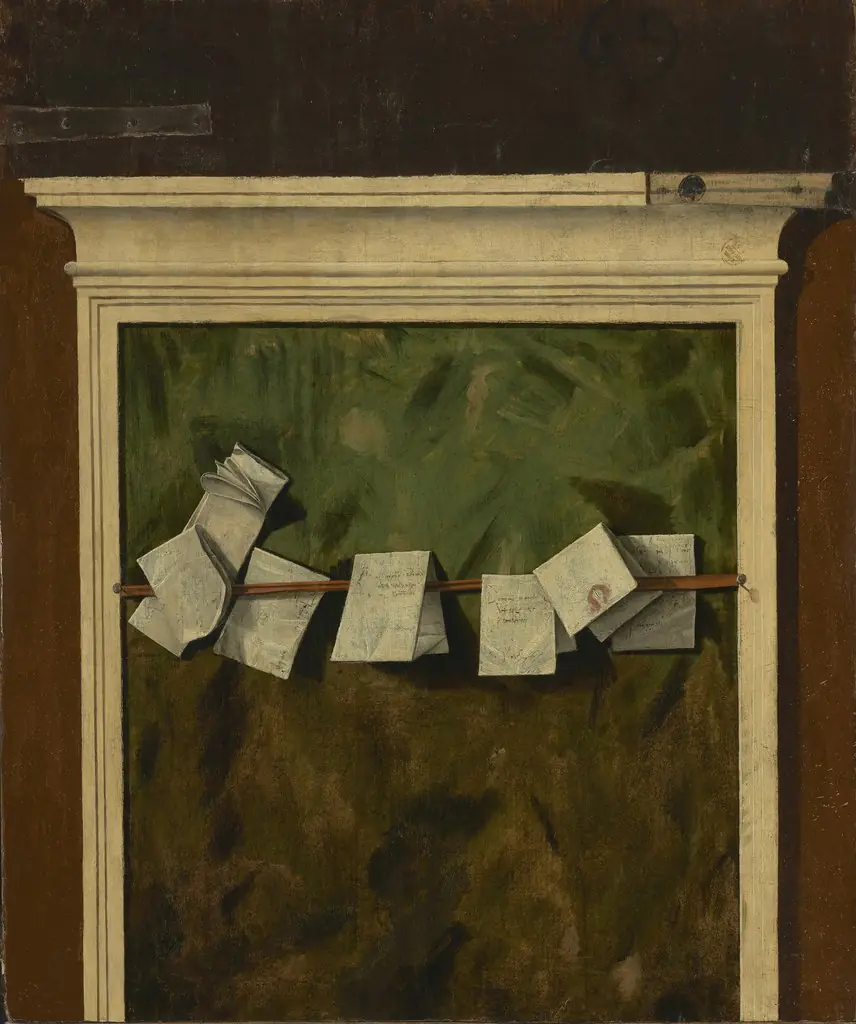 Letter Rack
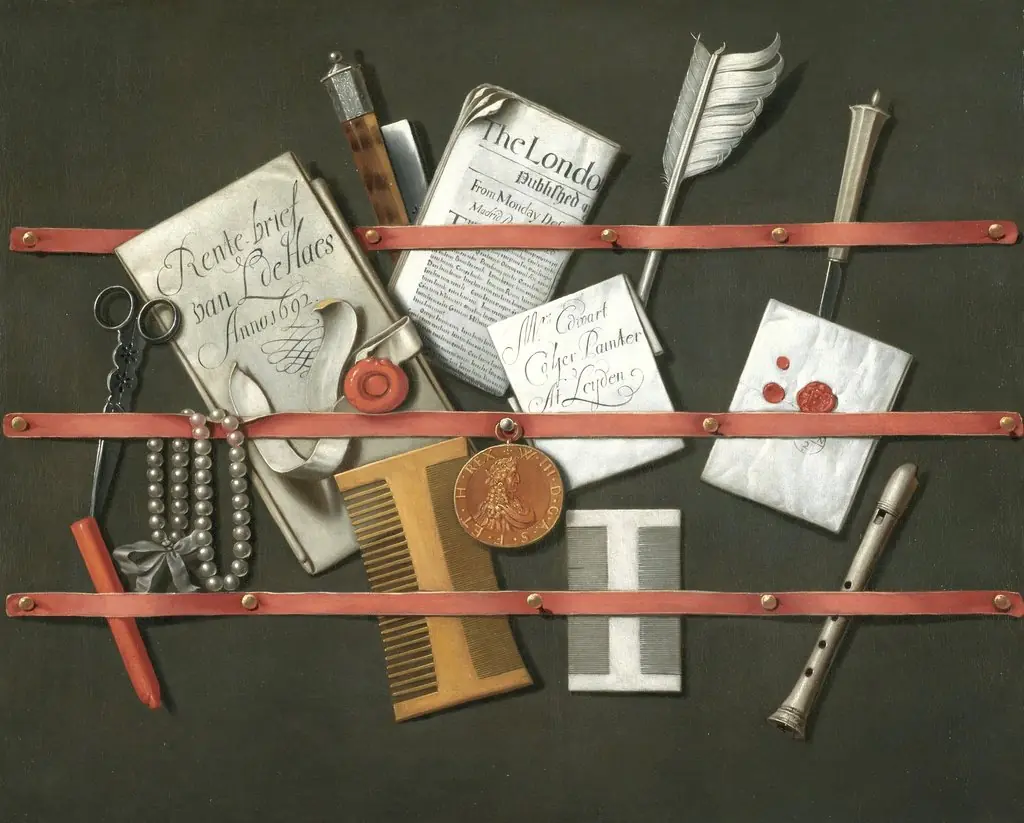 Still Life: A Letter Rack
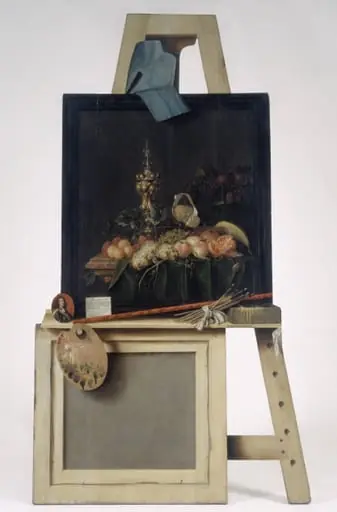 Cut-Out Trompe l'Oeil Easel with Fruit Piece