Artwork
Rape of Europa
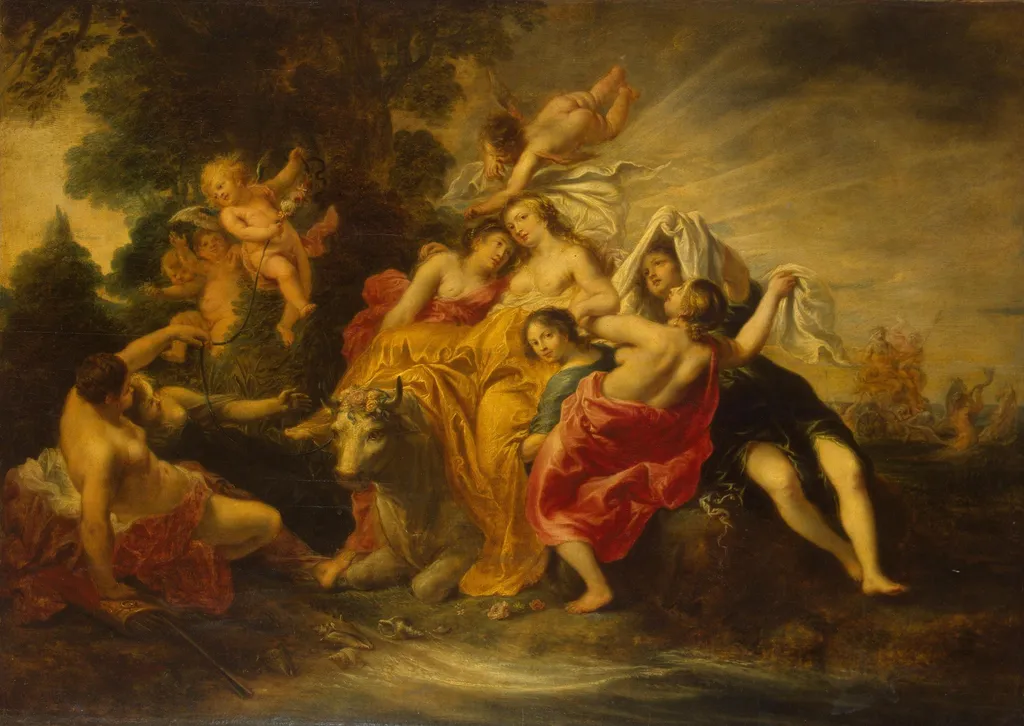
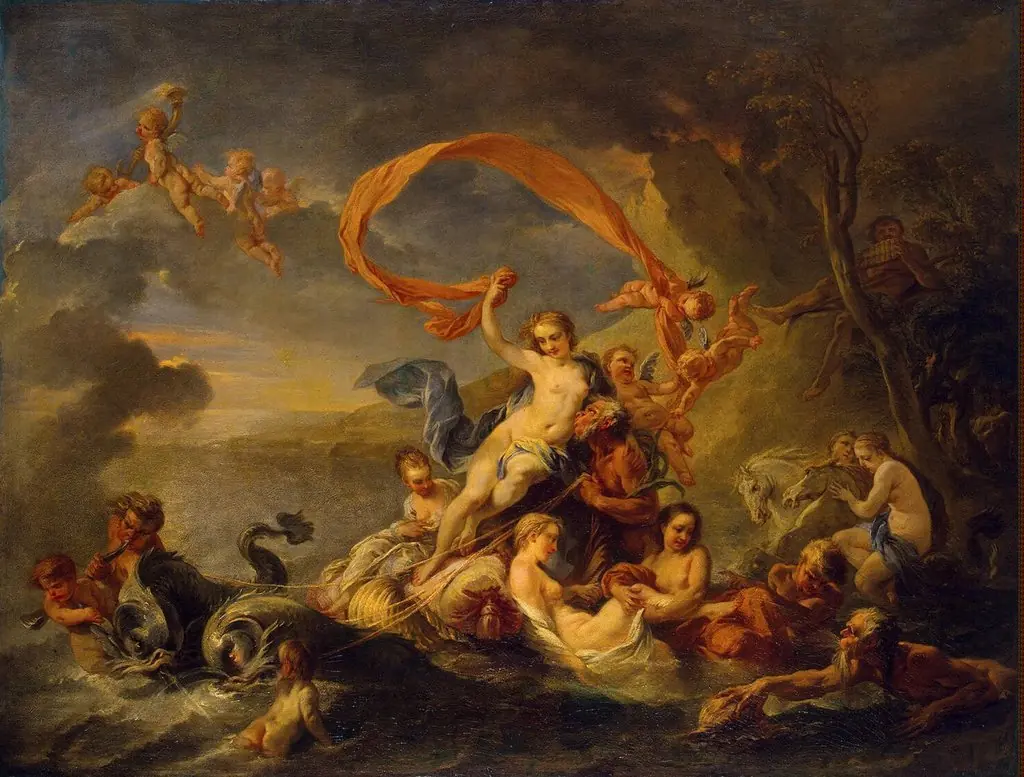
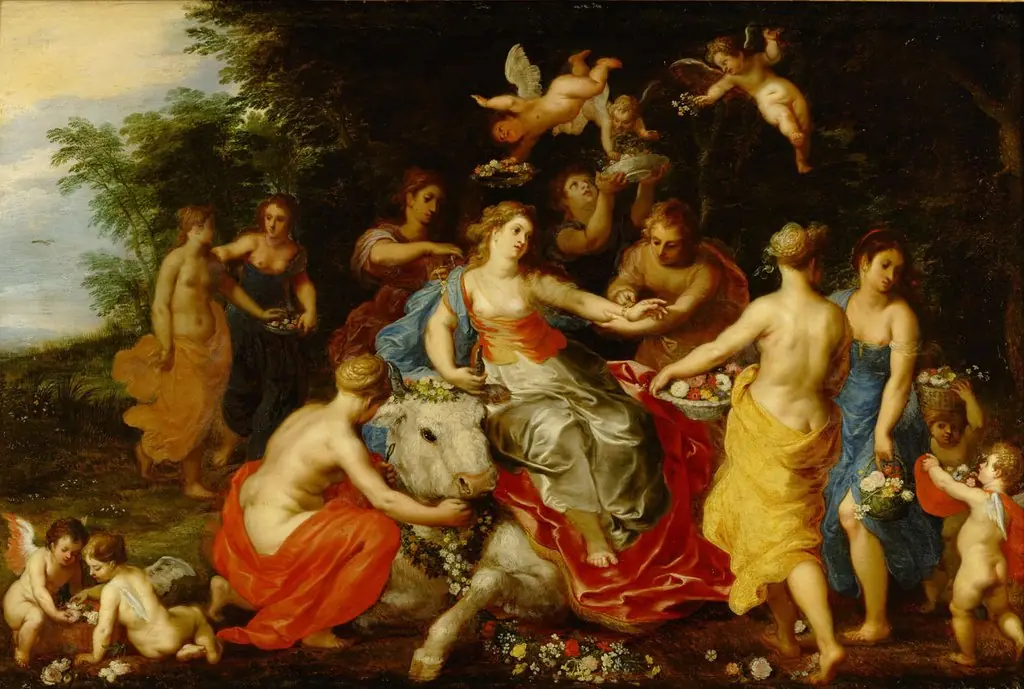
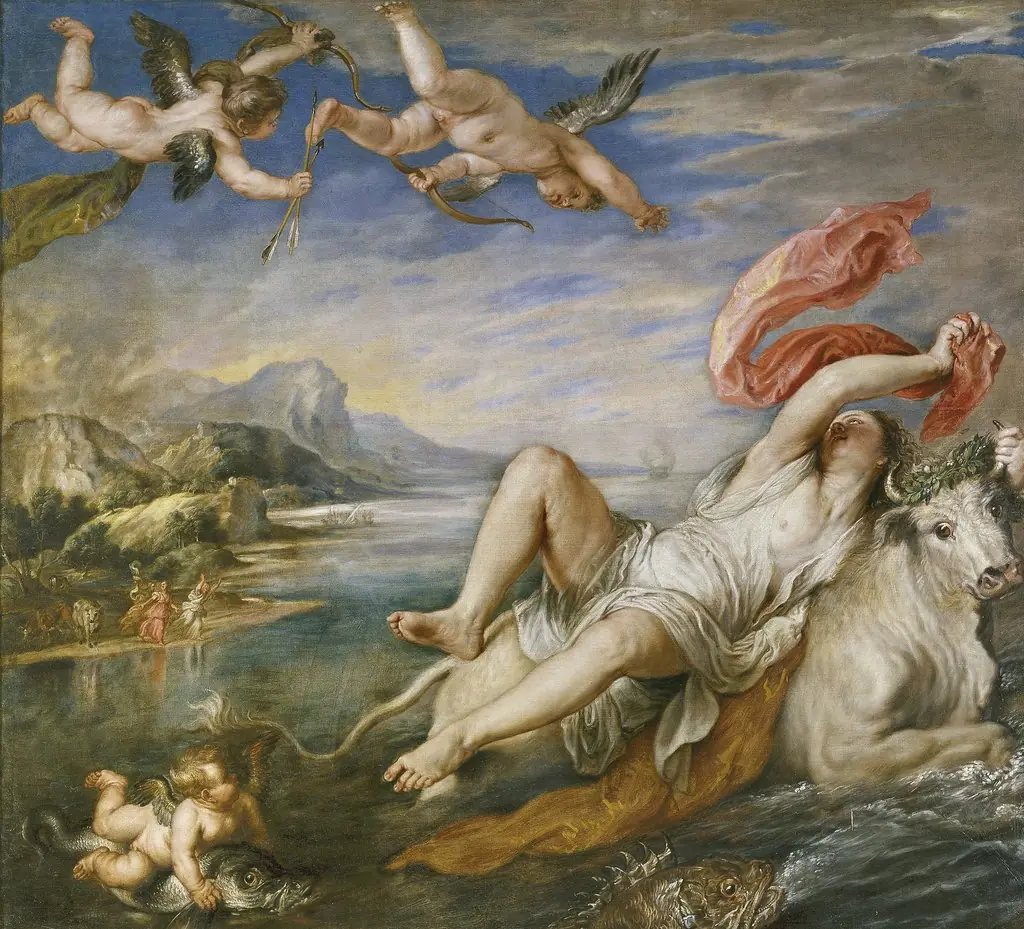
Rape of Europa is an oil painting by the Flemish Baroque painting artist Cornelis Schut. It dates from 1640 and is held in the collection of the Hermitage Museum.
About this work
Subject & Meaning
Schut renders the moment with dramatic tension, emphasizing Europa's startled expression and the bull's dynamic movement to convey both vulnerability and power.
The work portrays the mythological episode of Europa's abduction by a bull, a subject drawn from classical antiquity that symbolizes divine seduction and imperial expansion. Schut renders the moment with dramatic tension, emphasizing Europa's startled expression and the bull's dynamic movement to convey both vulnerability and power. The composition integrates iconographic elements, such as the bull, the distant shoreline, and attendant figures, to highlight themes of desire, transformation, and the intersection of mortal and divine realms.
By situating the narrative within a mythological genre, the painting invites contemplation of love's disruptive force and the fragility of human agency.
The depiction aligns with scholarly interpretations of Baroque mythology, where artists used allegorical scenes to explore complex moral and political ideas through familiar narratives.
The subject is explicitly identified as the rape of Europa, reflecting its status as a central mythological motif in 17th‑century Flemish art.
Technique & Style
Executed in oil on canvas, the work measures 61 cm in height and 83.5 cm in width, depicting the mythological scene of the rape of Europa through fluid, dynamic brushwork typical of Flemish baroque practice.
The composition emphasizes dramatic movement, with the bull and Europa rendered in lively, twisting forms against a softly indicated landscape background. The handling balances energetic contours with delicate modeling of flesh and drapery, while luminous highlights on the figures’ surfaces heighten the scene’s emotional charge.
History & Provenance
The Rape of Europa is an oil-on-canvas painting by Cornelis Schut, dated 1640 and produced in Flanders. The work, which measures 61 by 83.5 cm, entered the collection of the Hermitage Museum, where it remains held today. No further details of a commission, intermediate ownership, or earlier provenance are documented in the available sources.
The painting's documented creation history is limited to its 1640 inception in Flanders by Cornelis Schut and its subsequent presence in the Hermitage Museum collection; the sources do not record a patron, acquisition date, or chain of prior owners.
The painting is held by the State Hermitage Museum in Saint Petersburg, where it is inventoried as a work by Cornelis Schut.
It was exhibited at the Hermitage in the 2010 display "From Rembrandt to Rubens: Masterpieces from the Dutch and Flemish Collections," where it appeared under the title Rape of Europa.
Overview
Cornelis Schut’s oil painting Rape of Europa, executed in 1640, belongs to the Flemish Baroque tradition. The work portrays the mythological episode in which the goddess Europa is seized by Zeus, who has taken the form of a white bull. It is part of the State Hermitage Museum’s collection in St. Petersburg.
Context
The painting reflects the Counter‑Reformation climate of 17th‑century Flanders, where mythological subjects were often employed to demonstrate the virtuosity of the artist while adhering to the era’s moral and religious expectations. Schut’s treatment aligns with contemporary Flemish depictions of classical tales, emphasizing movement and emotional intensity.
Own this work as a print
Artist & collection
Artist
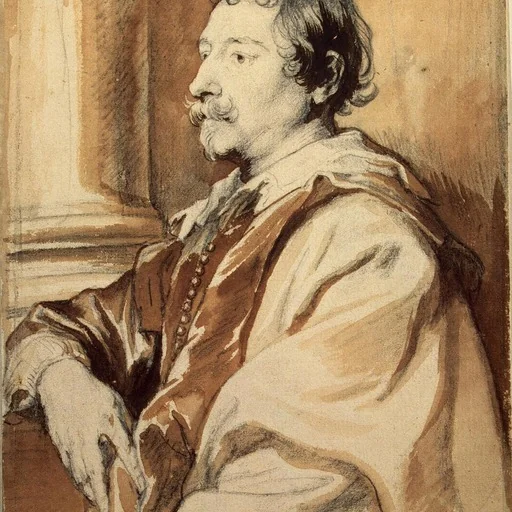
Cornelis Schut (13 May 1597 – 29 April 1655) was a Flemish painter, draughtsman, engraver and tapestry designer who specialized in religious and mythological scenes.