Artwork
The Rape of Europa
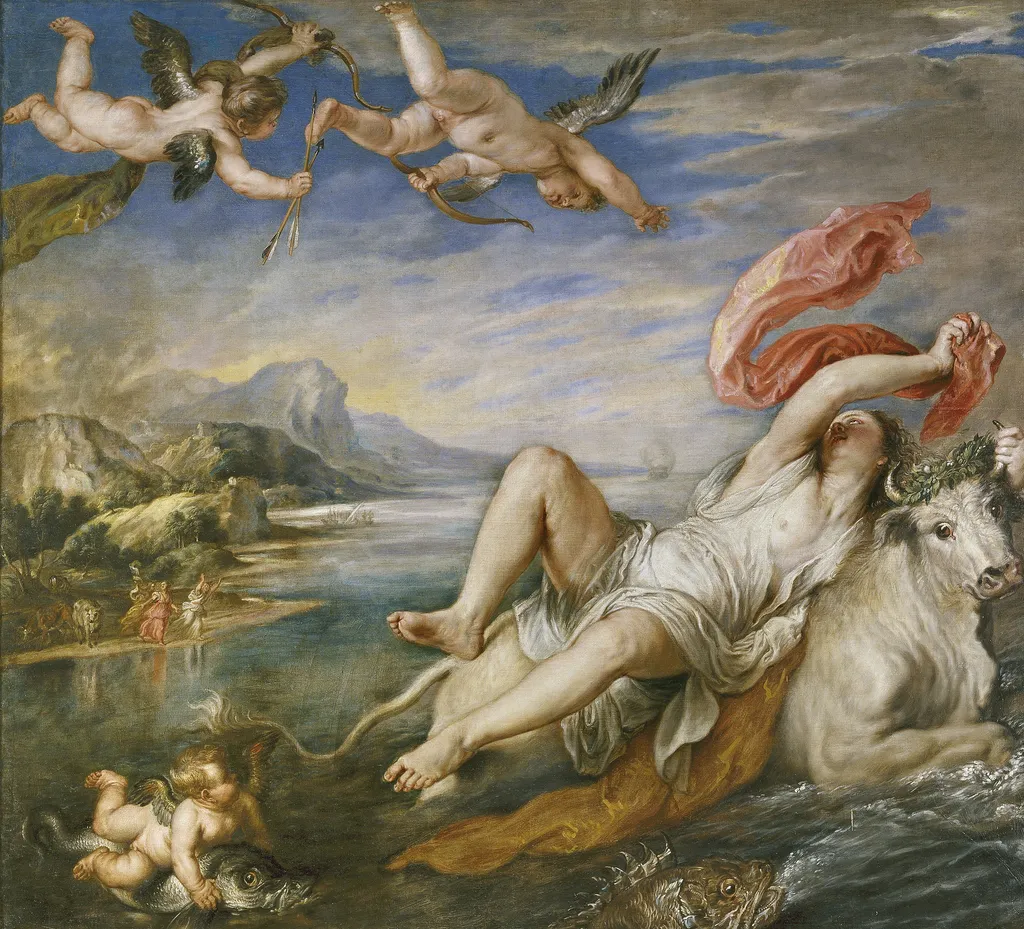
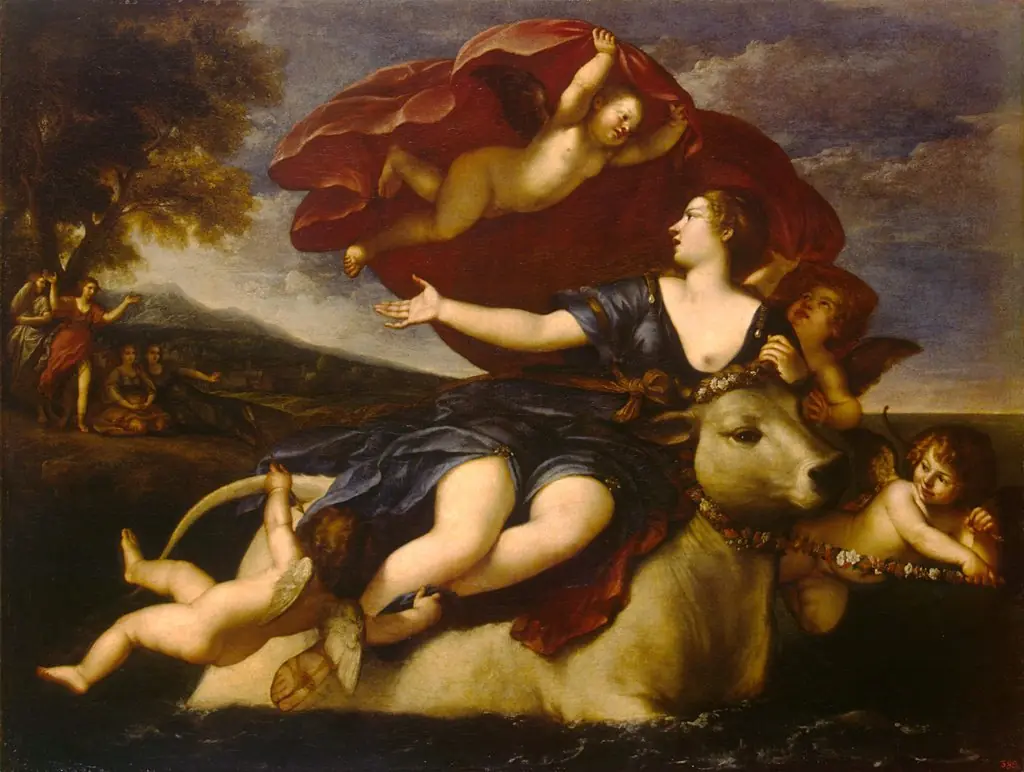
The Rape of Europa is an oil painting by the Flemish Baroque painting artist Peter Paul Rubens. It dates from 1628 and is held in the collection of the Museo del Prado. Created around 1560–1562 by the Venetian painter Titian, this oil on canvas measures roughly 178 by 205 centimetres.
About this work
Subject & Meaning
The surrounding sea, populated by dolphins and putti, heightens the drama, yet the absence of overt violence underscores the psychological tension of the scene.
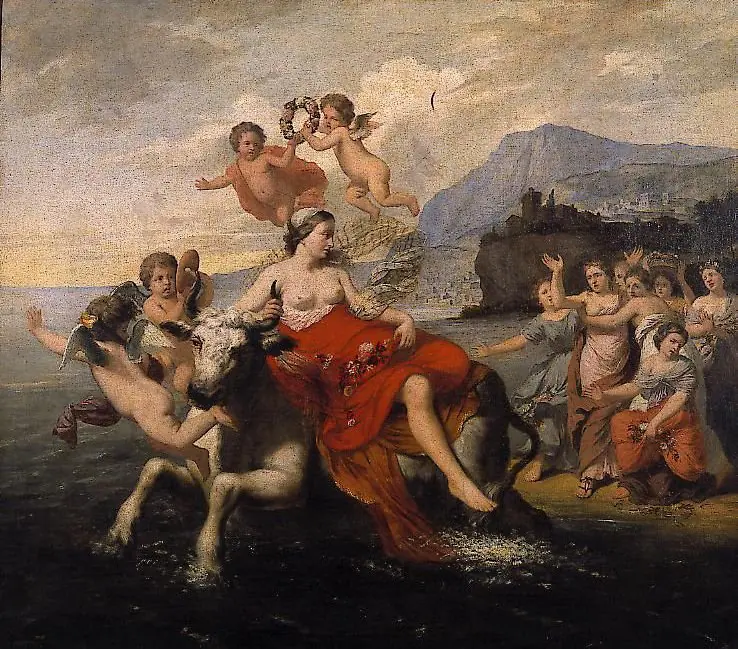
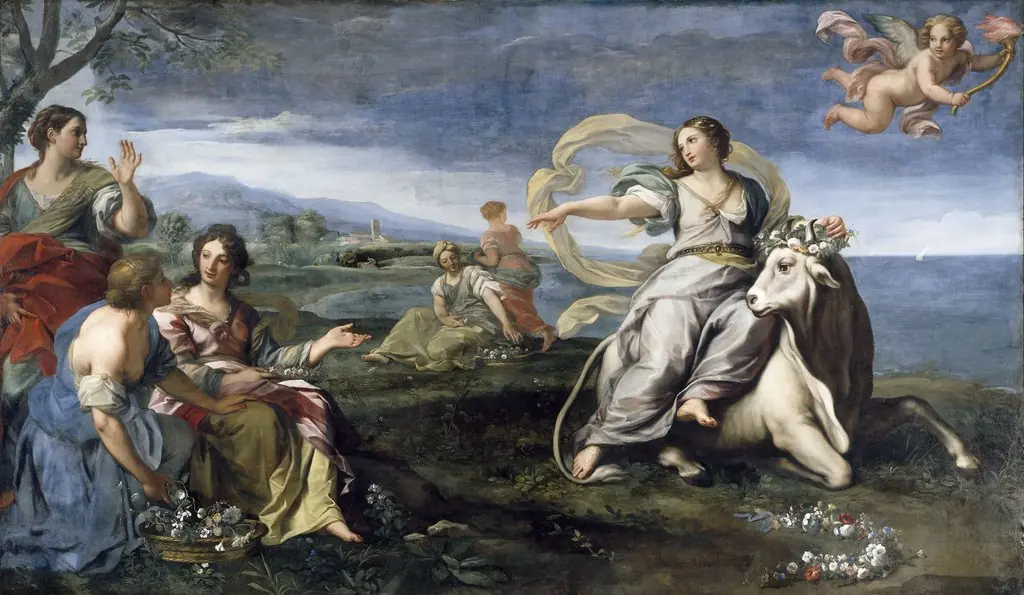
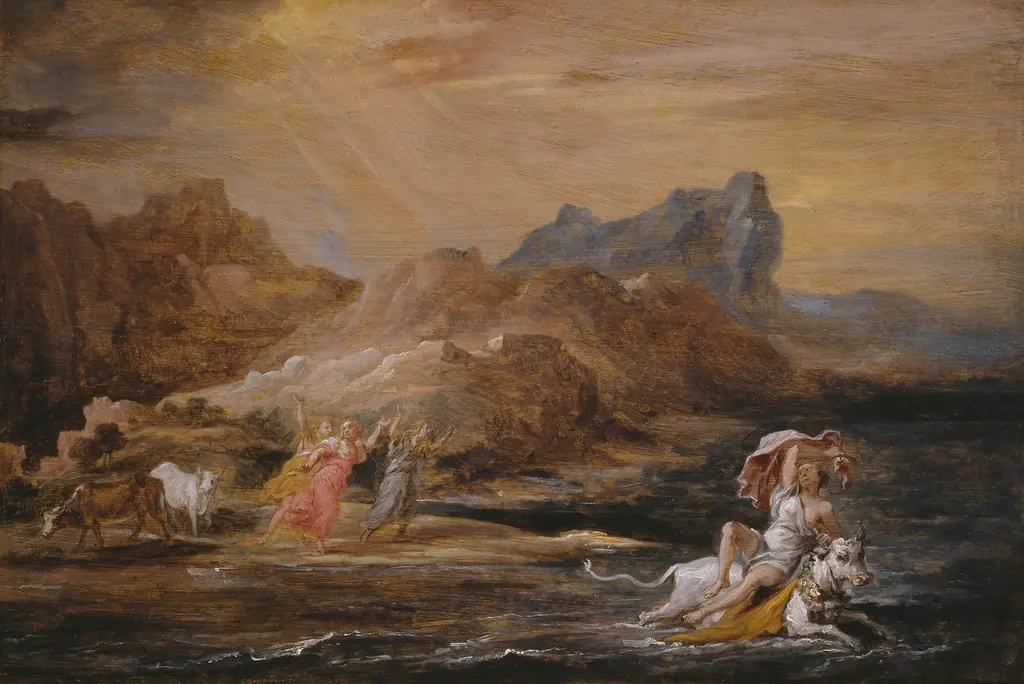
The painting depicts the myth of Europa’s abduction by Zeus in bull form, a subject drawn from Ovid’s Metamorphoses and Achilles Tatius’s Leucippe and Clitophon. Europa, a Phoenician princess, is shown clinging to the bull’s back as it wades into the sea, her pose conveying vulnerability and resistance, her legs unbalanced and garments disarrayed, while she waves a red scarf, signaling distress. The surrounding sea, populated by dolphins and putti, heightens the drama, yet the absence of overt violence underscores the psychological tension of the scene.
Rubens’s 1628–29 version closely follows Titian’s c. 1560–62 composition, translating Titian’s warm, atmospheric handling into cooler tones and sharper contours, emphasizing spatial depth and figural clarity.
Technique & Style
Peter Paul Rubens executed this work between 1628 and 1629 as an oil painting on canvas. The composition measures 182.5 cm in height and 201.5 cm in width. Stylistically, the piece exhibits a clear, pictorial approach characterized by rich color nuances and subtle light variations that create harmony between the figures and the landscape.
Distinct from Titian's original, Rubens employed cooler colors and more sharply defined forms. The artist emphasized spatial depth within the landscape and provided detailed renderings of individual figures, contrasting with the warm, atmospheric blending found in the source material. This handling results in a faithful yet technically distinct interpretation of the mythological subject.
History & Provenance
The Rape of Europa was painted by Titian between 1559 and 1562 as part of the poesie series commissioned by Philip II of Spain, depicting mythological scenes of sexual violence and consent. The work, an oil on canvas measuring 178 by 205 centimetres, entered the collection of Ferdinand VII of Spain and remained in the Orleans Collection in Paris throughout the 18th century. It was later acquired by Isabella Stewart Gardner in 1896 through the agency of art dealer Bernard Berenson, becoming part of the permanent collection of the Isabella Stewart Gardner Museum in Boston.
A faithful copy of the painting was made by Peter Paul Rubens between 1628 and 1629, which now resides in the Museo del Prado in Madrid. The original work has been exhibited at the museum in special displays, including the 2021–2022 exhibition Titian: Women, Myth & Power, which reunited all six surviving poesie paintings for the first time since the 16th century.
The Rape of Europa by Peter Paul Rubens, painted in 1628–1629, is held in the Museo del Prado in Madrid, where it has been part of the museum’s collection since 1834. It was acquired by King Philip IV of Spain and later entered the Prado’s holdings, becoming one of its notable works. The painting was created as a faithful copy of Titian’s 1562 work of the same subject, which was originally commissioned by Philip II of Spain and later entered the Orléans Collection in Paris before being purchased by Isabella Stewart Gardner in 1896 for her museum in Boston.
The Rubens version was displayed alongside the original six Titian poesie in the 2021–2022 exhibition "Titian: Women, Myth & Power" at the Isabella Stewart Gardner Museum. A related copy by Rubens is documented in scholarly sources and exhibited in the Prado’s collection, reflecting the transmission and reception of Titian’s mythological themes in Flemish art.
Context
Rubens’s 1628–1629 version of The Rape of Europa is widely discussed as a deliberate engagement with Titian’s celebrated 1560–1562 composition, then in the Spanish royal collection. Rubens made the copy during his diplomatic mission to Madrid, a moment when Titian’s late works were studied closely by northern artists eager to absorb Venetian colorism and painterly freedom.
Scholars emphasize how Rubens’s treatment differs from Titian’s in palette and finish: cooler tones, sharper contours, and a more pronounced spatial recession foreground the Flemish master’s interpretive distance. The Prado copy entered the Spanish royal collection after Rubens’s death, later passing to the Museo del Prado, where it remains a touchstone for discussions of artistic transmission between Italy and the Netherlands.
Legacy
The Rape of Europa by Peter Paul Rubens, painted between 1628 and 1629, became a significant influence on Baroque art and the development of mythological painting in the 17th century. Rubens created a faithful copy of Titian’s 1562 masterpiece, adapting its composition with heightened chiaroscuro, cooler tones, and more distinct figure delineation, as noted in scholarly comparisons of the two works. The painting entered the Spanish royal collection and later the Museo del Prado, where it remained a key example of Rubens’s engagement with Titian’s poesie series.
Its legacy was further cemented through 19th- and 20th-century exhibitions, including its inclusion in the 1857 Manchester Art Treasures exhibition and the 2021–2022 'Titian: Women, Myth & Power' exhibition at the Isabella Stewart Gardner Museum, which reunited it with other related works. Rubens’s interpretation, while faithful in subject, emphasized landscape depth and individual figure detail, distinguishing his approach from Titian’s more atmospheric style.
Overview
Created around 1560–1562 by the Venetian painter Titian, this oil on canvas measures roughly 178 by 205 centimetres. It belongs to the permanent collection of Boston’s Isabella Stewart Gardner Museum. The composition captures a dramatic mythological episode set on a turbulent sea, rendered with a palette of muted earth tones punctuated by vivid reds and luminous highlights.
Own this work as a print
Artist & collection
Artist
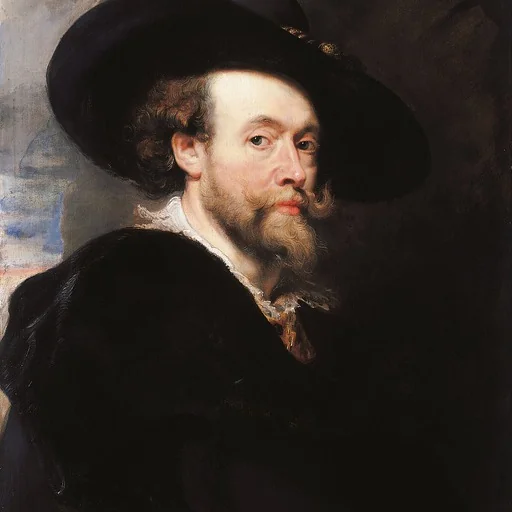
Sir Peter Paul Rubens ( ROO-bənz; Dutch:; 28 June 1577 – 30 May 1640) was a Flemish artist and diplomat.