Artwork
Bacchus, Ceres and Venus
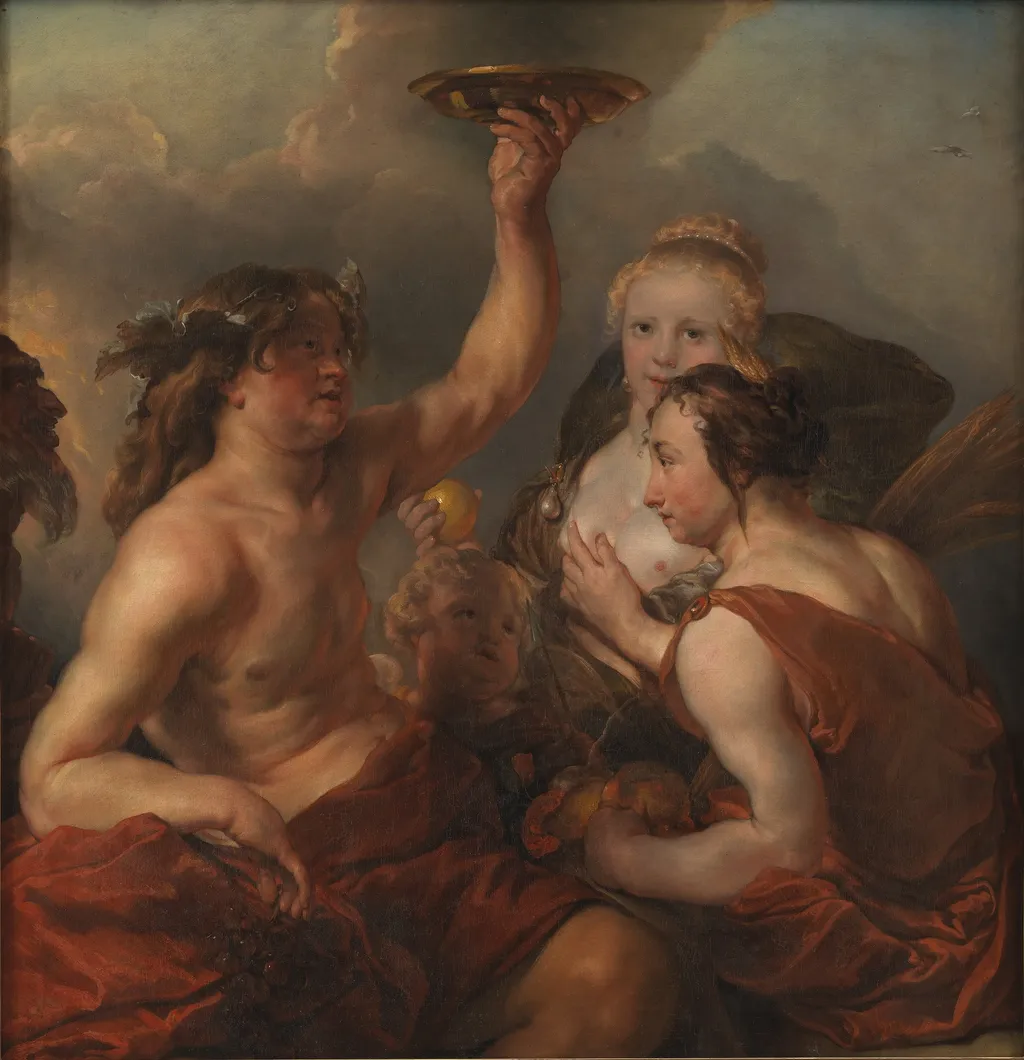
Bacchus, Ceres and Venus is an oil painting by the Flemish Baroque painting artist Cornelis Schut. It dates from 1633 and is held in the collection of the Statens Museum for Kunst.
About this work
Technique & Style
The painting is classified as a mythological work and attributed to Cornelis Schut, reflecting the classical subject matter typical of the period.
The work is executed in oil paint on canvas, a medium and support documented in the sources. Its handling and condition are not detailed in the provided material, and therefore omitted. Formal stylistic analysis identifies a mythological composition featuring the figures of Bacchus and Venus, rendered in a manner consistent with 17th‑century Dutch painting practice.
The painting is classified as a mythological work and attributed to Cornelis Schut, reflecting the classical subject matter typical of the period.
History & Provenance
Cornelis Schut painted the mythological canvas titled Bacchus, Ceres and Venus in 1633, a work now held by the Statens Museum for Kunst where it remains on display. The painting entered the museum's collection through a formal acquisition, establishing a clear chain of ownership from its creation to the present institution.
The painting is part of the collection at the Statens Museum for Kunst, where it is recorded under the accession details associated with its mythological subject matter and oil paint medium. It has been exhibited in the museum's displays focused on 17th-century Dutch and Flemish painting, reinforcing its attribution to Cornelis Schut and contextualizing its mythological theme within the broader European artistic tradition.
Overview
Cornelis Schut’s oil painting Bacchus, Ceres and Venus (1633) presents a festive gathering of three classical deities within an idealised landscape. The composition balances a luminous sky, scattered birds and a sense of plentiful harvest, reflecting the celebratory tone typical of early‑17th‑century Flemish mythological art.
Subject & Meaning
At the left stands Bacchus, crowned with foliage and raising a bowl, a symbol of wine and revelry. Central to the scene is a woman in a red gown, identified as Ceres, the goddess of agriculture, holding an orange that signifies abundance. To her right, Venus, also dressed in red, clasps another fruit, linking love and fertility to the themes of plenty and festivity.
Context
The painting belongs to a broader Flemish tradition of integrating classical mythology with contemporary allegory, a practice that allowed patrons to display erudition and moral instruction. By juxtaposing Bacchus, Ceres and Venus, Schut aligns themes of wine, harvest and love, echoing the cultural emphasis on prosperity and harmony in the early 1630s.
Own this work as a print
Artist & collection
Artist
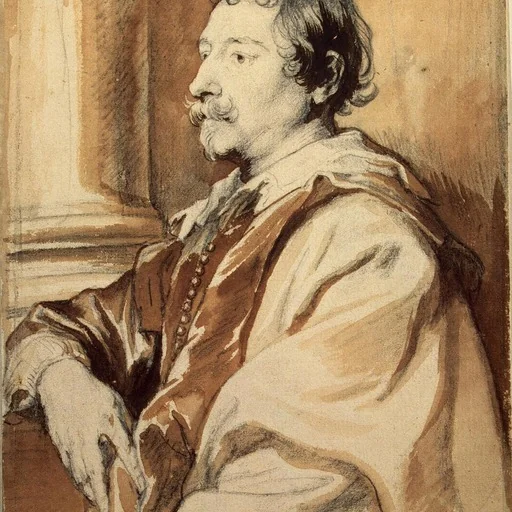
Cornelis Schut (13 May 1597 – 29 April 1655) was a Flemish painter, draughtsman, engraver and tapestry designer who specialized in religious and mythological scenes.

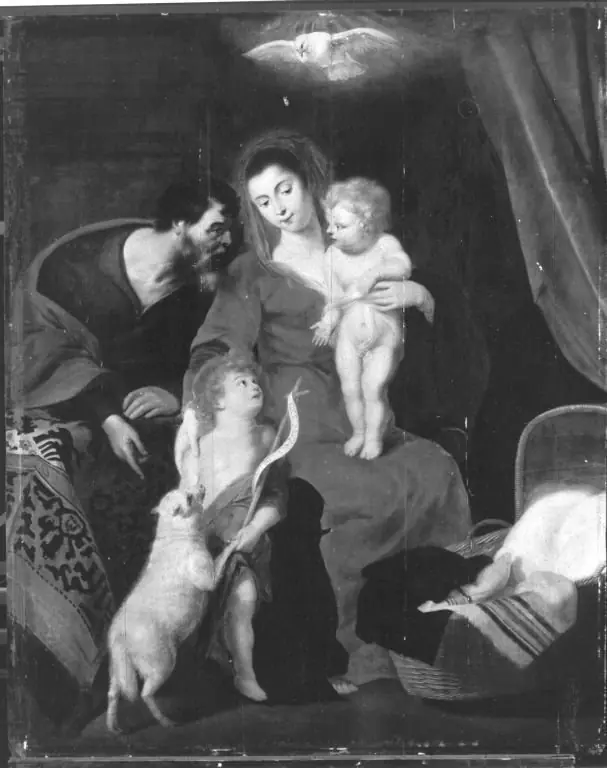
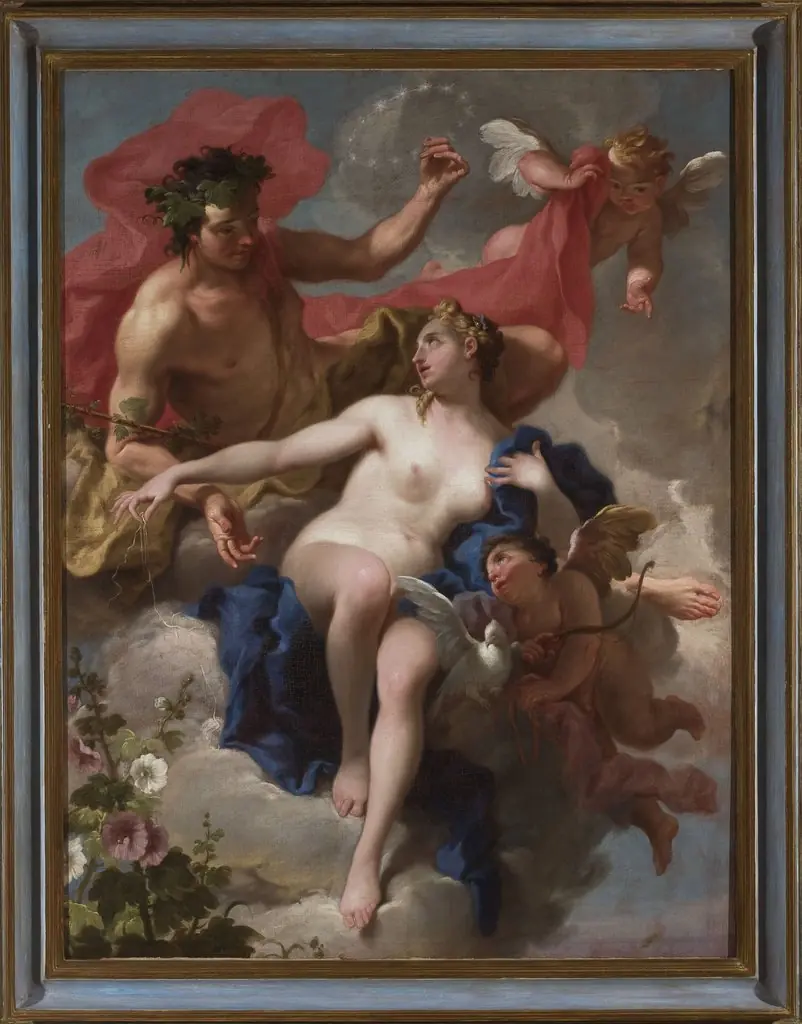 Bacchus and Ariadne
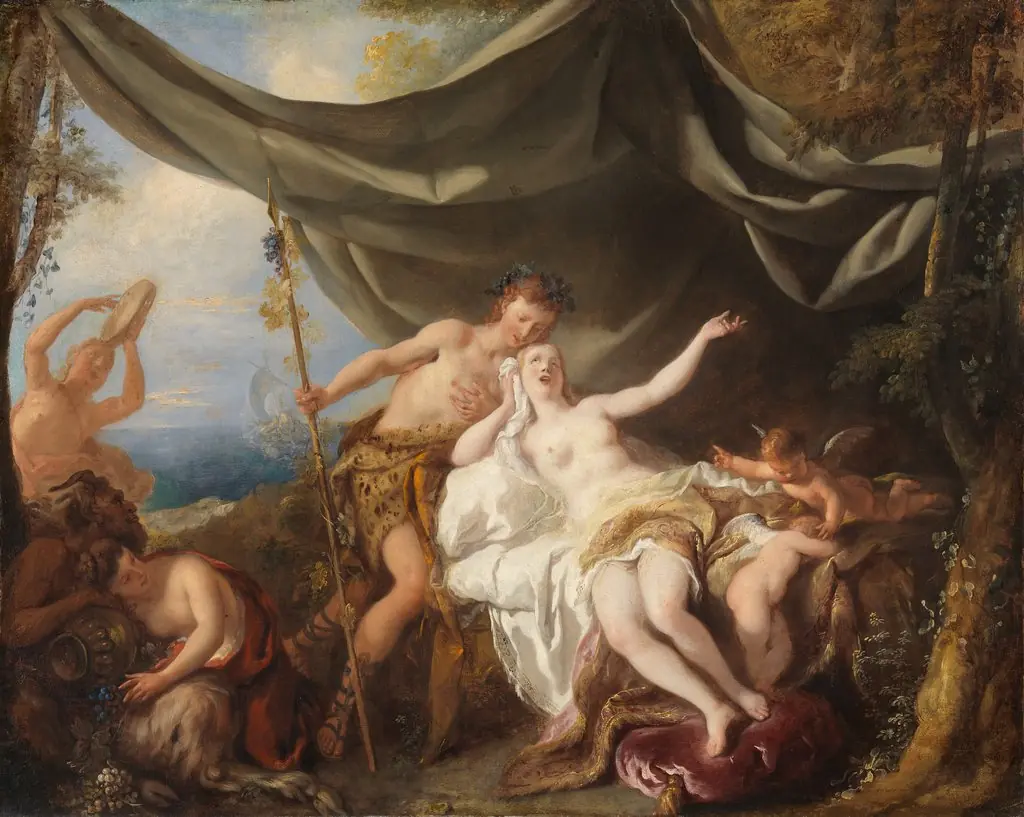 Bacchus and Ariadne
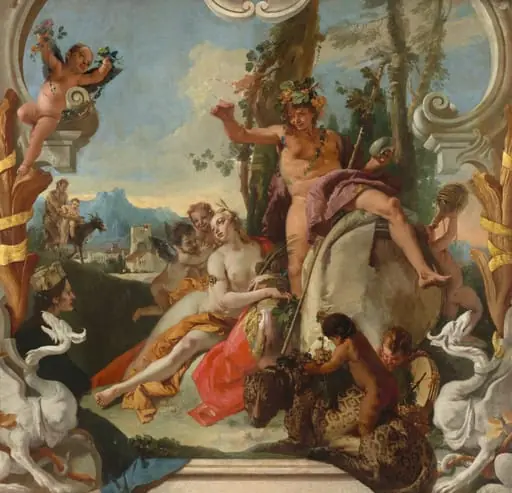 Bacchus and Ariadne
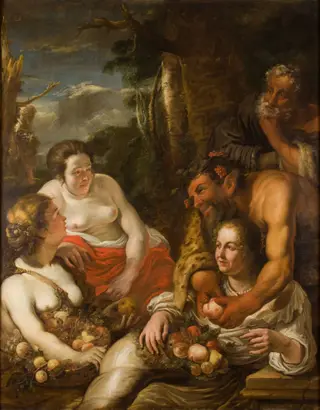 Mythological Scene – Filling the Horn of Plenty?
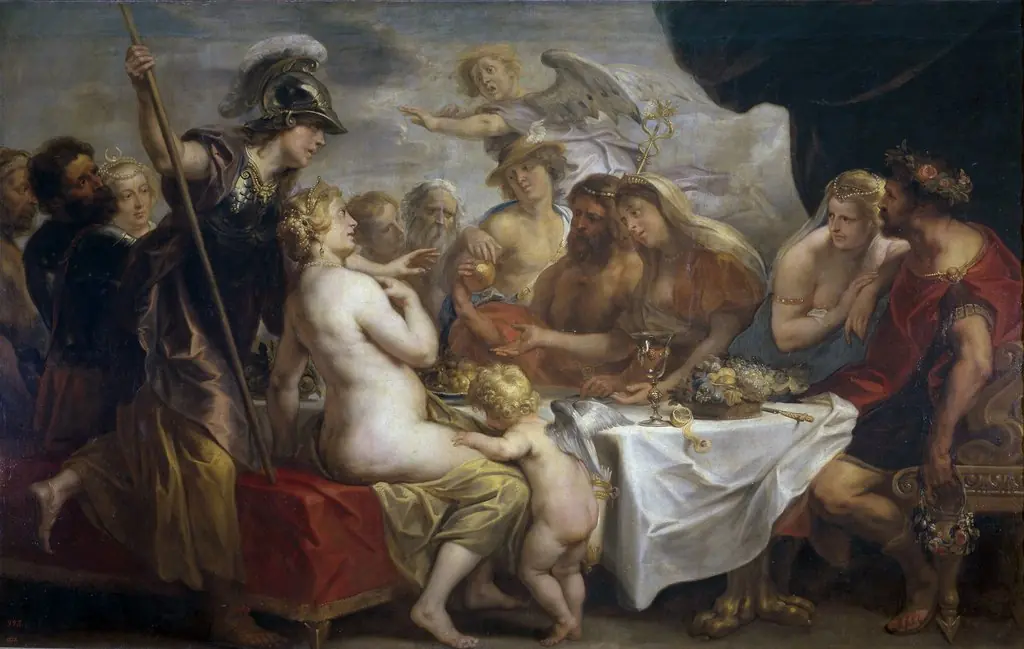 The wedding of Thetis and Peleus
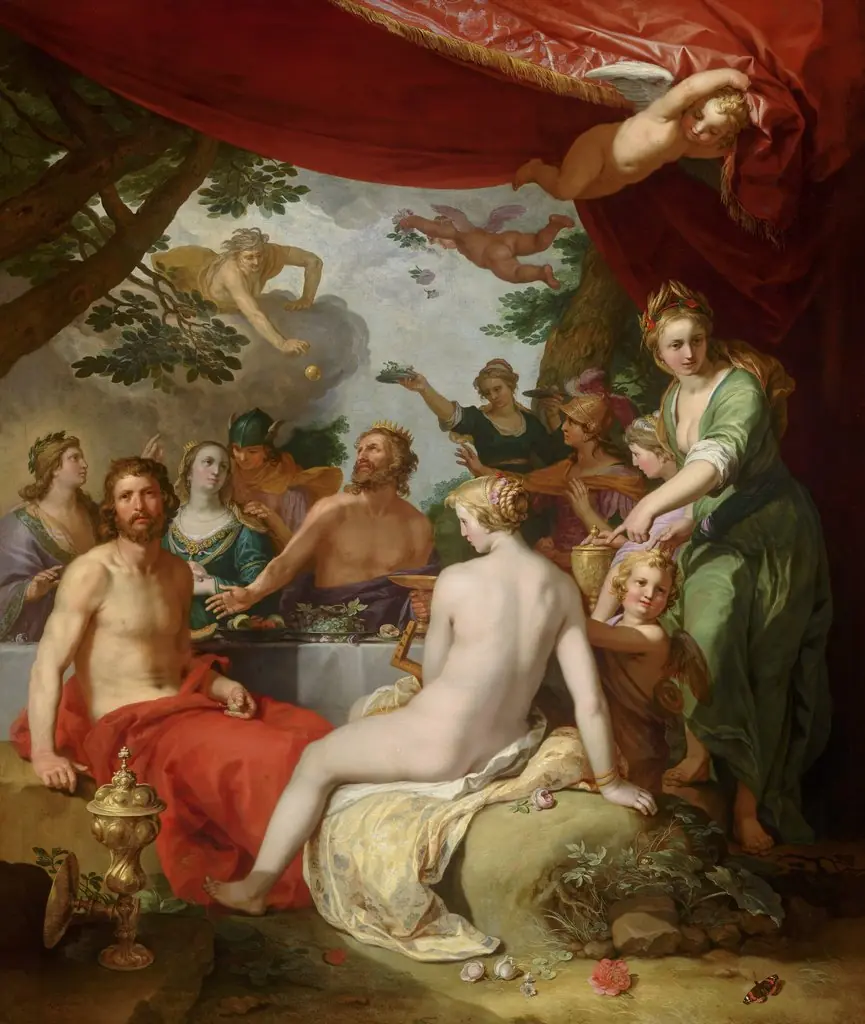 The feast of the gods at the wedding of Peleus and Thetis
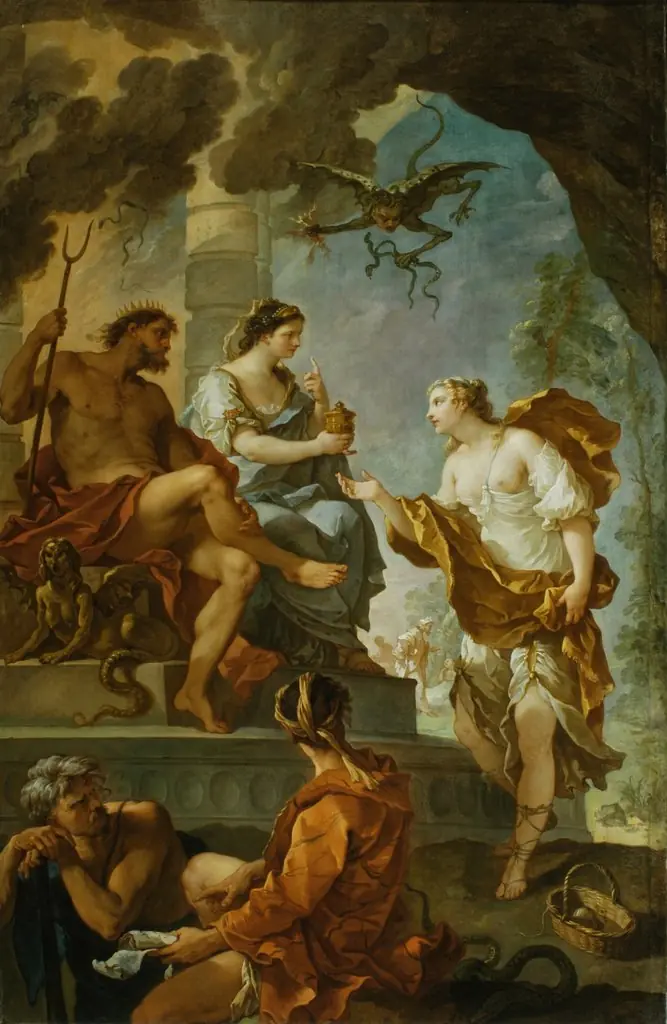 Psyche Obtaining the Elixir of Beauty from Proserpine
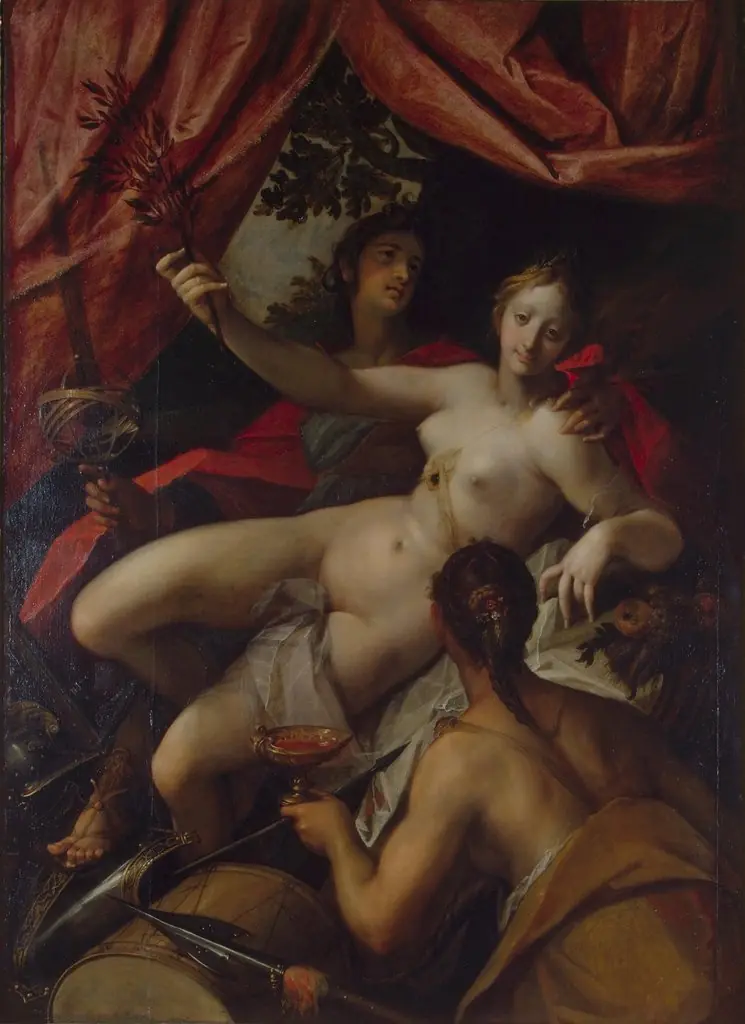 Allegory of Peace and Abundance
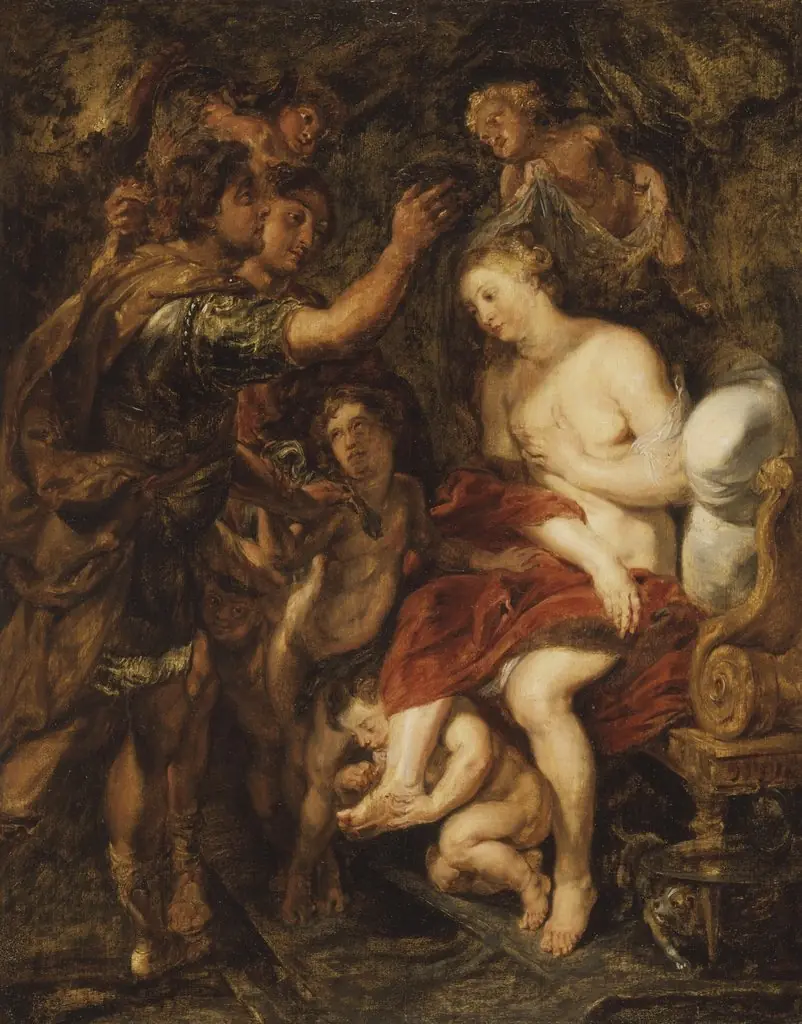 The Crowning of Roxana