Artwork
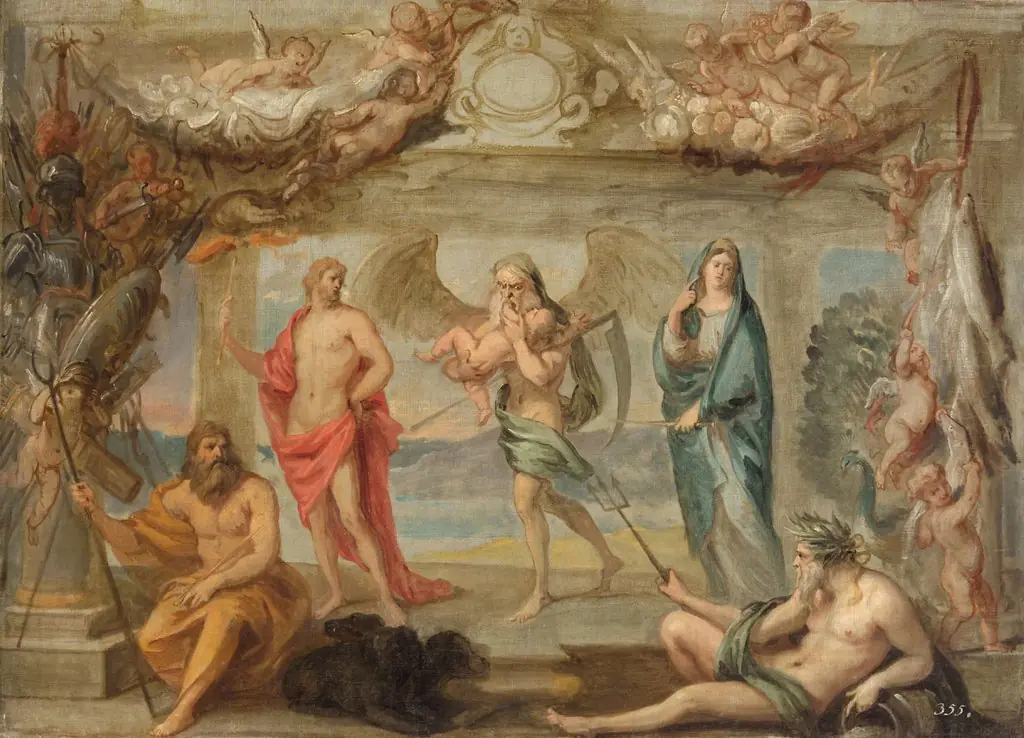
Helios and Phaeton with Saturn and the Four Seasons
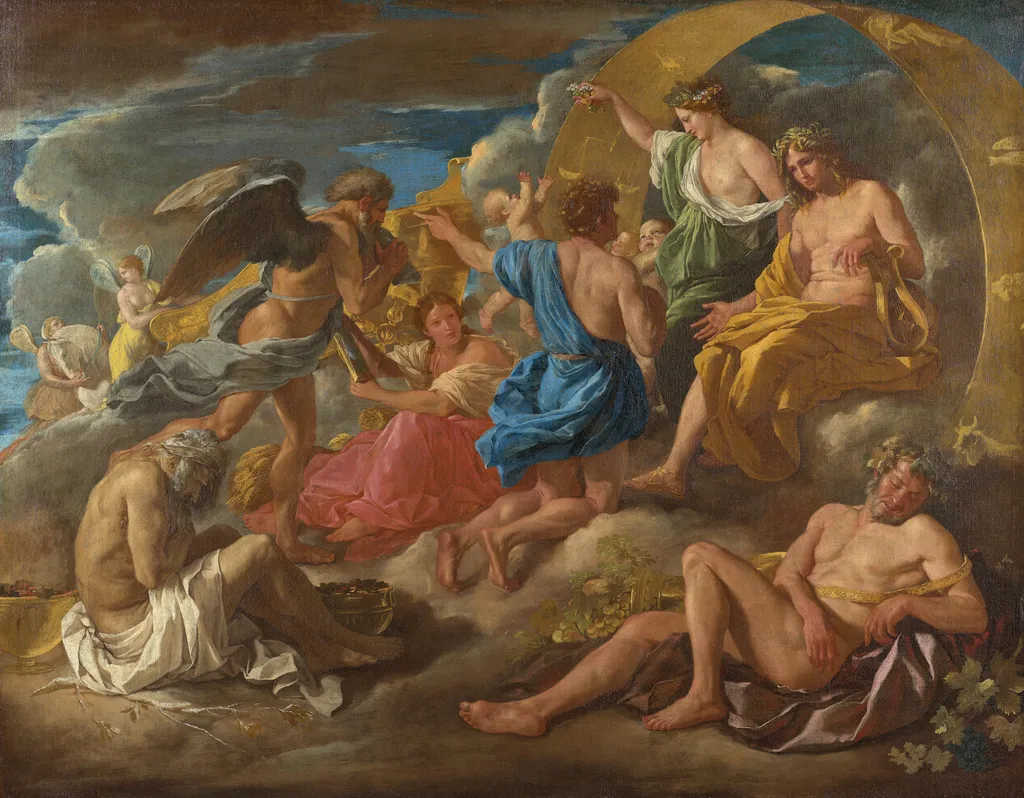
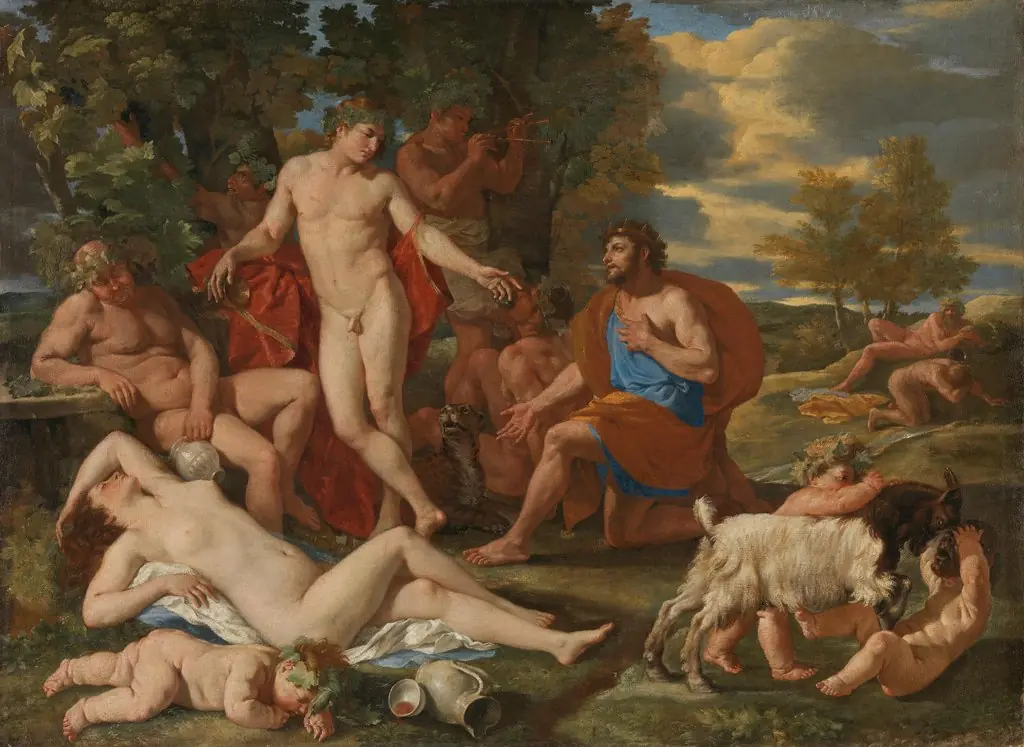
Helios and Phaeton with Saturn and the Four Seasons is an oil painting by the Early Baroque Italian artist Nicolas Poussin. It dates from 1630 and is held in the collection of the Gemäldegalerie Berlin.
About this work
Subject & Meaning
The iconography draws on classical myth, emphasizing the peril of overreaching ambition and the divine order represented by Saturn and the seasonal figures.
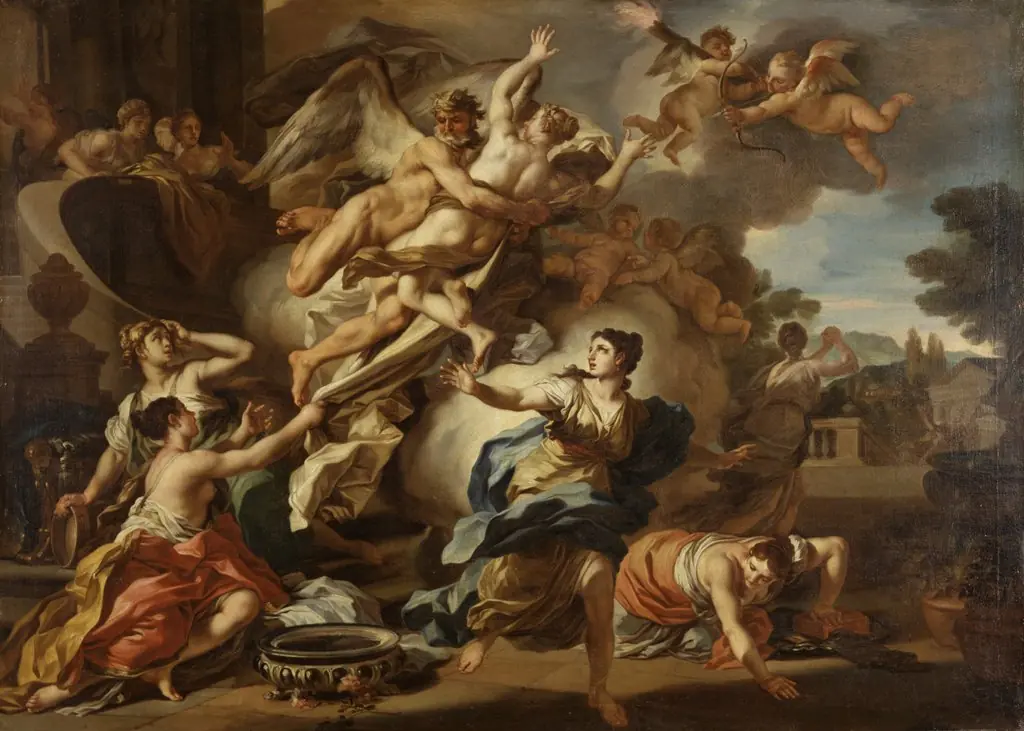
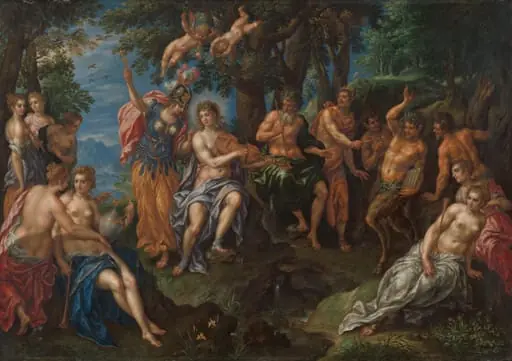
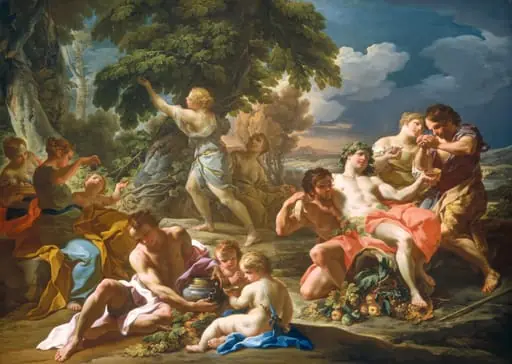
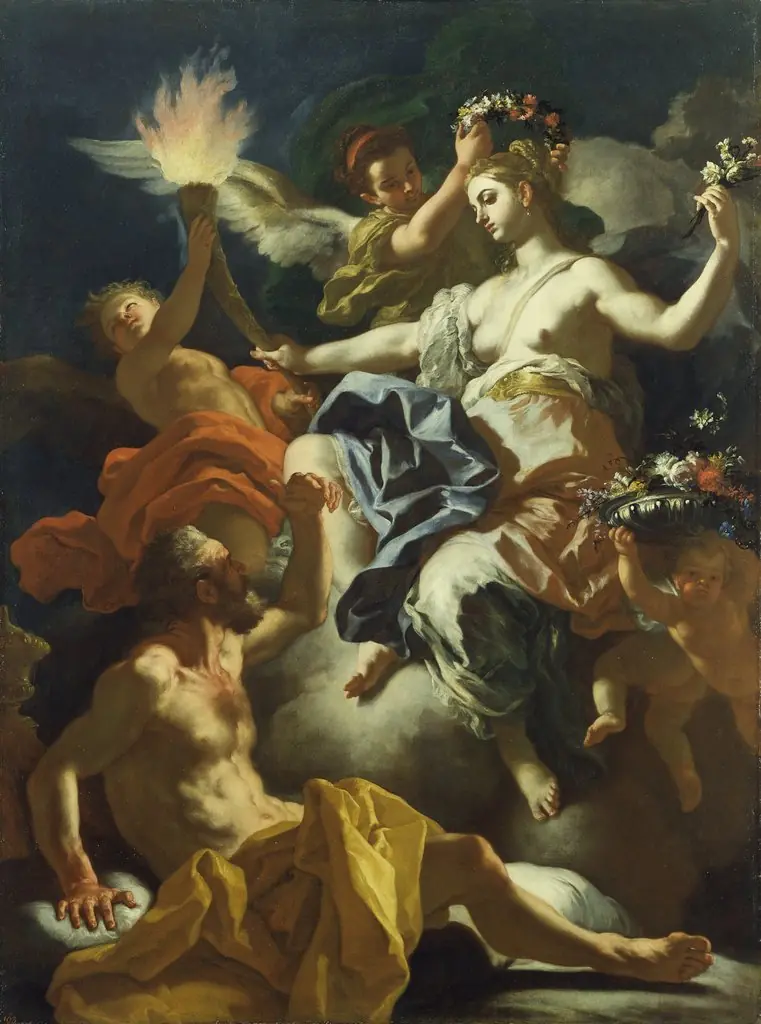
The painting portrays Helios driving his sun‑chariot while Phaethon, his son, attempts to steer it, set against the backdrop of Saturn accompanied by the four seasons. The iconography draws on classical myth, emphasizing the peril of overreaching ambition and the divine order represented by Saturn and the seasonal figures. Symbolically, the work juxtaposes celestial power with human hubris, reflecting Baroque explorations of fate and the limits of mortal agency.
Technique & Style
Helios and Phaeton with Saturn and the Four Seasons is executed in oil paint, a medium consistent with Poussin's mythological compositions of the period. The work is classified as a painting on a horizontal support, with recorded dimensions of 122 cm in height by 153 cm in width, giving it a landscape-oriented format suited to its multi-figure mythological narrative. It is held in the collection of the Gemäldegalerie Berlin at the New Palace.
Beyond these cataloguing details, the available sources do not provide further specifics about the support, handling, condition, or stylistic qualities of the work.
History & Provenance
The work was created in 1630 by Nicolas Poussin, executed in oil paint as a mythological painting. It entered the collection of the Gemäldegalerie Berlin, where it remains on display in the New Palace.
The painting was commissioned by an unnamed patron and has been part of the museum's holdings since its creation, reflecting continuous ownership by the institution.
Context
The work is recognized as a mythological painting executed in oil by Nicolas Poussin in 1630, depicting the moment of Helios and Phaethon alongside Saturn and the Four Seasons, and it is housed in the Gemäldegalerie Berlin within the New Palace. Scholarship situates this canvas within Poussin's mature mythological output, emphasizing its compositional rigor and the integration of classical themes with Baroque dynamism, while its presence in a major German collection underscores its significance in the transmission of French classicism across Europe.
Overview
Nicolas Poussin's 'Helios and Phaeton with Saturn and the Four Seasons,' painted in 1630, depicts the mythological moment where the sun god Helios reluctantly agrees to let his son Phaeton drive the solar chariot. The composition is organized into distinct horizontal zones: the upper register features Helios in his radiant chariot, attended by personifications of the Hours, while the lower register presents Saturn, crowned with laurel, seated beside the allegorical figures of the Four Seasons. The work exemplifies Poussin's early Roman period, characterized by a vibrant palette and a dynamic, crowded arrangement of figures that contrasts with his later, more austere classical style.
The artist employs complex iconography to explore themes of cosmic order and the dangers of hubris. The figures are rendered with sculptural solidity, and the landscape background integrates seamlessly with the mythological narrative. This painting stands as a significant example of Poussin's engagement with Ovidian themes and his development of a rigorous visual language that would come to define French classical painting in the seventeenth century.
Own this work as a print
Artist & collection
Artist
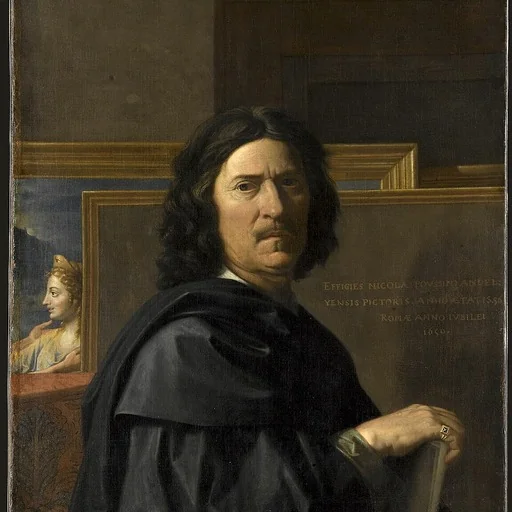
Nicolas Poussin (UK: US: French:; June 1594 – 19 November 1665) was a leading painter of the classical French Baroque style, although he spent most of his working life in Rome.