Artwork
The Glorification of Saint James the Great
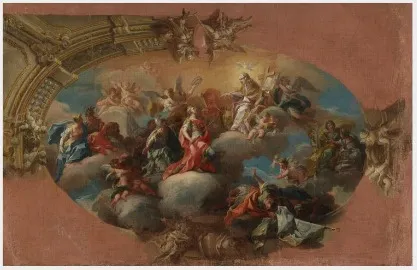
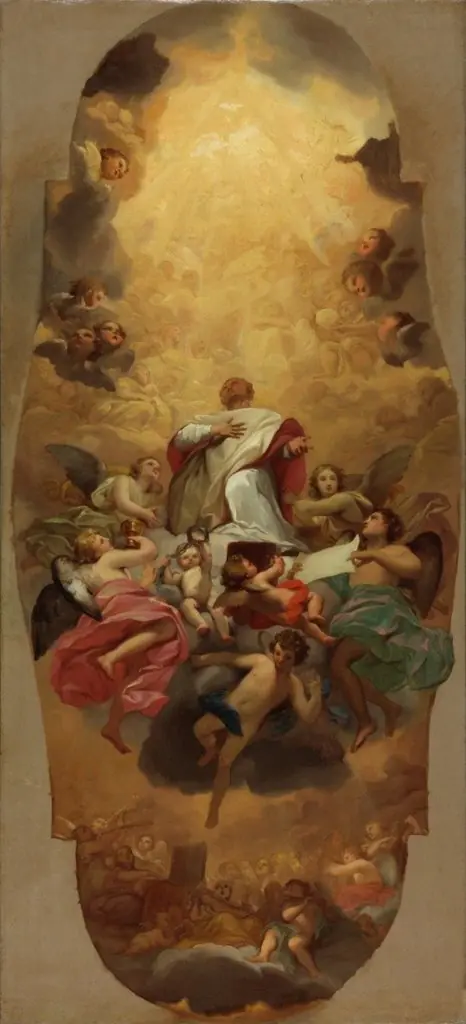
The Glorification of Saint James the Great is an oil painting by the Rococo painting artist Corrado Giaquinto. It dates from 1744 and is held in the collection of the National Gallery of Ireland.
About this work
Overview
The work depicts the apostle James the Greater ascending into the heavens, clad in a vibrant red robe that anchors the central vertical axis.
Painted in 1744 by the Italian Rococo master Corrado Giaquinto, The Glorification of Saint James the Great exemplifies the artist's mature style characterized by luminous color and dynamic composition. The work depicts the apostle James the Greater ascending into the heavens, clad in a vibrant red robe that anchors the central vertical axis. His arms are raised in a gesture of triumph and divine acceptance, surrounded by a swirling host of angels.
These celestial figures engage in a musical celebration, playing instruments and singing, creating a sense of rhythmic movement typical of the mid-eighteenth-century Neapolitan school. Giaquinto utilizes a soft, atmospheric light to dissolve hard contours, enhancing the ethereal quality of the scene. Executed during a period when the artist was gaining significant recognition in Italy before his later appointments in Madrid and Lisbon, this painting demonstrates his ability to synthesize Venetian colorism with the theatrical energy of the Baroque tradition.
The composition balances the earthly weight of the saint with the airy lightness of the surrounding angels, reflecting the Counter-Reformation emphasis on the glory of the saints while adhering to the decorative elegance of the Rococo aesthetic.
Subject & Meaning
The work portrays the apotheosis of Saint James the Great, a figure venerated as a pilgrim and martyr. By presenting the saint in a radiant, exalted pose, Giaquinto emphasizes his heavenly reward and spiritual victory. The surrounding angels, engaged in music and song, reinforce the celebratory atmosphere, suggesting divine approval and the saint’s entry into celestial glory.
Technique & Style
Executed in the late Baroque idiom, the painting displays Giaquinto’s skillful handling of oil paint to achieve rich, warm hues and subtle chiaroscuro. The artist employs dynamic composition, with swirling drapery and animated gestures that convey movement. A palette of earthy reds, golds, and browns creates depth, while fine detailing in the angels’ instruments and garments enhances the overall visual richness.
History & Provenance
Created circa 1744, The Glorification of Saint James the Great entered the public domain through acquisition by the National Gallery of Ireland, where it remains on display. Its provenance traces back to the artist’s workshop in Rome, reflecting Giaquinto’s reputation among patrons seeking devotional works for churches and private chapels during the mid‑18th century.
Artist & collection

Artist
Corrado Giaquinto was an Italian Rococo painter who worked in Naples, Rome, Turin and Madrid.

- Sketch for a Ceiling Design
 The Glorification of Saint Dominic
 Gloria de santos
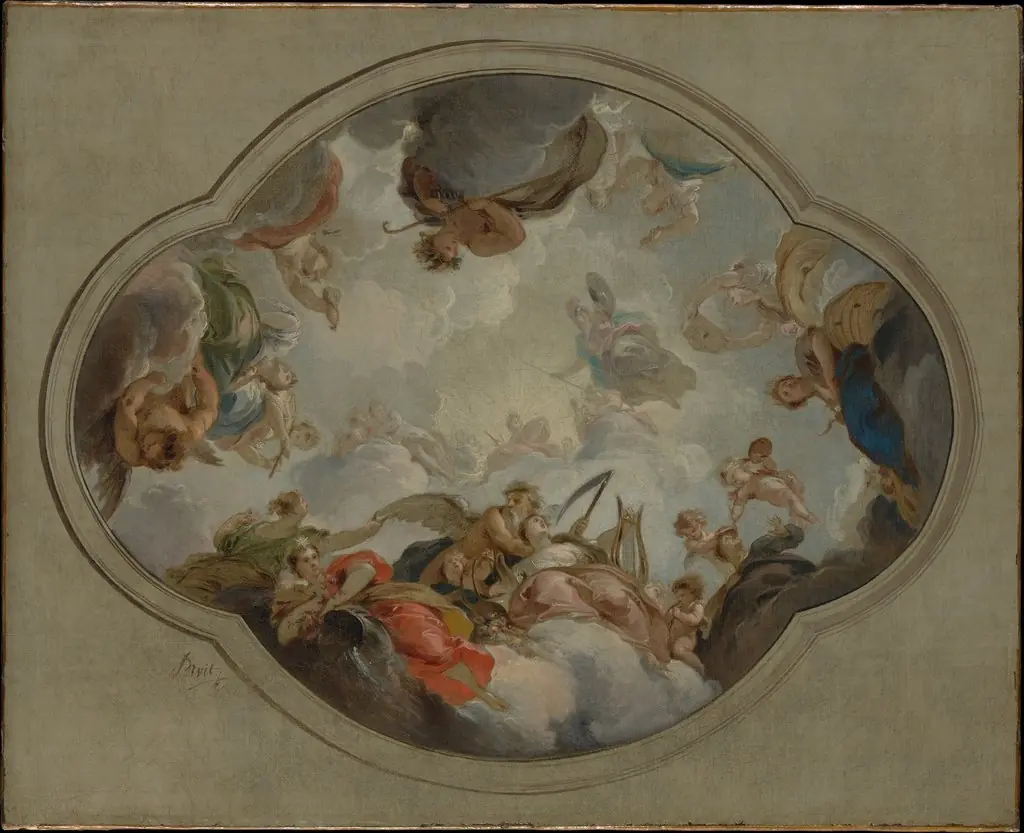 Allegory of the Arts
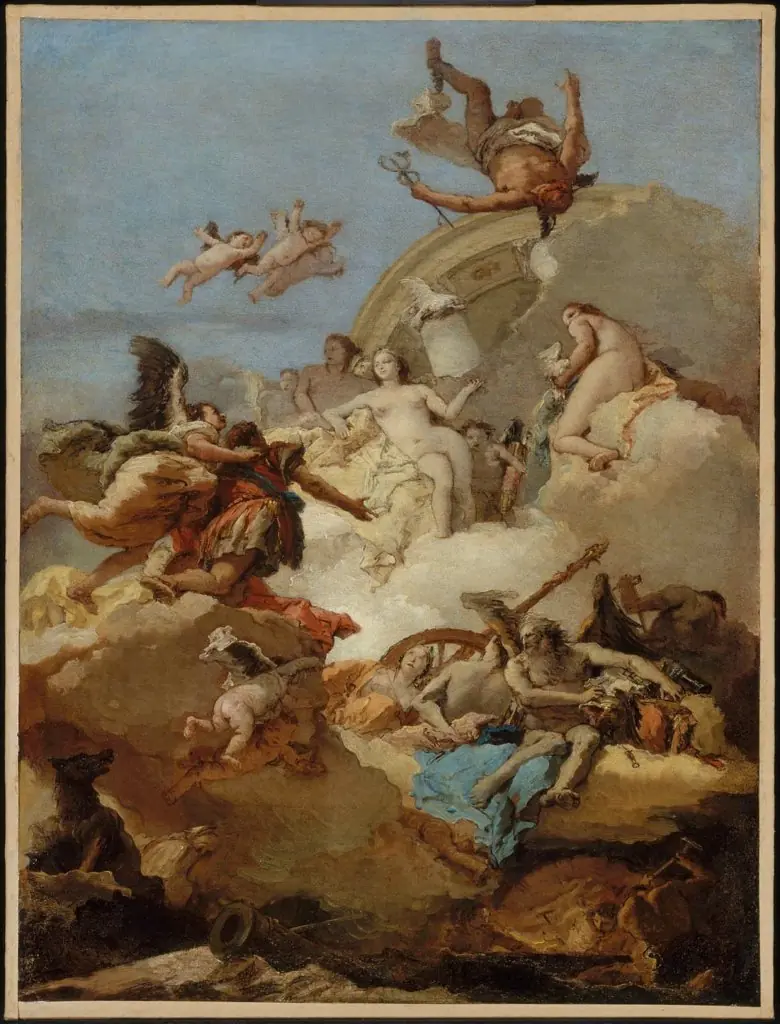 Apotheosis of Aeneas
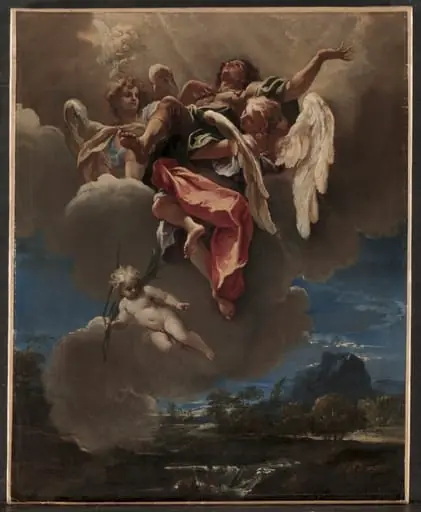 Study for "An Apotheosis of a Saint" (for San Bernardino dei Morti, Milan)
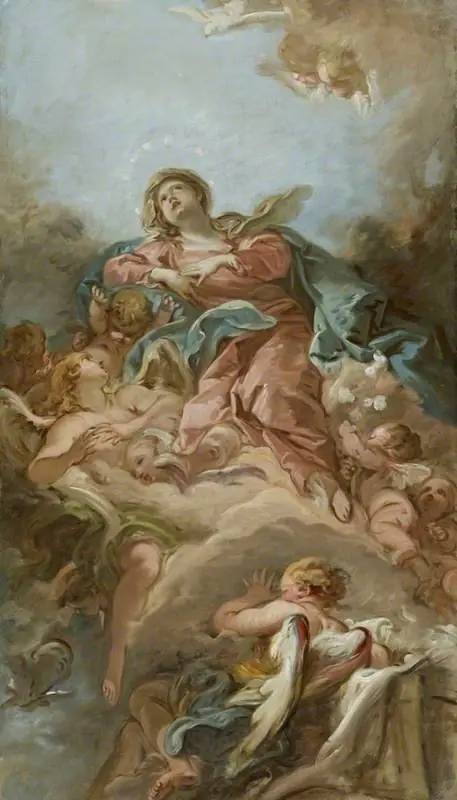 The Assumption of the Virgin
 Allegori över konung Karl XI:s och drottning Ulrika Eleonoras förmälning
 Sketch for a Ceiling Fresco
 The Triumph of the Virgin
 The Last Judgement
 The Glory of St. Eusebius of Rome