Artwork
Winter
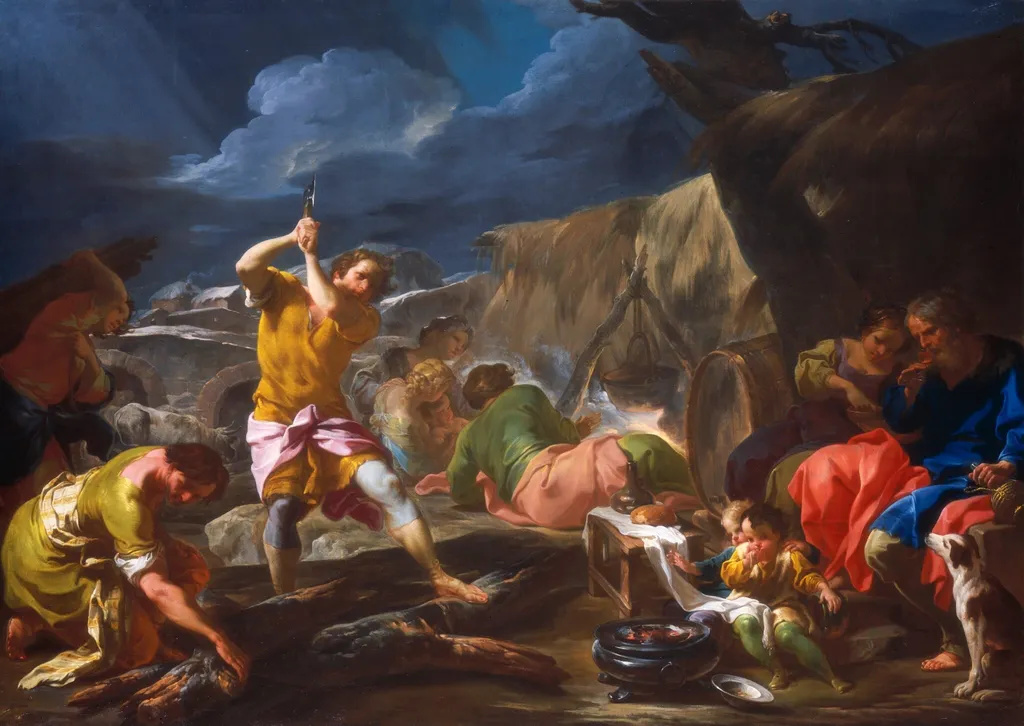
Winter is an oil painting by the Baroque artist Corrado Giaquinto. It dates from 1745 and is held in the collection of the National Gallery of Art.
About this work
Subject & Meaning
These works were likely created as allegorical representations of the natural cycle, with each painting embodying the characteristics of its respective season.
Winter depicts the season as a personified figure, embodying the cold and stillness associated with winter through traditional iconographic elements. The work functions as part of a seasonal allegory, where Winter stands in contrast to the other three personifications of the year, representing the cyclical passage of time and the harsher aspects of nature. As a painting by Corrado Giaquinto, it reflects 18th-century artistic conventions in which personified seasons conveyed moral and philosophical ideas about renewal and impermanence.
The painting was created in 1740 and originally entered the collection of the Comte d'Arthois in Paris before moving through several European and American dealers. It was exhibited in Birmingham (1931) and Memphis (1938) before being acquired by the Rizik family in Washington, D.C. The work was later donated to the National Gallery of Art in 2001, where it remains in their collection.
Winter is one of four seasonal paintings by Giaquinto, each representing a different time of year. These works were likely conceived as personifications of the seasons, a theme common in Baroque and Rococo art. The allegorical representation of Winter underscores themes of rest, dormancy, and the natural cycle of life and death, aligning with broader artistic traditions of the period.
The National Gallery of Art holds the painting in its collection in Washington, D.C., where it is part of the European paintings holdings.
Winter exemplifies the symbolic use of personification in painting, where abstract concepts like seasons are given human form to convey deeper meanings about nature and human experience. Through this work, Giaquinto contributes to a long-standing artistic tradition that uses visual metaphor to interpret the world.
The painting’s composition and iconography reflect 18th-century European artistic practices, in which seasonal themes were used to explore philosophical and moral ideas. Winter, as a personified figure, embodies the characteristics traditionally linked to the season, stillness, cold, and the quiet passage of time, serving as a visual metaphor for these concepts.
The work was created in 1740 and is part of a set of four seasonal paintings by Giaquinto, each representing a different time of year. These paintings were likely intended as allegorical representations of the seasons, a theme that was common in Baroque and Rococo art. Winter, in particular, reflects the characteristics traditionally associated with the season, such as cold and stillness, and may symbolize the cyclical nature of time and the inevitability of change.
Winter is part of a set of four paintings by Giaquinto that personify the seasons. These works were likely created as allegorical representations of the natural cycle, with each painting embodying the characteristics of its respective season. Winter, in particular, reflects the characteristics traditionally associated with the season, such as cold and stillness, and may symbolize the cyclical nature of time and the inevitability of change.
Winter is an oil painting on canvas created in 1740 by Corrado Giaquinto. It measures 108.4 cm in height and 151.5 cm in width. The painting is part of a set of four seasonal works, each representing a different time of year.
These paintings were likely intended as allegorical representations of the seasons, a theme that was common in Baroque and Rococo art. Winter, in particular, reflects the characteristics traditionally associated with the season, such as cold and stillness, and may symbolize the cyclical nature of time and the inevitability of change.
Winter is part of a set of four seasonal paintings by Corrado Giaquinto, each representing a different time of year. These works were likely conceived as allegorical representations of the seasons, a theme common in Baroque and Rococo art. Winter, as a personified figure, embodies the characteristics traditionally associated with the season, stillness, cold, and the quiet passage of time, serving as a visual metaphor for these concepts.
Winter is an oil painting on canvas created in 1740 by Corrado Giaquinto. It measures 108.4 cm in height and 151.5 cm in width. The painting is part of a set of four seasonal works, each representing a different time of year.
These paintings were likely intended as allegorical representations of the seasons, a theme that was common in Baroque and Rococo art. Winter, in particular, reflects the characteristics traditionally associated with the season, such as cold and stillness, and may symbolize the cyclical nature of time and the inevitability of change.
Winter is depicted as a personified figure in a painting by Corrado Giaquinto, created in 1740. The work is part of a set of four seasonal paintings, each representing a different time of year. Winter, as a personification, embodies the characteristics traditionally associated with the season, such as cold and stillness, and may symbolize the cyclical nature of time and the inevitability of change.
Winter is depicted as a personified figure in a painting by Corrado Giaquinto, created in 1740. The work is part of a set of four seasonal paintings, each representing a different time of year. Winter, as a personification, embodies the characteristics traditionally associated with the season, such as cold and stillness, and may symbolize the cyclical nature of time and the inevitability of change.
Winter is part of a set of four seasonal paintings by Corrado Giaquinto, each representing a different time of year. These works were likely conceived as allegorical representations of the seasons, a theme common in Baroque and Rococo art. Winter, as a personified figure, embodies the characteristics traditionally associated with the season, stillness, cold, and the quiet passage of time, serving as a visual metaphor for these concepts.
Winter is depicted as a personified figure in a painting by Corrado Giaquinto, created in 1740. The work is part of a set of four seasonal paintings, each representing a different time of year. Winter, as a personification, embodies the characteristics traditionally associated with the season, stillness, cold, and the quiet passage of time, serving as a visual metaphor for these concepts.
Winter is an oil painting on canvas created in 1740 by Corrado Giaquinto. It measures 108.4 cm in height and 151.5 cm in width. The painting is part of a set of four seasonal works, each representing a different time of year.
These paintings were likely intended as allegorical representations of the seasons, a theme that was common in Baroque and Rococo art. Winter, in particular, reflects the characteristics traditionally associated with the season, such as cold and stillness, and may symbolize the cyclical nature of time and the inevitability of change.
Winter is part of a set of four paintings by Corrado Giaquinto that personify the seasons. These works were likely created as allegorical representations of the natural cycle, with each painting embodying the characteristics of its respective season. Winter, in particular, reflects the characteristics traditionally associated with the season, such as cold and stillness, and may symbolize the cyclical nature of time and the inevitability of change.
Winter is depicted as a personified figure in a painting by Corrado Giaquinto, created in 1740. The work is part of a set of four seasonal paintings, each representing a different time of year. Winter, as a personification, embodies the characteristics traditionally associated with the season, stillness, cold, and the quiet passage of time, serving as a visual metaphor for these concepts.
Winter is an oil painting on canvas created in 1740 by Corrado Giaquinto. It measures 108.4 cm in height and 151.5 cm in width. The painting is part of a set of four seasonal works, each representing a different time of year.
These paintings were likely intended as allegorical representations of the seasons, a theme that was common in Baroque and Rococo art. Winter, in particular, reflects the characteristics traditionally associated with the season, such as cold and stillness, and may symbolize the cyclical nature of time and the inevitability of change.
Technique & Style
Corrado Giaquinto's Winter, executed in 1740, is an oil painting on canvas. The work measures 108.4 cm in height and 151.5 cm in width. Created as part of a set of four allegorical seasons, the piece utilizes the traditional oil medium on a canvas support characteristic of the artist's mid-18th-century practice.
The painting is currently held in the collection of the National Gallery of Art in Washington, D.C., having been gifted to the institution by the Rizik family in 2001.
History & Provenance
The set of four seasons paintings by Corrado Giaquinto, including Winter, dates to 1740, as confirmed by the artist’s chronology and the group’s first recorded exhibition in Birmingham, Alabama in 1931.
Winter passed from the Comte d’Arthois in Paris into New York art circles, appearing at the Metropolitan Galleries in 1931–1932 and at Nicholas M. Acquavella Galleries in 1938. By 1941 it was handled by Dr. Siegfried F. Aram, who lent it to San Francisco. It was subsequently purchased through a New York dealer, likely Aram, by the Rizik family of Washington, D.C., and remained in their estate until the 2001 gift to the National Gallery of Art.
Winter is held by the National Gallery of Art, Washington, D.C. The painting entered the museum’s collection as a gift from the Rizik family in 2001 and is recorded with accession number 2001.15.1. It has been featured in several exhibitions, including presentations at the Metropolitan Galleries, New York, in 1932, and at the Nicholas M. Acquavella Galleries, New York, in 1938. The work was also included in a 1931 exhibition in Birmingham, Alabama, and a 1941 exhibition in San Francisco.
Overview
Created circa 1745, Winter is an oil on canvas work by Italian painter Corrado Giaquinto. Executed during his mature period, the painting presents a small group gathered around a fire in a wintry landscape. The composition balances the chill of the setting with the intimate warmth generated by the figures, offering a snapshot of communal life in a cold season.
Context
Although often linked to Rococo’s decorative charm, Winter also reflects the period’s fascination with pastoral and seasonal subjects. Such scenes were popular among aristocratic patrons who idealized rural life, using the contrast of harsh weather and domestic warmth to evoke moral and sentimental values prevalent in mid‑18th‑century Europe.
Own this work as a print
Artist & collection

Artist
Corrado Giaquinto was an Italian Rococo painter who worked in Naples, Rome, Turin and Madrid.


- Massacre of the Innocents
 Miracle of the loaves (Jesus feeds the five thousand)
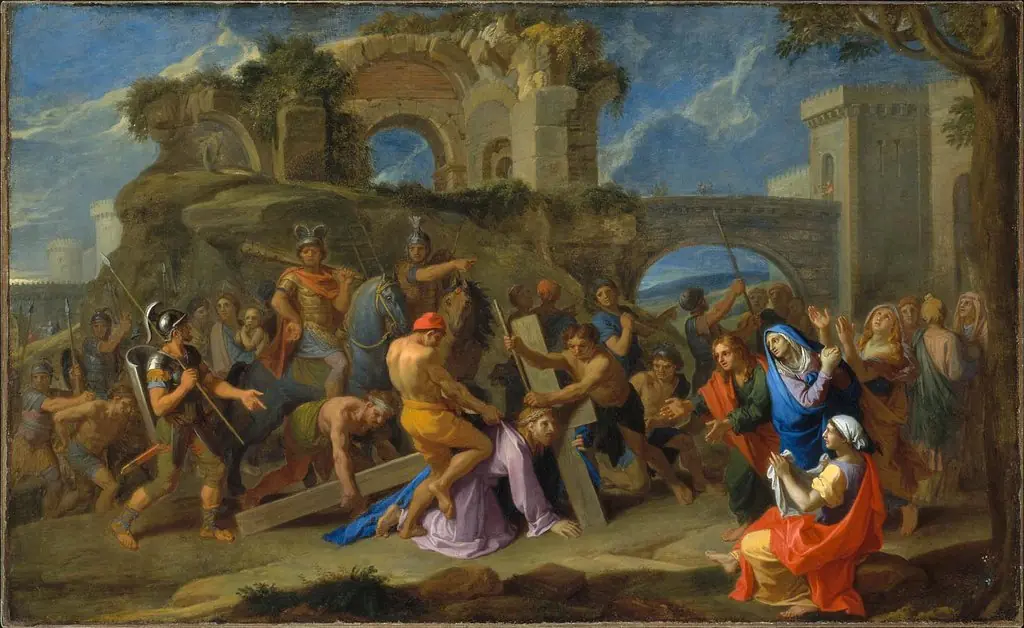 Christ Carrying the Cross
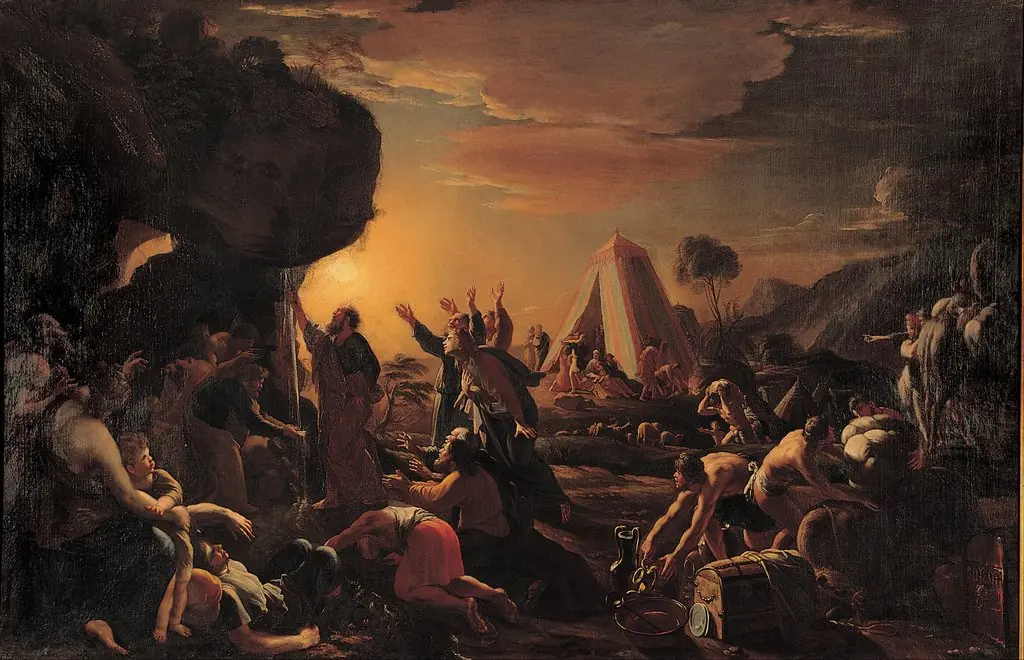 Moses draws water from the Rock
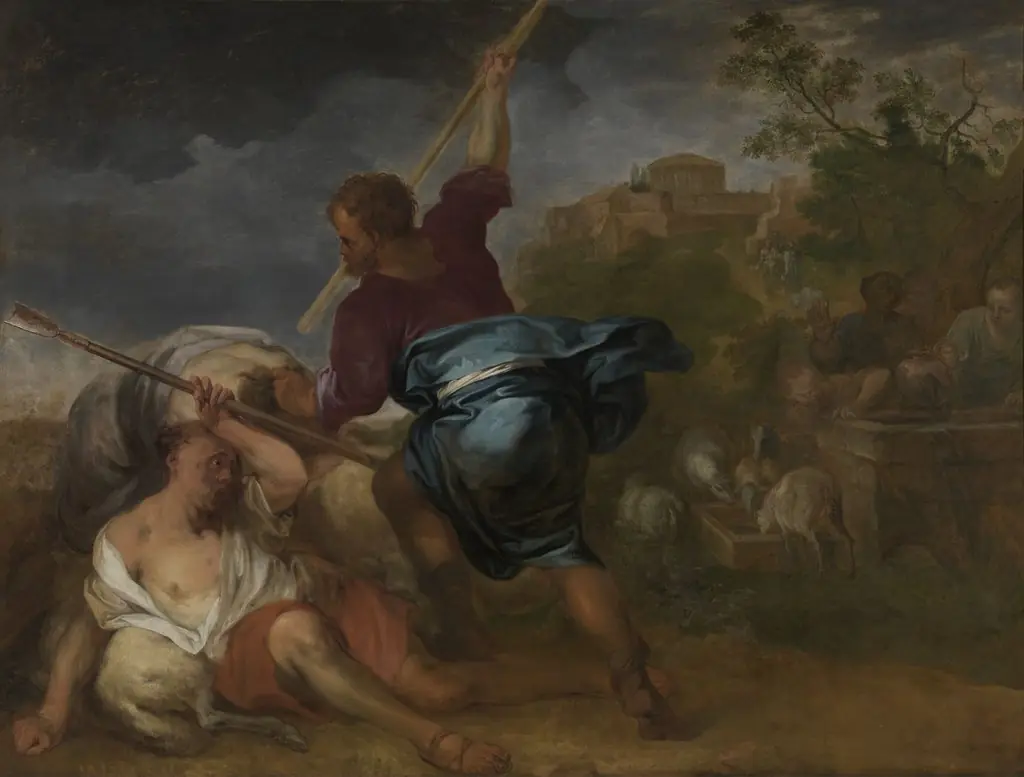 Moses defends the daughters of Jethro
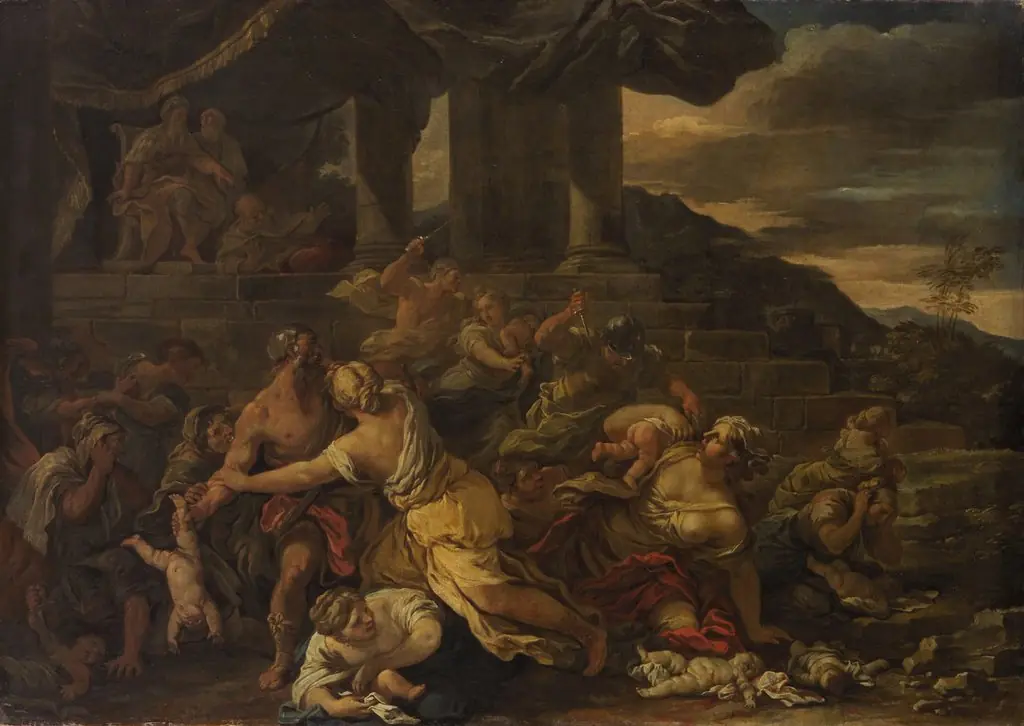 Killing of the Children in Bethlehem
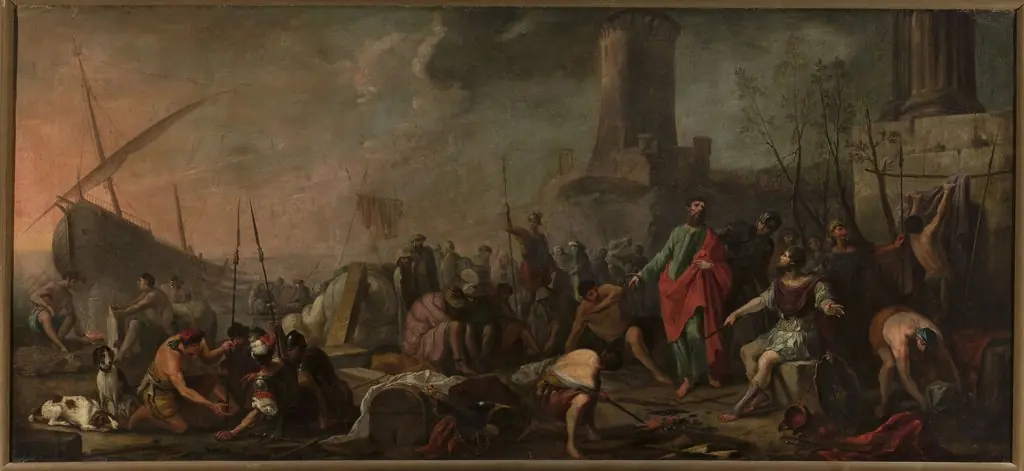 St. Paul on Malta
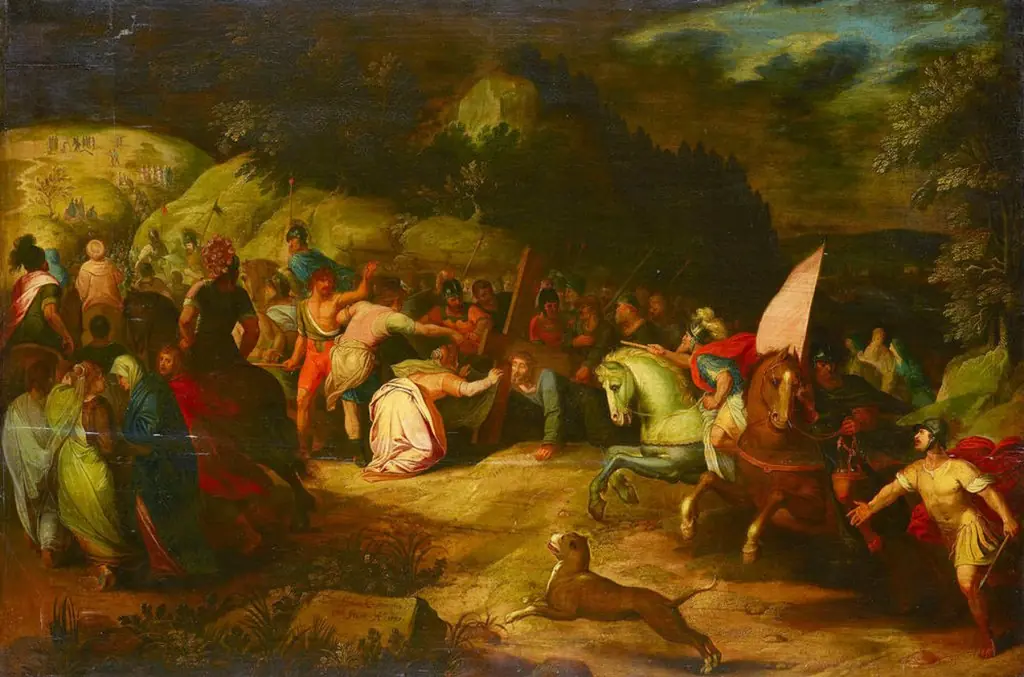 Christ collapsing under the cross on his way to Golgotha
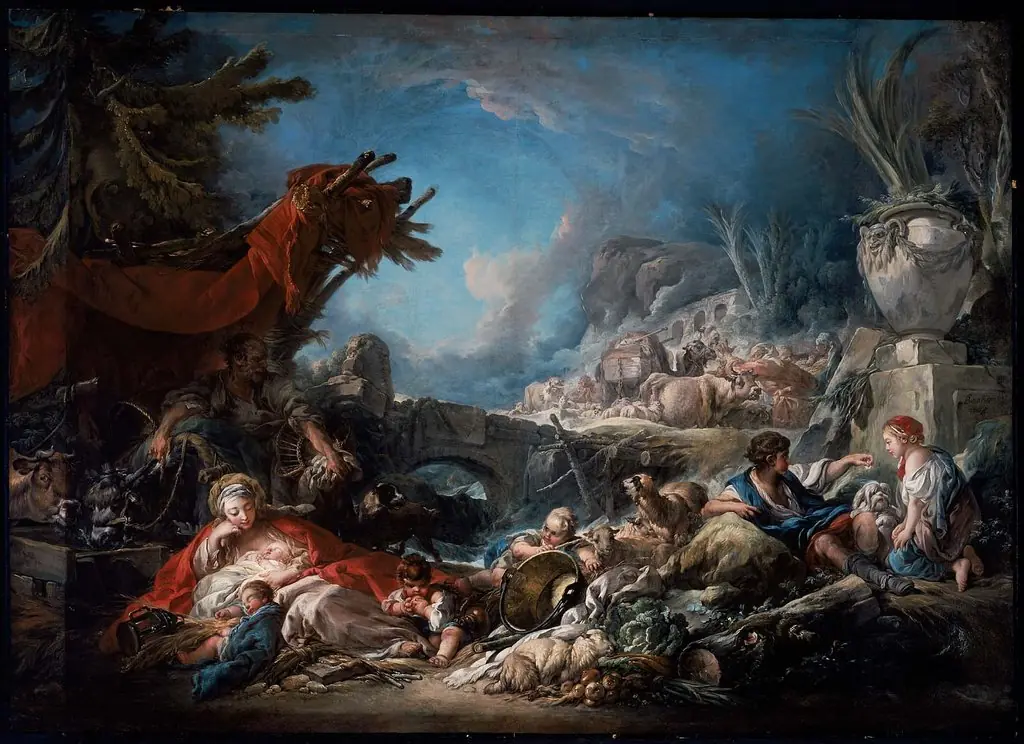 Halt at the Spring
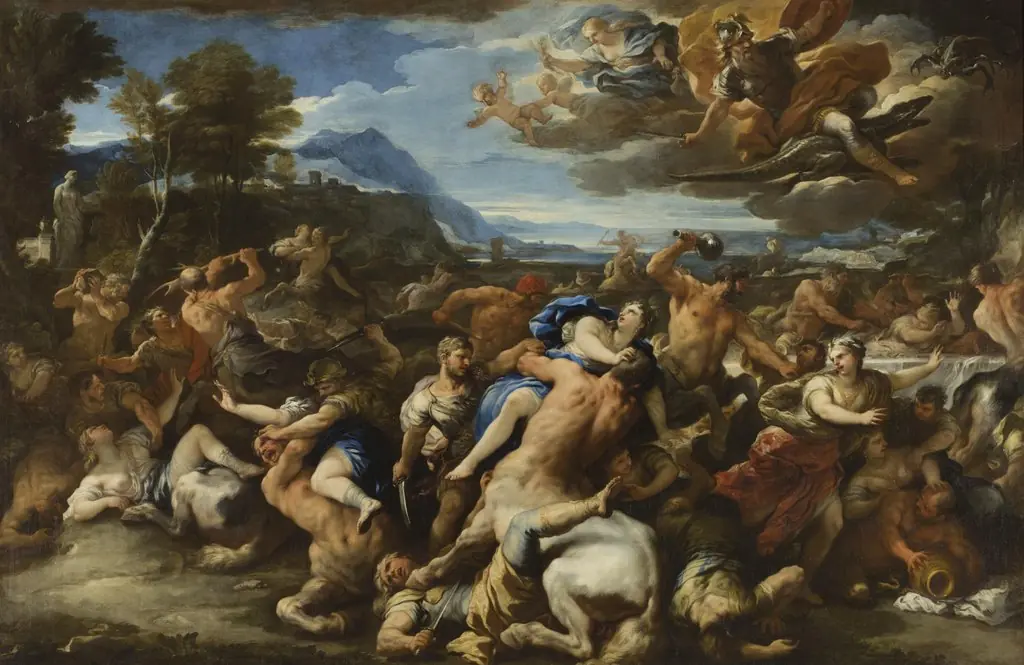 Battle Between the Lapiths and Centaurs
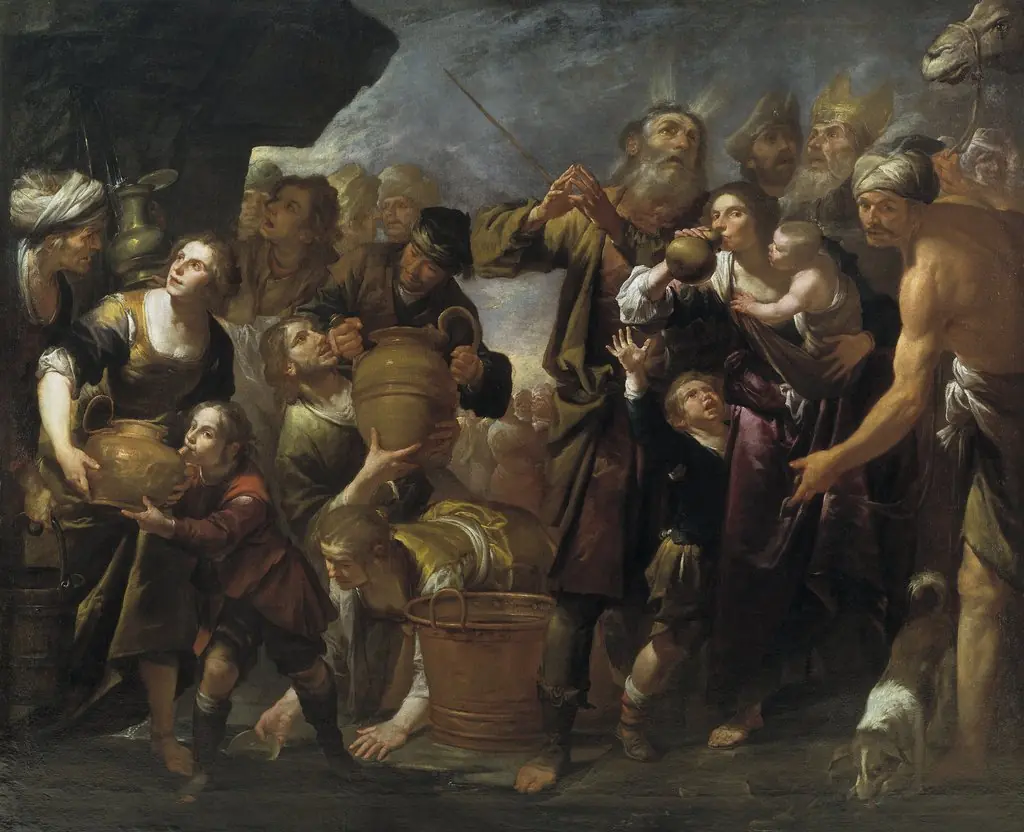 Moses striking the Water from the Rock
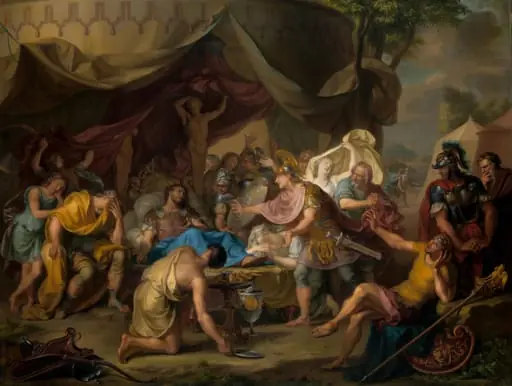 Het sterfbed van Epaminondas