Artwork
Joseph Claims Benjamin as his Slave
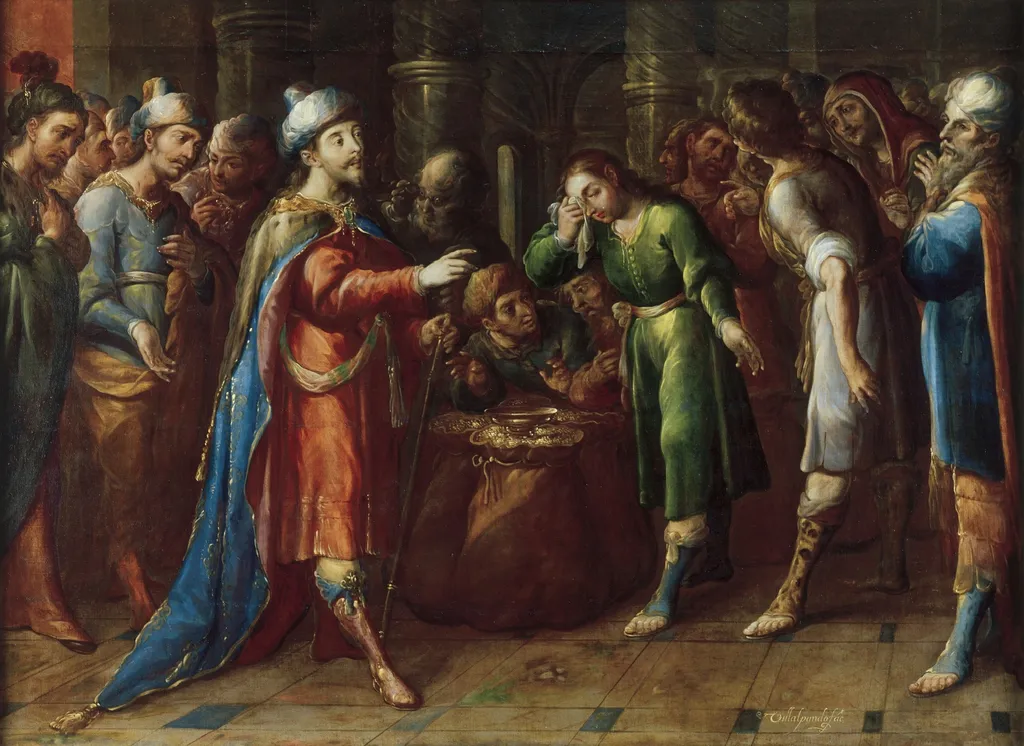
Joseph Claims Benjamin as his Slave is an oil painting by the Mexican Casta Painting artist Cristóbal de Villalpando. It dates from 1705 and is held in the collection of the Denver Art Museum.
About this work
Overview
As a Criollo artist active in New Spain, Villalpando blended European Baroque traditions with local artistic sensibilities.
Painted in 1705 by Cristóbal de Villalpando, this oil-on-canvas work depicts a biblical episode from the Book of Genesis. As a Criollo artist active in New Spain, Villalpando blended European Baroque traditions with local artistic sensibilities. The painting is part of a broader corpus of religious imagery produced in colonial Mexico, reflecting both spiritual narratives and social hierarchies of the time.
Subject & Meaning
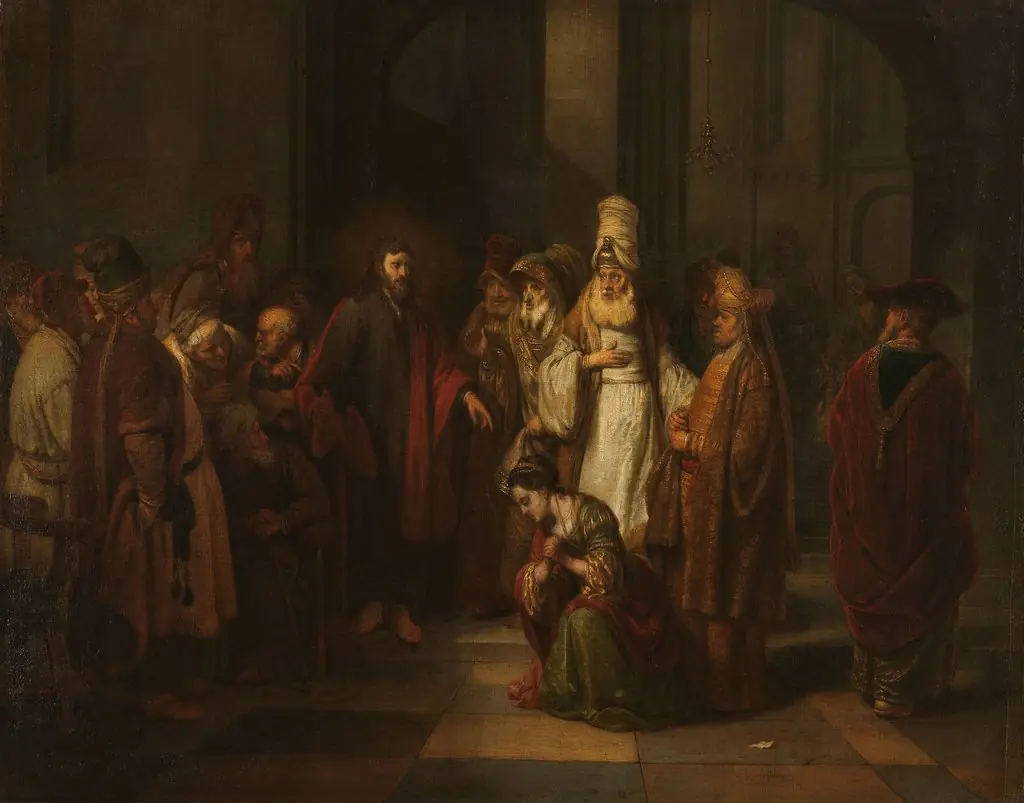
The scene illustrates Joseph, disguised as an Egyptian official, accusing his younger brother Benjamin of theft. Joseph, dressed in red and a turban, gestures toward Benjamin, who covers his face in distress. The surrounding figures represent court attendants and witnesses, emphasizing the public nature of the accusation.
The moment captures tension between familial loyalty and legal authority, a theme resonant in colonial contexts where identity and status were tightly regulated.
Technique & Style
Villalpando employs chiaroscuro to heighten emotional intensity, directing light onto the central figures while plunging the background into shadow. The contrast isolates Joseph and Benjamin, reinforcing their psychological drama. Rich textures in fabric and skin are rendered with precision, demonstrating the artist’s command of European modeling techniques. The composition is tightly controlled, with figures arranged to guide the viewer’s eye toward the accusatory gesture.
History & Provenance
Created during Villalpando’s tenure as an arts administrator in Mexico City, the painting likely originated in a religious or elite domestic setting. It entered the Denver Art Museum’s collection in the 20th century, where it is now preserved as part of its Latin American art holdings. Its survival reflects the enduring interest in colonial religious imagery, though its specific early ownership remains undocumented.
Context
Though visually aligned with biblical narrative, the painting resonates with colonial social structures. The depiction of Joseph as an authoritative figure in orientalized attire, and Benjamin as a subordinate, mirrors the racial and class hierarchies of New Spain. The work exists within a tradition of casta painting, where religious stories were sometimes used to encode contemporary social order, blending sacred and secular meanings.
Legacy
Villalpando’s work contributed to the development of a distinct colonial artistic identity in Mexico. While not widely exhibited during his lifetime, this painting now serves as a reference point for understanding how European techniques were adapted to local contexts. It remains a key example of how religious themes were employed to reflect and reinforce the complexities of colonial society.
Own this work as a print
Artist & collection
Artist
Cristóbal de Villalpando (ca. 1649 – 20 August 1714) was a Baroque Criollo artist from New Spain, arts administrator and captain of the guard. He painted prolifically and produced many Baroque works now displayed in…

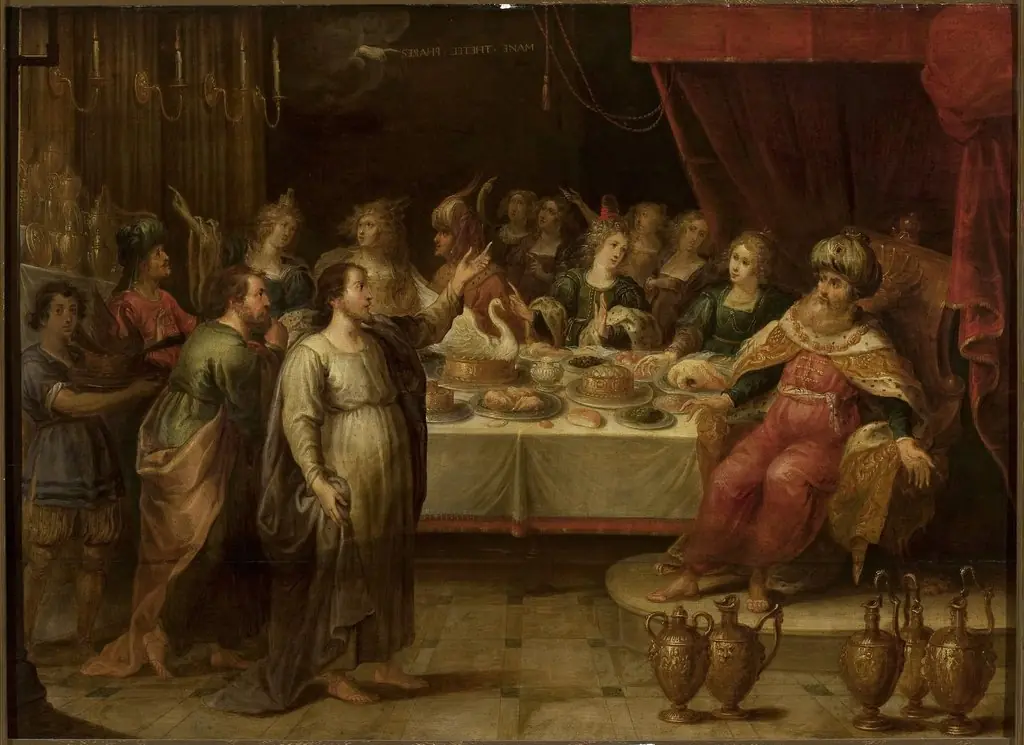 Belshazzar's feast (Daniel 5:1-31)
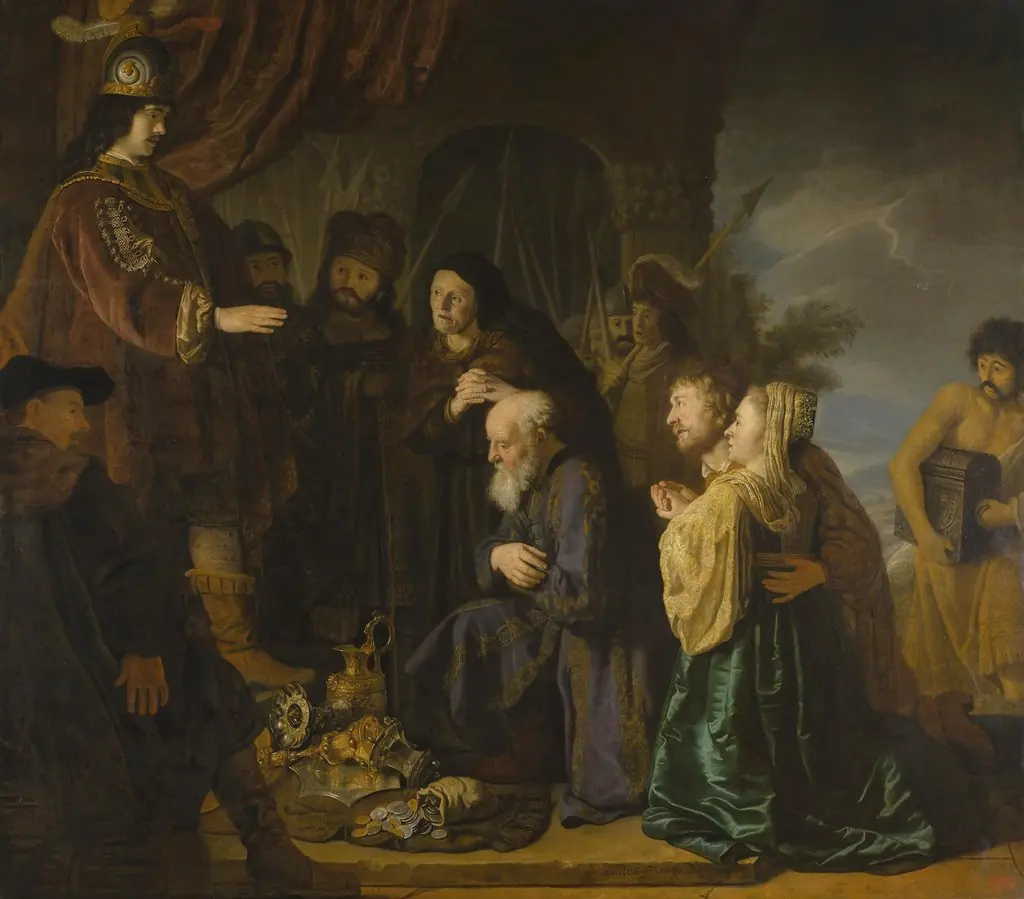 The Magnanimity of Scipio Africanus
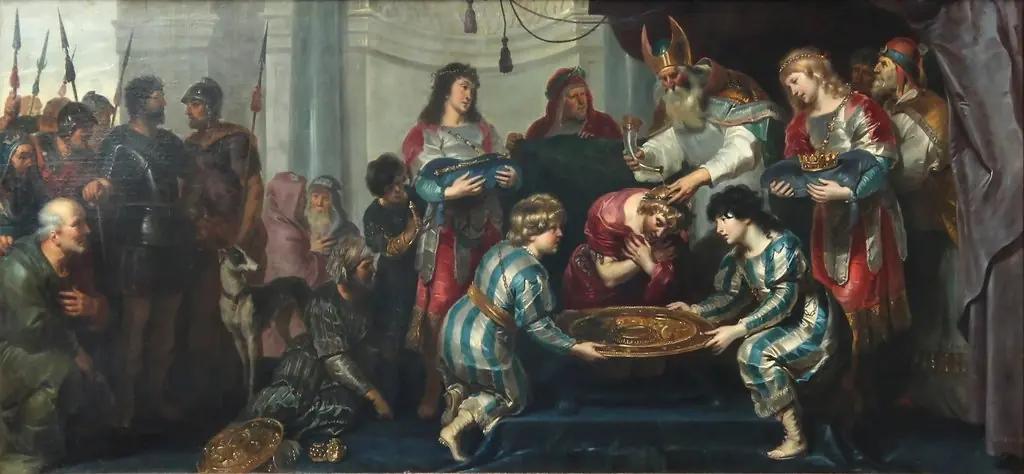 The anointing of Solomon
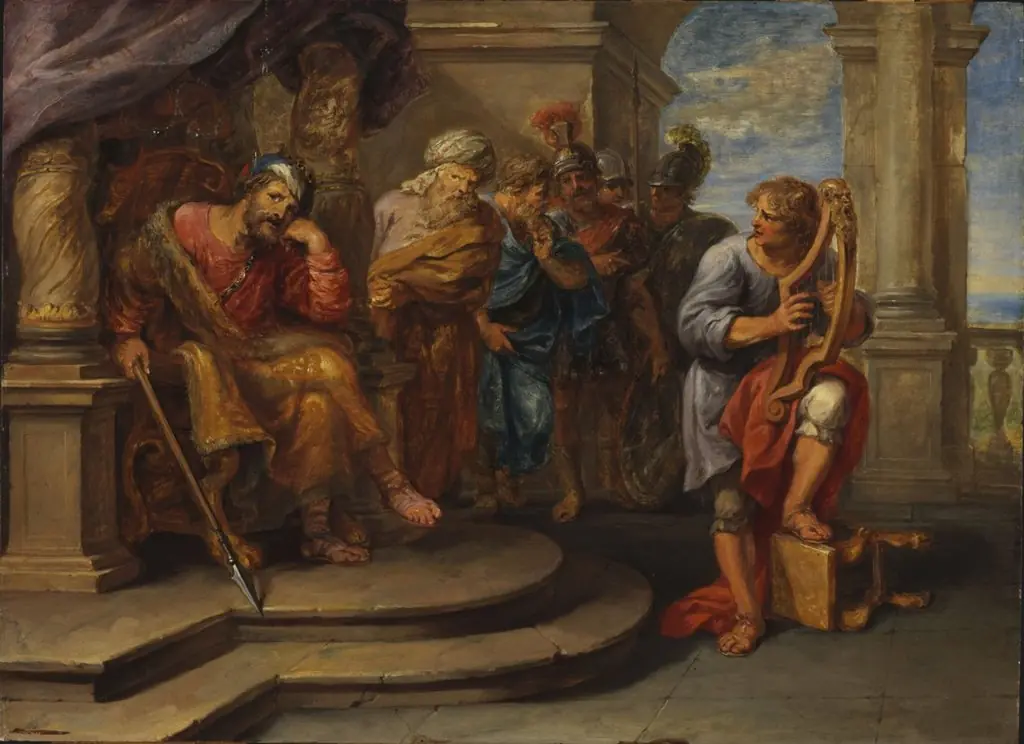 David Playing the Harp for King Saul
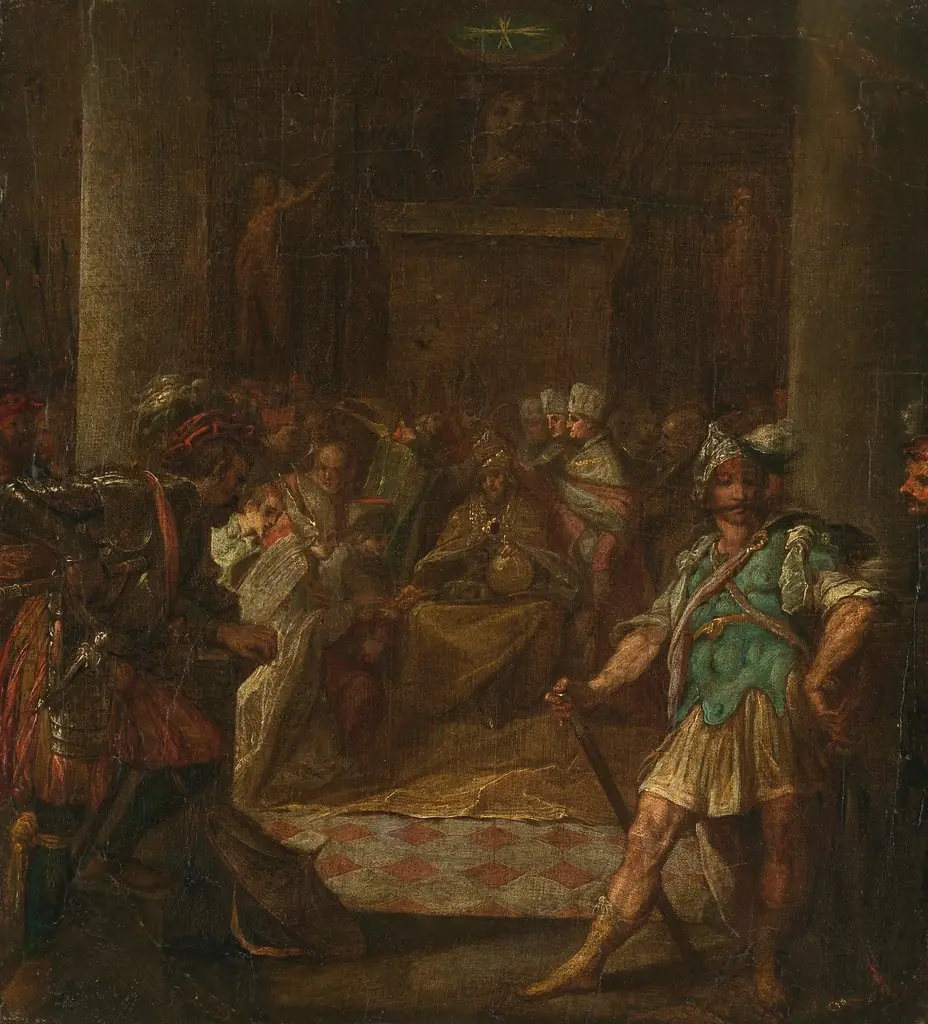 Imperial Coronation
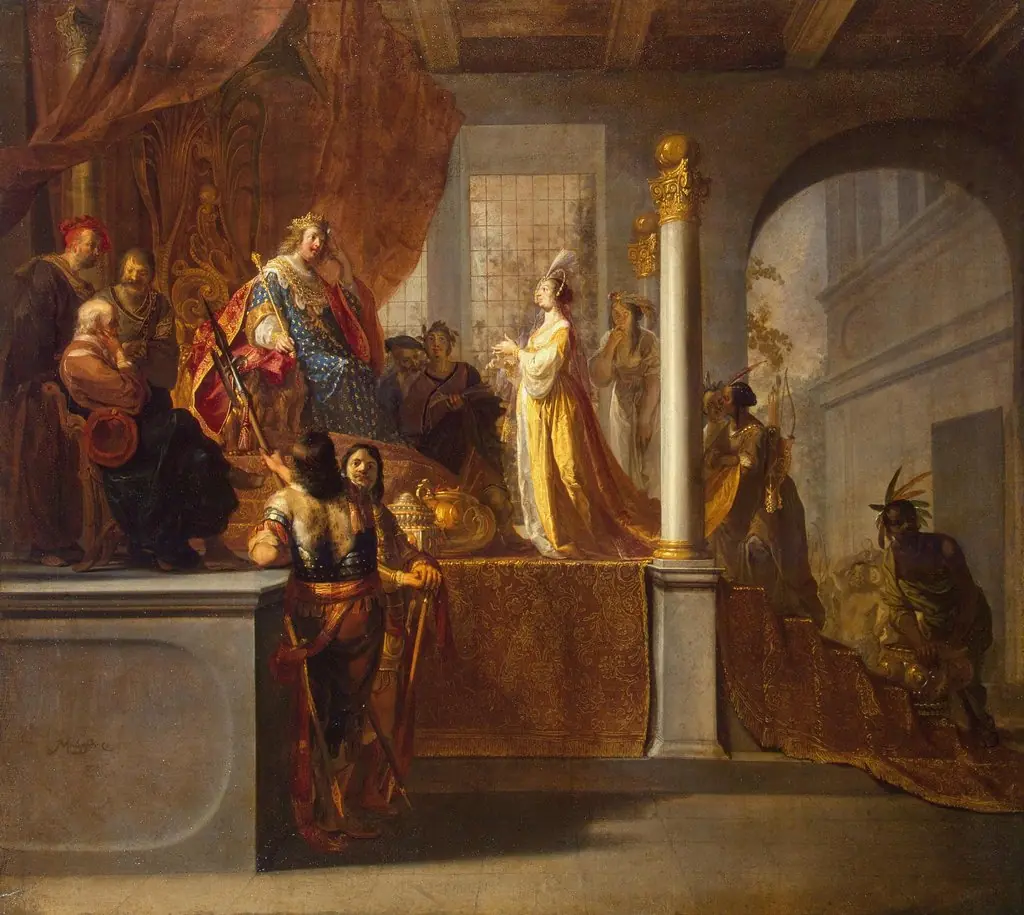 Queen of Sheba before Solomon
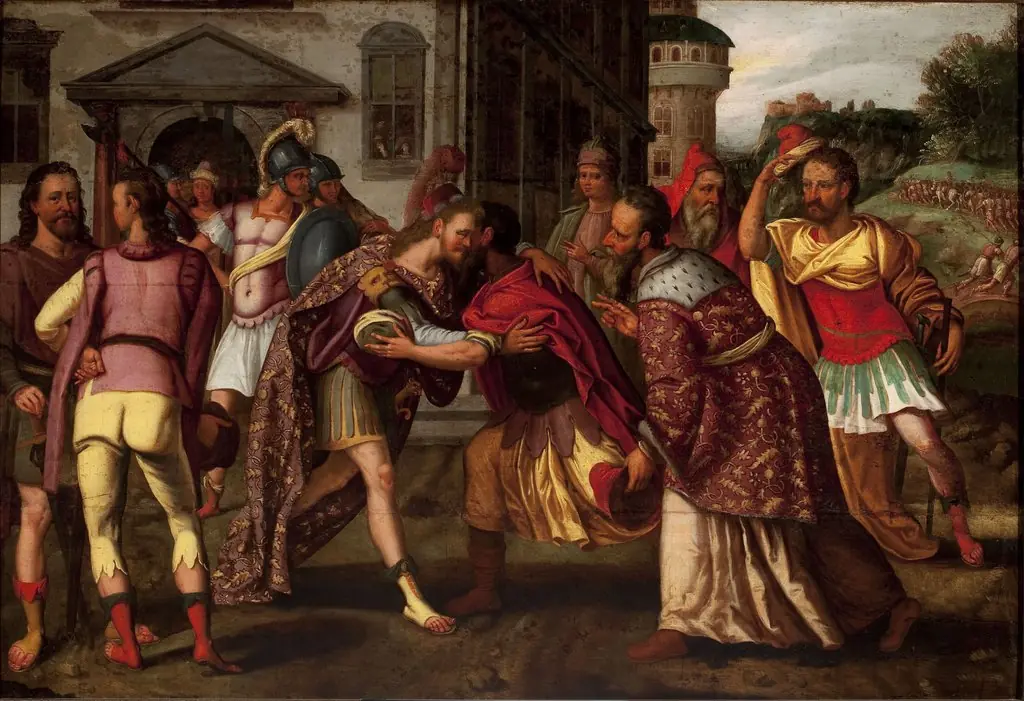 Absalom propitiating friends (2 Samuel 15:2-5)
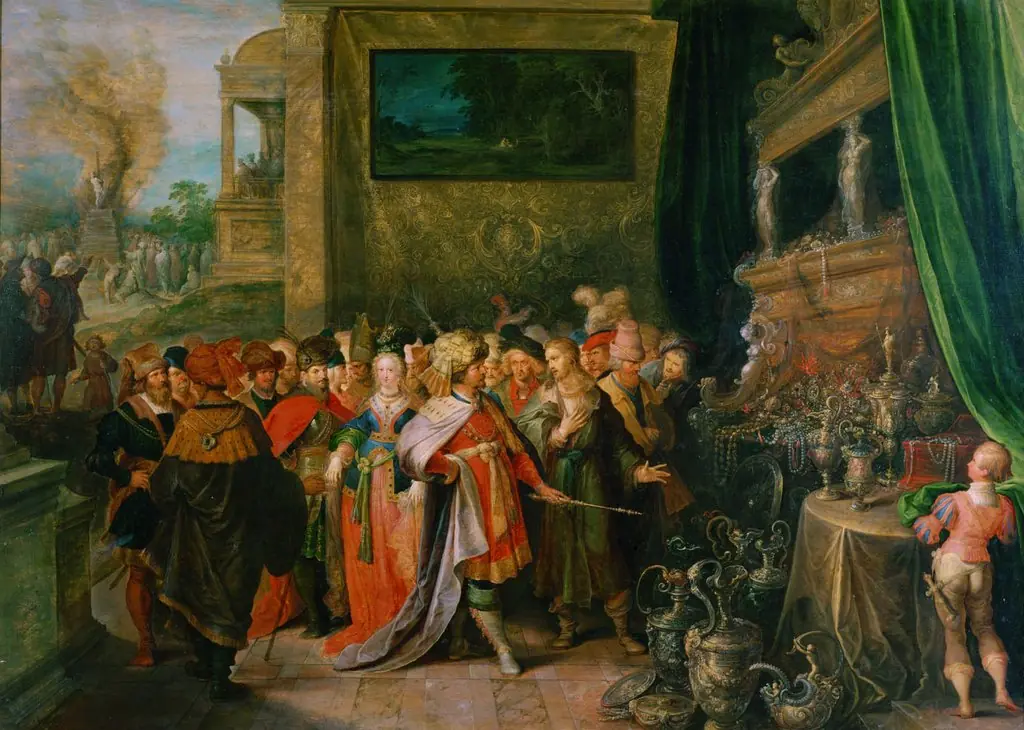 Croesus displays his treasures to Solon
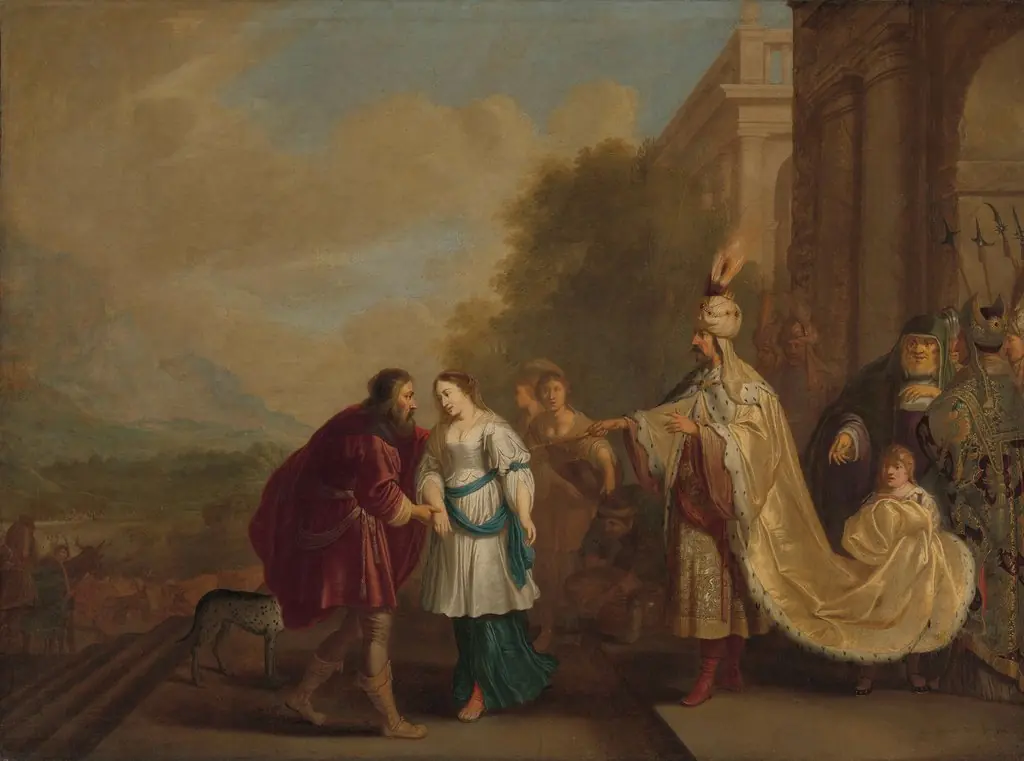 Pharaoh gives Sarah back to Abraham
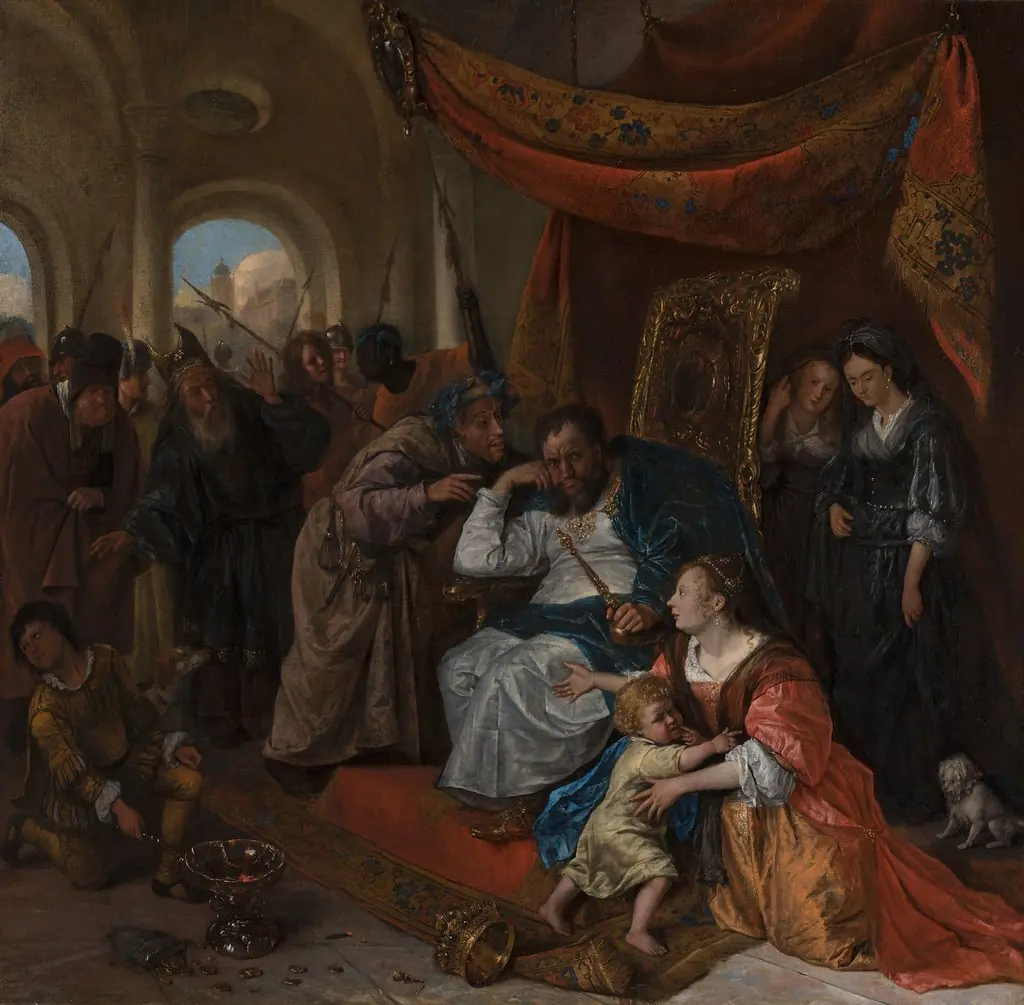 Moses and Pharaoh’s Crown
 Christus and the woman in adultery
- Joseph Interprets Pharaoh's Dream