Artwork
Pompton Plains, New Jersey
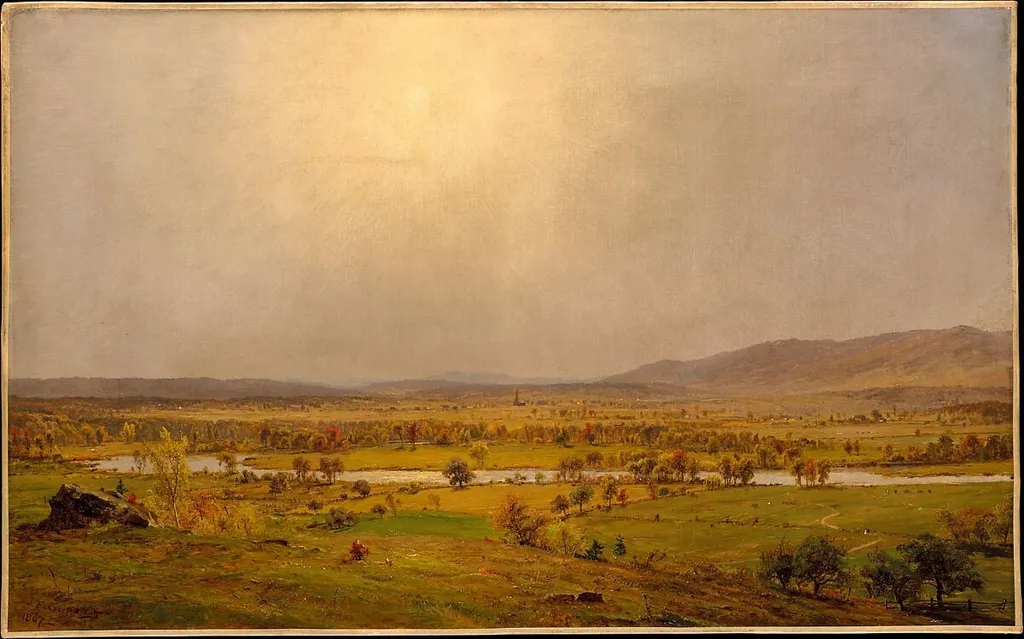
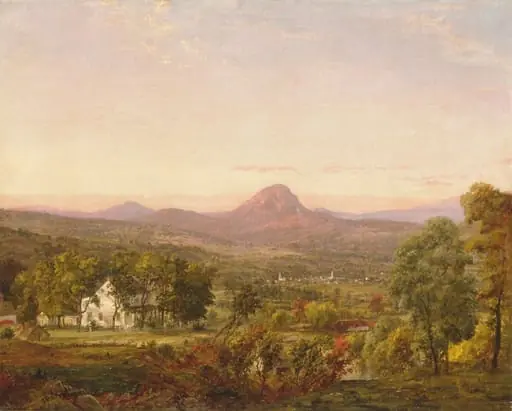
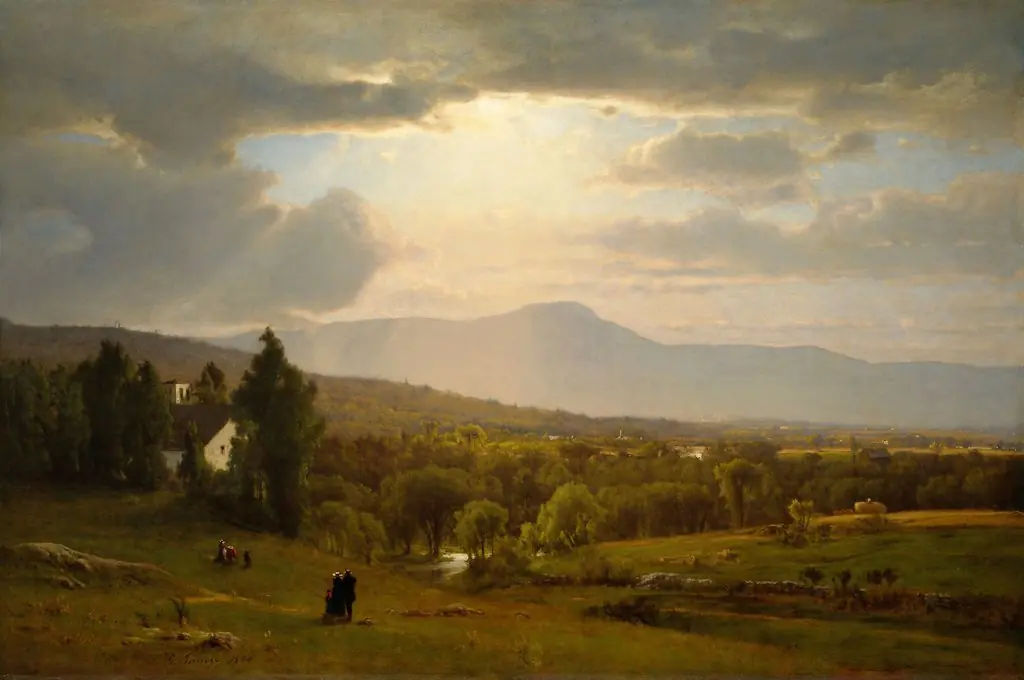
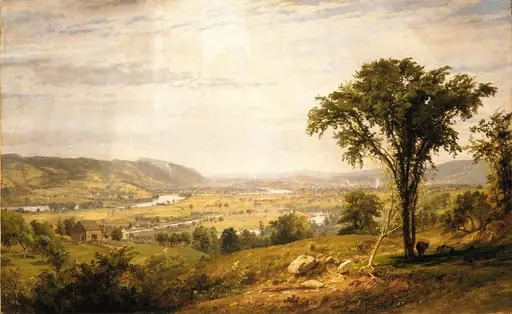
Pompton Plains, New Jersey is an oil painting by the Hudson River School artist Jasper Francis Cropsey. It dates from 1867 and is held in the collection of the Metropolitan Museum of Art.
About this work
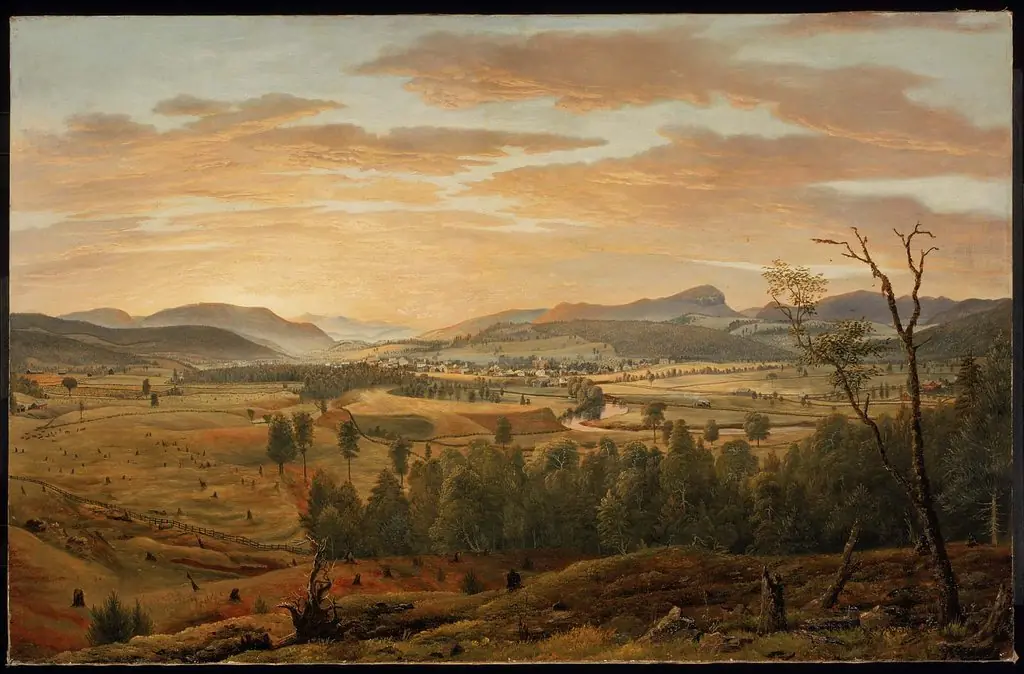
A church steeple catches the light across a wide New Jersey horizon, where rolling plains fade into misty distance under a pale sky. Cropsey painted it in 1867, after six years in England, marking his post-Civil War turn toward the airy luminism of the second-generation Hudson River School. Now at the Metropolitan Museum of Art, a bequest of Collis P. Huntington.
Overview
This painting, now housed in the Metropolitan Museum of Art's American Wing, depicts a broad, horizontal view of the northern New Jersey landscape.
Jasper Francis Cropsey completed Pompton Plains, New Jersey in 1867, an oil on canvas measuring 20 1/8 by 32 1/4 inches. This painting, now housed in the Metropolitan Museum of Art's American Wing, depicts a broad, horizontal view of the northern New Jersey landscape. The scene is characterized by a pervasive, soft light that illuminates a tranquil expanse, with a slender church steeple subtly anchoring the composition at its center.
Subject & Meaning
The artwork presents the flat terrain of northern New Jersey as an expansive vista, bathed in a gentle, diffused light. A solitary church steeple emerges from the distant horizon, serving as a quiet focal point within the vastness. This element suggests a sense of divine order and spiritual solace, offering a serene counterpoint to the nation's recent turmoil following the Civil War and reflecting a renewed sense of national identity.
Technique & Style
Cropsey's approach in this painting exemplifies the luminist style, departing from the more dramatic wilderness scenes of earlier Hudson River School artists. The light appears to emanate uniformly, creating a smooth, uninterrupted continuum across the land and sky. The artist employed a restrained palette of muted greens, soft browns, and silvery tones, coupled with a smooth finish that conceals brushstrokes, achieving a characteristic crystalline clarity.
Context
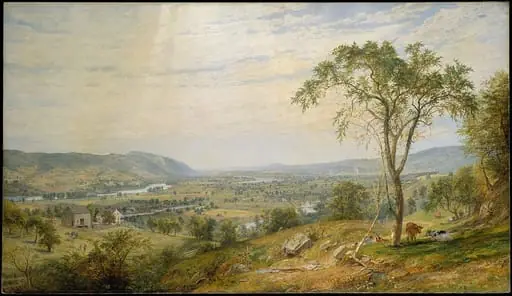
Created four years after Cropsey's return from a six-year period in England, Pompton Plains, New Jersey reflects the artist's engagement with the post-Civil War American landscape. It belongs to a series of ambitious, spatially expansive works from this era, including The Valley of Wyoming and Battlefield at Gettysburg. The painting demonstrates Cropsey's adoption of the aerial luminism practiced by contemporaries, aligning with a broader artistic movement toward serene, light-filled compositions.
History & Provenance
This oil painting became part of the Metropolitan Museum of Art's collection through the generous bequest of Collis P. Huntington. Huntington, a prominent railroad magnate, ensured the artwork's place within a major public institution, where it continues to represent a significant example of American landscape painting from the mid-19th century.
Artist & collection
Artist
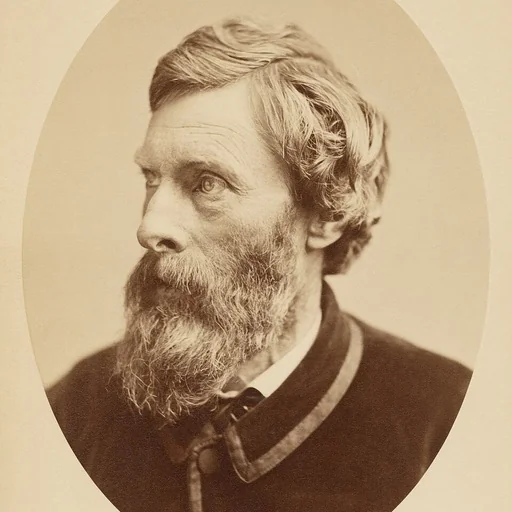
Jasper Francis Cropsey was an American architect and artist. He is best known for his Hudson River School landscape paintings.