Artwork
Calanque des Antibois
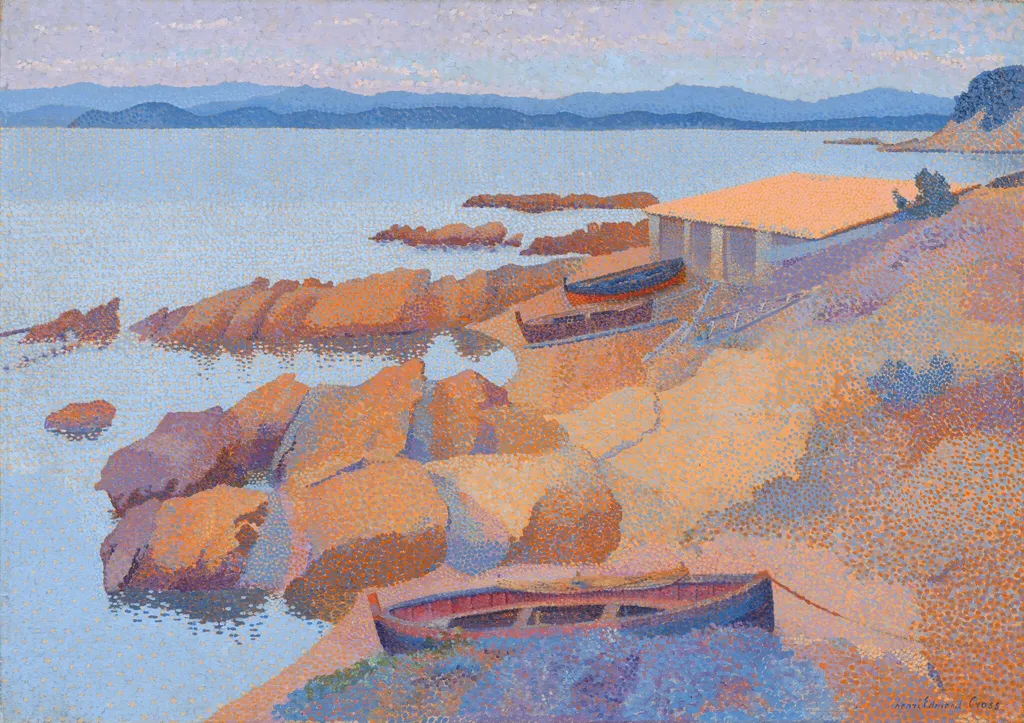
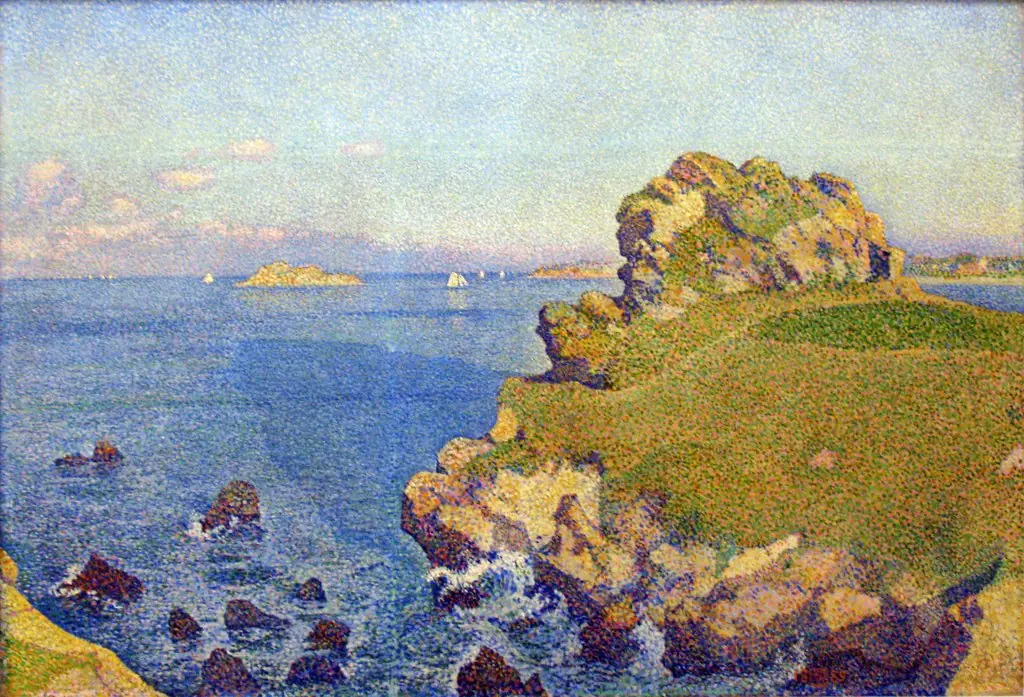
Calanque des Antibois is an oil painting by the Impressionist artist Henri Edmond Cross. It dates from 1892 and is held in the collection of the National Gallery of Art.
- Inscription
- Inscribed:lower right: henri Edmond Cross
About this work
Technique & Style
, it remains accessible to the public, underscoring its significance within Cross's oeuvre and the broader narrative of Post-Impressionist landscape art.
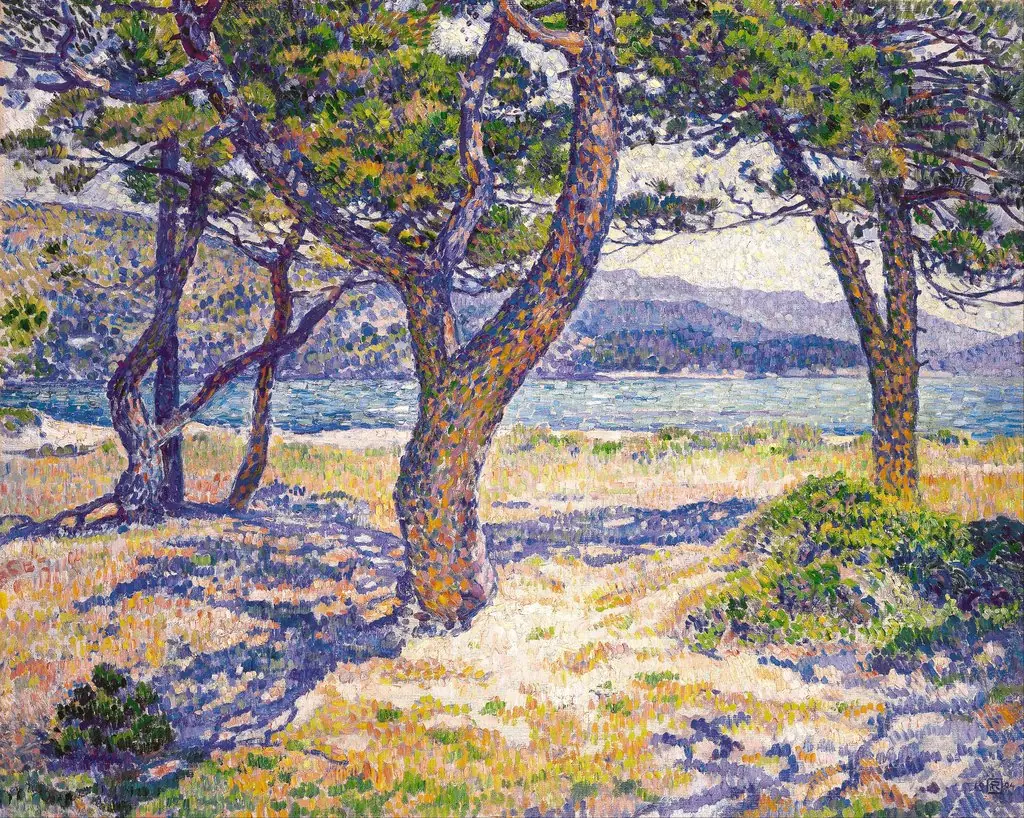
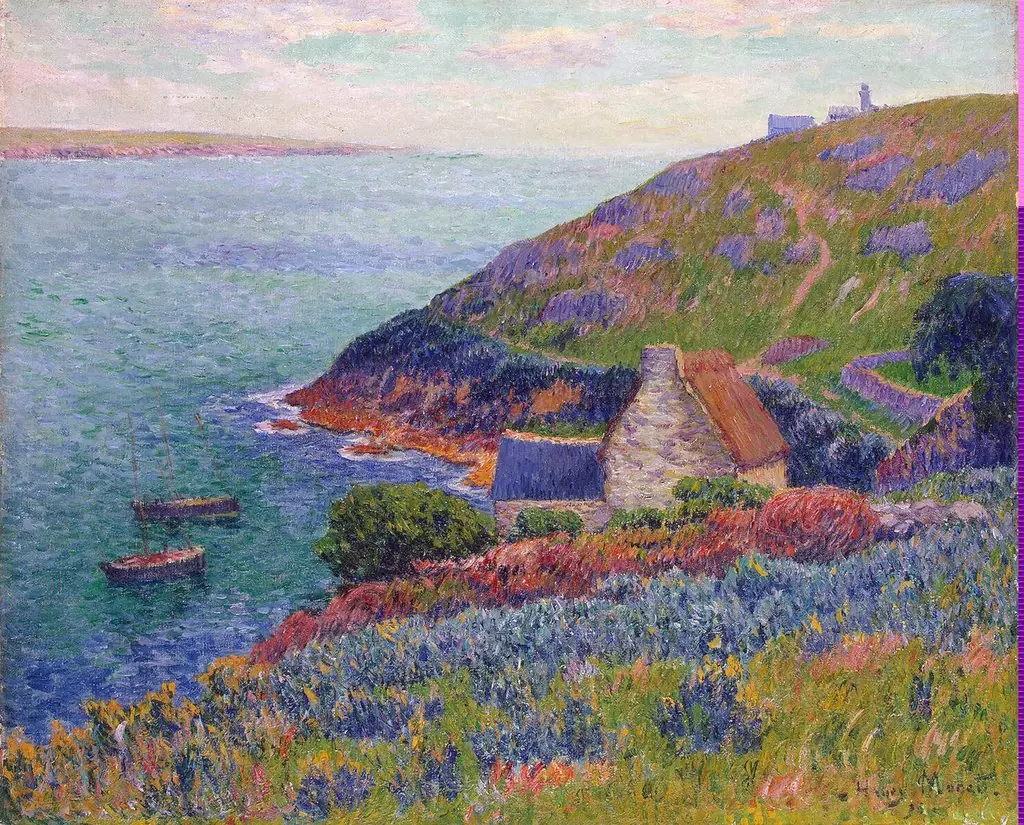
Calanque des Antibois is an oil painting on canvas created in 1891 by Henri Edmond Cross. The work measures 65.1 cm in height and 92.3 cm in width, reflecting the scale typical of late 19th-century landscape paintings. Executed in oil paint on canvas, the piece exemplifies Cross's pointillist technique and luminous color palette, aligning with the stylistic characteristics of Neo-Impressionism.
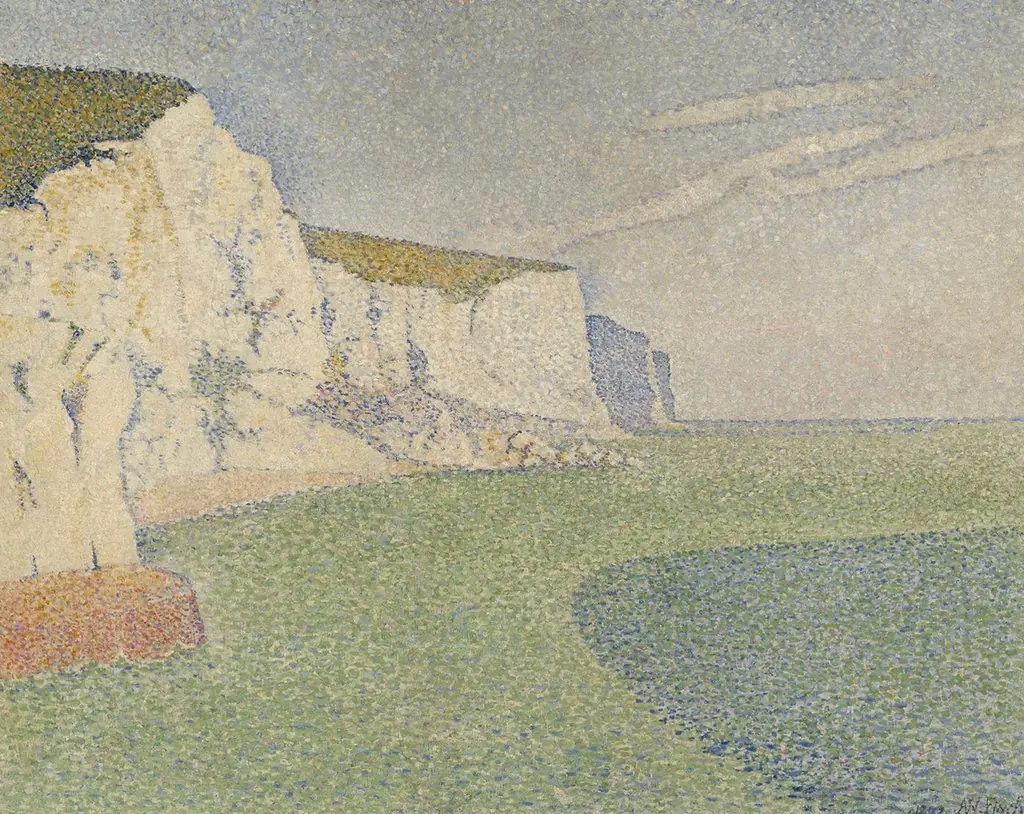
Its surface handling and brushwork demonstrate a methodical application of pigment to achieve atmospheric effects, while the composition captures the rugged coastal terrain near Antibes with a sense of structural clarity and chromatic vibration.
The painting's material integrity and condition have been preserved through careful conservation practices, maintaining the vibrancy of its oil-based medium without significant degradation. As part of the National Gallery of Art's collection in Washington, D.C., it remains accessible to the public, underscoring its significance within Cross's oeuvre and the broader narrative of Post-Impressionist landscape art.
History & Provenance
The painting Calanque des Antibois was created in 1891 by Henri Edmond Cross as an oil on canvas work. It entered the Paris art market through a sale at Hôtel Drouot on 28 October 1921 and again on 16 May 1922, after which it passed to Léopold Zborowski and subsequently to Bernheim-Jeune in Paris before 1932. In 1950 it was acquired by John Hay Whitney in Paris, and in 1982 it was deeded to the John Hay Whitney Charitable Trust, remaining in that collection until it was gifted to the National Gallery of Art in Washington, D.C.
The provenance chain reflects documented transfers documented in auction records and dealer inventories, with no gaps in the ownership sequence from the artist to the current institutional holder.
The painting is held by the National Gallery of Art, Washington, D.C. Its accession record is not specified in the cited sources.
It was acquired in 1950 by John Hay Whitney from Kleinmann et Cie., Paris, and was deeded in 1982 to the John Hay Whitney Charitable Trust before being gifted to the National Gallery of Art in 1982.
Legacy
The legacy of Calanque des Antibois is anchored by its inclusion in the permanent collection of the National Gallery of Art in Washington, D.C., following its donation in 1982 by the John Hay Whitney Charitable Trust. Prior to this institutional acquisition, the work circulated through significant Parisian galleries and private collections, including ownership by Léopold Zborowski and the Bernheim-Jeune gallery before 1932. The painting's historical trajectory was documented in early 20th-century literature, appearing as the first plate in Lucie Cousturier's 1932 monograph on Henri Edmond Cross.
Its provenance records sales at the Hôtel Drouot in 1921 and 1922, reflecting its presence in the Parisian art market decades after its creation. The work remains a key example of Cross's Pointillist style within a major American public collection.
Overview
Henri Edmond Cross painted Calanque des Antibois in 1892 using oil on canvas. The work measures a modest size and presents a tranquil coastal scene rendered in a restrained palette of blues, yellows, and earth tones.
Subject & Meaning
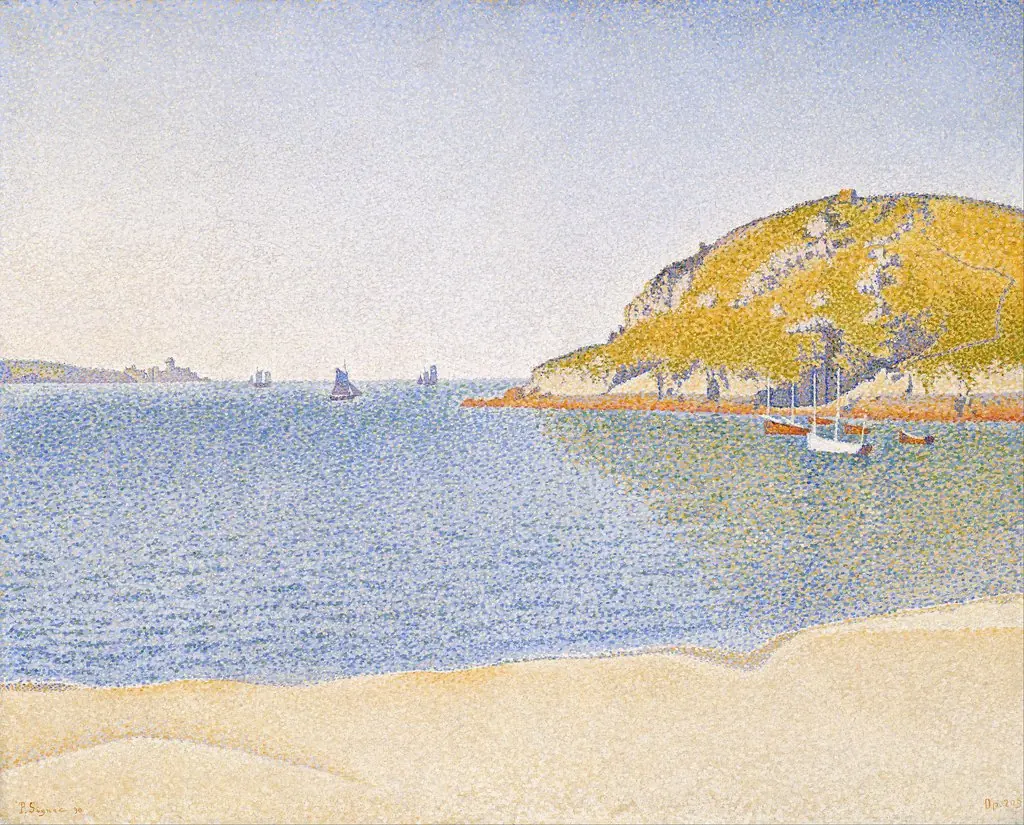
The composition depicts a narrow, rocky inlet where a handful of weathered boats lie half‑buried in sand. Calm water mirrors a pale sky that recedes into the horizon, suggesting a moment of quiet stillness in a maritime setting.
Own this work as a print
Artist & collection
Artist
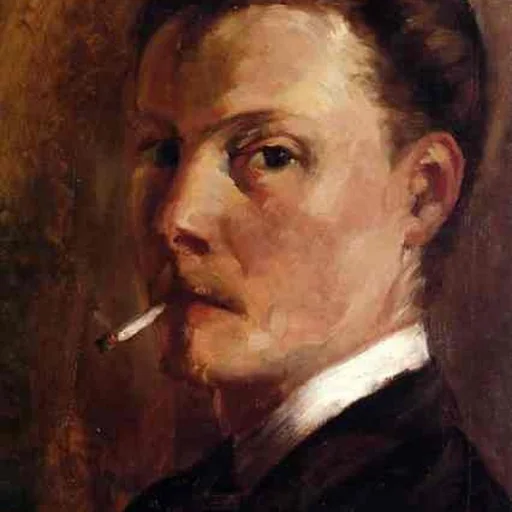
Henri-Edmond Cross (French:; 20 May 1856 – 16 May 1910), born Henri-Edmond-Joseph Delacroix (), was a French painter and printmaker.