Artwork
The Man of Sorrows Mocked by a Soldier
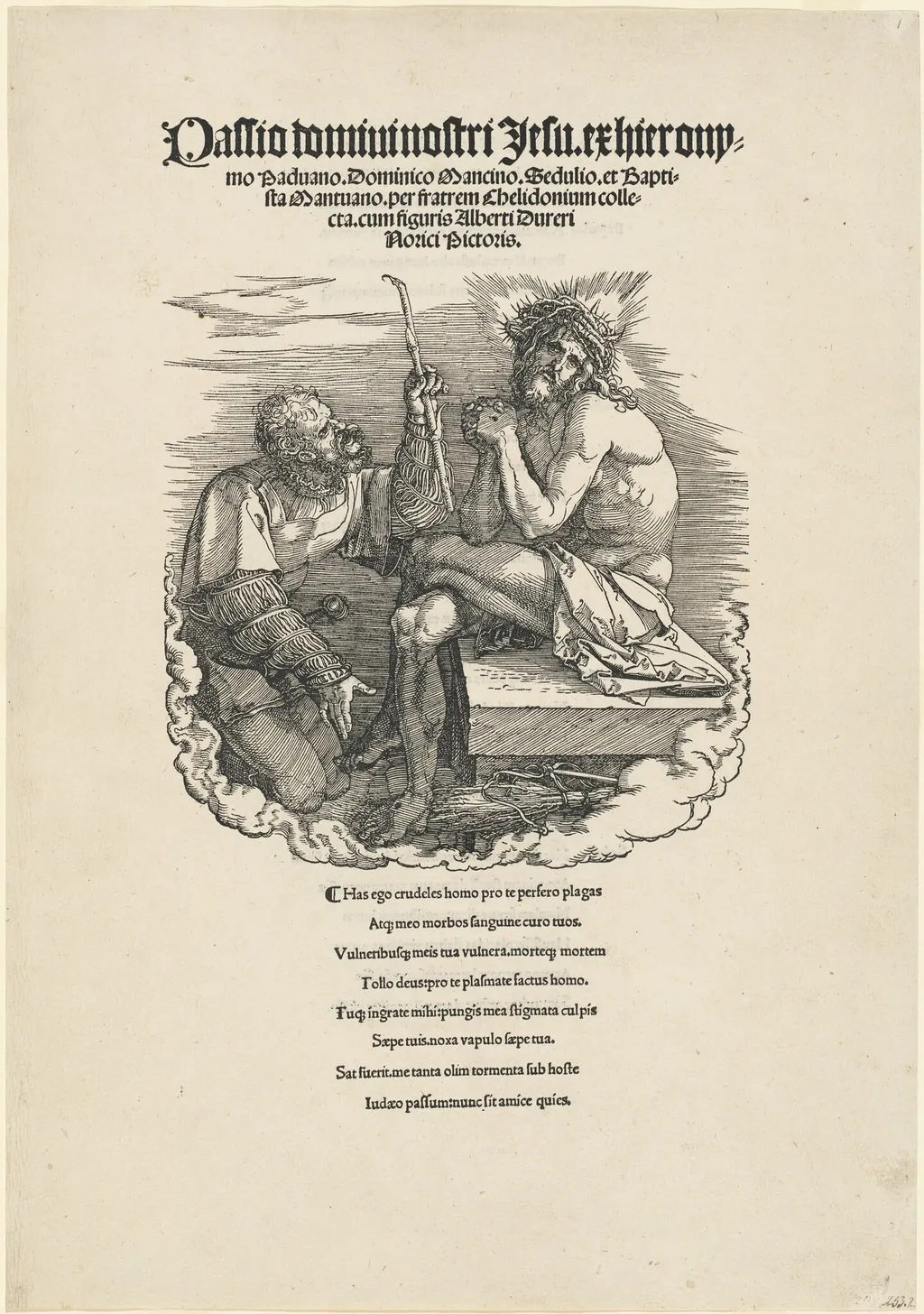
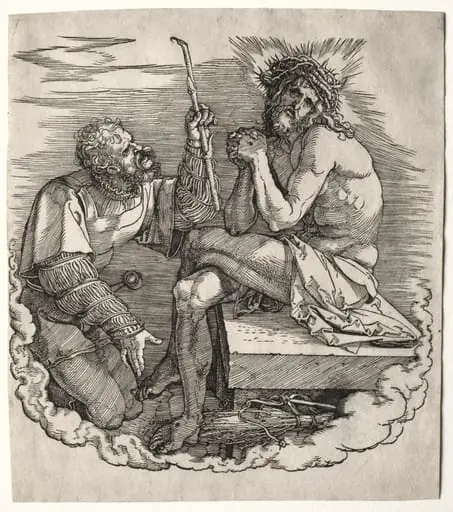
The Man of Sorrows Mocked by a Soldier is an ink print by the Northern Renaissance artist Albrecht Dürer. It dates from 1511 and is held in the collection of the Cooper Hewitt, Smithsonian Design Museum.
- Inscription
- Inscribed:recto, top right corner, in graphite by a later hand: 1; in block, upper center: Passio domini nostri Jesu. ex hierony- / mo Paduano. Dominico Mancino. Sedulio. et Bapti- / sta Mantuano. per fratrem Chelidonium colle- / cta. cum figuris Alberti Dureri / Norici Pictoris.; in block, lower center: Has ego crudeles homo pro te perfero plagas / Atque meo morbos sanguine curo tuos. / Vulneribusque meis tua vulnera. morteque mortem / Tollo deus: pro te plasmate factus homo. / Tuque ingrate mihi: pungis mea stigmata culpis / Saepe tuis. noxa vapulo saepe tua. / Sat fuerit. me tanta olim tormenta sub hoste / Iudaeo passum: nunc sit amice quies.; recto, bottom right corner, in ink by a later hand: [illegible/erased] 253.2 [?]; verso, center: [text in Latin]
About this work
This woodcut shows Jesus with a soldier mocking him. His body is marked with wounds. Thorns cover his head like a crown.
Dürer made this print in 1511. It feels small, but every line is sharp. Woodcuts carve an image into wood, then ink covers it. The paper presses down to make the print.
You can see this print in Washington, D.C. at the National Gallery of Art, Washington.
Subject & Meaning
The scene is drawn from the Gospel accounts of Christ's Passion, in which Roman soldiers mocked him as he bore the cross toward Golgotha.
Albrecht Dürer's woodcut depicts the Man of Sorrows, a devotional image of Jesus Christ shown after the Crucifixion, presenting his wounds as evidence of his sacrifice. The scene is drawn from the Gospel accounts of Christ's Passion, in which Roman soldiers mocked him as he bore the cross toward Golgotha. In the composition, a soldier places a hand on Christ while gesturing in derision, embodying the taunts recorded in scripture and reinforcing the theme of human cruelty directed against the divine.
The image belongs to the iconographic tradition of the Man of Sorrows (Imago Pietatis), a devotional type that invites the viewer to meditate on Christ's suffering and to respond with compassion and penitence. By pairing the wounded, resurrected Christ with an act of mockery, Dürer compresses the entire Passion into a single encounter, encouraging the beholder to contemplate both the injustice done to Christ and the redemptive purpose of his death.
Technique & Style
Created in 1511, The Man of Sorrows Mocked by a Soldier is a woodcut executed by Albrecht Dürer on laid paper. As part of the Great Passion series, the work exemplifies the German Renaissance movement through its precise line work and religious subject matter. The print measures 38.5 cm in height and 26.4 cm in width.
Produced in Nuremberg, the medium of woodcut on paper allows for the detailed depiction of the Man of Sorrows and the surrounding figures, characteristic of Dürer's mastery of the technique during this period.
History & Provenance
Executed in 1511 during Dürer’s mature period, this woodcut belongs to the ‘Great Passion’ series. The sheet was first recorded in the collection of King Ferdinand of Portugal (1816–1885), then passed to Vincent Mayer in New York; it later entered the holdings of Wiliam Goodwin Russell Allen in Boston. In 1941 Allen donated the impression to the National Gallery of Art, Washington, D.C., where it remains.
Impressions of Albrecht Dürer's 1511 woodcut The Man of Sorrows Mocked by a Soldier are held in major international collections, including the National Gallery of Art in Washington, D.C., the Metropolitan Museum of Art, the Art Institute of Chicago, the Albertina, the Rijksmuseum, the Cleveland Museum of Art, and the Kupferstich-Kabinett in Dresden. The specific impression at the National Gallery of Art entered the institution in 1941 as a gift from William Goodwin Russell Allen of Boston. This particular sheet previously belonged to the collections of Vincent Mayer of New York and King Ferdinand of Portugal.
The work is part of Dürer's Great Passion series. While multiple museums hold examples of this print, the provenance of the Washington impression is documented through these specific former owners before its accession into the Rosenwald Collection.
Overview
Albrecht Dürer’s woodcut titled The Man of Sorrows Mocked by a Soldier dates from around 1511. Executed on laid paper, the print presents a compact yet meticulously rendered image of the crucified Christ, whose wounded body and crown of thorns are emphasized by the artist’s precise line work. The work is part of the National Gallery of Art’s collection in Washington, D.C.
Context
Created during the later phase of Dürer’s career, the woodcut aligns with the Northern Renaissance’s heightened interest in devotional imagery and the technical possibilities of print media. The work illustrates how artists of the time employed portable formats to disseminate religious narratives to a broader audience beyond the confines of altarpieces and manuscripts.
Own this work as a print
Artist & collection
Artist
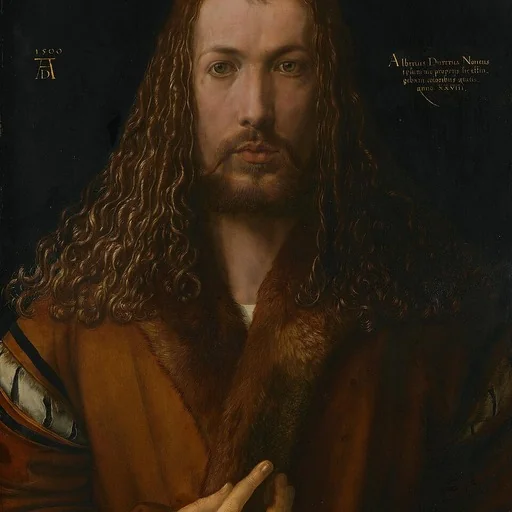
Albrecht Dürer spent his life in Nuremberg, a busy German city where artists traded prints like currency.

Museum
Cooper Hewitt, Smithsonian Design Museum
Continue through works from the same source collection.
![Madonna and Child [obverse], by Albrecht Dürer](https://artifactworldgallery.com/img/albrecht-durer--madonna-and-child-obverse--d7b8ebf05d22ebe5-w320.webp)
![Lot and His Daughters [reverse], by Albrecht Dürer](https://artifactworldgallery.com/img/albrecht-durer--lot-and-his-daughters-reverse--b4ebf9b282faa17a-w320.webp)
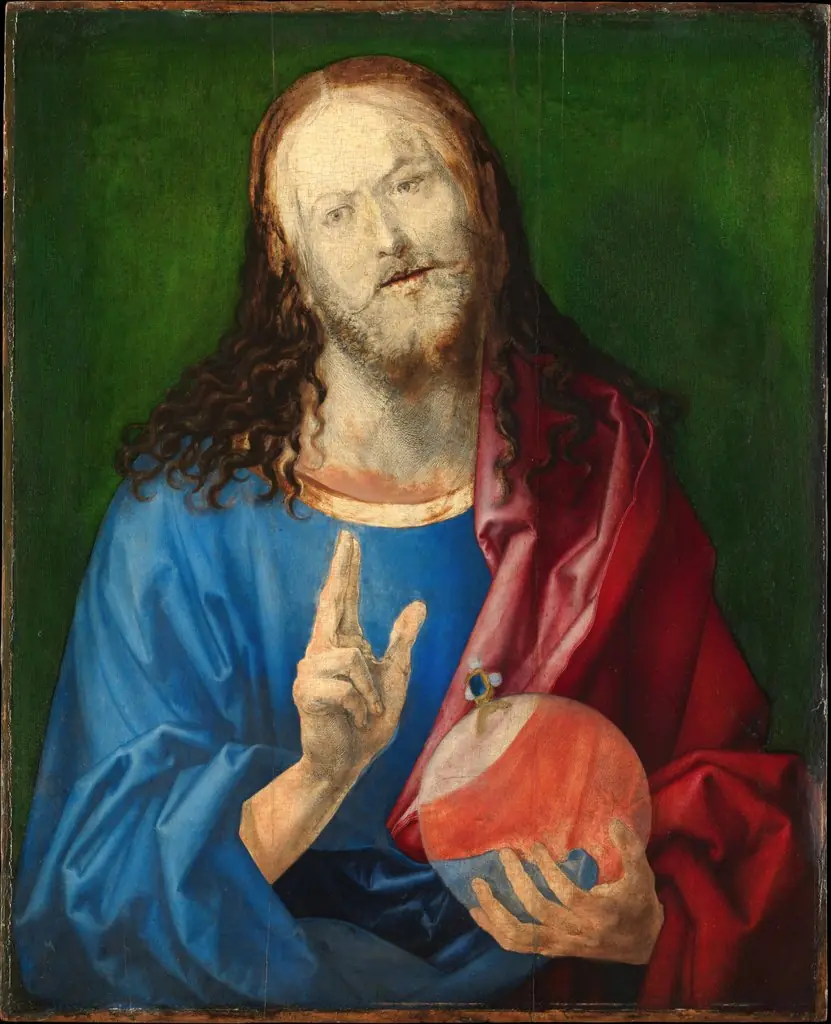
- The Great Passion: Title Page - Christ, Man of Sorrows
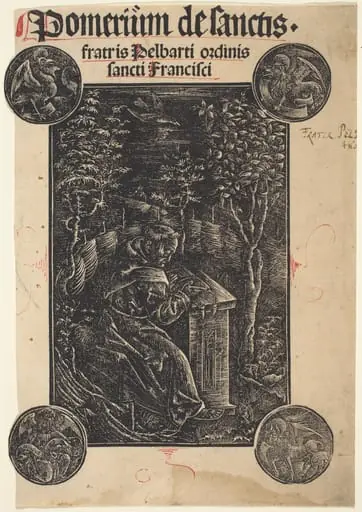 Franciscan, Pelbartus of Temesvar, in a Garden
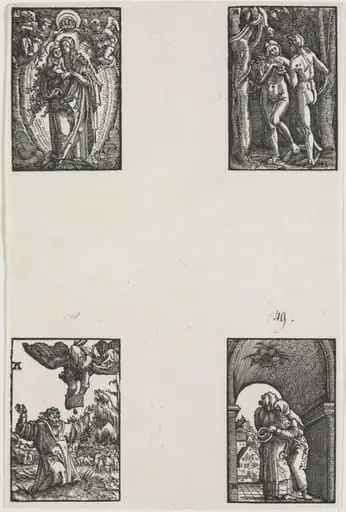 The Fall and Redemption of Man
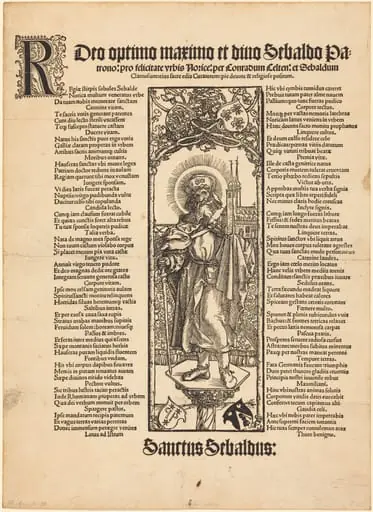 Saint Sebaldus Standing on a Column
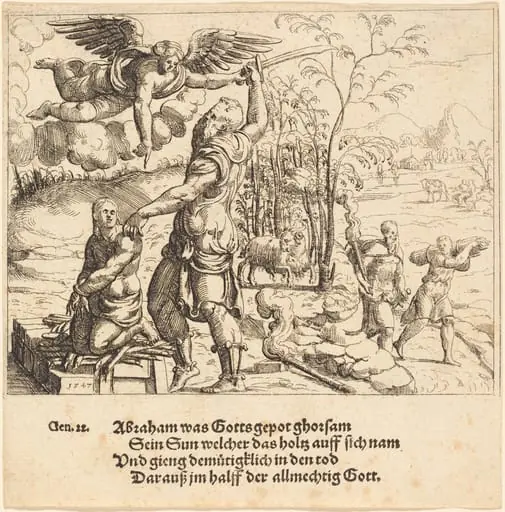 The Sacrifice of Isaac
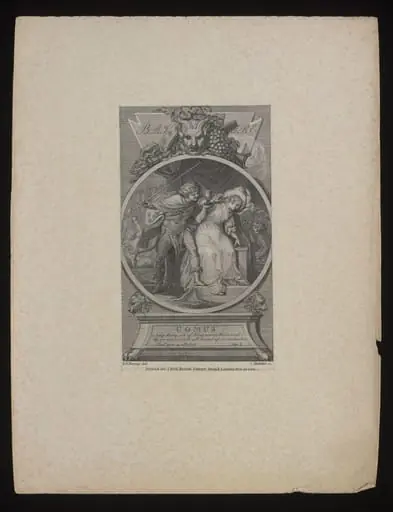 H Beard Print Collection
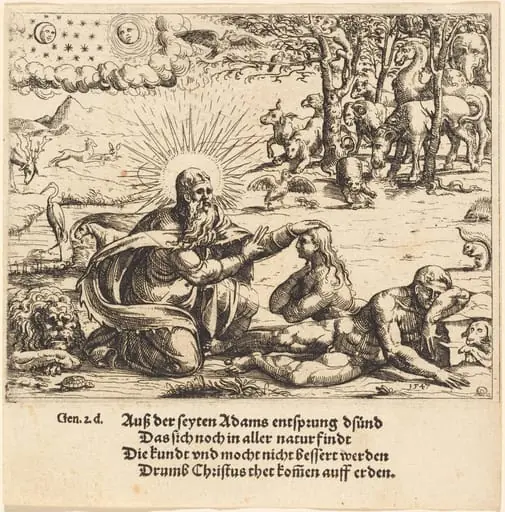 Creation of Eve
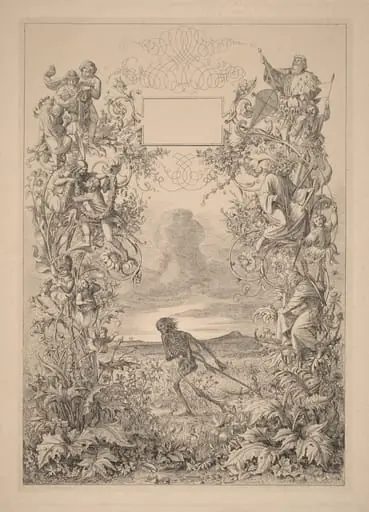 Heute Roth, Morgen Tod (Today Red, Tomorrow Dead)
 St. George and the Dragon (2)
 Title Page to Urbium Praecipuarum Mundi Theatrum Quintum
 Saint Sebastian
 Personification of Rome