Artwork
Avarice
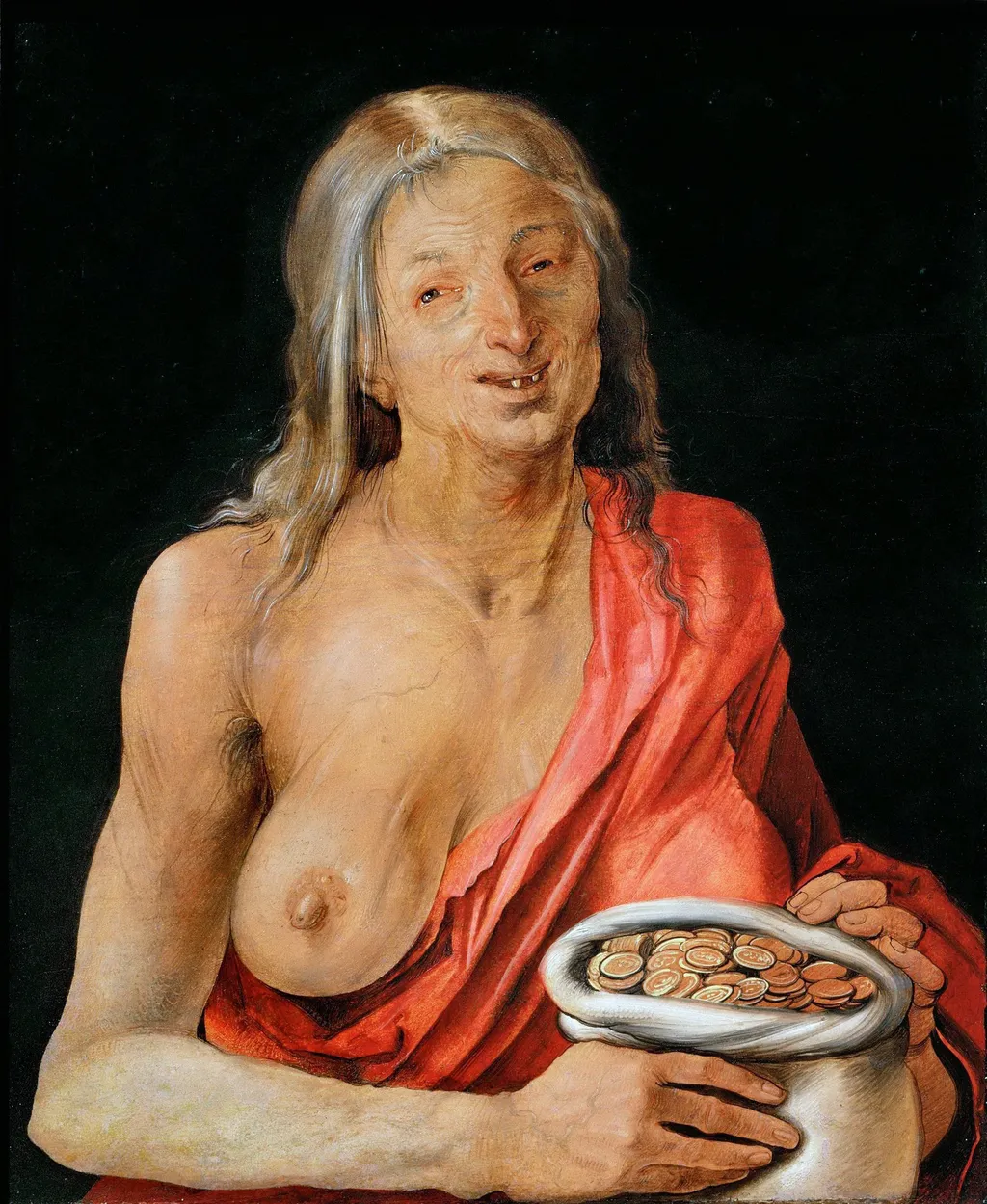
Avarice is an oil painting by the Northern Renaissance artist Albrecht Dürer. It dates from 1507 and is held in the collection of the Kunsthistorisches Museum.
About this work
Avarice is a small oil by Albrecht Durer, a single figure standing in for greed. Painted in 1507 on the back of another portrait, it is easy to miss unless you look closely. The point is a warning: life is short, and money does not last. If it interests you, look at how old age appears in other works.
Subject & Meaning
Its dark background and stark contrast heighten the moral message, linking it to Dürer's other allegorical pieces such as Melencolia I.
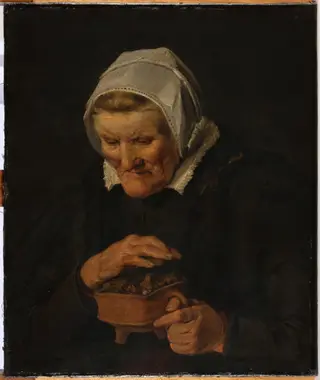
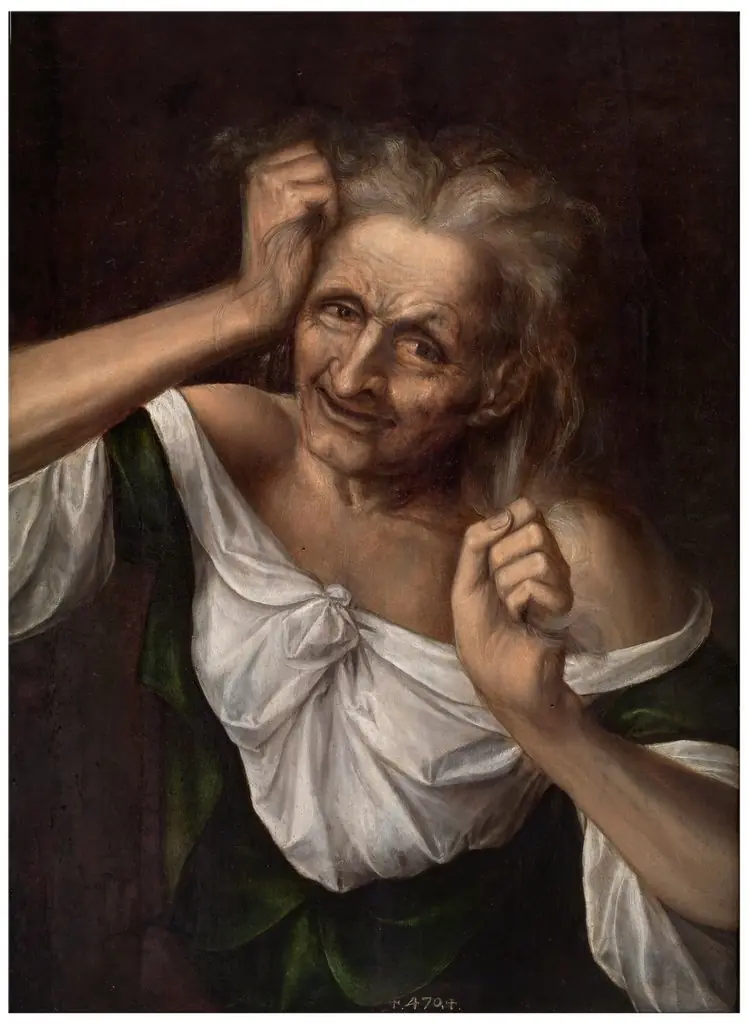
The painting Allegorie des Geizes, known as Avarice, portrays an elderly woman embodying greed. She is shown half-length, with long blond hair, a gaunt face, only two teeth, and a scornful smile, while a muscular right arm and a tuft of underarm hair emphasize her physical grotesqueness. In her hands she clutches a bag of gold coins, a conventional attribute of avarice that underscores the transience of earthly wealth.
The work functions as a vanitas image, warning of the fleeting nature of life and the futility of material fortune. Its dark background and stark contrast heighten the moral message, linking it to Dürer's other allegorical pieces such as Melencolia I.
Technique & Style
Created in 1507, Avarice is an oil painting executed on a limewood panel measuring 35 by 29 centimeters. Visually, the painting features a half-length figure set against a flat, matte black background, creating a stark contrast with the coloring of the subject's gown and hair. Stylistically, the figure is rendered with exaggerated, grotesque features, including a muscular, disproportionate arm and visible underarm hair, while the face retains outlines hinting at former beauty.
The composition utilizes tight cropping to intensify the focus on the allegorical subject. The work is attributed to Albrecht Dürer's engagement with Venetian colorism and Giorgionesque style during his Italian period.
History & Provenance
The Allegory of Avarice, painted by Albrecht Dürer in 1507, is an oil-on-limewood panel measuring 35 × 29 cm that appears on the reverse of his Portrait of a Young Man. Scholars have noted that the two panels may have been intended as a diptych, though this remains uncertain. The work is held in the Kunsthistorisches Museum in Vienna, where it is catalogued as an allegorical female figure. No earlier ownership records are provided in the sources.
Context
Avarice is regularly discussed as one of Dürer's vanitas images, often paired with Melencolia I, and serves as an allegorical warning against the transience of life and the futility of earthly wealth. Scholars note its Giorgionesque affinities: art historians compare it to Giorgione's Col tempo or La Vieille, citing shared thematic concerns and a debt to the Venetian school's colour and impasto, a view echoed by T. Sturge Moore who suggested Dürer aimed to demonstrate his ability to paint like Giorgione. Alternative readings propose the work as a satire on an unpaid patron, though Jessie Allen argues it was economically motivated, using the reverse of a portrait to create a marketable image. The painting is frequently described as unfinished or a sketch.
Legacy
The painting is regarded as a central example of Dürer's vanitas tradition, often discussed alongside Melencolia I to illustrate the transience of life and the emptiness of material wealth. Scholars highlight its allegorical warning about youth's fleeting nature and the futility of earthly fortune, as well as its formal features, tight cropping, stark black background, and rich coloristic quality, that contribute to Northern Renaissance visual rhetoric. Comparative studies with Giorgione's compositions, noting shared thematic and coloristic strategies, underscore its influence on later interpretations of avarice.
Debates about its unfinished status and the use of the reverse side for a commercial portrait reflect ongoing research into Dürer's workshop practices and market concerns. The work remains on display at the Kunsthistorisches Museum in Vienna.
Overview
Albrecht Dürer's 1507 oil painting, Avarice, is a small-scale work executed on limewood. This allegorical piece depicts a figure embodying greed, serving as a cautionary reflection on human mortality and the ephemeral nature of worldly wealth. Its modest size and placement on the reverse of another portrait contribute to its distinct character within Dürer's oeuvre.
Own this work as a print
Artist & collection
Artist
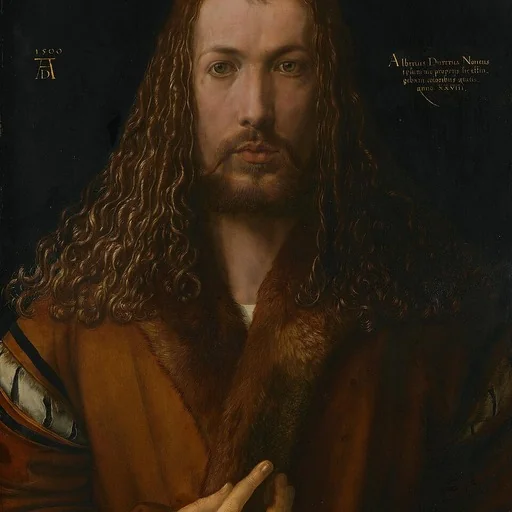
Albrecht Dürer spent his life in Nuremberg, a busy German city where artists traded prints like currency.

![Madonna and Child [obverse], by Albrecht Dürer](https://artifactworldgallery.com/img/albrecht-durer--madonna-and-child-obverse--d7b8ebf05d22ebe5-w320.webp)
![Lot and His Daughters [reverse], by Albrecht Dürer](https://artifactworldgallery.com/img/albrecht-durer--lot-and-his-daughters-reverse--b4ebf9b282faa17a-w320.webp)