Artwork
Flower Garland with the Virgin and Child
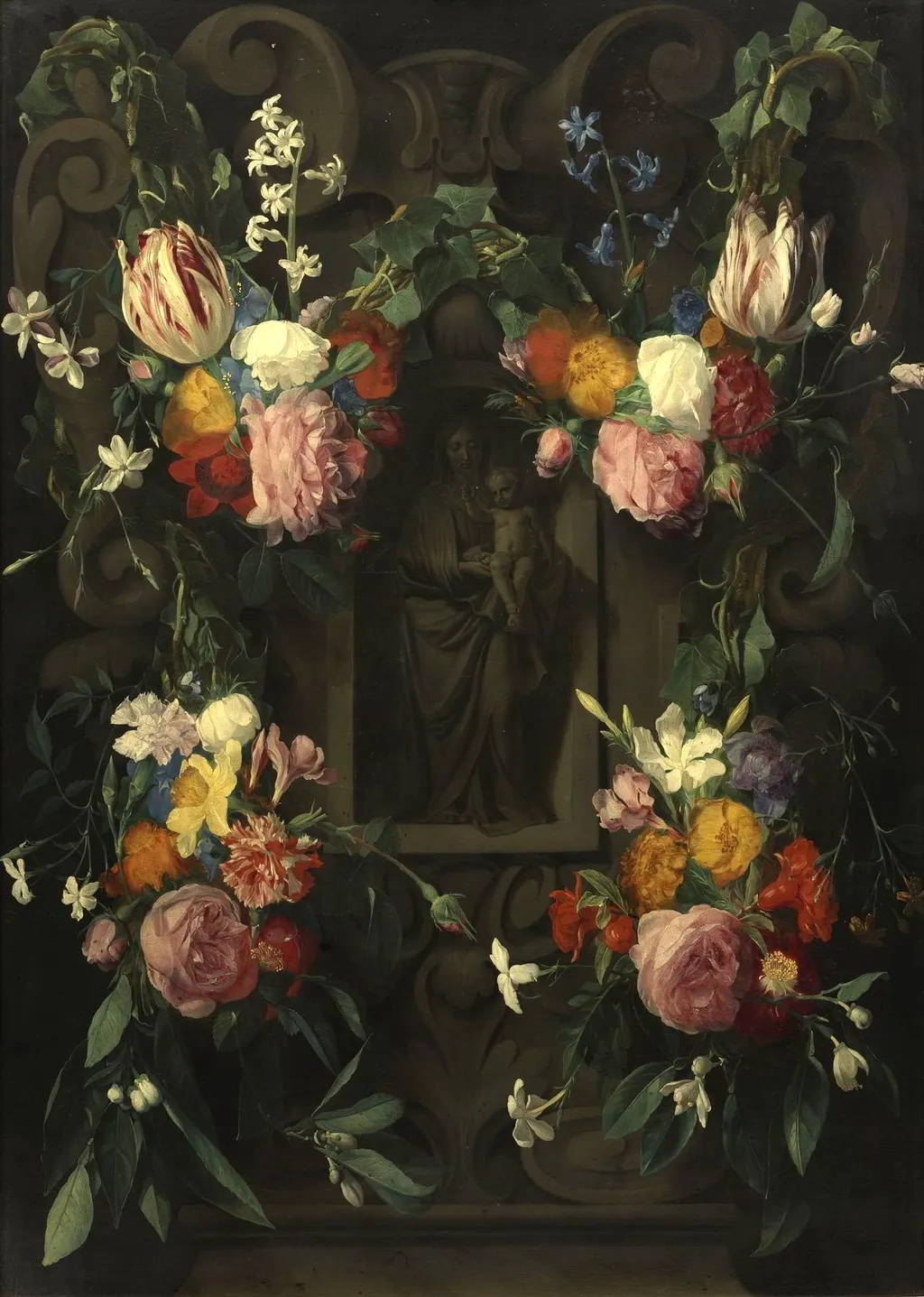
Flower Garland with the Virgin and Child is an oil painting by the Flemish Baroque painting artist Daniel Seghers. It dates from 1647 and is held in the collection of the Nationalmuseum.
About this work
Subject & Meaning
The inclusion of the garland serves to frame and honor the sacred figures, emphasizing their spiritual significance through the surrounding natural beauty.
The work depicts a religious scene centered on the Madonna and Child, who are encircled by a lush floral garland. As the main subject, the Virgin Mary holds the Christ Child, a composition that merges the genres of religious art and floral painting. Created by Daniel Seghers in 1647, the imagery presents the holy figures within a wreath of flowers, a format characteristic of this specific type of devotional imagery.
The inclusion of the garland serves to frame and honor the sacred figures, emphasizing their spiritual significance through the surrounding natural beauty.
Technique & Style
Flower Garland with the Virgin and Child is an oil painting executed on wood panel. The work depicts a floral wreath surrounding the Madonna and Child, rendered in the characteristic naturalistic style of Daniel Seghers' devotional imagery. The composition features a central portrayal of Mary with the infant Christ, framed by intricately detailed blossoms and foliage.
Seghers employed oil paint to achieve rich coloration and fine textural detail across the 83 cm × 60 cm dimensions.
History & Provenance
The painting Flower Garland with the Virgin and Child was created by Daniel Seghers in 1647. Executed in oil paint, the work depicts a religious scene featuring a garland surrounding the Madonna and Child. This specific piece is currently held in the collection of the Nationalmuseum. The inception date is recorded as January 1, 1647.
Flower Garland with the Virgin and Child is held in the collection of Nationalmuseum, where it is catalogued under the accession number NM 1988:123. The work was first exhibited publicly in 1992 as part of the museum’s special exhibition on Baroque religious paintings, and has subsequently appeared in the 2005 retrospective of Daniel Seghers at the same institution.
Context
Daniel Seghers created Flower Garland with the Virgin and Child in 1647, a religious oil painting now held by Nationalmuseum. The work exemplifies his specialization in floral motifs surrounding devotional subjects, a format that influenced later devotional still lifes. Scholarship emphasizes its role within Flemish Baroque devotional art and its contribution to the development of flower garland painting as a distinct genre.
The painting depicts the Virgin Mary cradling the Christ Child within a vibrant floral arrangement, reflecting Counter-Reformation themes of Marian veneration. Its formal qualities and iconography have been analyzed in relation to Seghers' broader oeuvre and his collaboration with other artists, such as Peter Paul Rubens.
Art historical context places this piece within the trajectory of 17th-century religious art, where naturalistic floral elements served symbolic and didactic purposes. It remains a key example for understanding the intersection of botanical realism and sacred imagery in the period.
Overview
Flower Garland with the Virgin and Child is a 1647 oil painting by Daniel Seghers, a Flemish Jesuit brother known for his flower still lifes and garland compositions. The work features the Virgin Mary and the Christ Child encircled by a vibrant floral arrangement against a dark background.
Legacy
While specific legacy details of this piece are not highlighted, it contributes to the broader appreciation of Flemish Baroque flower garland paintings and Seghers' contribution to the genre.
Own this work as a print
Artist & collection
Artist
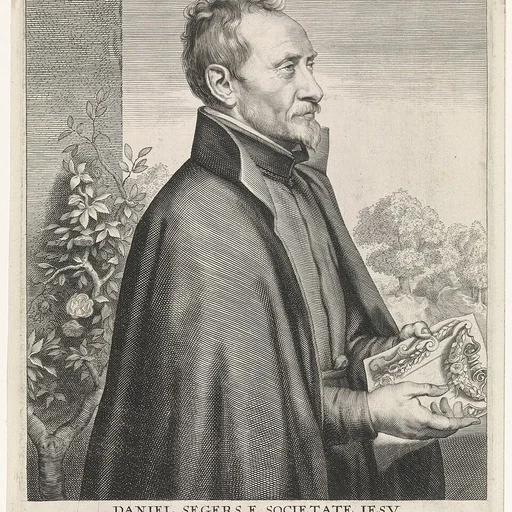
Daniel Seghers (3 December 1590 – 2 November 1661) was a Flemish Jesuit brother and painter who specialized in flower still lifes.

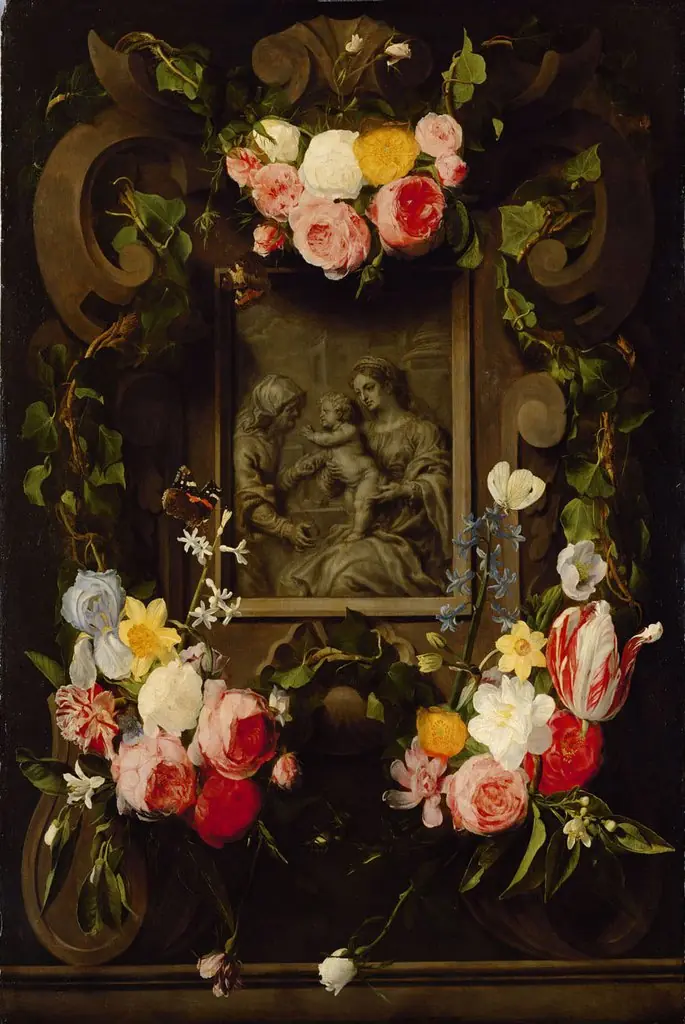 Madonna and Child with St Anna in a Flower Garland
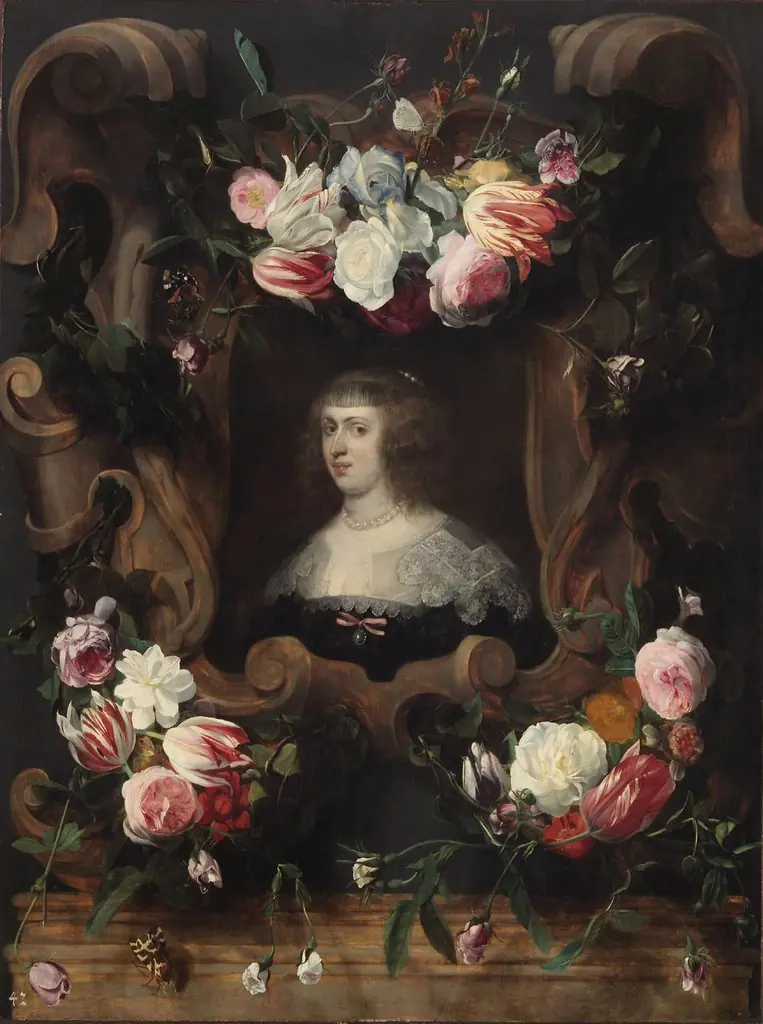 Cartouche decorated with flowergarlands surrounding a portrait of archduchess Maria Anna of Austria (1610-1665)
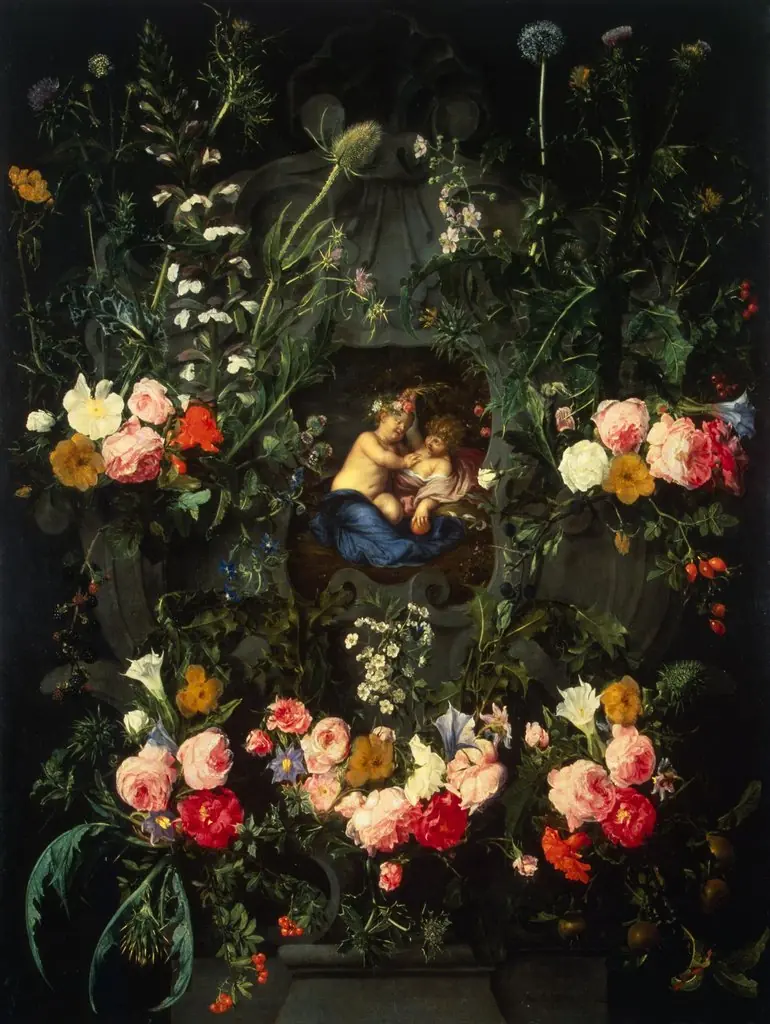 Garland of Flowers Around a Cartouche with Jesus and St John the Baptist as Children
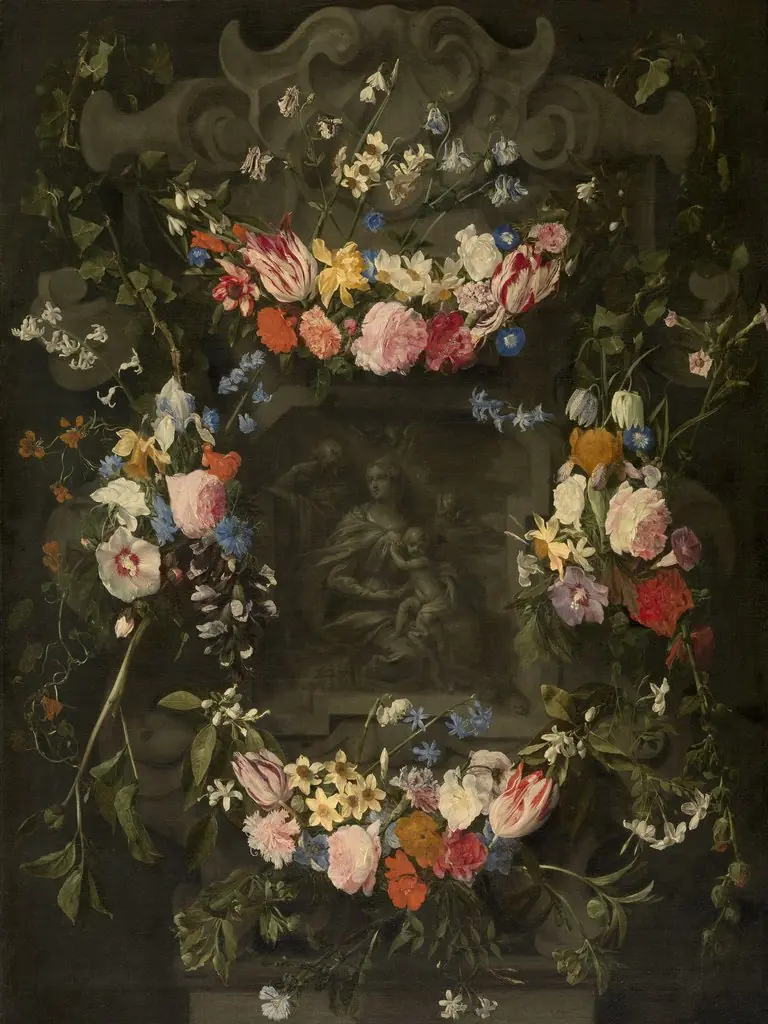 Holy Family in a Flower Garland
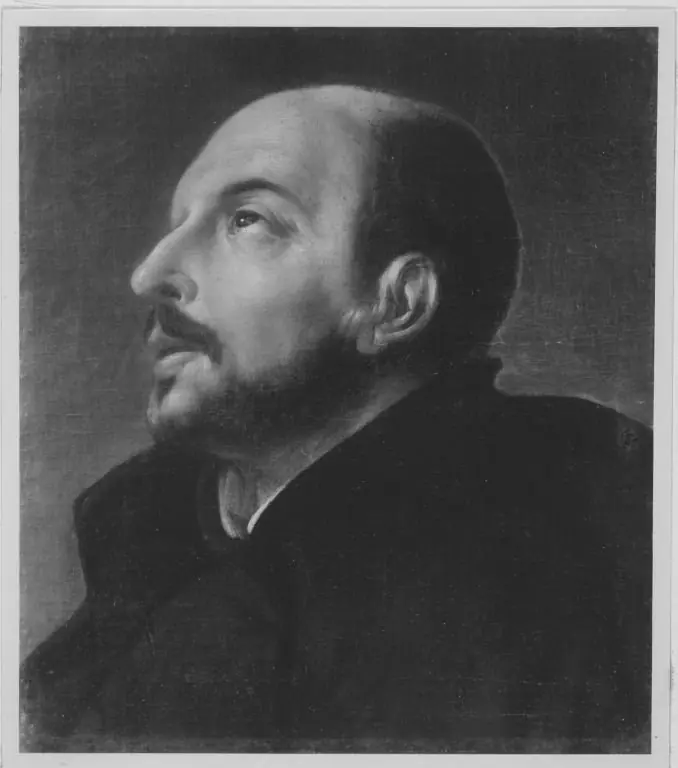 Bust portrait of Ignatius of Loyola
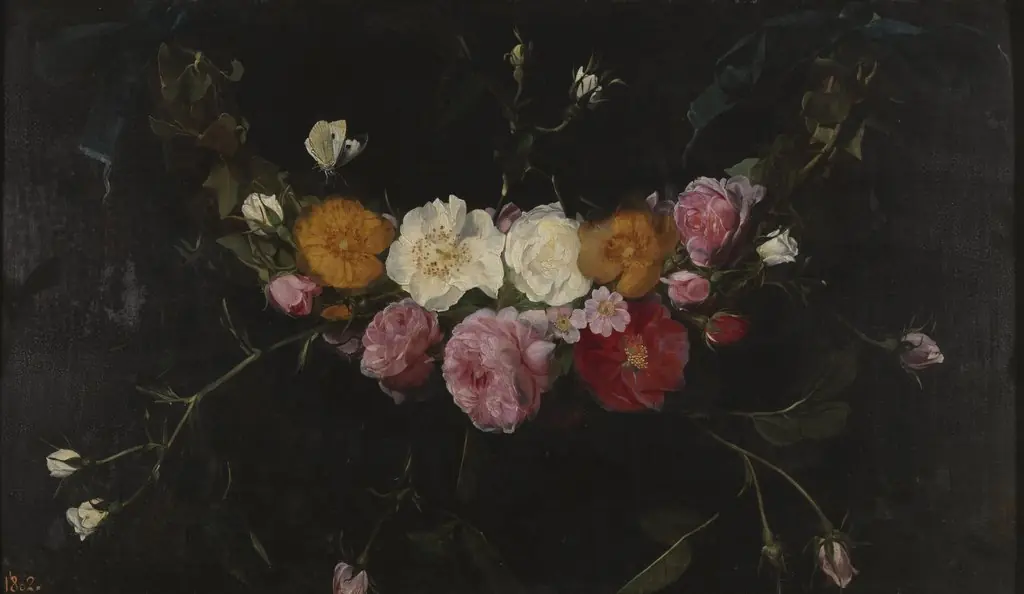 Garland of Roses
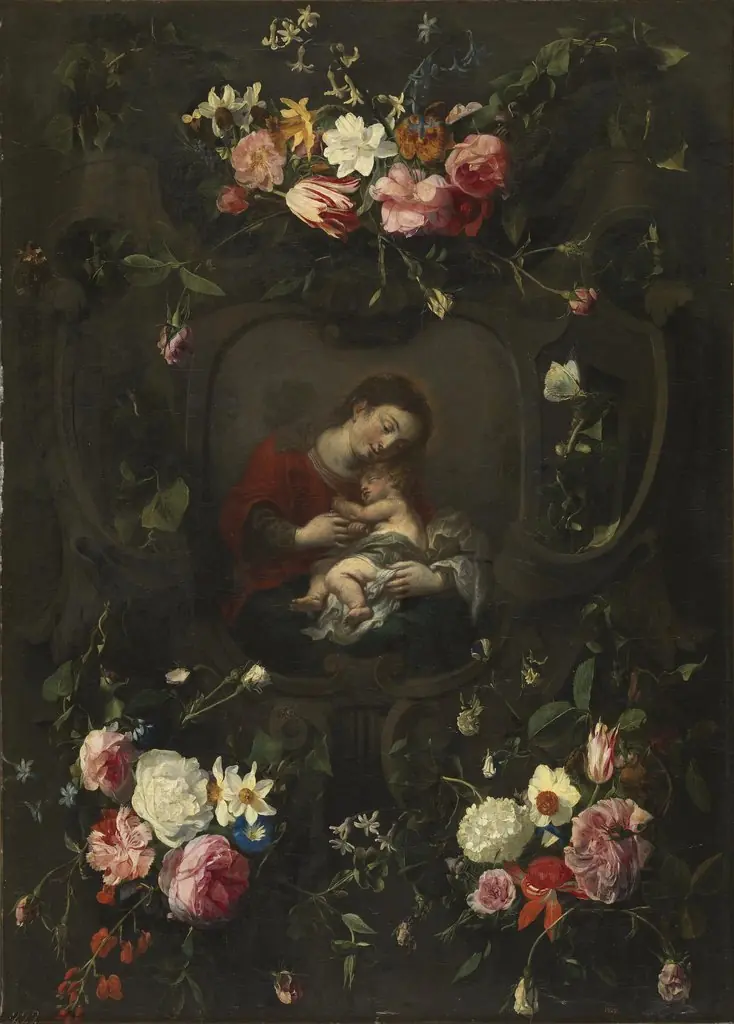 Flower garland around a Madonna and Child
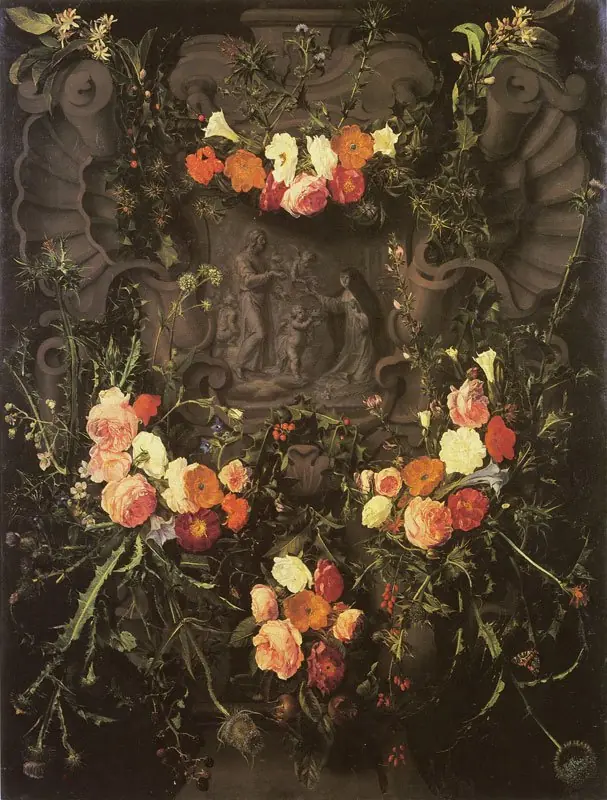 Saint Catherine of Siena Surrounded by a Garland of Flowers
- Flower garland cartouche around the Madonna and Child
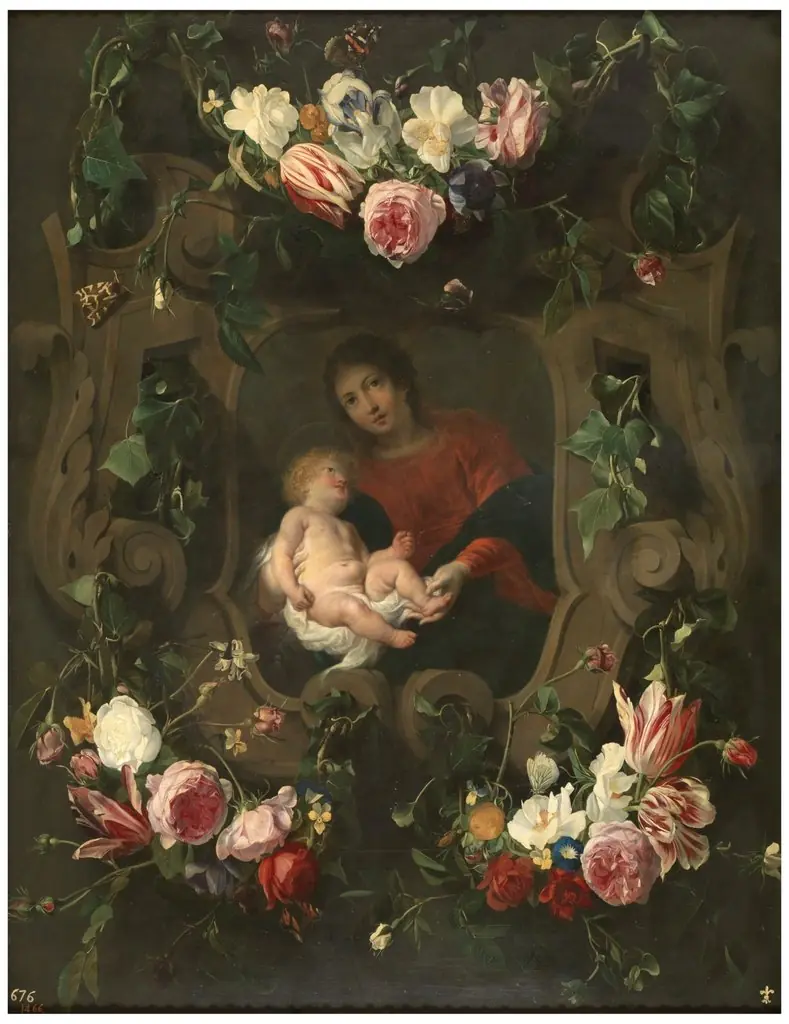 Flower garland around the Virgin and Child
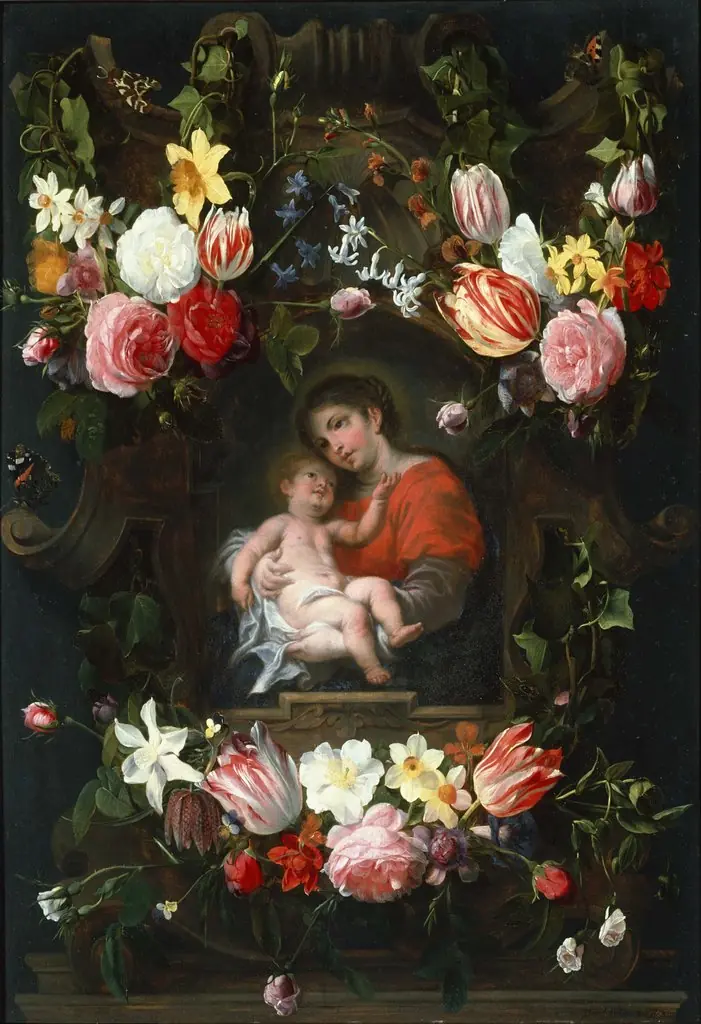 Garland of Flowers with Madonna and Child
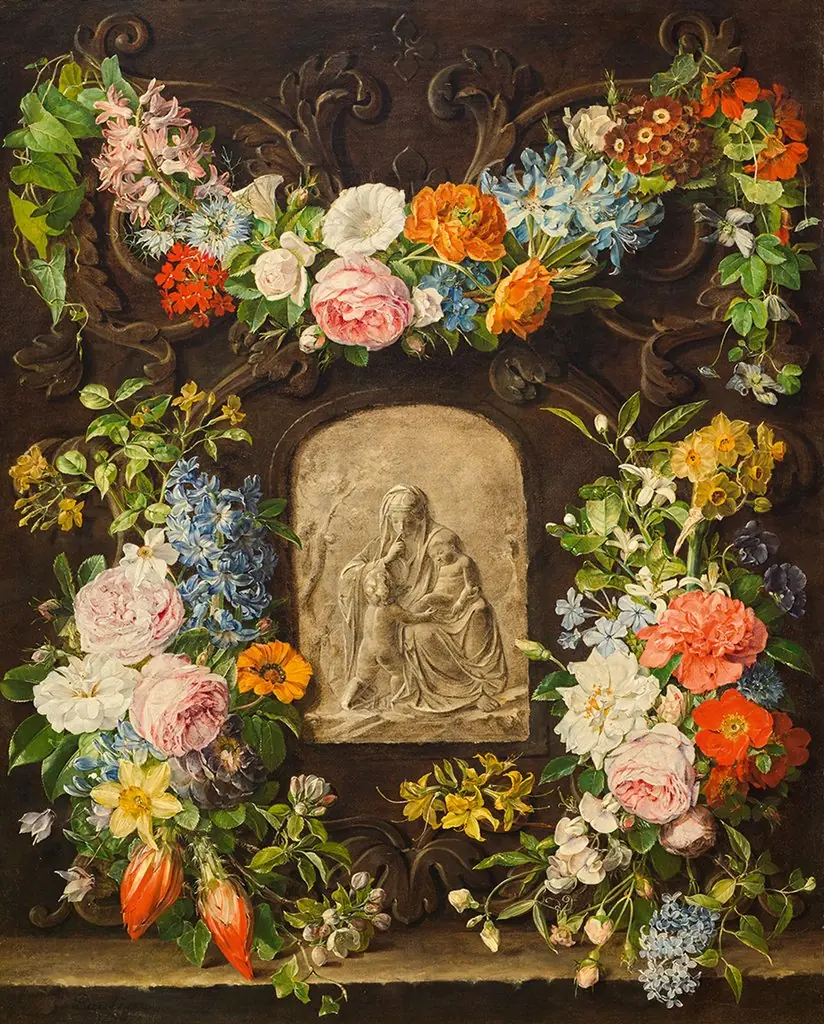 Flower garland with a relief of a Madonna
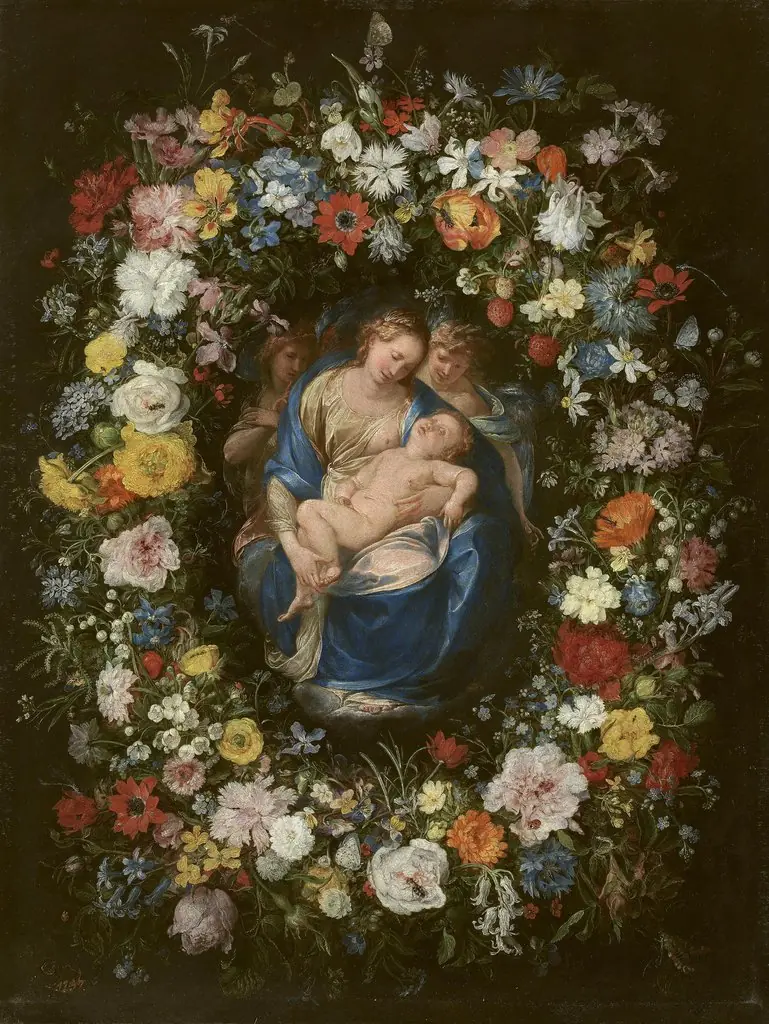 Garland with the Virgin, the Christ Child and two Angels
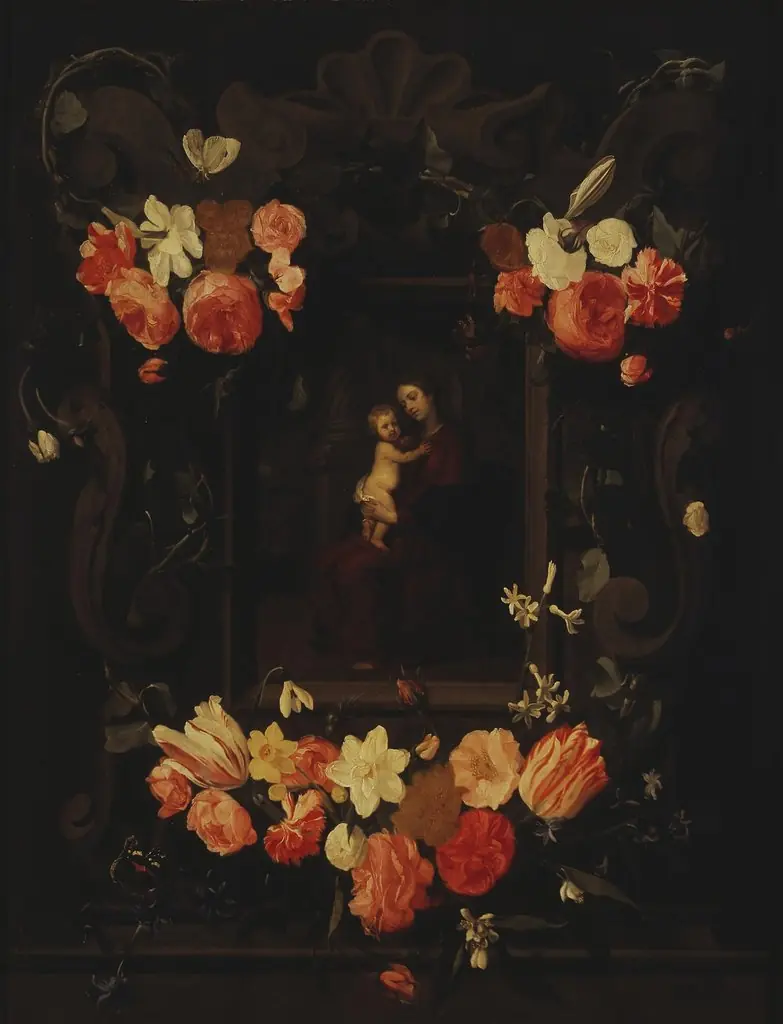 Madonna and Child Framed a Garland of Flowers
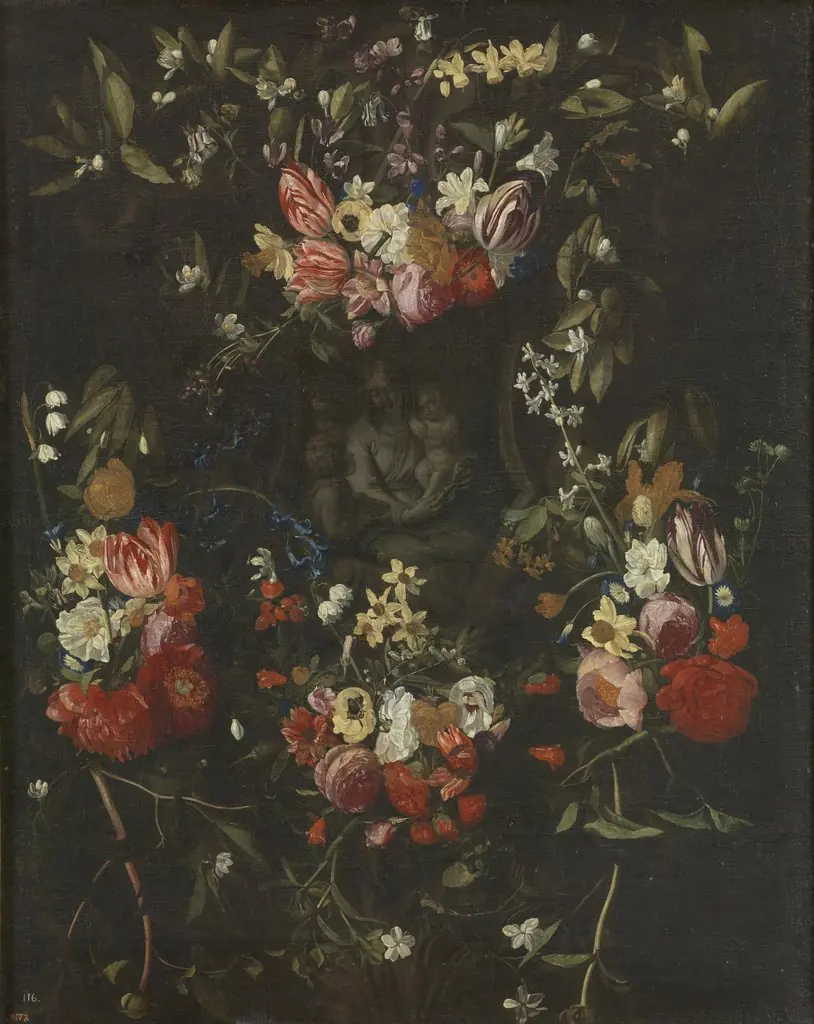 Garland of Flowers with the Virgin, the Christ Child and Saint John
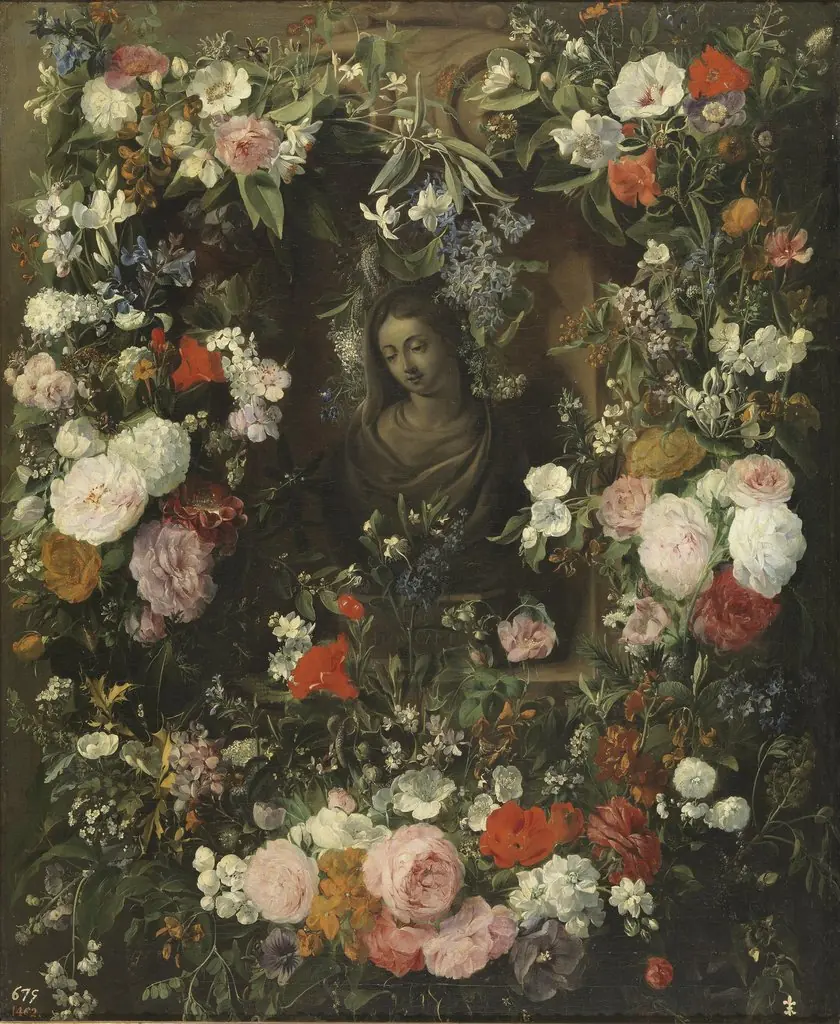 Garland surrounding the Virgin Mary
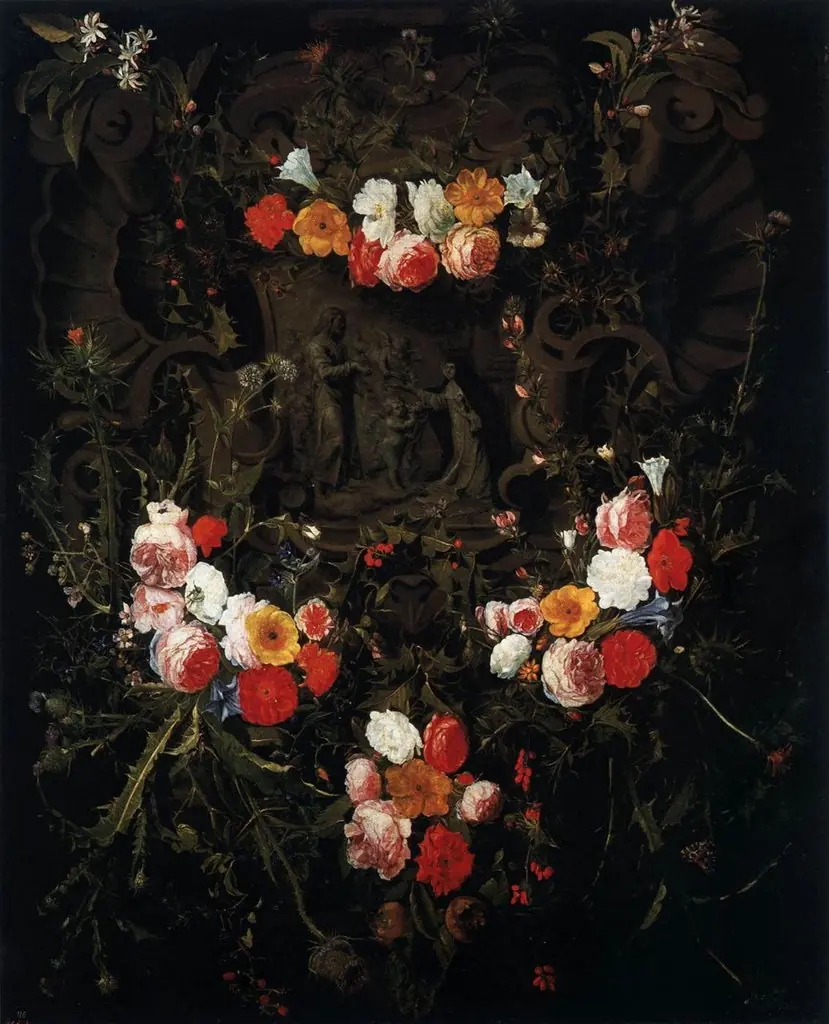 The Child Christ and St Theresa in a Flower Garland
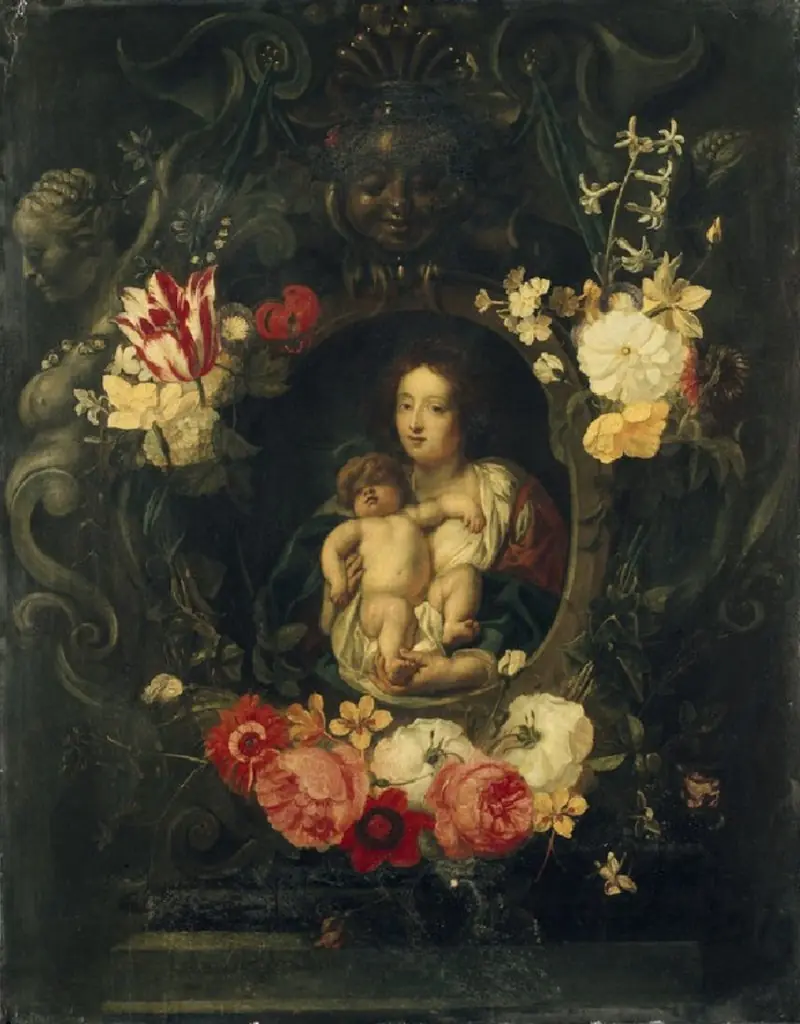 A Garland of Flowers surrounding a Medallion of the Virgin and Child