Artwork
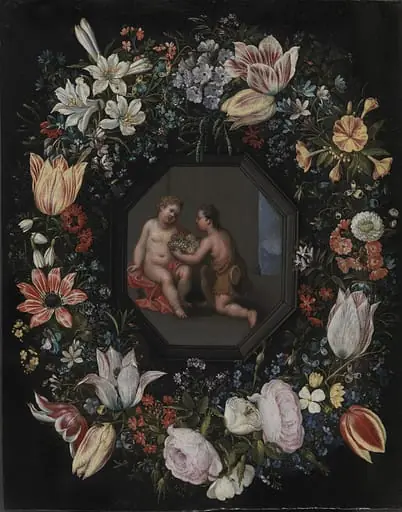
Garland of Flowers with the Virgin, the Christ Child and Saint John
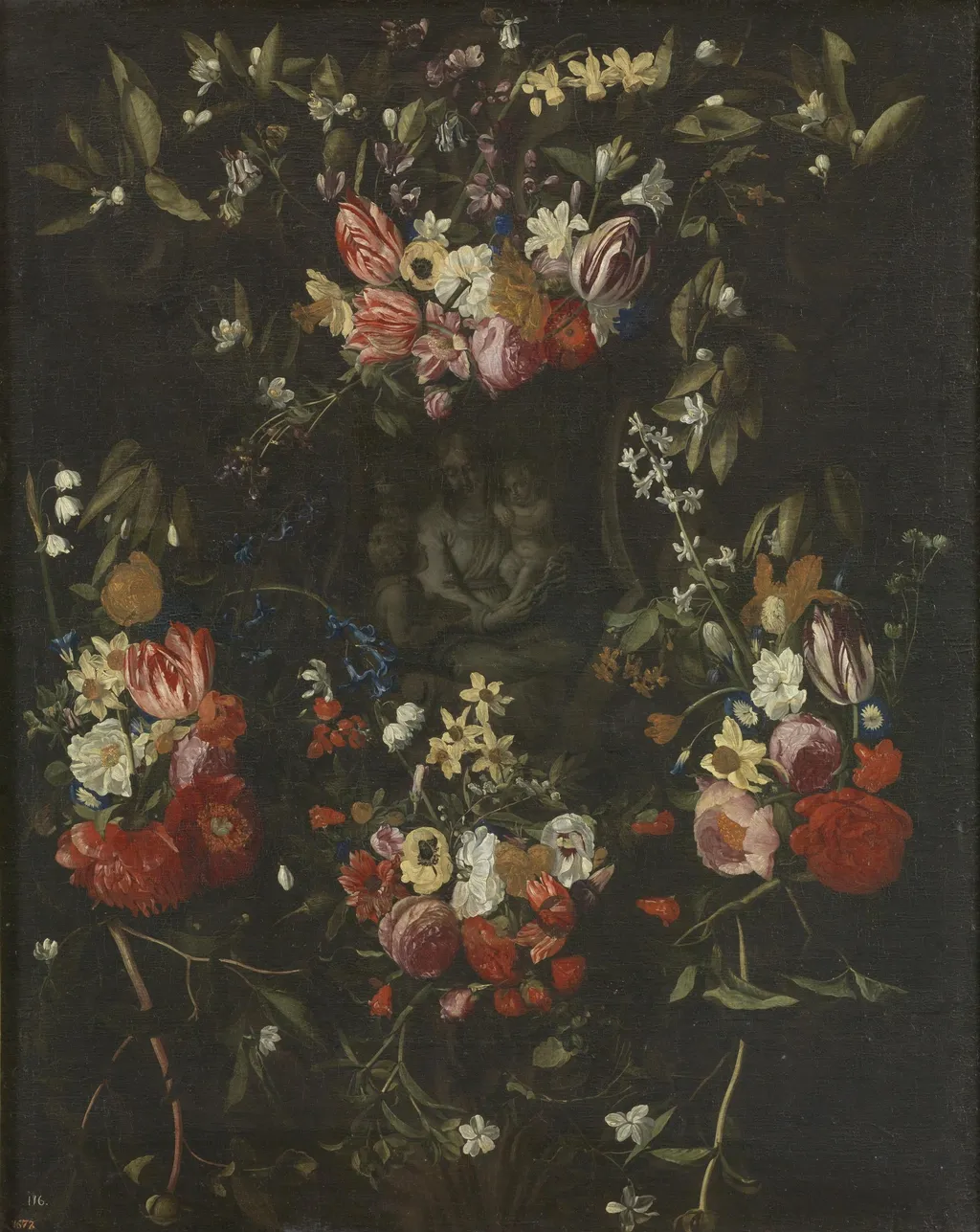
Garland of Flowers with the Virgin, the Christ Child and Saint John is an oil painting by the Early Baroque Italian artist Erasmus Quellinus II. It dates from 1601 and is held in the collection of the Museo del Prado.
About this work
Subject & Meaning
The floral motif functions as a symbolic reference to the purity and immaculacy of the Virgin, a common attribute in Counter‑Reformation devotional imagery.
The painting portrays the Virgin Mary holding the infant Christ Child, surrounded by a garland of assorted flowers, while Saint John the Baptist appears as a cherubic child within the composition. The floral motif functions as a symbolic reference to the purity and immaculacy of the Virgin, a common attribute in Counter‑Reformation devotional imagery. The inclusion of Saint John as a child underscores his role as the precursor of Christ and reinforces the sacred narrative of divine preparation.
This iconographic program reflects the theological emphasis on Mary’s intercessory role and the unity of the Holy Family within Catholic devotional practice of the early seventeenth century.
The work is housed in the Museo del Prado, where it remains part of the royal collection originally assembled by Ferdinand VII of Spain.
Technique & Style
The work is executed in oil paint on a canvas support, a standard medium for religious paintings of this period. Created collaboratively by Erasmus Quellinus II, Catarina Ykens, and Daniel Seghers, the piece measures 130 cm in height and 105 cm in width. As a religious genre painting, the composition centers on the depiction of the Child Saint John within a floral garland.
The physical dimensions and material construction align with the large-scale devotional works typical of the mid-17th century Flemish school.
History & Provenance
The painting was created in 1601 by Erasmus Quellinus II, likely in collaboration with Catarina Ykens and Daniel Seghers, as indicated by the creator attribution in the source. It was subsequently owned by Ferdinand VII of Spain, entering the Spanish royal collection before being installed at the Museo del Prado within the Royal Palace of Aranjuez, a provenance trajectory confirmed by the work's documented inception between 1601 and 1650 and its current classification as part of the Museo del Prado's holdings.
Legacy
The work's legacy is anchored in its attribution to Erasmus Quellinus II, a prominent Flemish Baroque painter, and its presence in the Royal Palace of Aranjuez collection under Ferdinand VII of Spain, reflecting its historical significance and preservation within a major cultural institution.
Its composition, combining the Virgin, Christ Child, and Saint John within a floral motif, influenced later religious decorative schemes in Spanish Baroque art, particularly in devotional works emphasizing Marian veneration and child saints.
Overview
Created in 1601, this oil on canvas presents a devotional grouping of the Virgin Mary, the infant Christ, and the youthful Saint John, framed by an elaborate wreath of blossoms. The composition is attributed to Erasmus Quellinus II, a Flemish artist who worked in the early Baroque period. The work belongs to the collection of the Museo del Prado in Madrid.
Context
In the early 1600s, Flemish artists increasingly incorporated Italianate Baroque elements, merging robust figural modeling with elaborate decorative motifs. Quellinus’s inclusion of a flower garland aligns with contemporary vanitas traditions, where luxuriant flora symbolised both divine abundance and the fleeting nature of earthly pleasures.
Own this work as a print
Artist & collection
Artist
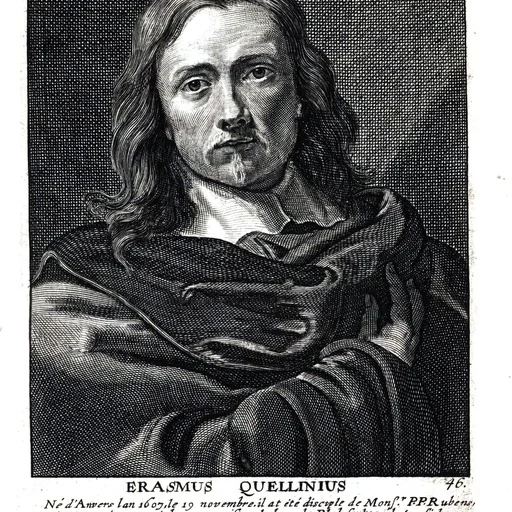
Erasmus Quellinus the Younger or Erasmus Quellinus II (November 19, 1607 – November 11, 1678) was a Flemish painter, engraver, draughtsman and tapestry designer who worked in various genres including history, portrait, allegorical, battle…

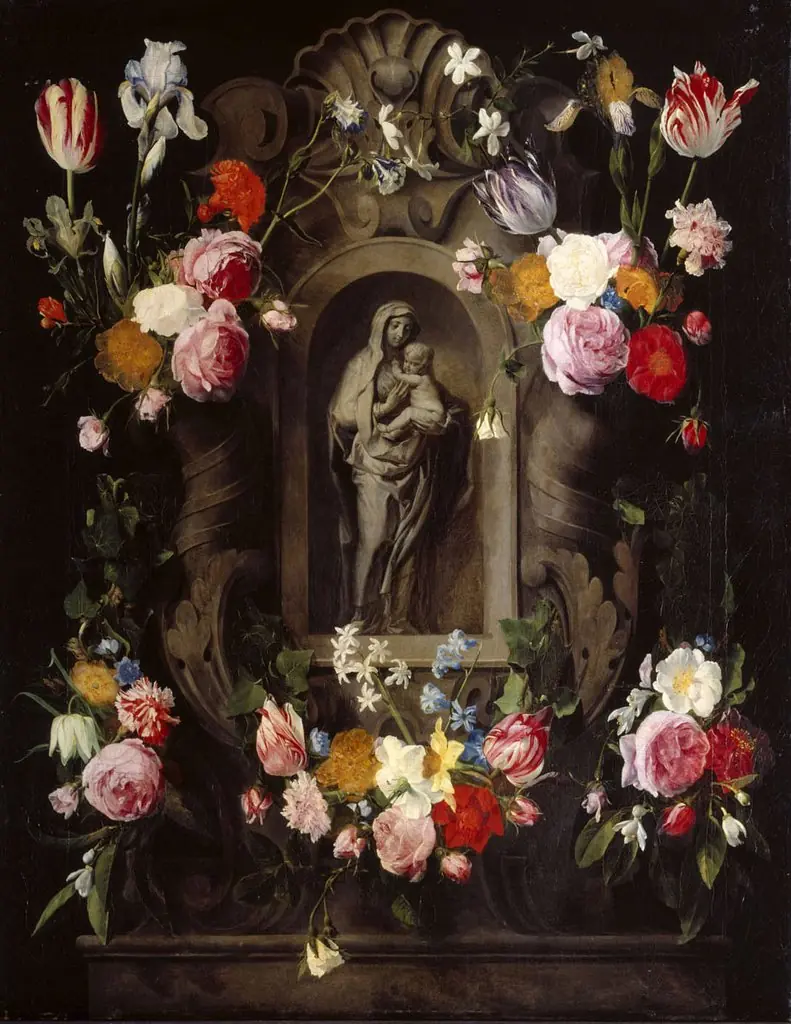 Madonna & Child Statuette in a Niche surrounded by a Garland of Flowers
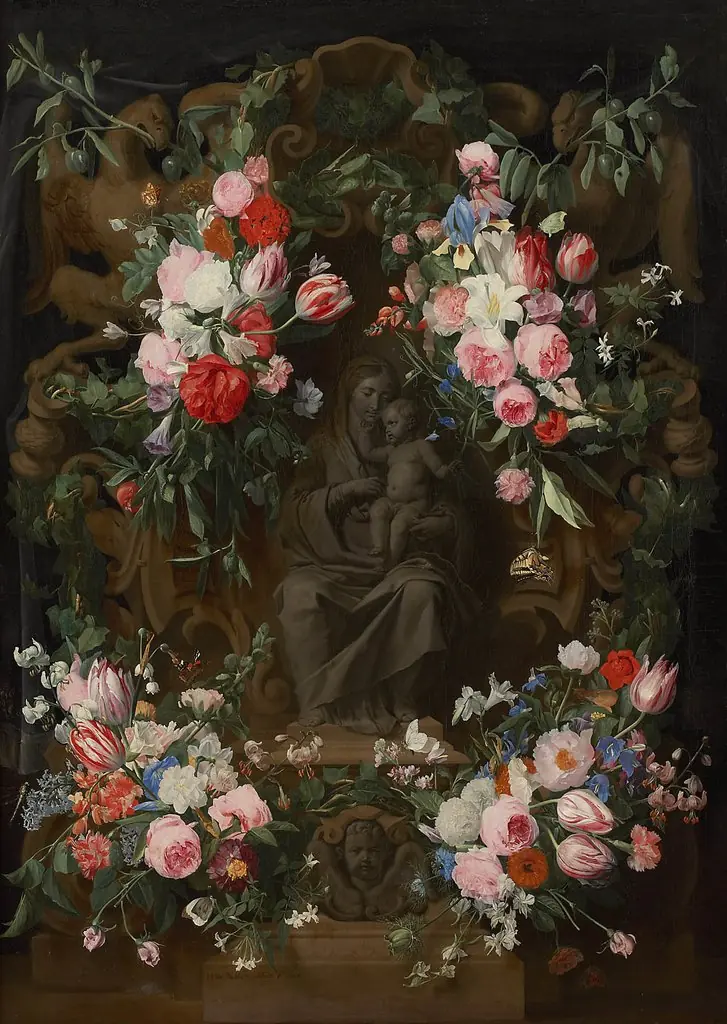 Seated Maria in a Flower Garland
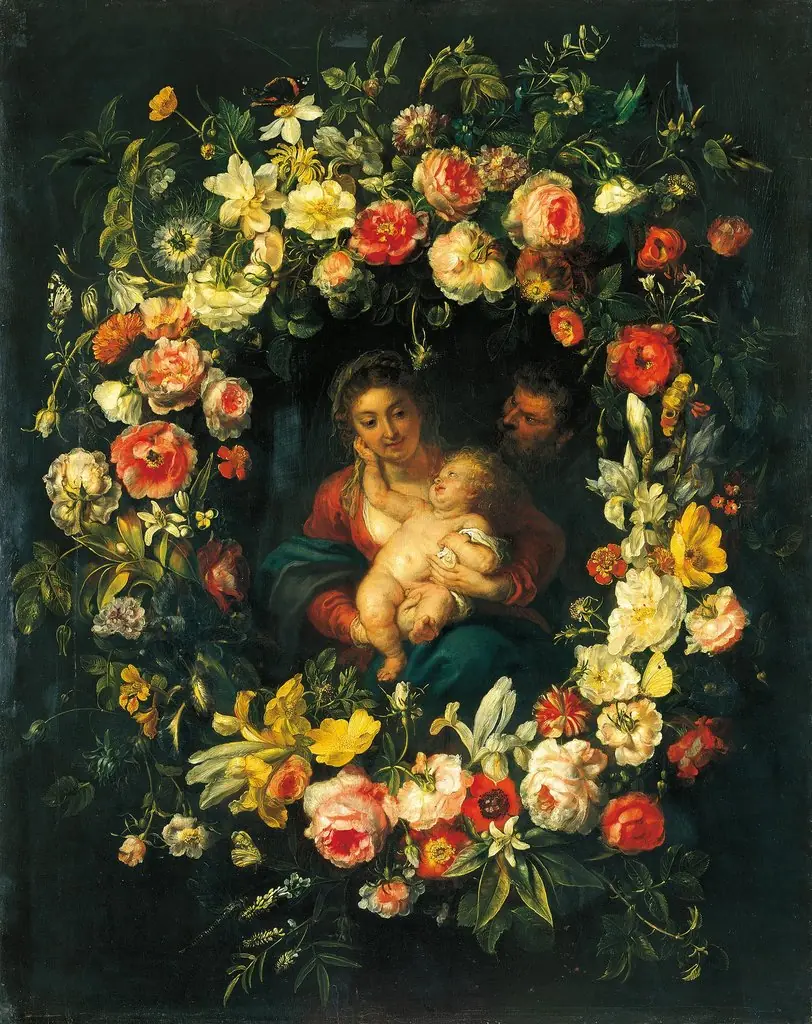 Holy Family in a Wreath of Flowers
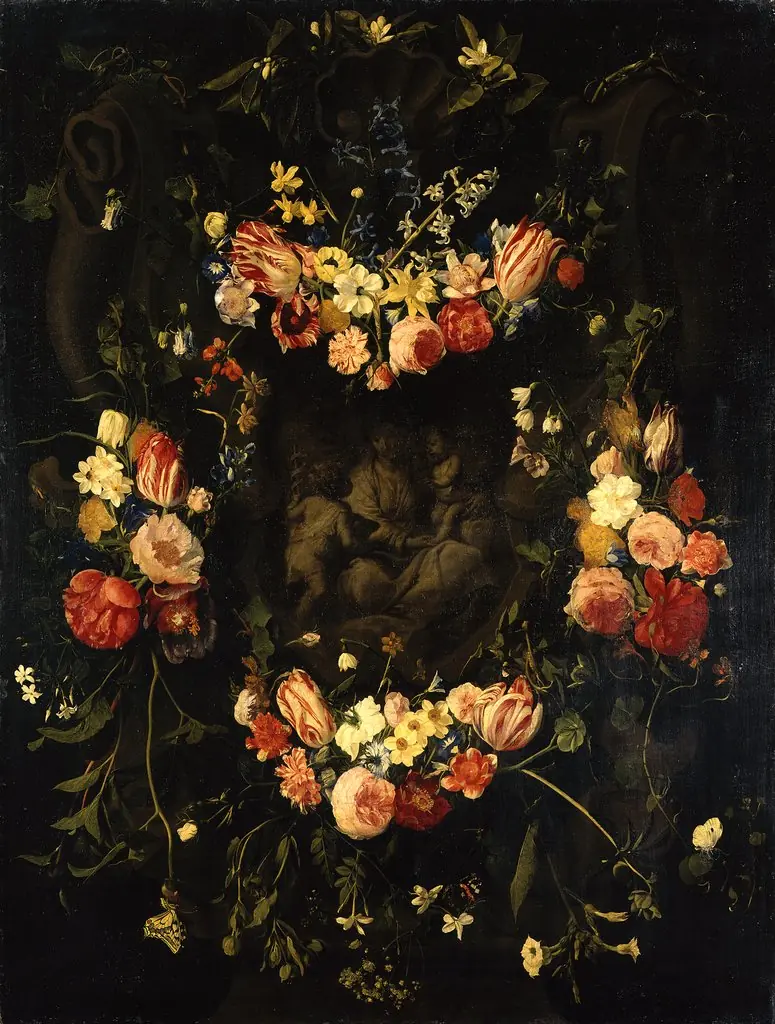 Cartouche addorned with flowergarlands surrounding a depiction of the Holy Family with the infant Saint John the Baptist
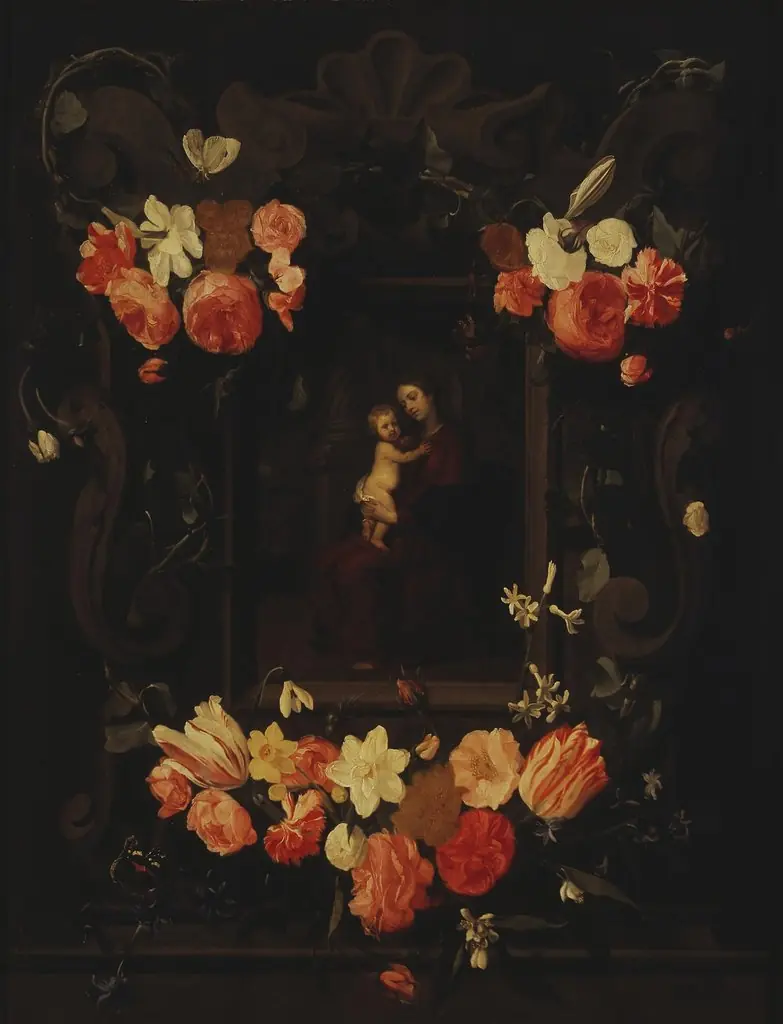 Madonna and Child Framed a Garland of Flowers
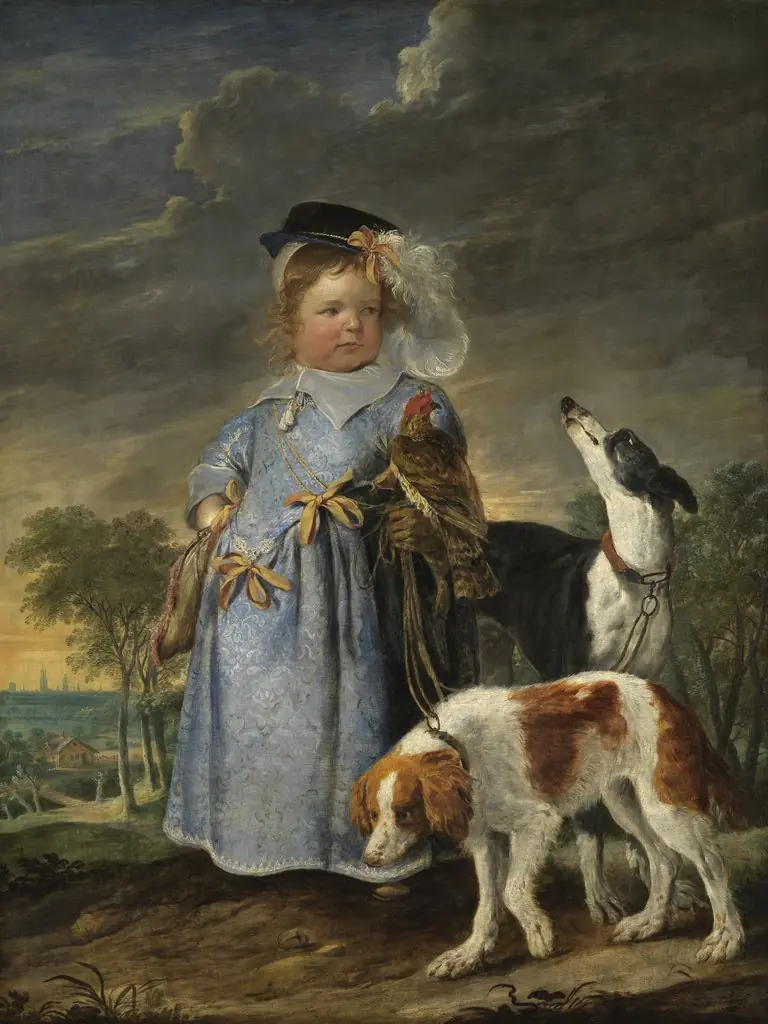 Portrait of a Boy
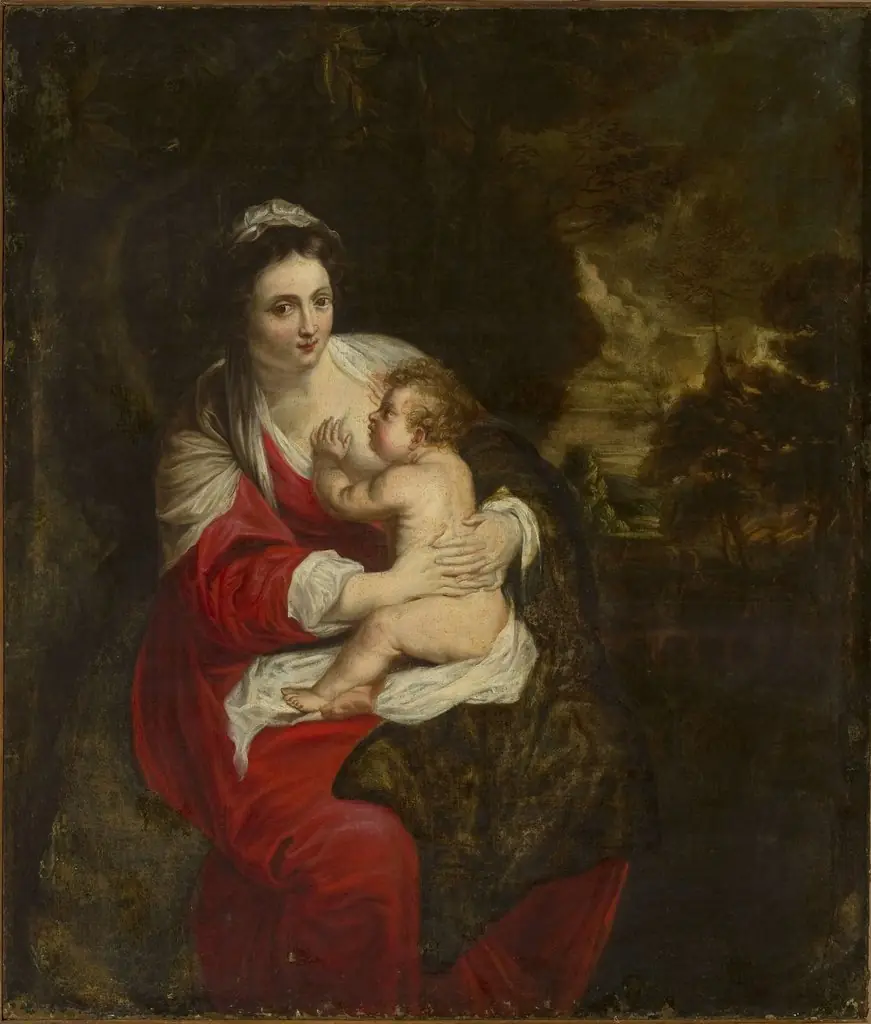 Madonna with Child Jesus
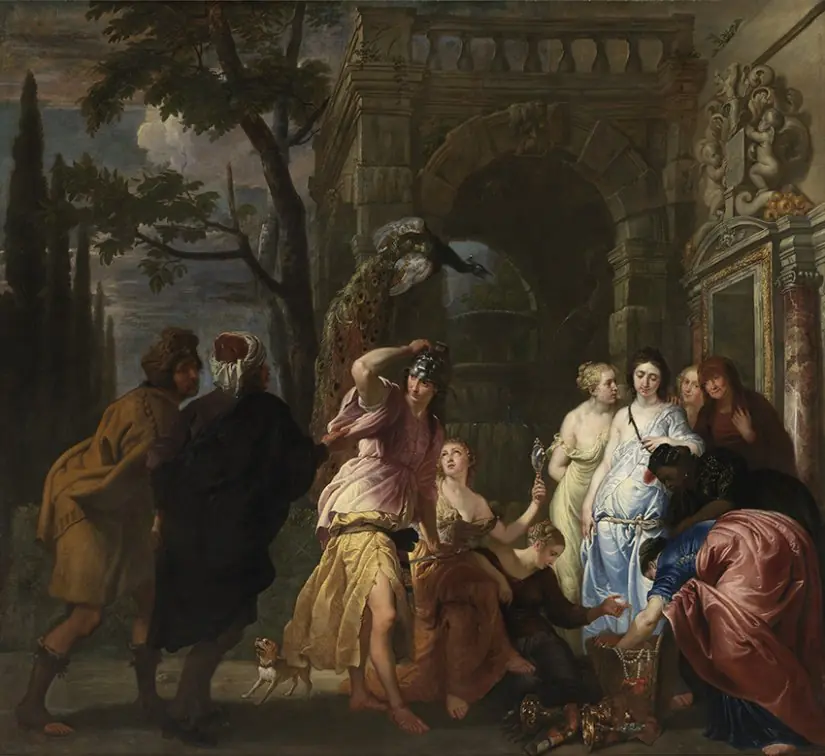 Achilles among the Daughters of Lycomedes
- Garland with the Virgin, the Christ Child and two Angels
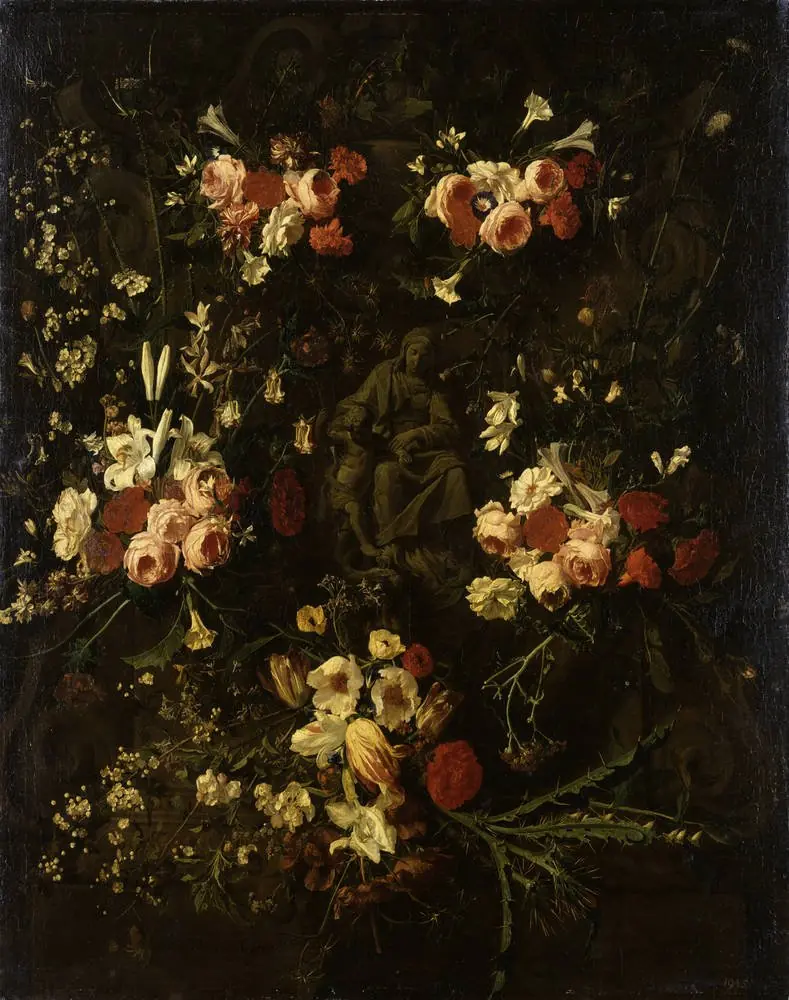 Flower garland cartouche around the Madonna and Child
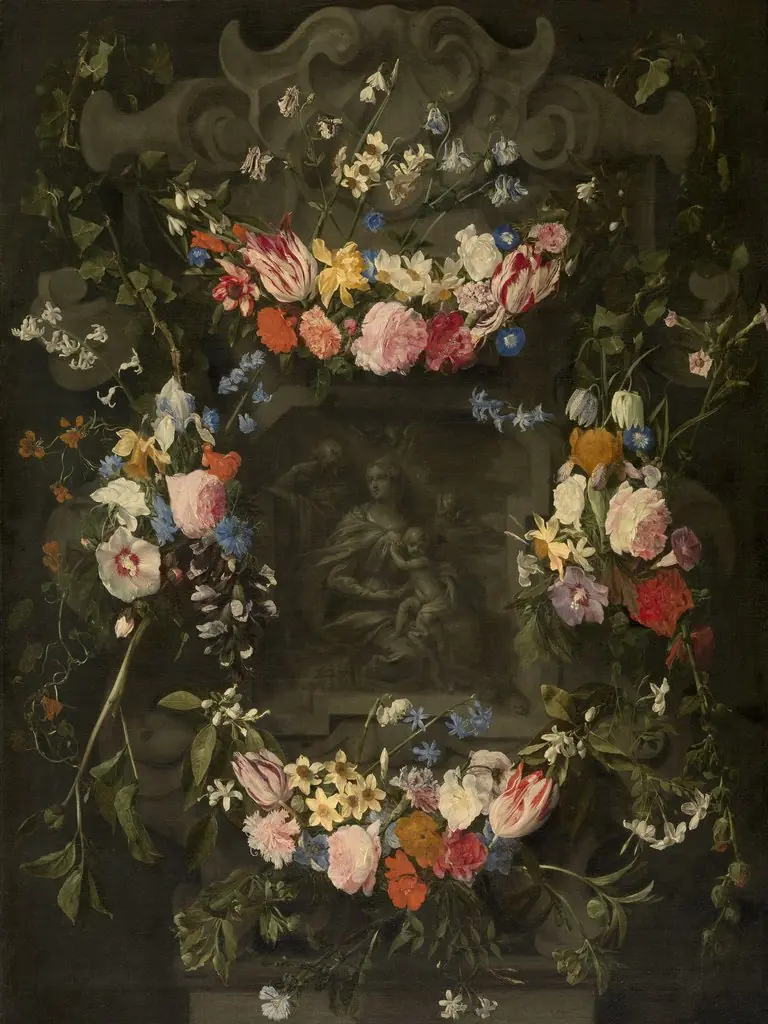 Holy Family in a Flower Garland
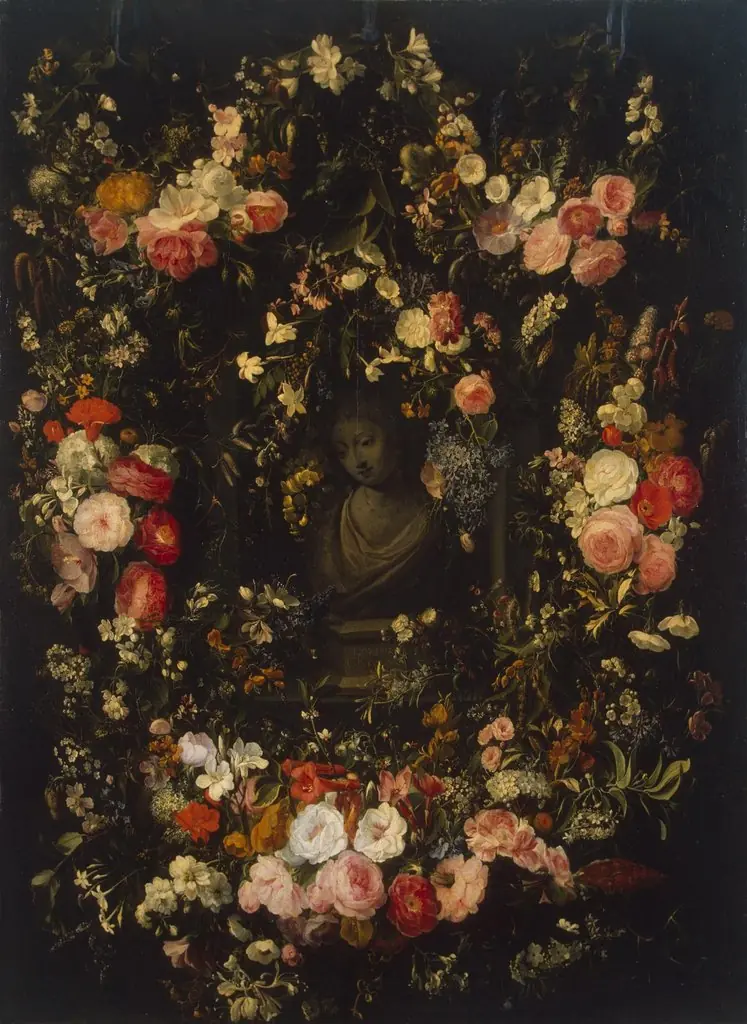 Bust of the Virgin Framed with a Garland of Flowers
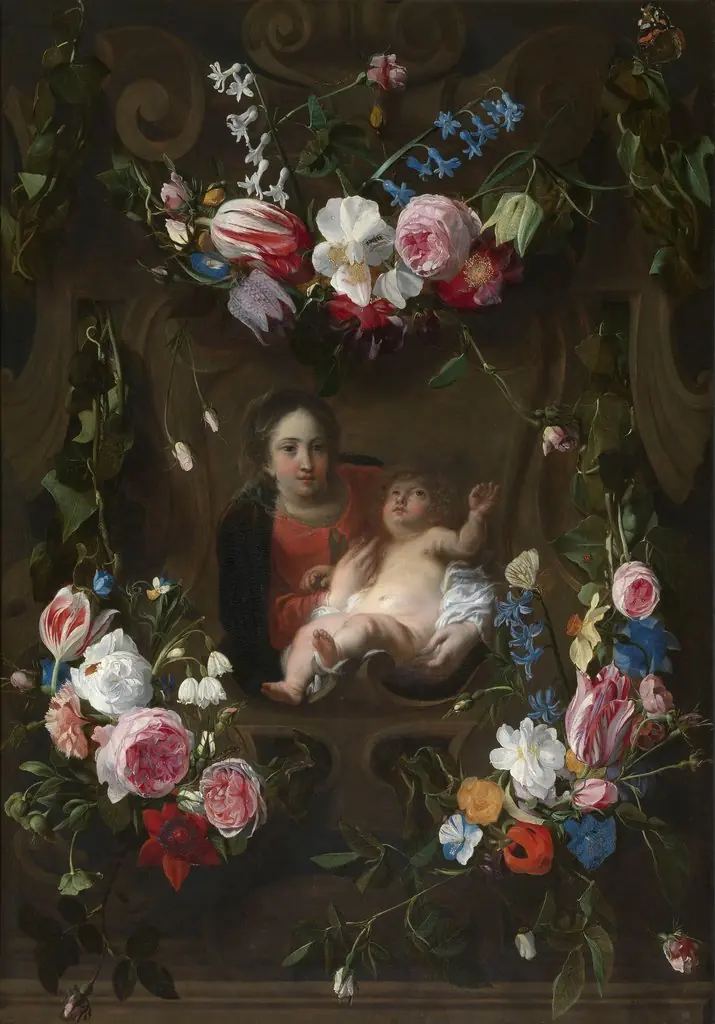 Madonna Surrounded by a Garland of Flowers
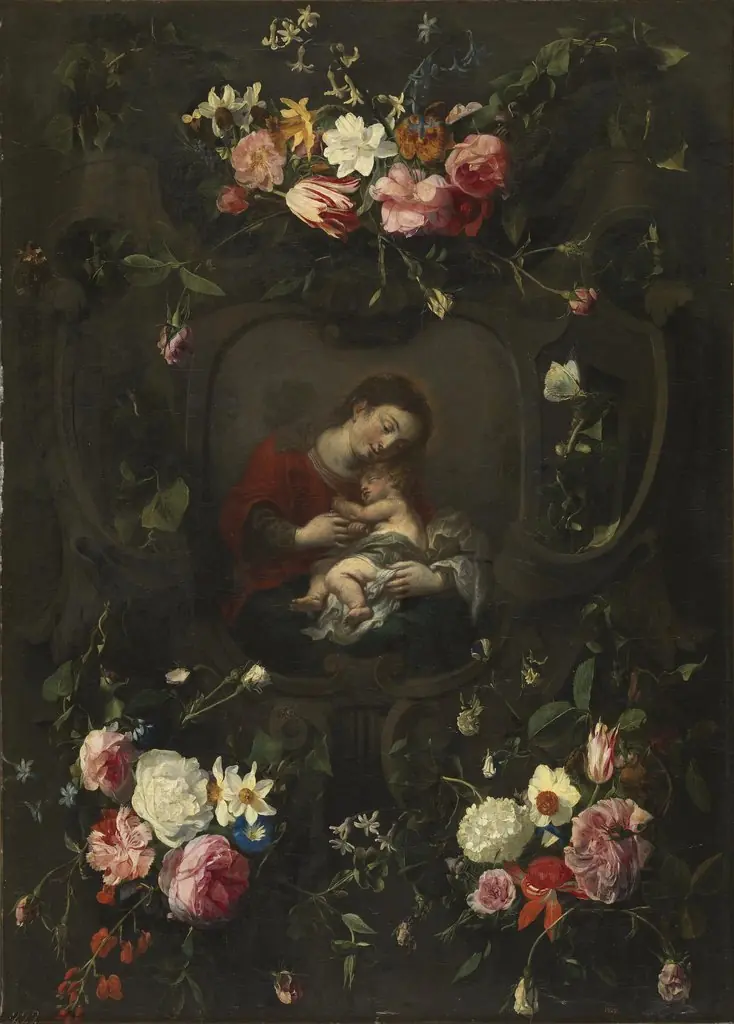 Flower garland around a Madonna and Child
 Wreath of flowers with Jesus and the infant John
 Flower Garland