Artwork
Sunset on the River Oise
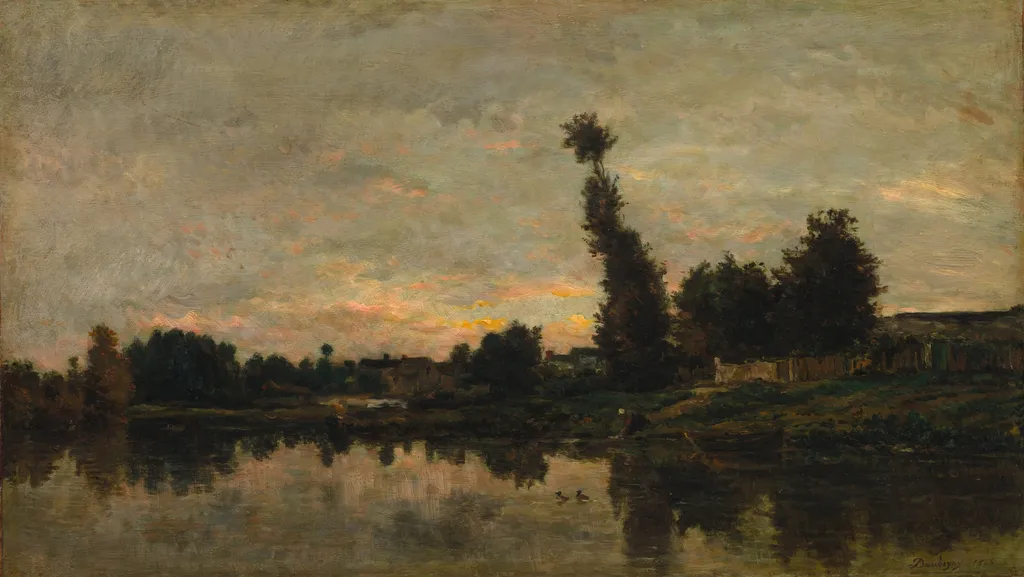
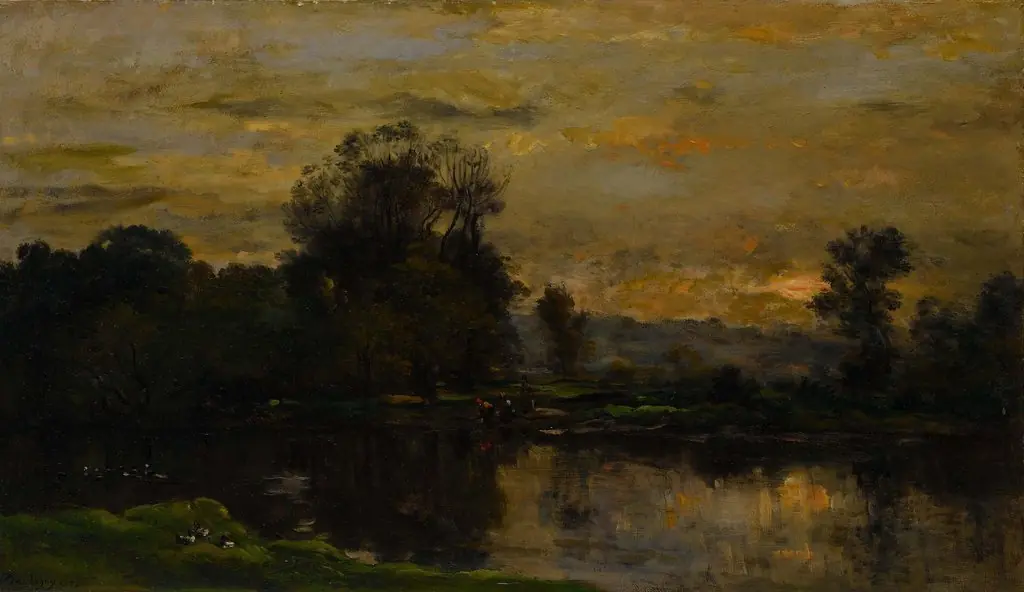
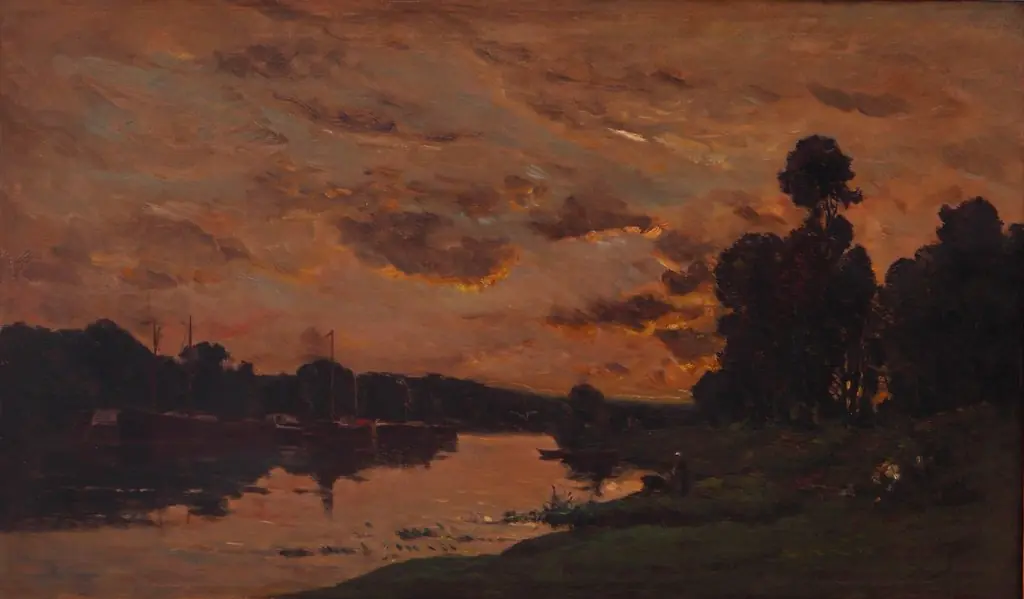
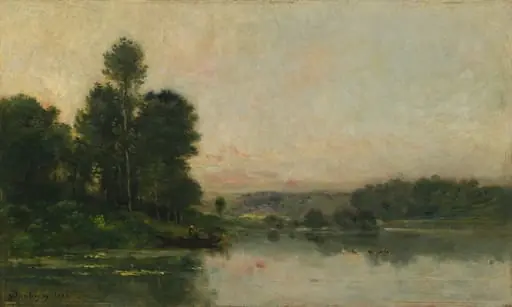
Sunset on the River Oise is an oil painting by the Barbizon school artist Charles François Daubigny. It dates from 1866 and is held in the collection of the Cleveland Museum of Art.
About this work
Subject & Meaning
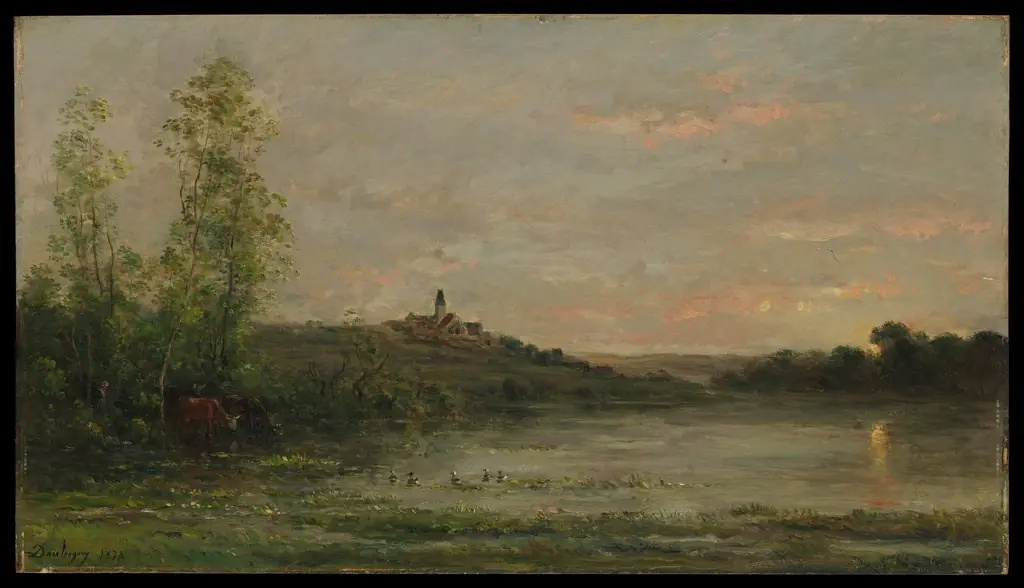
A row of poplars frames the left bank, their silhouettes echoed by reflections in the water, while a single boatman guides a small vessel across the expanse.
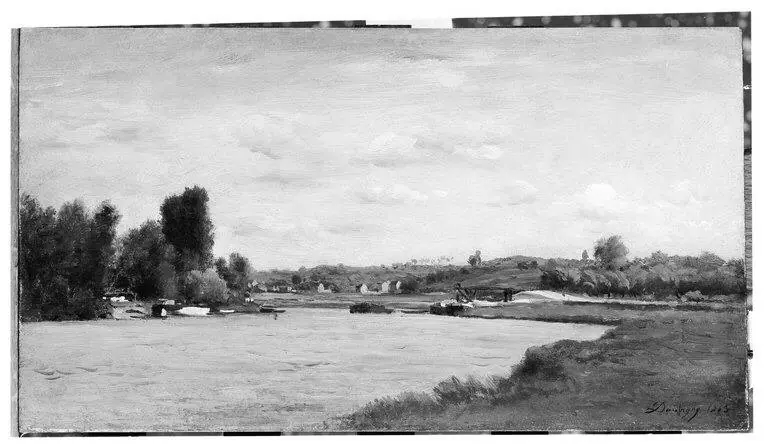
The painting depicts a quiet river scene at dusk, where the Oise is rendered with reflective golden light under a low sky. A row of poplars frames the left bank, their silhouettes echoed by reflections in the water, while a single boatman guides a small vessel across the expanse. The sky’s gradient, from pale yellow at the horizon to deepening blue above, anchors the scene in the fleeting moment of sunset, emphasizing transience and stillness.
Daubigny’s composition avoids overt narrative, instead capturing the atmospheric conditions that define the landscape. The work foregrounds the natural environment as both subject and mood, evoking a meditative encounter with nature rather than a specific event.
Technique & Style
Created in 1866, Sunset on the River Oise is an oil painting executed on a panel support. The work measures 40.1 cm in height and 69.1 cm in width, depicting a landscape scene that includes trees along the river. As an oil-on-panel piece by Charles-François Daubigny, it reflects the artist's engagement with the French landscape tradition during the mid-19th century.
History & Provenance
Sunset on the River Oise was painted in 1866 by Charles François Daubigny in France. The work is executed in oil paint on a wooden panel. It entered the collection of Solomon R. Guggenheim and his wife Irene Guggenheim, after which it passed to Severance Allen Millikin.
It is now held by the Cleveland Museum of Art, where it is catalogued as 1964.289. No record of a specific commission for the painting appears in the available sources.
Sunset on the River Oise is held in the collection of the Cleveland Museum of Art. The work carries the accession number 1964.289. Prior to its acquisition by the Cleveland institution, the painting was owned by Solomon R. Guggenheim, Irene Guggenheim, and Severance Allen Millikin. The provided sources do not list specific exhibitions in which the work has appeared.
Context
Sunset on the River Oise (1866) belongs to Charles François Daubigny’s late river scenes, a motif central to his career and emblematic of the Barbizon school’s plein-air naturalism. Critics of the 1860s praised Daubigny’s evocation of fleeting light and atmosphere, aligning his work with the broader shift toward landscape as a vehicle for mood and season rather than topographical record. The painting’s horizontal format and subdued palette situate it within the decade’s growing interest in the Oise valley as a subject, anticipating the more radical atmospheric experiments of Impressionism.
Scholarly assessments consistently place the work within Daubigny’s mature phase, noting its synthesis of Realist observation with poetic sensibility. The Cleveland Museum of Art holds the painting, which entered the collection via the Severance Allen Millikin bequest, underscoring its recognized stature in American museum holdings of nineteenth-century European landscape.
Overview
Charles-François Daubigny, a French painter associated with the Barbizon school, created Sunset on the River Oise in 1866. This oil painting captures a tranquil moment on the Oise River, featuring a prominent tree on its bank under the fading light of dusk. The work is currently housed in the collection of the Cleveland Museum of Art, representing a key period in the artist's career and his connection to naturalistic landscape painting.
Artist & collection
Artist
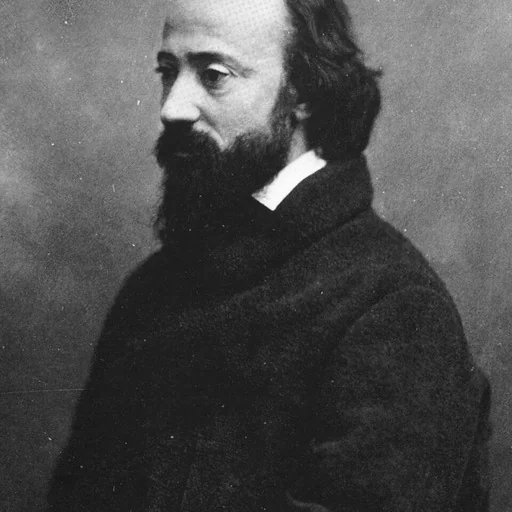
Charles-François Daubigny ( DOH-bin-yee, US: DOH-been-YEE, doh-BEEN-yee, French:; 15 February 1817 – 19 February 1878) was a French painter, one of the members of the Barbizon school, and is considered an important precursor of…