Artwork
Le Zendale (Woman in a Hood, or the Woman Returning from Church)
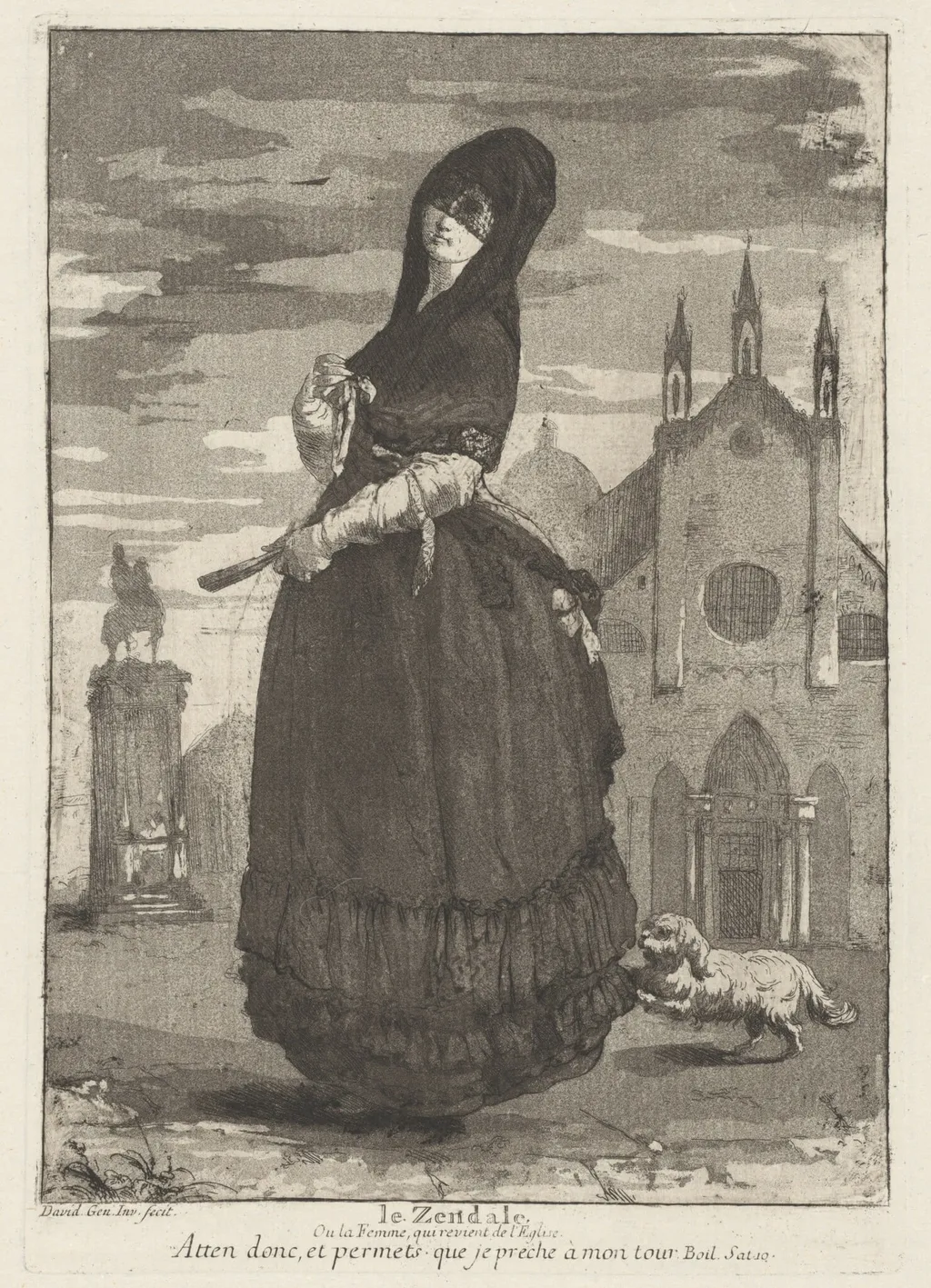
Le Zendale (Woman in a Hood, or the Woman Returning from Church) is an ink print by the Romanticist artist Giovanni David. It dates from 1775 and is held in the collection of the National Gallery of Art.
- Inscription
- Inscribed:lower left in plate: David Gen. Inv. fecit; lower center in plate: le Zendale / Ou la Femme, qui revient de l'Eglise / Atten donc, et permets que je prèche à mon tour Boil. Sat. 10.
- Markings
- Marked:none
About this work
Overview
In the background, a church characterized by tall spires and arched windows rises against a sky filled with swirling clouds.
Giovanni David's 1775 etching and aquatint, Le Zendale (also titled Woman in a Hood or the Woman Returning from Church), depicts a solitary female figure traversing a landscape. The composition centers on a woman clad in a long, dark dress and a hood, walking a small dog while holding a fan. In the background, a church characterized by tall spires and arched windows rises against a sky filled with swirling clouds.
David employs a combination of fine linear etching and the tonal gradations of aquatint to render the atmospheric depth and the textures of the fabric and architecture. Created during the late 18th century, this work reflects the artist's engagement with genre scenes and landscape elements, capturing a moment of daily life with a sense of quiet movement. The piece stands as a significant example of David's printmaking practice, demonstrating his ability to integrate narrative detail with expressive atmospheric effects typical of the period.
Subject & Meaning
The central figure appears to be a woman just leaving a place of worship, suggested by the title. She holds a fan in one hand, a customary accessory of the period, while her companion dog follows her steps. The composition’s quiet atmosphere and the swirling clouds above convey a sense of contemplation and gentle movement beyond the sacred space.
Technique & Style
David employed a combination of precise etching lines and aquatint washes to achieve tonal depth. Fine linear work defines the woman’s attire and the dog’s form, while broader, softly graded aquatint areas render the sky’s clouds and the distant church’s architecture, creating a layered sense of space within the limited black‑and‑white palette.
History & Provenance
The print was produced in the late eighteenth century, a period when Italian printmakers frequently explored everyday subjects through the etching‑aquatint medium. While specific ownership records are scarce, the work is catalogued among David’s known prints and has been referenced in scholarly surveys of eighteenth‑century Italian graphic art.
Own this work as a print
Artist & collection


 Adoration of the Magi
 Le Perruquier fatigué (The Tired Wigmaker)
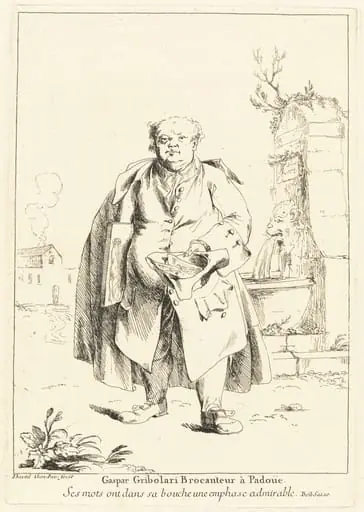 Gaspar Gribolari Brocanteur à Padoüe (Gaspar Gribolari, Secondhand Dealer in Padua)
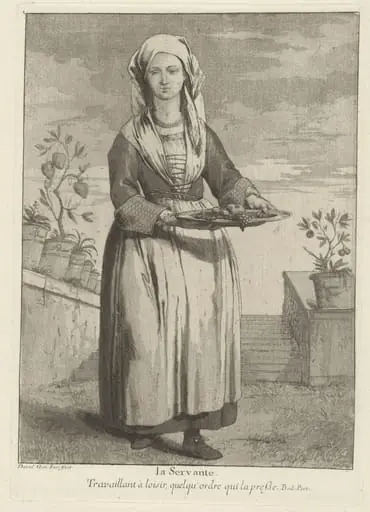 La Servante (The Servant)
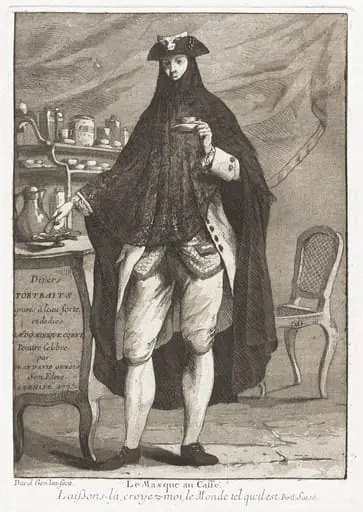 Le Masque au caffé (The Masked Man Taking Coffee)
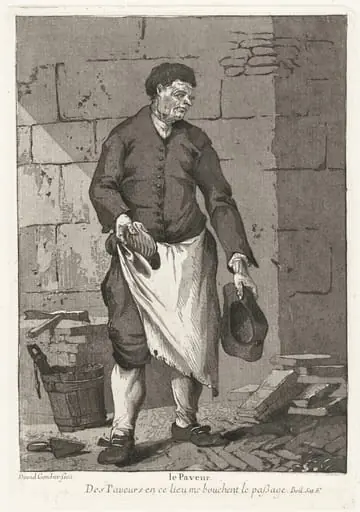 Le Paveur (The Road Paver)
 Democritus
 Exegi Monumentum (Art Inscribing Minerva's Shield)
 La Dame Venitienne en abit de masque (Venetian Woman in Carnival Dress)
 Lola de Valence
 Beggar Woman with Rosary
 Le Marchand allant à Rialto (The Merchant at the Rialto)
 Volaverunt (They Have Flown)
 Nadie se conoce (Nobody Knows Himself)
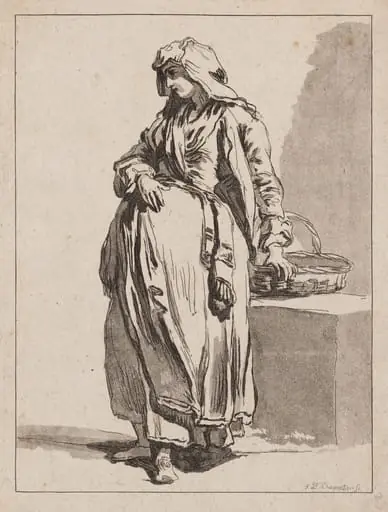 Italian Peasant Woman
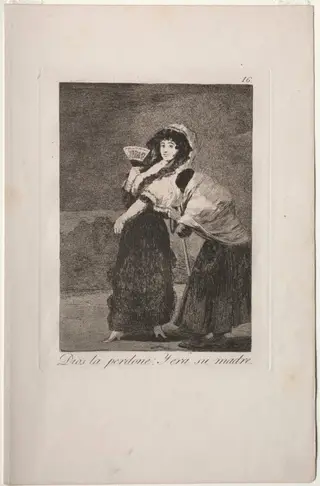 For Heaven's Sake: and It Was Her Mother, Plate 16
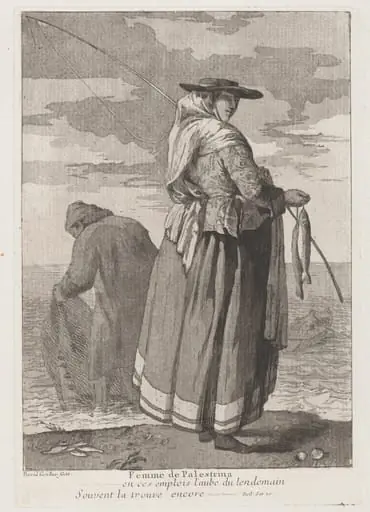 Femme de Palestrina (Woman from Pellestrina)
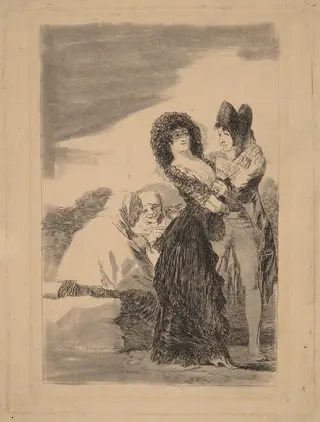 Tal para qual (Two of a Kind)