Artwork
Plundering Soldiers
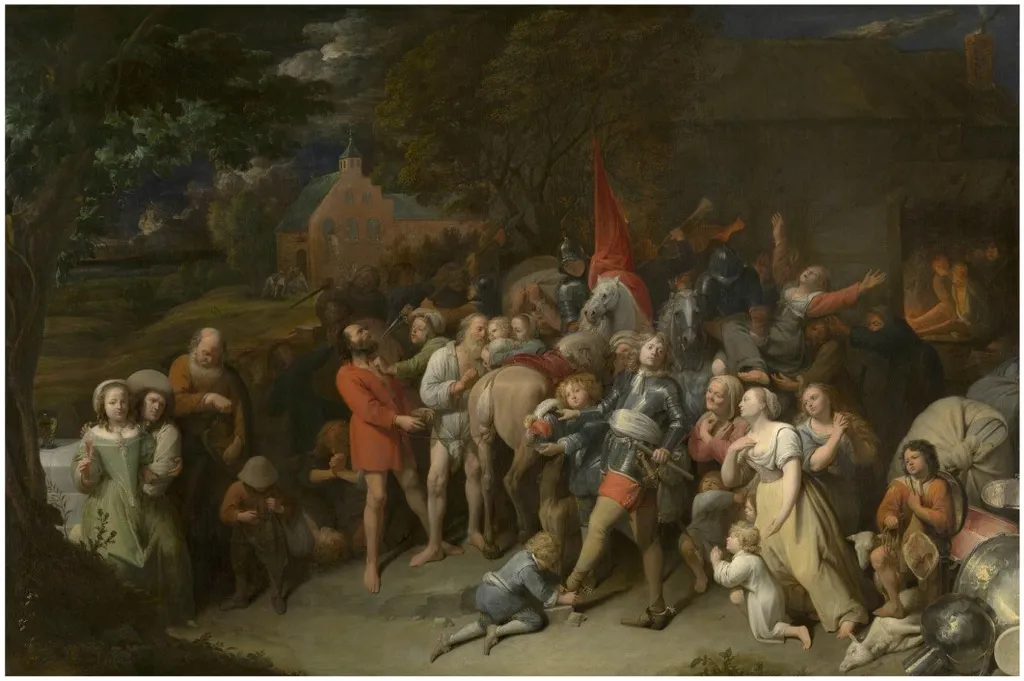
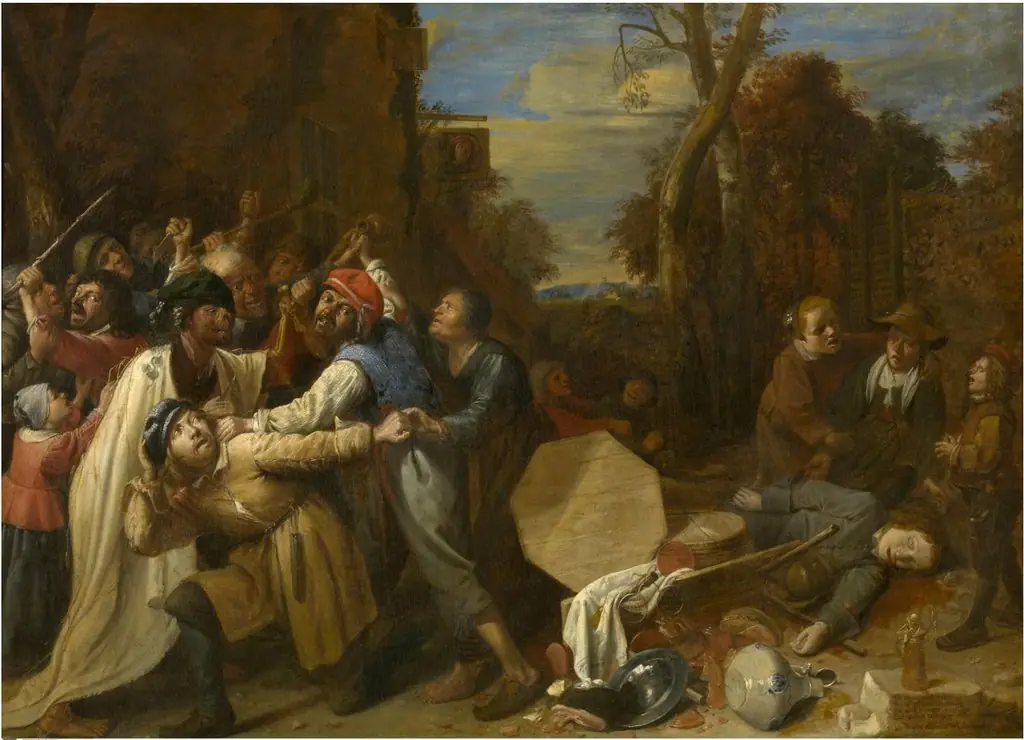
Plundering Soldiers is an oil painting by David Ryckaert III. It dates from 1648 and is held in the collection of the Royal Museum of Fine Arts Antwerp.
About this work
Overview
This piece diverges from his more common depictions of rural merriment, instead focusing on the disruption of civilian life by military forces.
Painted in 1648 by David Ryckaert III, Plundering Soldiers is an oil-on-canvas work that captures a moment of violence during wartime. Ryckaert, based in Antwerp, was known for genre scenes that often portrayed everyday life with psychological nuance. This piece diverges from his more common depictions of rural merriment, instead focusing on the disruption of civilian life by military forces. It resides today in the Royal Museum of Fine Arts Antwerp.
Subject & Meaning
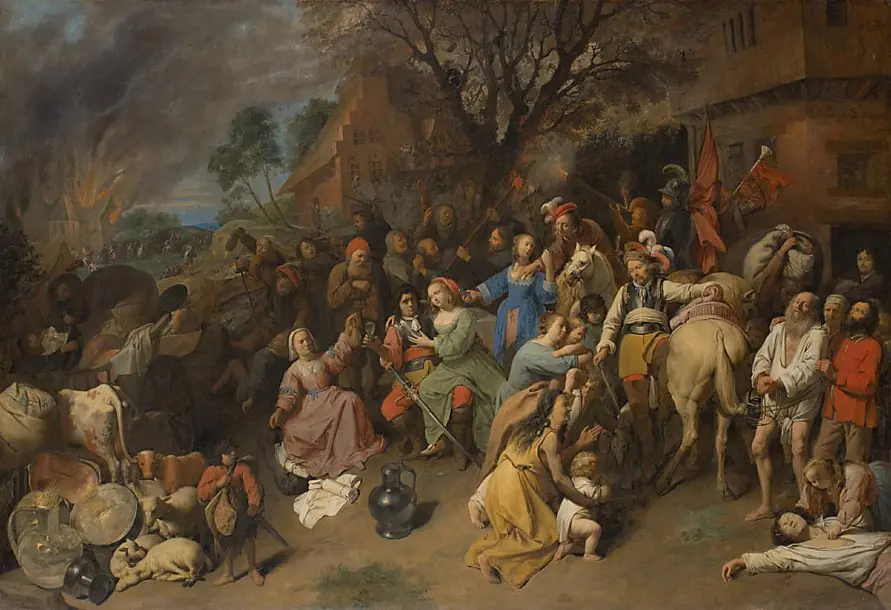
The painting portrays soldiers ransacking a village, seizing household goods and driving residents to flee. The scene reflects the broader trauma of the Thirty Years’ War, which ravaged the Low Countries. Rather than glorifying combat, Ryckaert emphasizes the vulnerability of non-combatants and the disorder of occupation.
The absence of heroic figures or clear moral resolution underscores the grim reality of war’s impact on ordinary communities.
Technique & Style
Ryckaert employed a naturalistic approach, rendering armor, textiles, and architecture with precise detail. Chiaroscuro is used to model forms and heighten emotional tension, casting deep shadows across the chaotic foreground while illuminating faces and stolen objects. The composition directs the viewer’s eye through diagonal lines of movement, soldiers hauling loot, villagers fleeing, creating a sense of urgency and spatial depth within a compact scene.
History & Provenance
Commissioned during a period of political instability in the Southern Netherlands, the painting likely resonated with contemporary viewers familiar with military incursions. It entered the collection of the Royal Museum of Fine Arts Antwerp in the 19th century, where it remains part of the museum’s Flemish Baroque holdings. Its survival suggests it was valued not merely as decoration but as a record of lived experience.
Context
The Thirty Years’ War (1618–1648) left the Low Countries scarred by troop movements, requisitions, and civilian displacement. Ryckaert’s work aligns with a broader trend among Flemish artists to depict the consequences of war beyond battlefield heroics. While some contemporaries painted idealized landscapes, Ryckaert chose to confront the disorder and suffering inflicted on villages, reflecting a shift toward socially aware genre painting.
Legacy
Though Ryckaert is less widely known than some of his peers, Plundering Soldiers stands as a significant example of 17th-century Flemish realism focused on civilian trauma. It influenced later artists who sought to portray war’s human cost without romanticism. The painting continues to serve as a visual document of wartime disruption, valued for its unflinching observation rather than its aesthetic polish.
Artist & collection
Artist
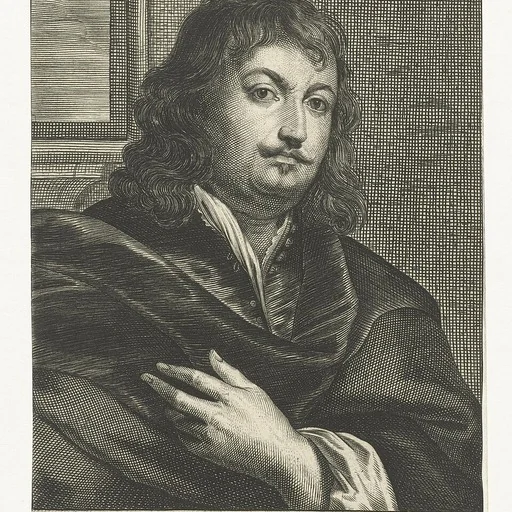
David Ryckaert III, David Rijckaert III or David Rijckaert the Younger (2 December 1612, Antwerp – 11 November 1661, Antwerp) was a Flemish painter known for his contribution to genre painting, in particular through his scenes of merry…

 John the Baptist Preaching in the Forest
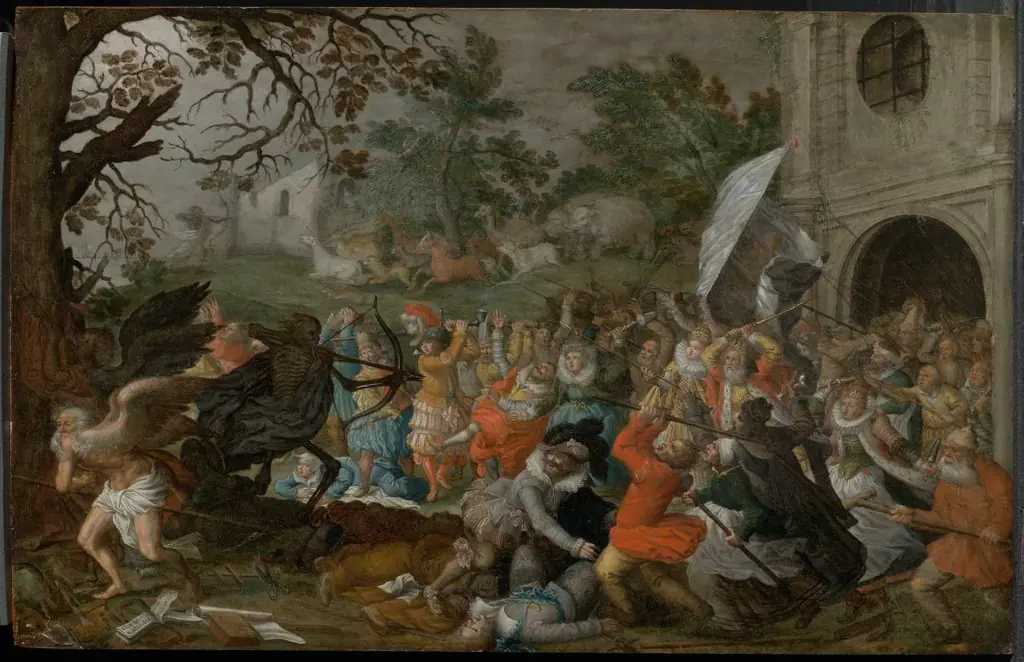 Men and Animals Struggling Against Death & Father Time
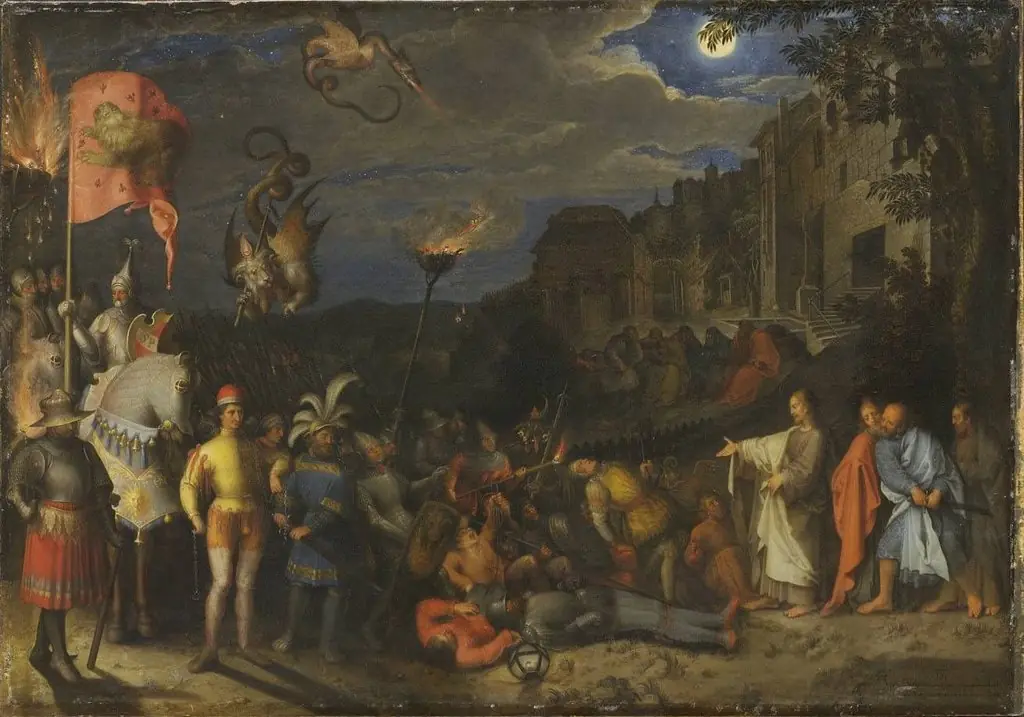 The arrest of Christ
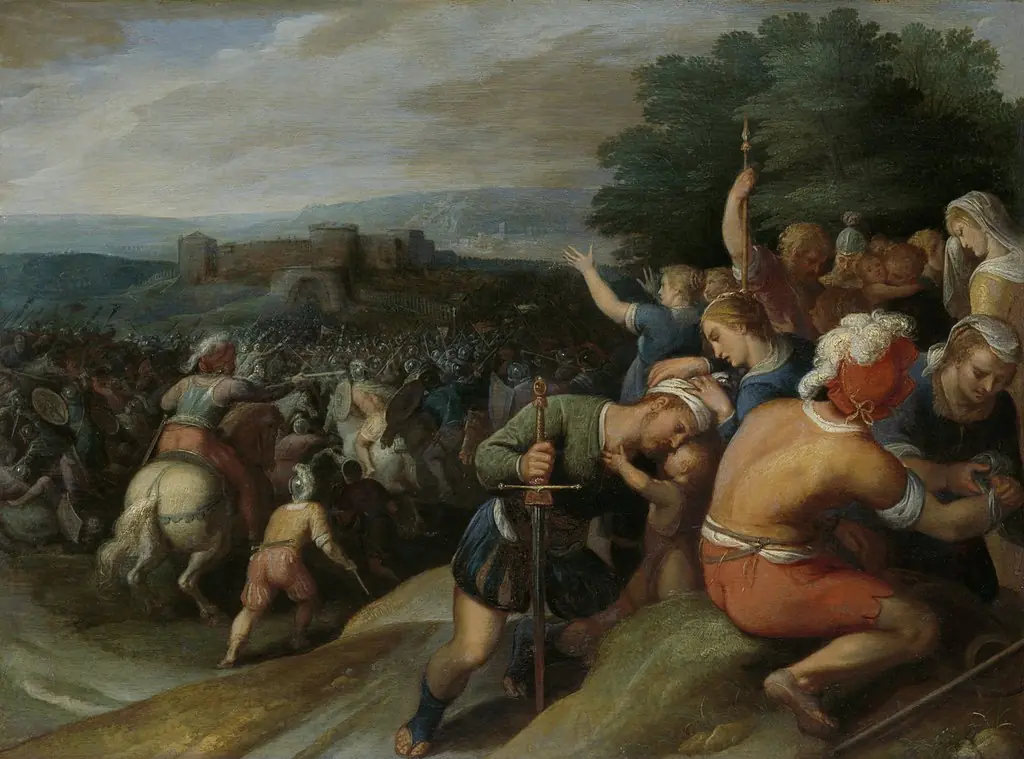 The Batavians Surround the Romans at Vetera
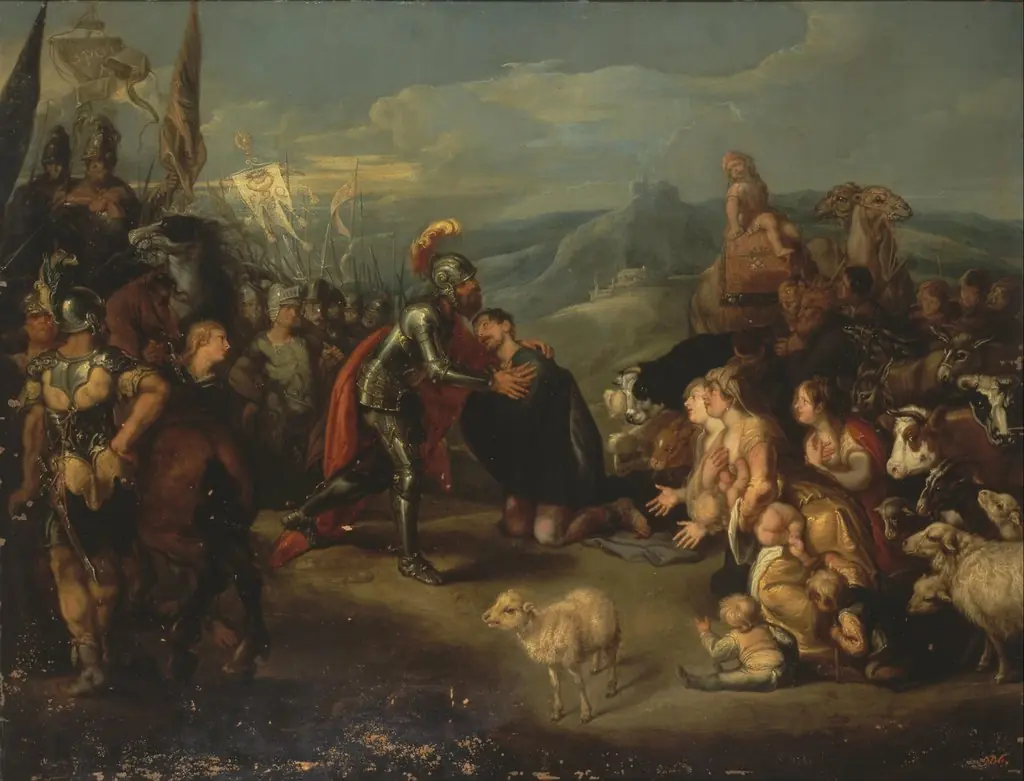 Meeting of Esau and Jacob
 Death is Fierce and Quick
 Gefangennahme Christi
 The Massacre of the Innocents
 Allegory of War
 Entry of David into Jerusalem
 Alexander en Diogenes
- The suffering of the peasants: soldiers plundering a village