Artwork
Archduke Leopold Wilhelm in his Gallery in Brussels
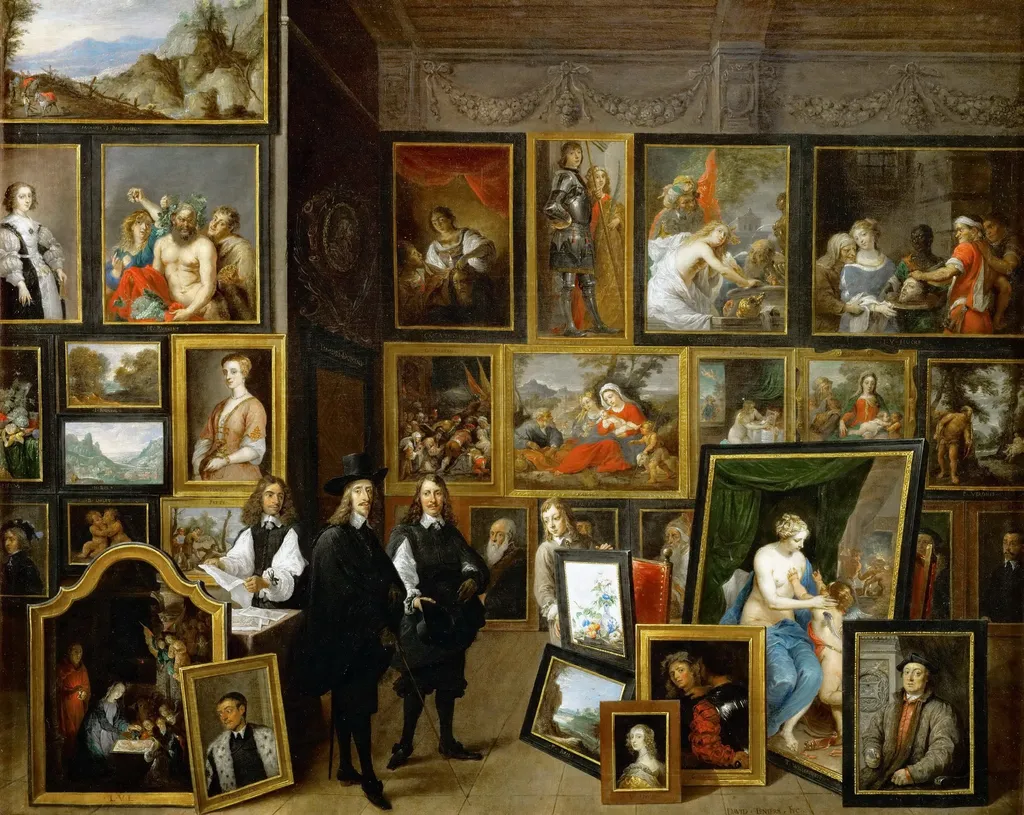
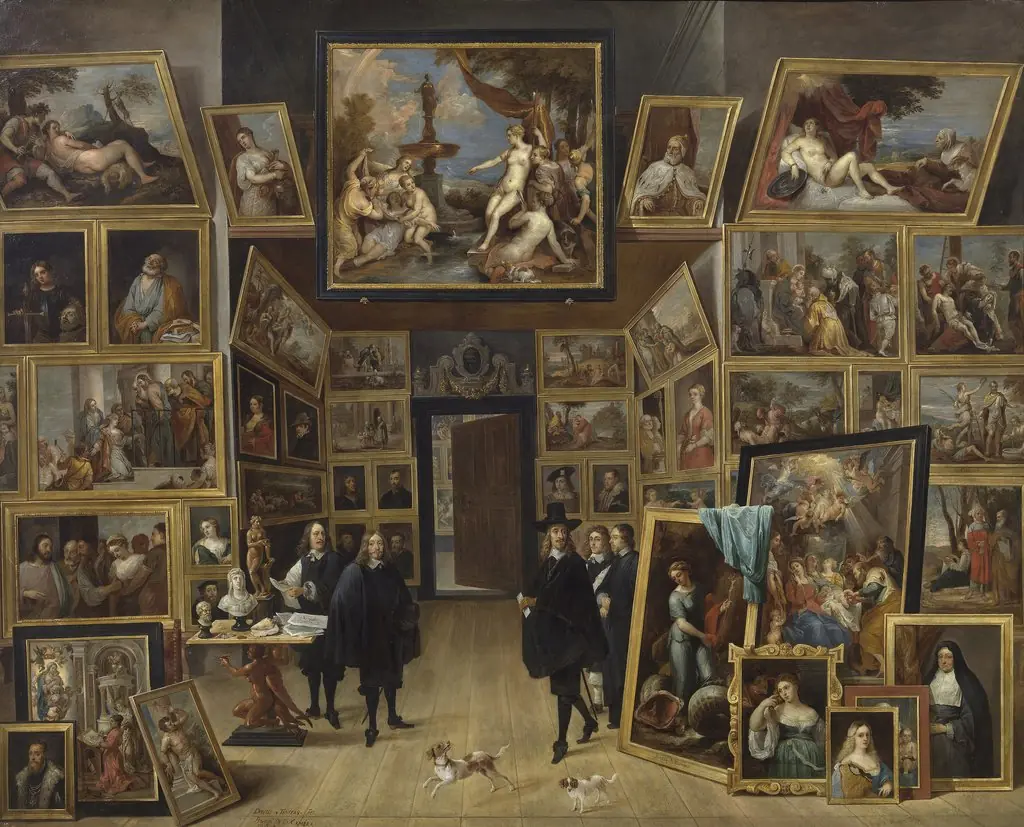
Archduke Leopold Wilhelm in his Gallery in Brussels is an oil painting by the Flemish Baroque painting artist David Teniers the Younger. It dates from 1653 and is held in the collection of the Kunsthistorisches Museum.
About this work
Subject & Meaning
Teniers renders the Archduke holding a cane that points toward newly acquired works, while he himself stands with a hat in hand, listening attentively.
The work, painted in 1653, shows Archduke Leopold Wilhelm of Austria as a connoisseur within his Brussels picture gallery, surrounded by companions who examine a carefully arranged series of paintings. Teniers renders the Archduke holding a cane that points toward newly acquired works, while he himself stands with a hat in hand, listening attentively. The orderly rows of canvases on the L‑shaped walls and the inscription “TIMORE DOMINI” above a sculpted portrait underscore the hierarchical and devotional context of the collection.
By depicting the Archduke as a discerning patron, the painting celebrates the intellectual authority of the collector and the curated presentation of art, reflecting the broader cultural prestige of the Habsburg court in the mid‑17th century.
Technique & Style
Created in 1653, this work is executed in oil paint on a canvas support. The composition functions as an interior view, depicting the Archduke's gallery with figures arranged in an L-shaped room. Stylistically, the artist employs a meticulous, orderly arrangement where artworks line the walls in neat rows, while additional pieces lean against chairs in the foreground awaiting inspection.
The scene captures the Flemish Baroque tradition of the gallery painting, focusing on the connoisseurship of the patron. A doorway inscribed with "TIMORE DOMINI" and a sculpted portrait anchor the architectural setting. The handling of the medium allows for the precise rendering of the numerous depicted paintings and the attentive postures of the figures, including the artist himself holding his hat.
This specific version differs from the larger copper support held in the Prado, utilizing a canvas medium to document the collection.
History & Provenance
Archduke Leopold Wilhelm in his Gallery in Brussels was painted by David Teniers the Younger in 1653‑3). The work was created to document the Archduke’s Italian art collection, preceding Teniers’ later engravings for the Theatrum Pictorium. After its completion the painting remained in Teniers’ possession before entering the Rothschild family collection; lists Teniers and Anselm von Rothschild as early owners, and notes that it was later held by the Rothschilds until it was forcibly donated by Baron Alphonse de Rothschild in 1938 and looted by the Nazis for the Führermuseum.
The looted canvas was stored in the Altaussee salt mines, recovered by the Allies, and held by the Kunsthistorisches Museum from the post‑war period until restitution to the Rothschild heirs in 1999, after which it returned to a private collection.
The painting is held in a private collection; it entered the Kunsthistorisches Museum in 1948 after seizure from the Rothschild family during World War II and remained there until 1999. It was restituted to the heirs in 1999 and thereafter displayed with the credit line “donated by Clarice Rothschild in memory of her husband.” The work has appeared in the exhibition “David Teniers and the Theatre of Painting” (Courtauld Institute of Art, 19 October 2006–21 January 2007).
Context
The painting is recognized as a pivotal example of Flemish Baroque gallery painting, documenting Archduke Leopold Wilhelm’s Italian collection and serving as a preparatory study for David Teniers the Younger’s Theatrum Pictorium, which scholars regard as the first illustrated art catalog. Published in Antwerp in 1659 and reissued in 1673, the engravings extended the work’s influence on art‑historical discourse about collecting and display. Teniers also produced a large copper version for the Museo del Prado as a gift to Philip IV of Spain, and a related copy likely accompanied a similar work now in the Museo Lázaro Galdiano.
The painting’s later provenance, looted by the Nazis and restituted in 1999, further situates it within modern debates on cultural heritage.
Legacy
The 1653 canvas helped codify the ‘gallery picture’ genre by visually recording an aristocratic art collection, a model later echoed in Teniers’s Theatrum Pictorium (1659, 1673), regarded as the first illustrated art catalogue and a template for subsequent museum catalogues. By portraying the Archduke as a connoisseur amid his assembled works, Teniers set a precedent for documenting private collections that influenced later artists and curators. The painting’s tumultuous wartime fate, looted by the Nazis, hidden in the Altaussee mines, and restituted to the Rothschild heirs before entering the Kunsthistorisches Museum, highlighted issues of cultural restitution and cemented the work’s legacy in provenance studies. Today it is celebrated as a pivotal Baroque record of elite collecting practices.
Overview
Painted in 1653 by the Flemish Baroque artist David Teniers the Younger, Archduke Leopold Wilhelm in his Gallery in Brussels depicts the Archduke amidst his extensive Italian art collection. This oil painting functions both as a portrait of the Archduke and a detailed representation of his private gallery. The artist himself is also included within the scene, offering a glimpse into the art world of mid-17th century Brussels.
Own this work as a print
Artist & collection
Artist
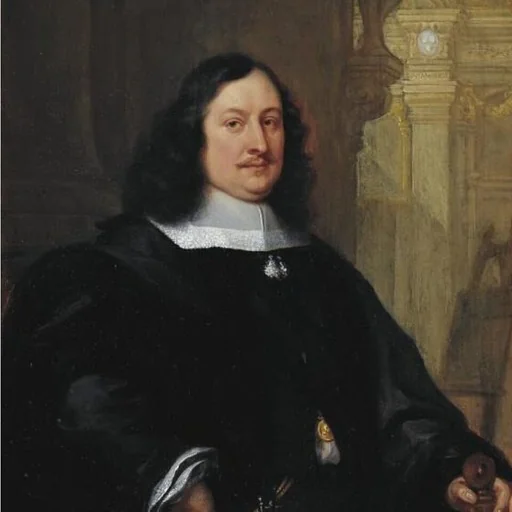
David Teniers the Younger or David Teniers II was a Flemish Baroque painter, printmaker, and artist.

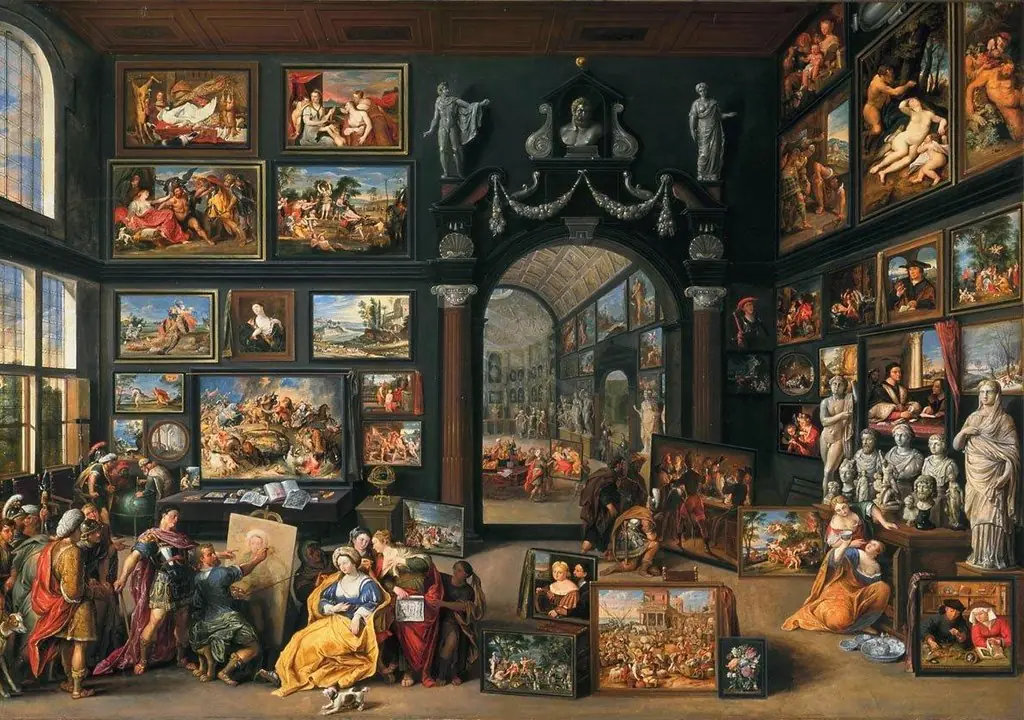 Appelles painting Campaspe
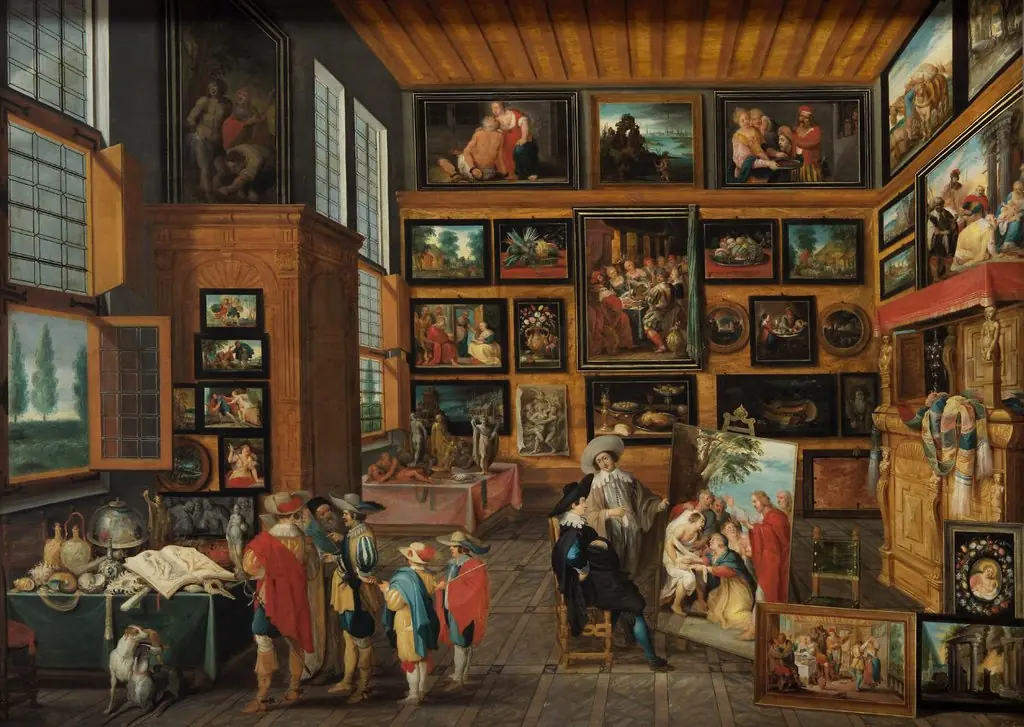 Art and Rarity Cabinet
 The Art Gallery of Jan Snellinck
 The Artist's Studio
 Chamber of Art and Curiosities
 A Picture Gallery with an Artist Painting a Woman and a Girl. Allegory of the Art of Painting
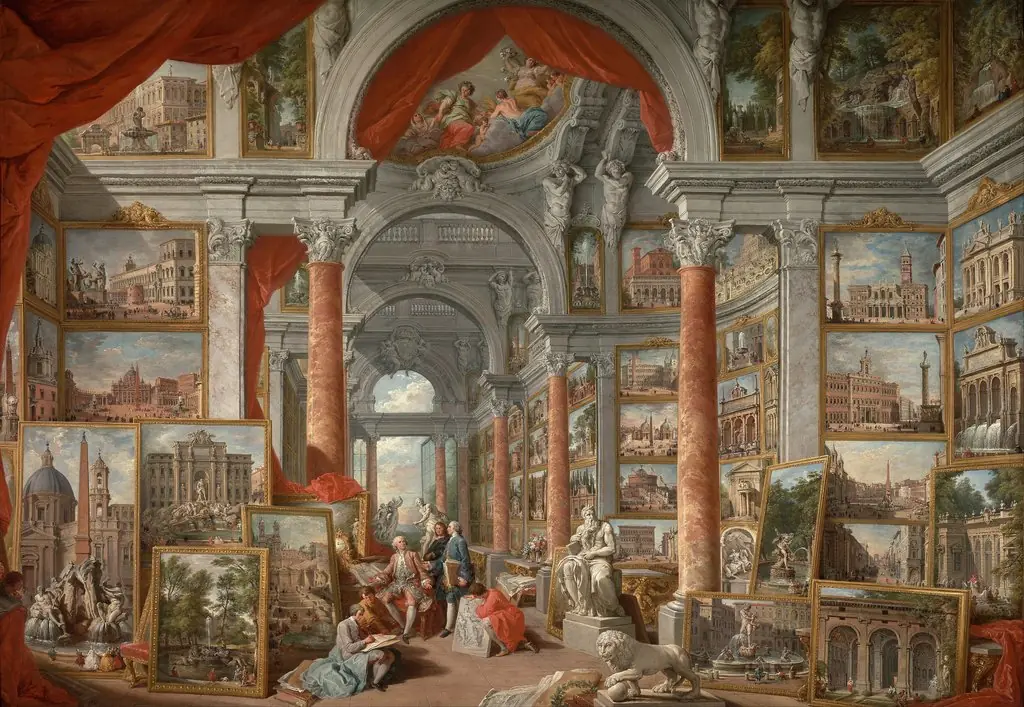 Picture Gallery with Views of Modern Rome
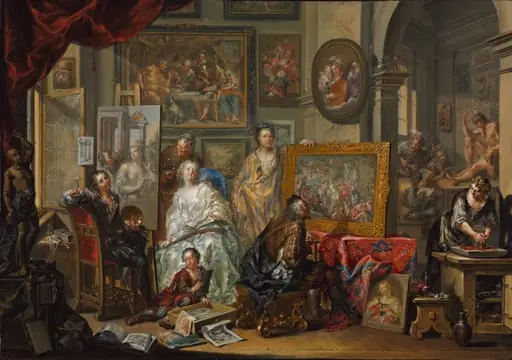 The Artist's Studio
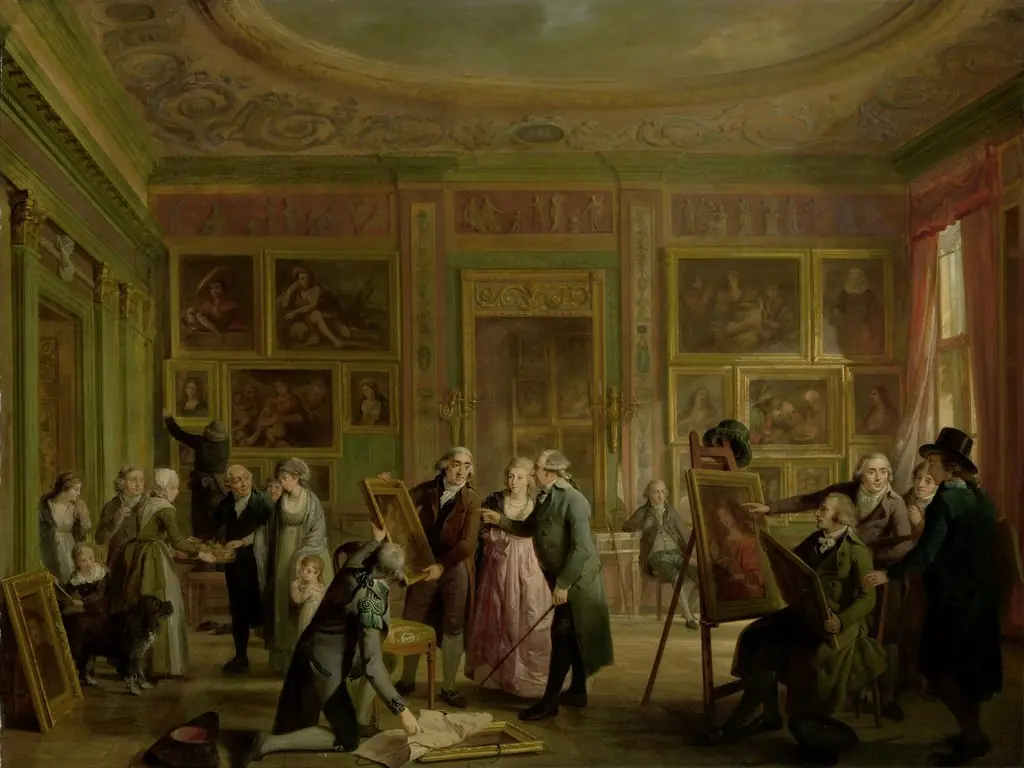 The Art Gallery of Josephus Augustinus Brentano