Artwork
The Oyster Woman
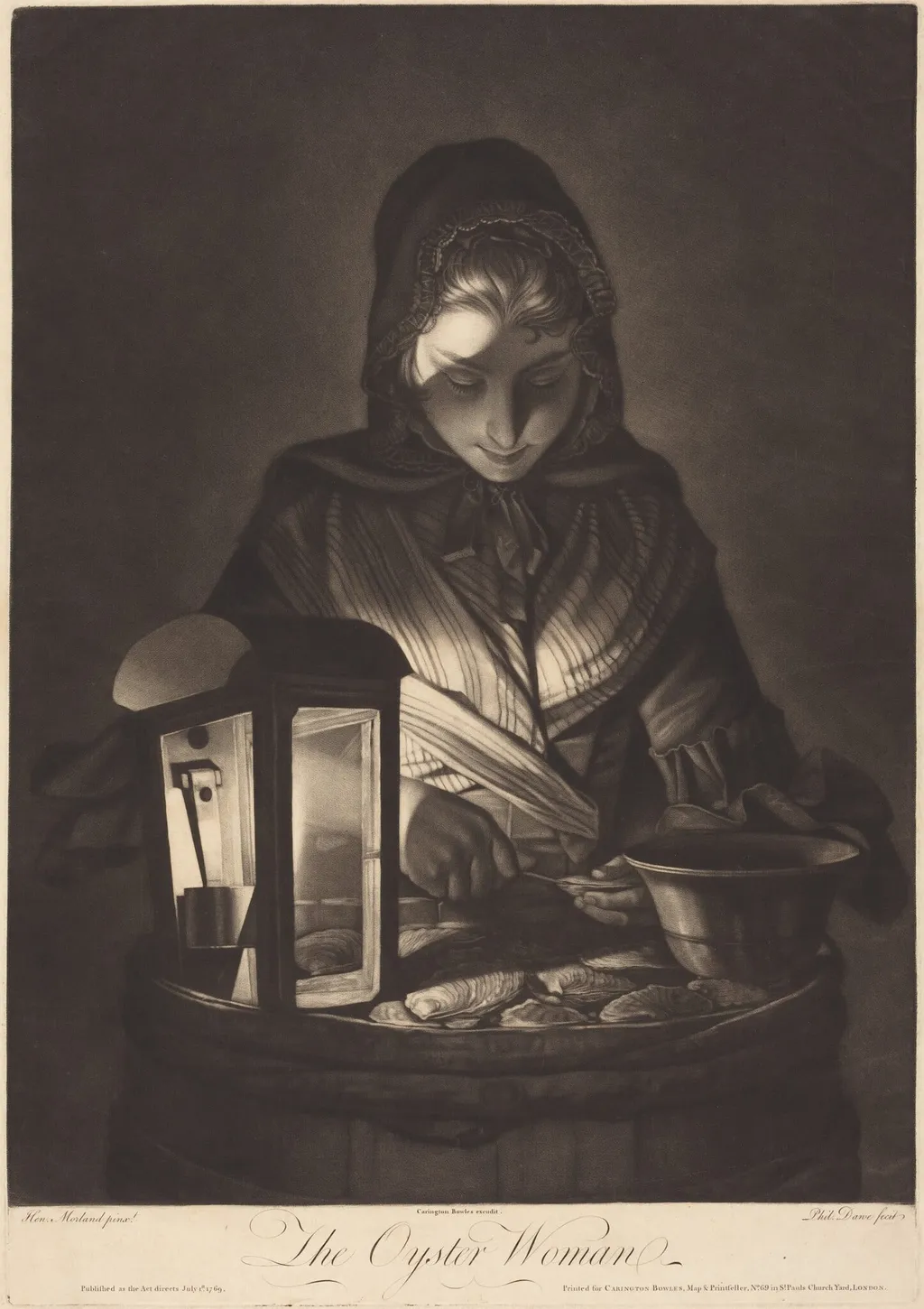
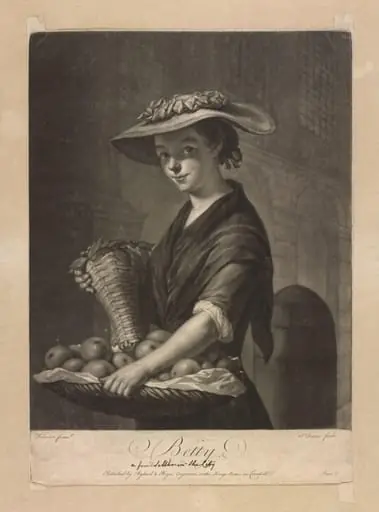
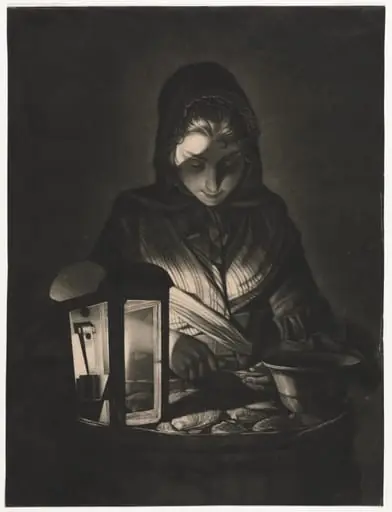
The Oyster Woman is an ink print by the Romanticist artist Philip Dawe. It dates from 1769 and is held in the collection of the National Gallery of Art.
- Inscription
- Inscribed:lower left in plate: Hen. Morland pinxt.; lower center in plate: Carington Bowles excudit. / The Oyster Woman / Published as the Act directs July 1. 1769 / Printed for CARINGTON BOWLES, Map & Printseller No 69 in St. Pauls Church Yard, LONDON; lower right in plate: Phil. Dawe fecit …
About this work
Overview
Created in 1769, The Oyster Woman is a mezzotint print executed on laid paper by English engraver Philip Dawe. The work belongs to Dawe’s extensive output of satirical and genre images produced in the late eighteenth century, and it exemplifies his focus on the mezzotint technique as a means of rendering atmospheric scenes.
Subject & Meaning
The composition centers on a cloaked woman seated at a table, manually prying open oysters and arranging them on a plate. A tall lantern and a bottle appear behind her, while the surrounding space recedes into deep black. The title and the domestic activity suggest a modest, perhaps market‑related, scene, rendered with a tone of quiet observation rather than overt narrative.
Technique & Style
Dawe employed mezzotint, a printmaking process that allows for subtle gradations of tone, to achieve a pronounced chiaroscuro effect. The stark contrast between the illuminated lantern and the enveloping darkness creates a dramatic visual focus on the woman's hands and the oysters, while the texture of the laid paper contributes to the overall tonal richness.
History & Provenance
Philip Dawe (1735–1832) worked primarily as a political cartoonist and genre printmaker in London. The Oyster Woman was produced during a period when mezzotint was a popular medium for disseminating both satirical and everyday subjects. The print has survived in several museum collections, documenting Dawe’s engagement with commercial and domestic themes alongside his more overtly political work.
Own this work as a print
Artist & collection
Artist
Philip Dawe (c. 1730 – 13 August 1832) was an English mezzotint engraver, artist and political cartoonist. He is thought to have been born in London in the 1730s, the son of a city merchant. He died in Kentish Town,…