Artwork
Les Courses du Matin, ou la Porte d'un Riche
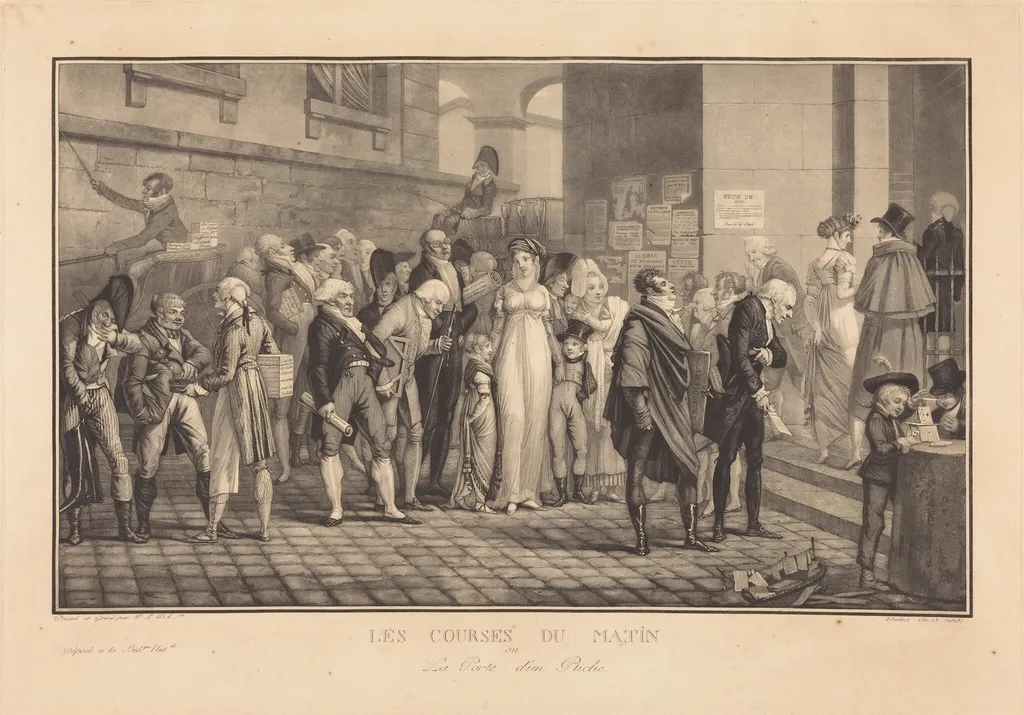
Les Courses du Matin, ou la Porte d'un Riche is an ink print by the Romanticist artist Philibert-Louis Debucourt. It dates from 1805 and is held in the collection of the National Gallery of Art.
About this work
Overview
Created in 1805 by French printmaker Philibert‑Louis Debucourt, Les Courses du Matin, ou la Porte d’un Riche is an etching combined with aquatint on wove paper.
Created in 1805 by French printmaker Philibert‑Louis Debucourt, Les Courses du Matin, ou la Porte d’un Riche is an etching combined with aquatint on wove paper. The work captures a bustling early‑morning scene before a stone façade, populated by a cross‑section of urban society. Its title, referring to morning errands, frames the composition as a snapshot of public life in the early nineteenth‑century French city.
Subject & Meaning
The print depicts a crowded forecourt where men in long coats and hats converse in small groups, while women in elegant dresses and children linger nearby. Some figures hold papers or books, and a few glance upward at notices on the wall, suggesting the exchange of news or advertisements. The presence of a small boat at the lower left hints at a nearby river or canal, reinforcing the setting as a lively commercial or transport hub.
Technique & Style
Debucourt employed a combination of line etching and aquatint to render both precise architectural details and subtle tonal variations. The wove paper surface provides a smooth ground for fine lines, while the aquatint areas create atmospheric washes that soften the crowded figures and convey the morning light. This hybrid approach allows a high level of narrative detail without sacrificing overall compositional harmony.
History & Provenance
The print was produced during the Napoleonic era, a period when French printmakers increasingly documented everyday urban scenes. While specific ownership records are scarce, the work has appeared in several 19th‑century print collections and auction catalogues, indicating its circulation among collectors interested in genre prints that illustrate contemporary social life.
Own this work as a print
Artist & collection
Artist
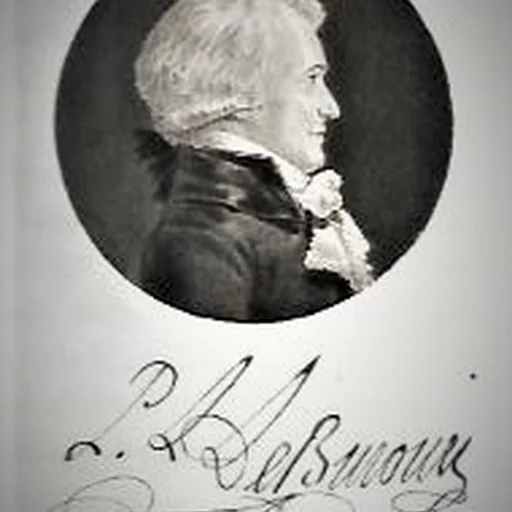
Philibert-Louis Debucourt (1755–1832) was a French artist, born in Paris.

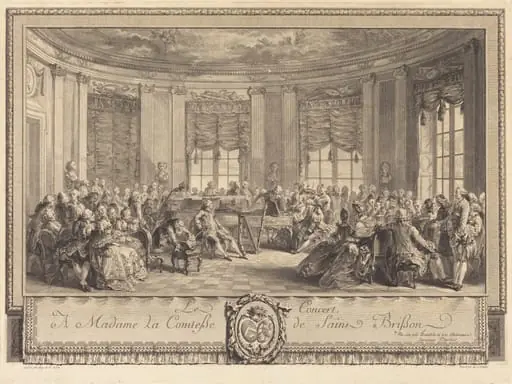 Le concert
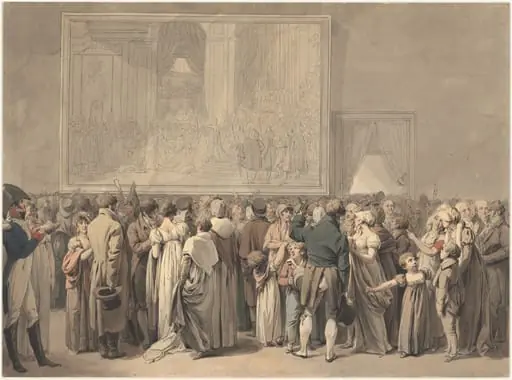 The Public in the Salon of the Louvre, Viewing the Painting of the "Sacre"
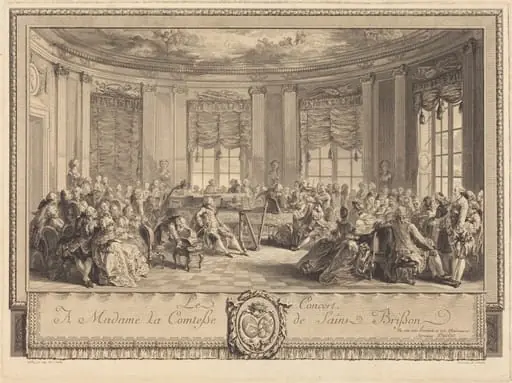 Le concert
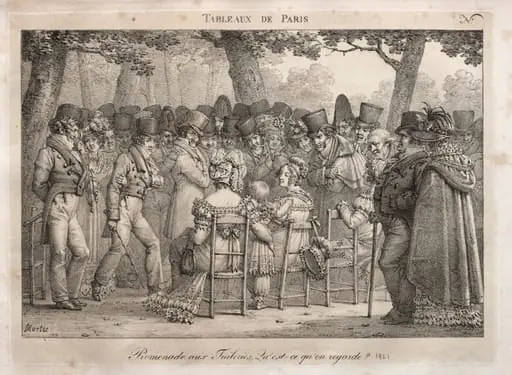 Promenade in the Tuileries. What are they looking at?
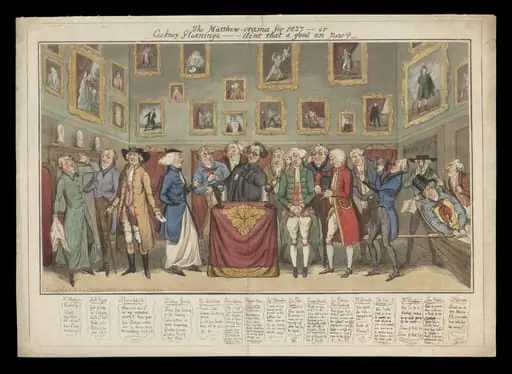 H Beard Print Collection
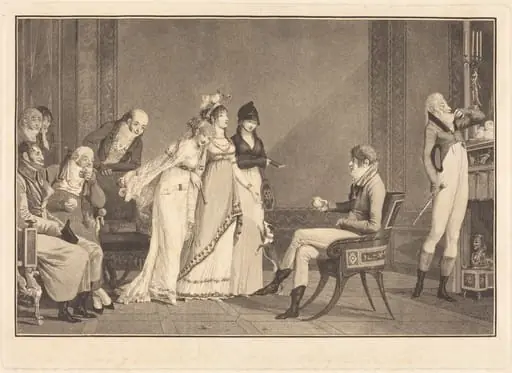 L'Orange, ou le moderne Jugement de Paris
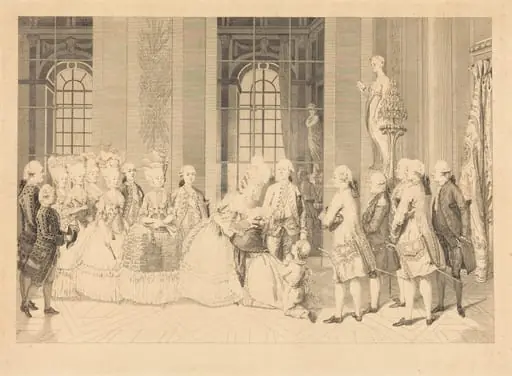 La Reine annonçant à Mme Bellegarde, des Juges, et la liberté de son mari en mai 1777
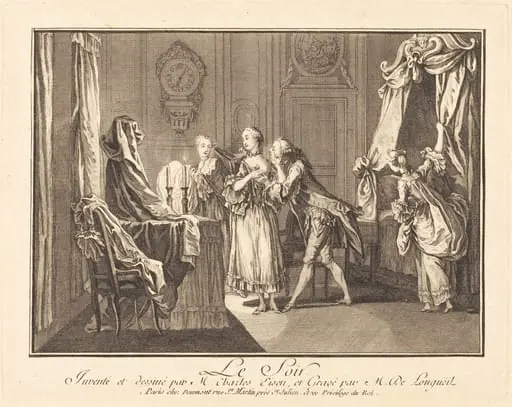 Le soir
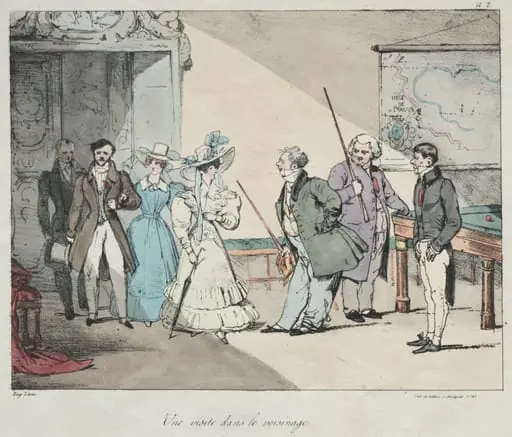 Life of the Chateau: A Visit in the Neighborhood
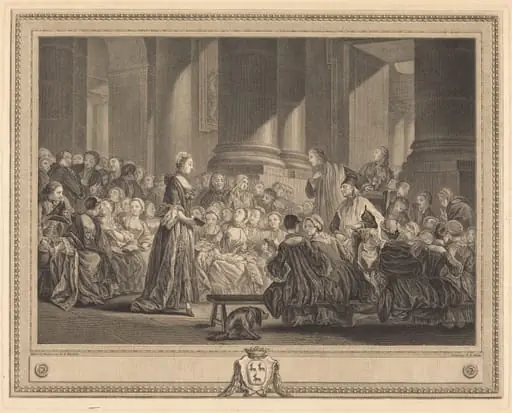 Le catechisme
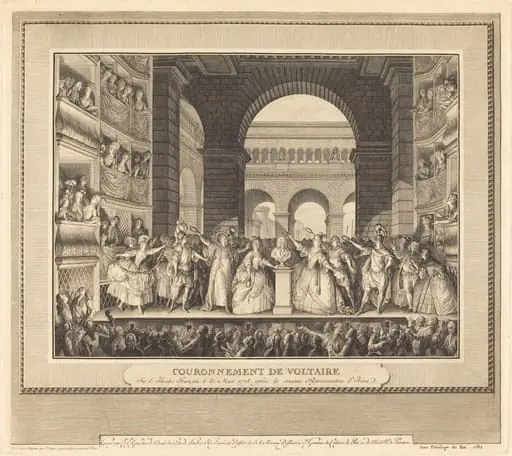 Couronnement de Voltaire (The Crowning of Voltaire)
- Le matin