Artwork
Radha and Krishna
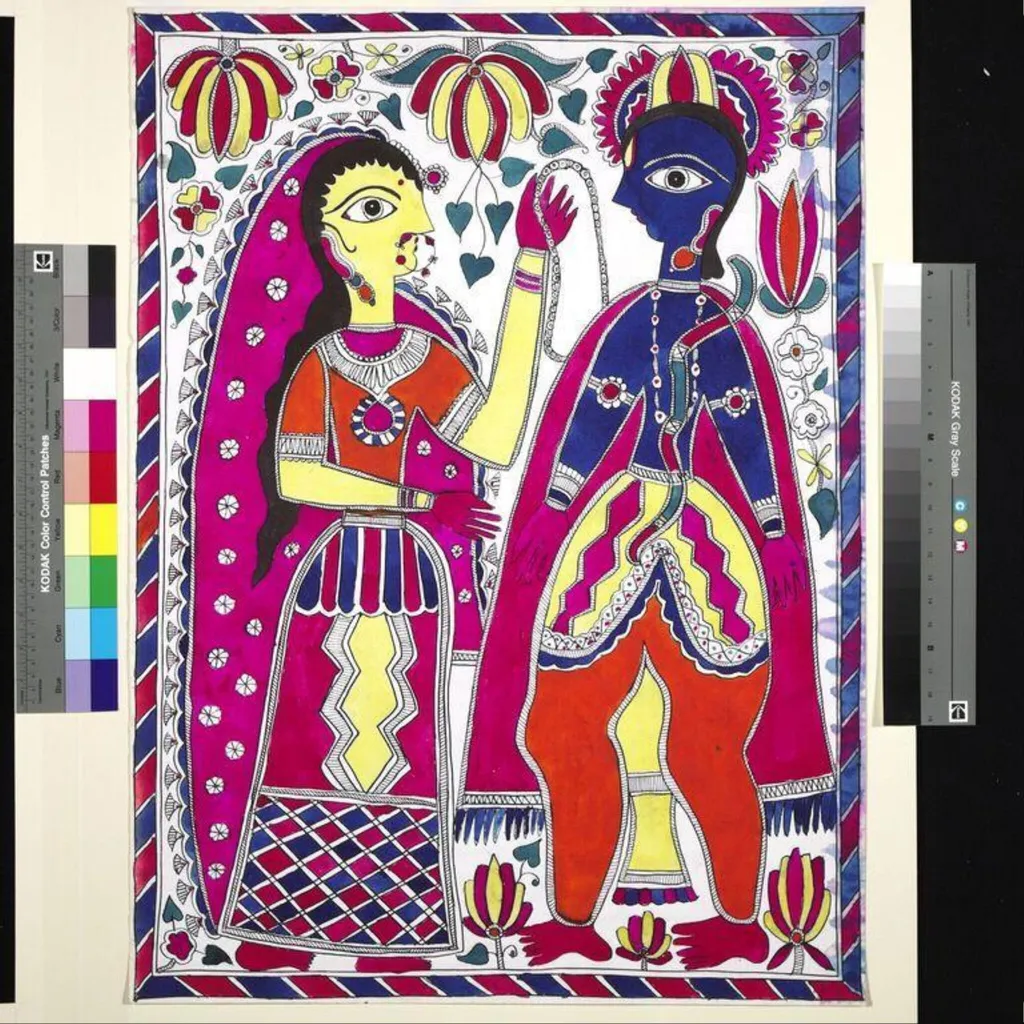
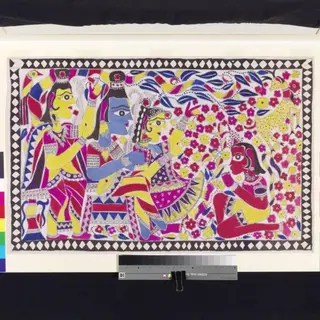
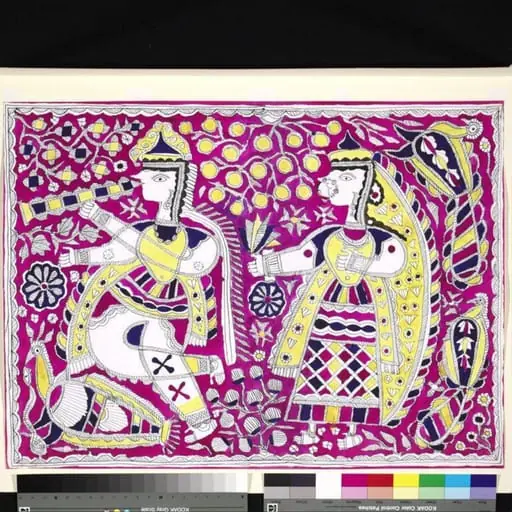
Radha and Krishna is a paint painting by the Contemporary Abstract artist Anamana Devi. It dates from 15 and is held in the collection of the Victoria and Albert Museum. This work is a paper painting executed in ink and natural pigments, originating from the Madhubani tradition of Mithila in northern Bihar.
About this work
Overview
This work is a paper painting executed in ink and natural pigments, originating from the Madhubani tradition of Mithila in northern Bihar.
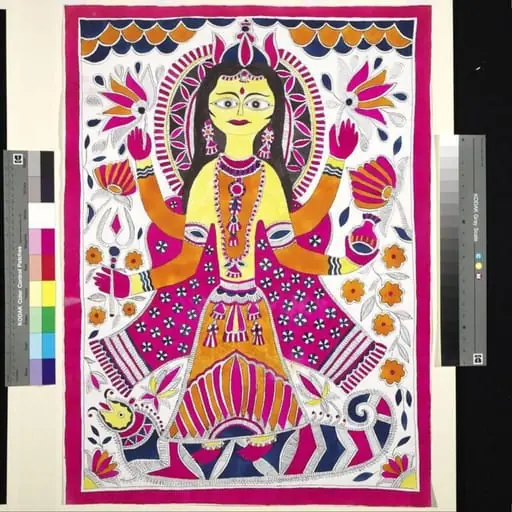
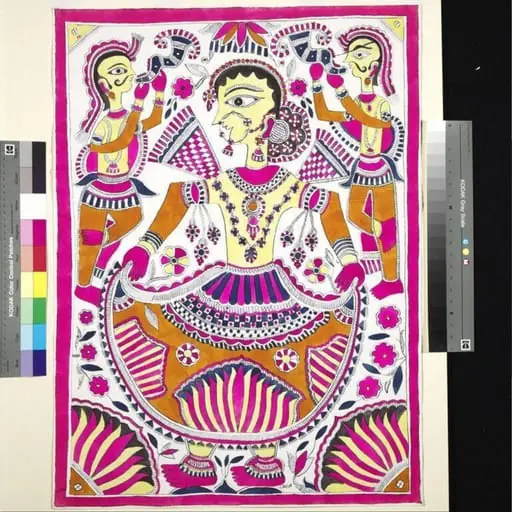
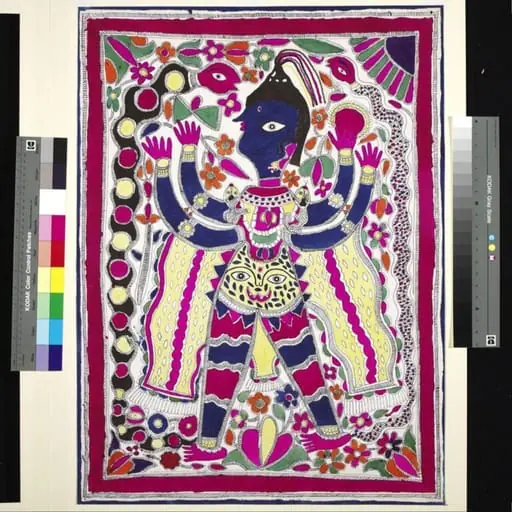
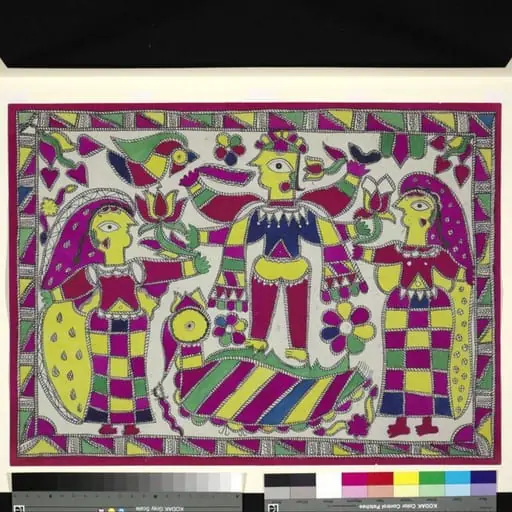
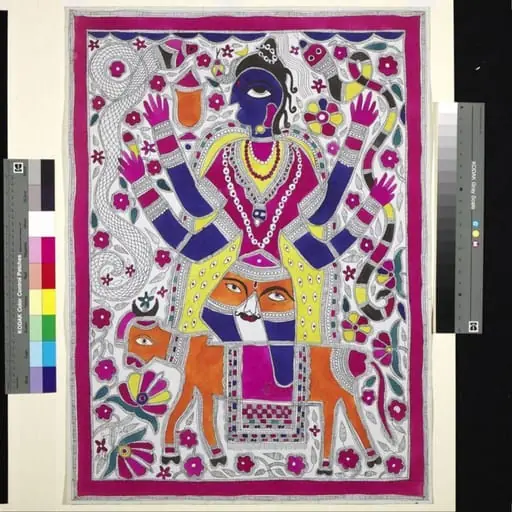
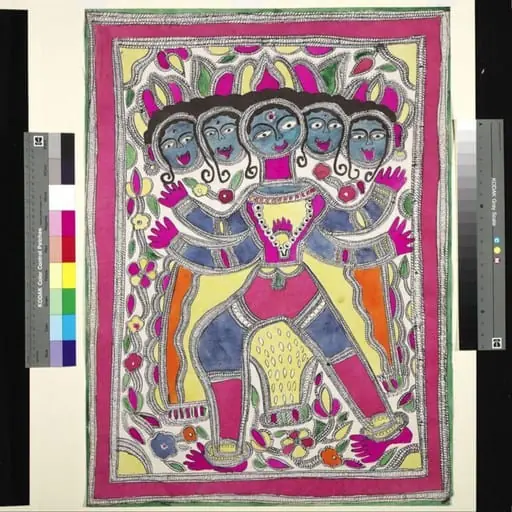
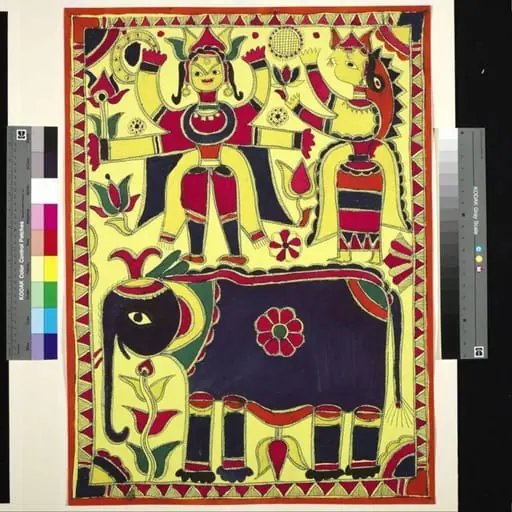
This work is a paper painting executed in ink and natural pigments, originating from the Madhubani tradition of Mithila in northern Bihar. It portrays a pair of figures, traditionally understood as Radha and Krishna, engaged in an intimate gesture of offering. The composition adheres to regional stylistic norms, with bold outlines, flat planes of color, and dense ornamentation, reflecting a practice historically rooted in domestic wall art by women of Brahmin and Kayastha communities.
Subject & Meaning
The figures represent a divine couple central to Vaishnava devotional traditions, with Radha presenting a garland to Krishna, symbolizing devotion and union. The lotus blooms surrounding them allude to purity and spiritual fertility, while their adorned forms signify divine grace. Though sometimes conflated with Sita and Rama, the blue skin of the male figure and contextual motifs align more closely with Krishna iconography in Mithila’s visual lexicon.
Technique & Style
The painting employs fine linear detailing and saturated pigments derived from minerals and plants, applied with bamboo pens and brushes. Figures are rendered in profile with exaggerated eyes and ornate jewelry, set against a plain white ground bordered by red and blue bands. Floral and vegetal patterns fill negative space, creating rhythmic density characteristic of Madhubani’s decorative grammar, where every surface carries symbolic weight.
History & Provenance
This piece belongs to a shift in Madhubani art from temporary wall murals to portable paper works, beginning in the 1960s as a response to economic hardship and external interest. The transition preserved traditional motifs while adapting materials and scale. The artist, likely from a lineage of female practitioners, continues a practice once confined to domestic rituals, now recognized in broader artistic circles.
Context
Madhubani painting emerged from ritual spaces, women decorating floors and walls during festivals and weddings, with imagery drawn from mythology, nature, and domestic life. The depiction of Radha and Krishna reflects not only religious devotion but also the cultural emphasis on feminine creativity and the sacredness of marital union. The style’s persistence on paper marks a transformation from ephemeral ceremony to enduring artifact.
Legacy
The work exemplifies how a localized, gendered art form evolved into a nationally recognized genre without losing its symbolic core. Artists like Devi and Anaman helped sustain the tradition through commercial adaptation, ensuring its transmission beyond caste and geographic boundaries. While now exhibited globally, the painting retains its roots in community-based practice and spiritual narrative.
Own this work as a print
Artist & collection
Artist
Anamana Devi painted mythic scenes from Hindu tradition on paper and board in the early 1970s.