Artwork
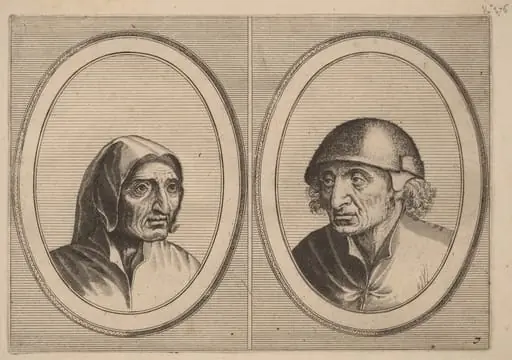
"Bruyntje Springh-in'-t- Bed" and "Flip de Duyvel"
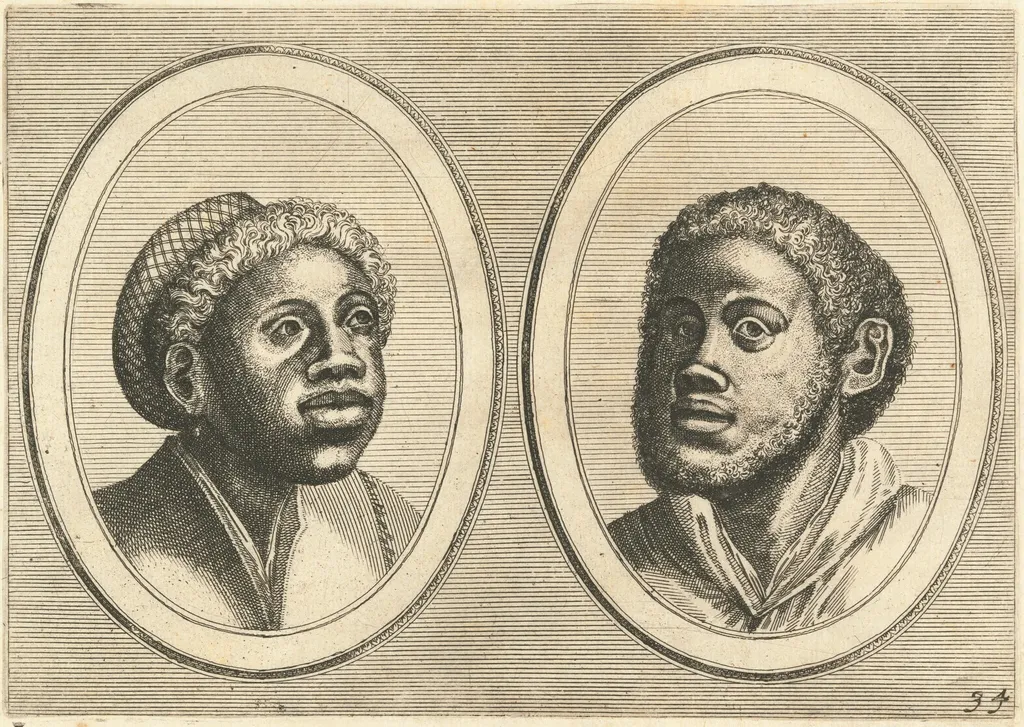
"Bruyntje Springh-in'-t- Bed" and "Flip de Duyvel" is an ink print by the Renaissance artist Johannes van Doetechum the Elder. It dates from 1564 and is held in the collection of the National Gallery of Art.
- Inscription
- Inscribed:Inscription: lower right in plate: 34; upper right in graphite: No 309
About this work
Overview
Van Doetecum, a Dutch engraver and cartographer, produced these works during his early career in Deventer.
Created around 1564 by Johannes van Doetecum the Elder, this pair of etchings, Bruyntje Springh-in'-t- Bed and Flip de Duyvel, captures two satirical portraits in oval frames. Van Doetecum, a Dutch engraver and cartographer, produced these works during his early career in Deventer. The prints reflect his engagement with the genre scenes popularized by Pieter Bruegel the Elder, translating their humor into monochrome line work suited for reproduction.
Subject & Meaning
The two portraits depict exaggerated, caricatured figures engaged in folkloric folly, likely referencing local idioms or moral tales. Their serious expressions contrast with the absurdity implied by their names, suggesting a tongue-in-cheek commentary on human vanity or stupidity. These figures were not portraits of real individuals but archetypes drawn from popular culture, meant to amuse and provoke reflection on societal behavior.
Technique & Style
Executed in etching, the images rely on fine, incised lines on metal plates to render facial features with precision. The textured borders of the ovals and the crisp, unmodulated black lines against a pale ground emphasize clarity over tonal variation. Van Doetecum’s meticulous line work captures texture in hair and facial structure, demonstrating skill in translating Bruegel’s expressive figures into the disciplined medium of printmaking.
History & Provenance
Van Doetecum produced these etchings before relocating to Haarlem in 1578, placing their origin in Deventer during the early 1560s. As a printmaker specializing in reproductions, he likely circulated these works through regional markets. Their survival in collections today reflects their appeal as affordable, portable satires, valued for their wit and technical execution rather than their rarity.
Context
In mid-16th-century Netherlands, printed satires flourished amid growing literacy and urban culture. Van Doetecum’s etchings align with a broader trend of visual humor derived from Bruegel’s peasant scenes, adapted for domestic consumption. These prints served as both entertainment and moral commentary, resonating with audiences familiar with folk traditions and the social critiques embedded in popular imagery.
Legacy
Though not widely known today, Van Doetecum’s etchings contributed to the dissemination of Bruegelian themes across northern Europe. His technical precision helped standardize the reproduction of genre scenes, influencing later printmakers. These works remain examples of how satire and craftsmanship intersected in early modern print culture, preserving vernacular humor in durable graphic form.
Own this work as a print
Artist & collection

Artist
Johannes van Doetechum the Elder
Joannes van Doetecum the Elder (1530 – 1605) was a Dutch engraver-cartographer known for his etched works after genre scenes by Pieter Bruegel the Elder and maps of various cities in the Netherlands.

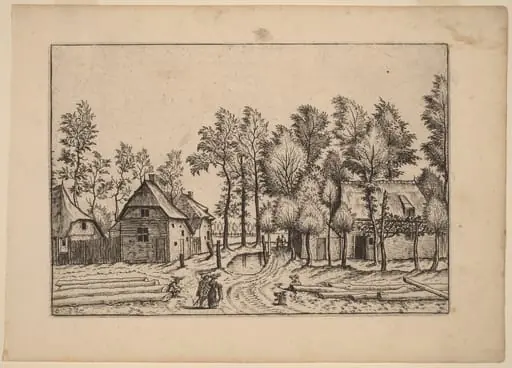
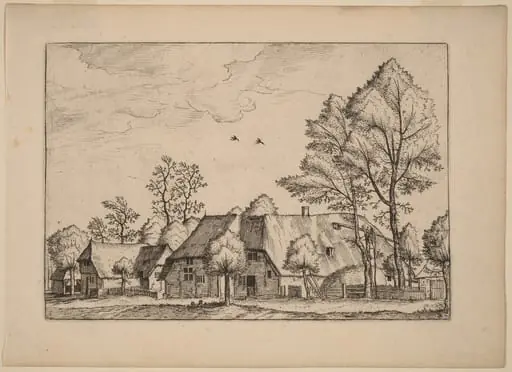
- "Ael Pieter-mans" and "Bedorve Sloof om't Geldt"
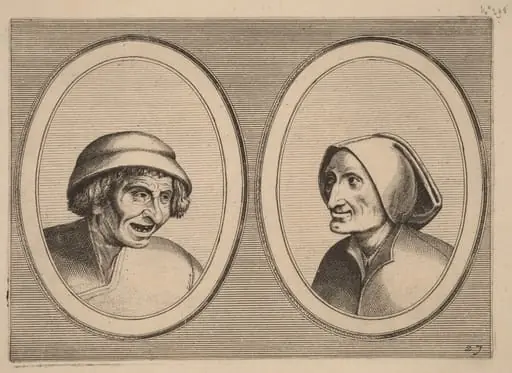 "Keesje Licht-hart" and "Verblinde Swaen"
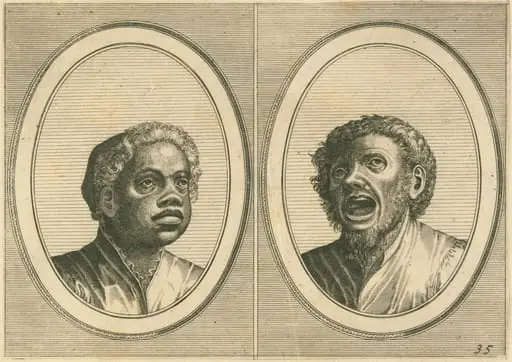 "t Moye Molletje" and "Melis Bocke-baert"
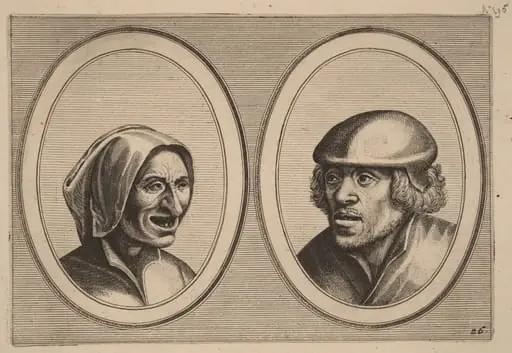 "Vrouw Verneem-al" and "Hans de Pluym-strijcker"
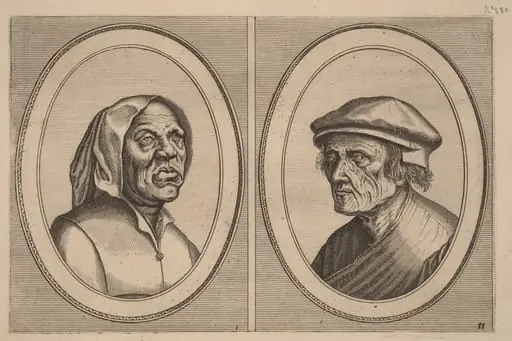 "Baef Schol-becx" and "Spruyt Vroegh-bedorven"
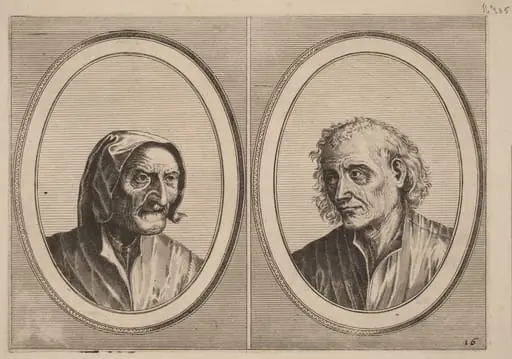 "Foockel Frons-muyl" and "Pietje Hard-loop"
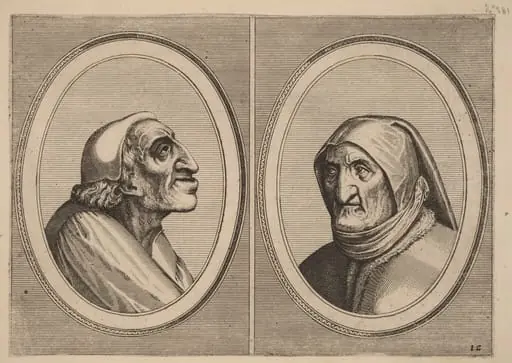 "Pater Muylaert" and "Mater Bille-bloots"
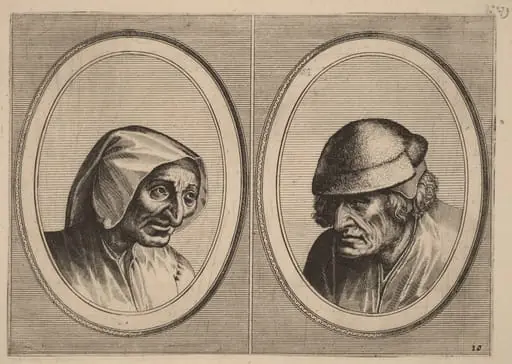 "Verdorde Nel" and "Jan Afterlam"
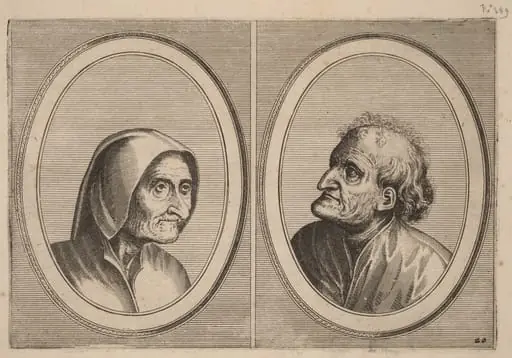 "Ritze Stijn" and "Schurckje Sonder-Baerdt"
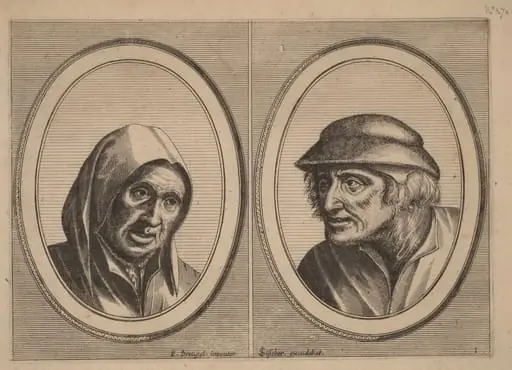 "Susanna Smuls" and "Leuye Joost"
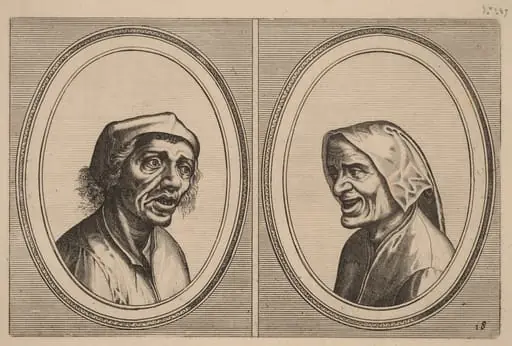 "Goe Geurtjen" and "Kribbighe Babbe"